Eastern Blue-Eyed Grass
Sisyrinchium atlanticum
Last reviewed: September 2026
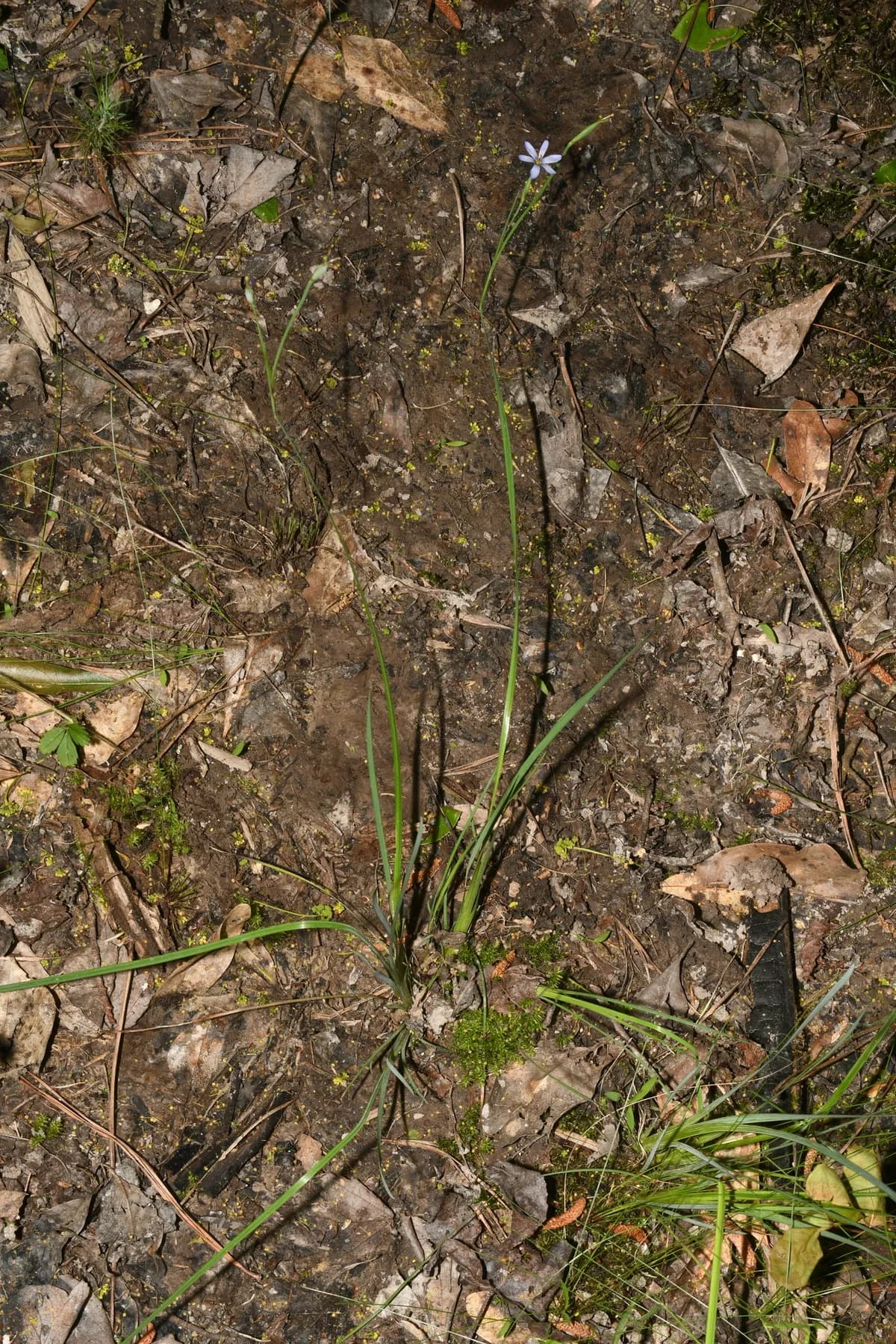
Eastern blue-eyed grass is a slender forb that blooms May through July in eastern meadows and moist grasslands. It grows best in full sun with medium to consistently damp soil and draws bees and butterflies.
Toxicity unknown
Eastern Blue-Eyed Grass (Sisyrinchium atlanticum) is not listed by the ASPCA Animal Poison Control Center (opens in new tab) or the other sources we check, so we have no verdict for it either way. Absence from those lists is not a clearance. If your pet shows symptoms after eating any plant, call the ASPCA at (888) 426-4435.
Light
full sun
Water
medium
Size
6"–18" H × 4"–12" W
Bloom
May, Jun, Jul
Native to
AL, AR, CT, DE and 25 more states
Pollinators
bees, butterflies
Before you buy
Your city may pay you to plant this
Cities and water utilities offer rebates for replacing lawn with native and water-wise plants. We track 459 programs across 44 states, each with a link to the provider and the date we last checked it.
Find rebates in your areaPicture natives in your own yard
Upload a photo of your yard and Patch Vision shows a rendering of it planted with natives for your region, like Eastern Blue-Eyed Grass.


Browse plants for this ecoregion
Eastern blue-eyed grass forms small clumps of narrow, grass-like foliage topped with delicate blue flowers in late spring and early summer. Despite its name, it's actually a member of the iris family and creates a charming, low-maintenance groundcover or accent plant.
Growing Eastern Blue-Eyed Grass
Grow Eastern Blue-Eyed Grass in full sun and medium water. Mature plants reach 6 to 18 inches tall and spread 4 to 12 inches wide. Expect low maintenance to keep it looking intentional in a front yard.
How to care for Eastern Blue-Eyed Grass, by region
How to care for Eastern Blue-Eyed Grass where it is actually grown: year-round basics plus what to do each season, region by region, with the sources for each.
Care guidance last updated: October 2026
Northeastern Coastal Zone (includes New York, NY)
Year-round
Eastern blue-eyed grass is a low, clumping perennial in the iris family that is native to New York and much of the eastern United States. In the New York City area it does best in full sun with consistently moist, sandy to average soil, where its grassy foliage and small blue, yellow-centered flowers make a tidy addition to a front-yard bed.
- Native to New York and the broader eastern seaboard, from Maine down through Florida.
- Give it full sun, at least six hours a day, for the strongest bloom.
- Keep the soil evenly moist. It is naturally at home in wet meadows and marsh edges and does not tolerate drought well.
- Stays compact, roughly 6 inches to a foot and a half tall, so it fits neatly along a walkway or bed edge without crowding its neighbors.
Fall
Fall is a good time to divide crowded clumps and to cut back foliage once it browns, ahead of winter in the New York City area.
- Divide congested clumps in fall if you missed the spring window. This keeps the planting vigorous.
- Cut the clump back to a few inches once the foliage browns after the first frost, which typically arrives from late October into mid-November in the New York City area.
- Leave a few seed capsules in place if you want the patch to slowly fill in on its own.
Cutting back browned foliage in fall keeps the bed from looking scraggly through the winter months.
Winter
This plant is winter hardy in the New York City area, which falls within its USDA hardiness range of zone 4a to 10b, and typically dies back to the ground for the season.
- Expect the foliage to die back to the ground in a typical New York winter.
- No pruning is needed once it is dormant. Leave the crown undisturbed until new growth appears in spring.
- A light mulch layer helps if the bed is exposed and the season has been unusually dry, protecting the shallow roots.
Spring
Spring is the main growing and bloom season for this plant in the New York City area, with flowers typically opening from April into June.
- Plant new starts or divide established clumps in early spring, after the last frost, which typically falls around mid-April in the New York City area.
- Expect the small blue, yellow-centered flowers to open through late spring.
- Water during dry spells. Spring rain in this region can be uneven and this plant prefers consistently moist soil.
Summer
Once the main spring flush of bloom fades, usually by June, the clump benefits from a light trim and steady watering through New York's hot, humid summer stretches.
- Shear off spent flower stalks after bloom finishes. This tidies the clump and helps prevent it from self-seeding into surrounding beds.
- Keep soil consistently moist. This plant is drought-intolerant, and New York summers can turn dry between storms.
- Some foliage yellowing or thinning by midsummer is normal as the plant slows down.
A midsummer trim after bloom keeps the clump looking tended in a visible front-yard bed.
Sources: Lady Bird Johnson Wildflower Center, Native Plant Database: Sisyrinchium atlanticum, NC State Extension Gardener Plant Toolbox: Sisyrinchium atlanticum, Wisconsin Horticulture Extension: Blue-eyed grass, Sisyrinchium
Ridge and Valley (includes Harrisburg, PA)
Year-round
Year-round care for eastern blue-eyed grass around Harrisburg, PA: full sun and moist, sandy soil.
- Plant it in full sun.
- It wants moist soil, and sandy or rocky acidic soil suits it best.
- Keep it watered. This is a plant for ground that stays moist, not a dry bed.
- It makes a small grassy clump 6 to 18 inches tall and 6 to 8 inches wide.
- Small blue to violet flowers with yellow centers bloom from March to June.
- It has no serious pest or disease problems. Divide the clumps or let it seed to get more plants.
The small grassy clumps make a neat edge along a walk or the front of a bed.
Sources: NC State Extension Gardener Plant Toolbox: Sisyrinchium atlanticum, Lady Bird Johnson Wildflower Center: Sisyrinchium atlanticum
Southern Coastal Plain (includes Orlando, FL)
Year-round
Year-round care for eastern blue-eyed grass around Orlando, FL: full sun and moist, sandy soil.
- Plant it in full sun.
- It wants moist soil, and sandy or rocky acidic soil suits it best.
- Keep it watered. This is a plant for ground that stays moist, not a dry bed.
- It makes a small grassy clump 6 to 18 inches tall and 6 to 8 inches wide.
- Small blue to violet flowers with yellow centers bloom from March to June.
- It has no serious pest or disease problems. Divide the clumps or let it seed to get more plants.
The small grassy clumps make a neat edge along a walk or the front of a bed.
Sources: NC State Extension Gardener Plant Toolbox: Sisyrinchium atlanticum, Lady Bird Johnson Wildflower Center: Sisyrinchium atlanticum
Southwestern Appalachians (includes Chattanooga, TN)
Year-round
Year-round care for eastern blue-eyed grass around Chattanooga, TN: full sun and moist, sandy soil.
- Plant it in full sun.
- It wants moist soil, and sandy or rocky acidic soil suits it best.
- Keep it watered. This is a plant for ground that stays moist, not a dry bed.
- It makes a small grassy clump 6 to 18 inches tall and 6 to 8 inches wide.
- Small blue to violet flowers with yellow centers bloom from March to June.
- It has no serious pest or disease problems. Divide the clumps or let it seed to get more plants.
The small grassy clumps make a neat edge along a walk or the front of a bed.
Sources: NC State Extension Gardener Plant Toolbox: Sisyrinchium atlanticum, Lady Bird Johnson Wildflower Center: Sisyrinchium atlanticum
In an HOA neighborhood
Eastern Blue-Eyed Grass is an HOA-friendly choice. Maintenance level: low. Tidiness: 4 out of 5.
Works well in: front yard, foundation, street edge, mid zone.
- Foliage dies back in winter
- May self-seed in favorable conditions
Wildlife value
The small blue flowers attract native bees and small butterflies during its blooming period from May through July.
Common questions
- When does Eastern blue-eyed grass bloom?
- It typically flowers from May through July, with small blue-violet blooms opening in the morning on wiry, grass-like stems.
- What kind of light does this plant need?
- It grows best in full sun but will tolerate part sun, especially in areas with hot summer afternoons.
- How much water does Eastern blue-eyed grass need?
- It prefers medium to consistently moist soil and does well near pond edges, wet meadows, or low spots that stay damp through the growing season.
- What pollinators visit this plant?
- Bees and butterflies are the main visitors, drawn to the small open flowers during the bloom period.
- Does Eastern blue-eyed grass keep its foliage year round?
- Its narrow, grass-like leaves are semi-evergreen, often persisting through mild winters but dying back in colder climates.
- Is Eastern Blue-Eyed Grass HOA-friendly?
- Eastern Blue-Eyed Grass is generally an HOA-friendly choice in the right placement, with low maintenance.
These answers were drafted with an AI model from this plant's data. Verify care details with a local expert.
Native range data from the World Checklist of Vascular Plants (Kew). Pollinator and host plant associations compiled from GBIF, iNaturalist, and published ecological literature.
If something looks wrong
Common plant problems, and what to check first
These come up on almost any plant. Each guide lists the likely causes in the order they are worth ruling out, with one thing to check before you act on any of them, and links to the source it came from.
- It is dying right after planting
- Leaves turning yellow
- Wilting even though I watered it
- Brown crispy leaf tips
- Bugs on the plant
Ready to grow Eastern Blue-Eyed Grass? Add it to your garden in Pollinator Patch to track it and get season-by-season care guidance.