Engelmann's prickly pear
Opuntia engelmannii
Last reviewed: September 2026
Engelmann's prickly pear is a sprawling, full-sun succulent that produces yellow blooms from April through June and thrives in arid, low-water landscapes with sandy or rocky soil.
Engelmann's prickly pear (Opuntia engelmannii) is not on the ASPCA Animal Poison Control Center toxic plant list for dogs or cats (aspca.org (opens in new tab), last reviewed 2026-05-21). If your pet shows symptoms after eating any plant, call the ASPCA at (888) 426-4435.
Light
full sun
Water
low
Size
36"–60" H × 48"–120" W
Bloom
Apr, May, Jun
Native to
AZ, CA, KS, LA and 5 more states
Pollinators
bees
Before you buy
Your city may pay you to plant this
Cities and water utilities offer rebates for replacing lawn with native and water-wise plants. We track 459 programs across 44 states, each with a link to the provider and the date we last checked it.
Find rebates in your areaPicture natives in your own yard
Upload a photo of your yard and Patch Vision shows a rendering of it planted with natives for your region, like Engelmann's prickly pear.


Browse plants for this ecoregion
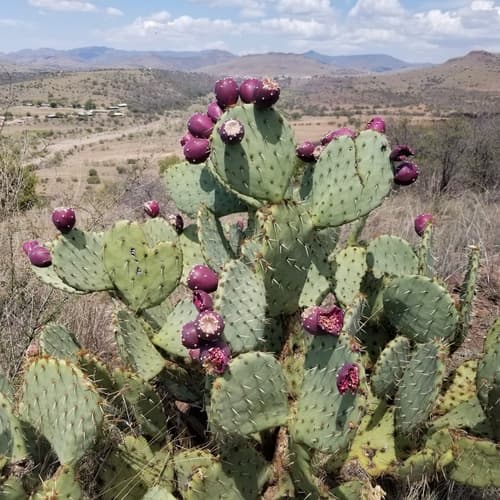
A robust clumping cactus with large, flat, blue-green pads armed with spines, forming a broad mounding shrub over time. Showy waxy yellow flowers open along the pad edges in spring, followed by reddish-purple fruits. Its bold architectural form makes a dramatic low-water accent, though the spines call for placement away from walkways.
Growing Engelmann's prickly pear
Grow Engelmann's prickly pear in full sun and low water. Mature plants reach 36 to 60 inches tall and spread 48 to 120 inches wide. Expect low maintenance to keep it looking intentional in a front yard.
How to care for Engelmann's prickly pear, by region
How to care for Engelmann's prickly pear where it is actually grown: year-round basics plus what to do each season, region by region, with the sources for each.
Care guidance last updated: September 2026
Edwards Plateau (includes San Antonio, TX)
Year-round
Engelmann's prickly pear (the Lindheimer variety common in this region) is a tough, spiny cactus that grows well across the Edwards Plateau around San Antonio, where it turns up naturally on rocky, thin-soil hillsides.
- This variety is documented as common across the Edwards Plateau, not just present somewhere in Texas.
- Give it full sun and fast-draining soil. Rocky, sandy, or caliche ground works better than rich garden soil.
- Water deeply only when the soil is bone dry, then leave it alone. Once established it rarely needs extra water in this region.
- Yellow to orange flowers open from March through June and draw in a lot of native bee activity.
- Not on the ASPCA toxic plant list for dogs or cats. The spines and glochids on the pads are a physical hazard, not a poisoning risk, so keep pets and kids from pawing at them.
Fall
Fall brings ripening fruit and a good window to tidy up fallen pads before winter.
- Ripe tunas deepen to red-purple through fall and are an important food source for birds and small mammals in the area.
- Cooling weather is a good time to rake up fallen pads and dropped fruit so they don't root nearby or make a mess near walkways.
- Keep watering to a minimum. This cactus does not want extra moisture heading into cooler weather.
Raking up fallen pads and dropped fruit in fall keeps the bed looking neat, which matters for HOA-friendly curb appeal.
Winter
Winter is the slow season for Engelmann's prickly pear and the best time to prune it back.
- Growth slows way down and the plant does not need any water through a typical Edwards Plateau winter.
- This species is rated cold tolerant by native plant sources, part of why it holds up well across Central Texas winters.
- Late winter, before new pad growth starts, is the recommended time to cut back pads that have grown over a sidewalk or patio area.
- Wear thick gloves. Cold weather does not make the spines or glochids any less sharp.
This late-winter trim is also the best-timed cut for keeping the front walkway clear, giving a tidy winter look for HOA-conscious yards.
Spring
Spring is when new pads and the first flowers of the year show up on Engelmann's prickly pear in the Edwards Plateau.
- New paddle-shaped pads grow out from the edges of last year's pads as the weather warms.
- Flower buds form along the pad edges, with the first blooms usually opening in March and continuing into June.
- The yellow to orange flowers are a strong draw for native bees in this region.
- Skip extra watering unless the area goes through a long dry stretch. Normal spring rain in the Edwards Plateau is usually enough.
Summer
Summer heat is no problem for an established Engelmann's prickly pear, but it is worth watching for a couple of pests.
- Established plants need little to no watering through a San Antonio summer. Only water deeply if the region goes several weeks without rain.
- Fruit (called tunas) starts forming after the spring flowers fade and keeps ripening into fall.
- Check pads for cochineal scale, a pest that shows up as small white cottony tufts. A strong spray of water knocks off a light infestation.
- A caterpillar called the cactus moth, originally from Argentina, has spread into parts of Texas and tunnels through pads from the inside. Watch for sudden pad collapse and remove any hollowed-out pads.
Sources: Lady Bird Johnson Wildflower Center, Opuntia engelmannii var. lindheimeri, Texas Parks and Wildlife Department, Edwards Plateau Limestone Shrubland, Lady Bird Johnson Wildflower Center, Opuntia engelmannii, ASPCA, Toxic and Non-Toxic Plant List, Dogs, ASPCA, Toxic and Non-Toxic Plant List, Cats, Texas A&M AgriLife Today, A Prickly Situation (cactus moth threat to Texas prickly pear)
Sonoran Basin and Range (includes Phoenix, AZ)
Year-round
Engelmann prickly pear is a tough, pad-forming cactus built for the low desert around Phoenix. Give it full sun, fast-draining soil, and very little water, and the main thing to remember is that too much water kills it faster than too little.
- Plant in full sun in decomposed-granite or gravelly soil that drains fast, never in a low spot where water pools after a monsoon storm.
- Water deep and infrequent only. An established plant in the Phoenix core needs almost no supplemental water once it is settled, and overwatering is the number one way people lose this cactus to rot.
- Skip fertilizer entirely. Desert natives like this one resent rich soil, and feeding it just makes weak, floppy growth.
- Top the bed with decomposed granite or gravel, not wood bark. Bark holds moisture against the pads and looks out of place in a desert yard.
Fall
Fall is the prime season in the low desert. Cooler weather makes this the best time to plant a new prickly pear and to tidy or trim the pads so roots settle in through the mild winter before next summer.
- Plant new pads or plants in October or November so roots establish through the cool winter before the heat returns. This is the single best planting window of the year.
- Water a newly planted pad lightly and infrequently just to help it root, then back off. Established plants still want almost nothing.
- This is the right time to remove any damaged or overcrowded pads. Wear thick gloves and use tongs, and let cut pads callus before doing anything with them.
- Refresh the decomposed-granite topdressing where it has thinned so the bed drains and looks clean going into winter.
A fall cleanup that removes broken pads and keeps the cactus set back from walkways reads as intentional, cared-for desert landscaping, the HOA-friendly front-yard standard in Phoenix, and keeps spines away from foot traffic so the yard stays neat and easy to pass.
Winter
Winter in Phoenix is a mild cool season, not a deep freeze. Engelmann prickly pear is frost-hardy in the Phoenix core, so the main job is to keep it dry so cold nights do not damage soggy pads.
- Keep the plant dry through winter. Wet, cold soil is the combination that causes cold damage and rot in cacti here.
- Gentle winter rains December through March are usually all the water it needs. Do not add supplemental water on top of them.
- This cactus is frost-hardy in the low desert and does not need cover on a normal Phoenix winter night. Only a rare hard freeze would call for light protection.
- Leave the pads alone for pruning now. Wait until the fall window to do any cutting back or tidying.
Spring
Spring is bloom time. From March into May your prickly pear opens big yellow to red flowers that later set purple fruit, so this is the season to enjoy it and ease off water as the heat builds.
- Expect flowers March through May, followed by the purple fruit. Do not water to force more bloom, this cactus flowers on its own schedule.
- Taper off any winter watering as days warm. By late spring an established plant wants dry soil going into summer.
- If you are adding a new pad or plant, early spring is a weaker secondary window. Fall is still the better choice, so only plant now if you missed the fall window.
- Pull spring weeds out of the decomposed-granite bed by hand so the base of the cactus stays open and dry.
Keeping the gravel bed weeded and the flowering pads tidy reads as intentional desert landscaping, which is the expected HOA-friendly front-yard look in Phoenix and helps you avoid a violation letter for a bed that looks neglected.
Summer
Summer is the stress season, not the growing peak. The June foresummer is bone dry and brutal, then the July to September monsoon brings warm downpours, and the biggest danger all summer is overwatering on top of that rain.
- In the dry June foresummer, an established plant needs no water. A brand-new plant in its first summer or two can take one occasional deep soak if pads look shriveled, then let it dry fully.
- Once the monsoon starts in July, stop supplemental water completely. Cacti rot fast when you water them on top of warm monsoon rain.
- Make sure water drains away from the base after a storm. Standing water around the pads for more than a day is what triggers rot.
- Do not plant now. Never set out a new prickly pear May through July, the heat is too much for new roots to establish.
Sources: Arizona-Sonora Desert Museum, Opuntia engelmannii (Engelmann prickly pear) species account, USDA PLANTS Database, Opuntia engelmannii native range including Arizona, Desert Botanical Garden, prickly pear (Opuntia) care and spring bloom notes, Desert Botanical Garden, best fall planting window for cacti in the low desert, University of Arizona Cooperative Extension, cactus and succulent summer watering in the low desert
In an HOA neighborhood
Engelmann's prickly pear is an HOA-friendly choice in the right placement. Maintenance level: low. Tidiness: 3 out of 5.
Works well in: mid zone.
- spines make it unsuitable next to walkways or where children play
- spreads into a wide clump over time
Wildlife value
Flowers feed native bees; the fruits and pads are eaten by birds and mammals, and the clump offers nesting cover.
Common questions
- How much water does Engelmann's prickly pear need?
- This cactus does best with low water and sharply drained soil. Once established it needs little to no supplemental irrigation, and standing moisture around the roots can lead to rot.
- When does Engelmann's prickly pear bloom?
- Flowering usually occurs from April through June, with large yellow blooms opening along the edges of the pads.
- What pollinators visit Engelmann's prickly pear?
- Bees are the main pollinators, visiting the flowers for pollen during the spring and early summer bloom period.
- What growing conditions does Engelmann's prickly pear prefer?
- It grows best in full sun with sandy, rocky, or otherwise fast-draining soil, and it tolerates heat and prolonged dry spells well.
- Is Engelmann's prickly pear toxic to dogs?
- Engelmann's prickly pear is not on the ASPCA Animal Poison Control Center toxic plant list for dogs (aspca.org).
- Is Engelmann's prickly pear toxic to cats?
- Engelmann's prickly pear is not on the ASPCA Animal Poison Control Center toxic plant list for cats (aspca.org).
- Is Engelmann's prickly pear HOA-friendly?
- Engelmann's prickly pear is generally an HOA-friendly choice in the right placement, with low maintenance.
These answers were drafted with an AI model from this plant's data. Verify care details with a local expert.
Native range data from the World Checklist of Vascular Plants (Kew). Pollinator and host plant associations compiled from GBIF, iNaturalist, and published ecological literature.
If something looks wrong
Common plant problems, and what to check first
These come up on almost any plant. Each guide lists the likely causes in the order they are worth ruling out, with one thing to check before you act on any of them, and links to the source it came from.
- It is dying right after planting
- Leaves turning yellow
- Wilting even though I watered it
- Brown crispy leaf tips
- Bugs on the plant
Ready to grow Engelmann's prickly pear? Add it to your garden in Pollinator Patch to track it and get season-by-season care guidance.