Hoary Tansyaster
Dieteria canescens
Last reviewed: August 2026
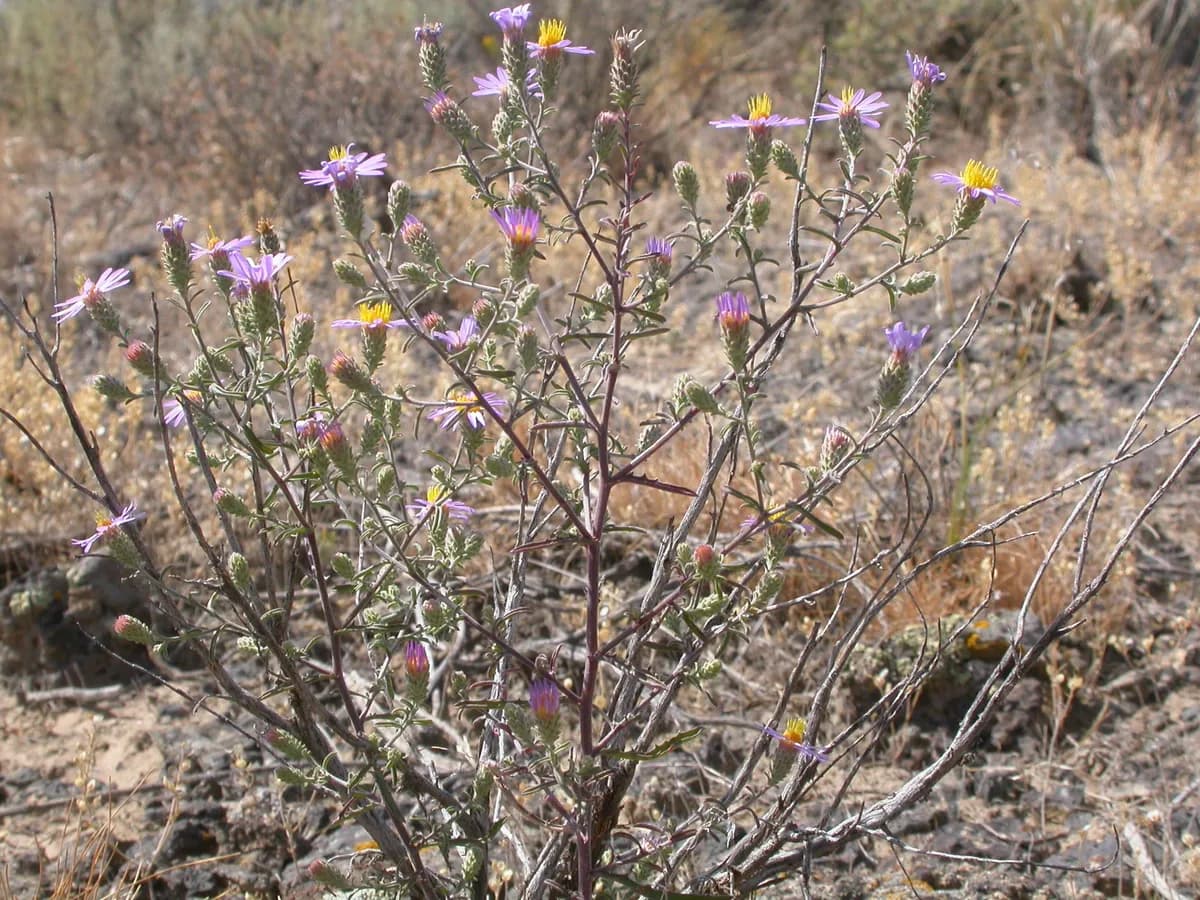
Dieteria canescens, or hoary tansyaster, is a drought tolerant forb that blooms from July through September, producing lavender-purple flowers in full sun across dry rangelands and high desert habitats.
Toxicity unknown
Hoary Tansyaster (Dieteria canescens) is not listed by the ASPCA Animal Poison Control Center (opens in new tab) or the other sources we check, so we have no verdict for it either way. Absence from those lists is not a clearance. If your pet shows symptoms after eating any plant, call the ASPCA at (888) 426-4435.
Light
full sun
Water
low
Size
6"–24" H × 6"–12" W
Bloom
Jul, Aug, Sep
Native to
AZ, CA, CO, ID and 12 more states
Pollinators
bees, butterflies
Before you buy
Your city may pay you to plant this
Cities and water utilities offer rebates for replacing lawn with native and water-wise plants. We track 459 programs across 44 states, each with a link to the provider and the date we last checked it.
Find rebates in your areaPicture natives in your own yard
Upload a photo of your yard and Patch Vision shows a rendering of it planted with natives for your region, like Hoary Tansyaster.


Browse plants for this ecoregion
Dieteria canescens is a compact native wildflower that produces small daisy-like blooms in shades of white to pale purple during late summer and early fall. This drought-tolerant perennial forms neat clumps and requires minimal water once established, making it an excellent choice for low-maintenance landscapes.
Growing Hoary Tansyaster
Grow Hoary Tansyaster in full sun and low water. Mature plants reach 6 to 24 inches tall and spread 6 to 12 inches wide. Expect low maintenance to keep it looking intentional in a front yard.
How to care for Hoary Tansyaster, by region
How to care for Hoary Tansyaster where it is actually grown: year-round basics plus what to do each season, region by region, with the sources for each.
Care guidance last updated: October 2026
Central Basin and Range (includes Salt Lake City, UT)
Year-round
Year-round care for hoary tansyaster around Salt Lake City, UT: open, dry spot with loamy to sandy, gravelly soil.
- It is most common in open, dry habitats.
- It does well in medium to coarse soils, including loamy to sandy ground with gravel and rocks.
- A soil pH of 6 to 8.4 is listed as a good range.
- Calscape lists partial shade as its exposure.
- Height is typically 2.5 to 30 inches.
- It can act as an annual, biennial, or short-lived perennial, so expect some plant turnover.
Set in a gravelly bed with a clean edge, the airy flowers look planned rather than wild.
Sources: Calscape: Dieteria canescens, Western Forbs: Dieteria canescens
Central California Foothills and Coastal Mountains (includes San Francisco, CA)
Year-round
Hoary tansyaster is a hairy, gray-green aster relative that in the wild grows on dry inland flats, high desert, and mountain slopes across the West, not on the foggy coast. It is a California native, but the plants nature put there are mostly in the state's drier, sunnier inland pockets. In a San Francisco Bay Area garden, treat it as a plant working against its usual climate. Give it your warmest, sunniest, best-drained spot rather than a shady or fog-heavy corner, and go easy on water and soil richness.
- Full sun and fast-draining soil matter more here than almost anywhere else you might grow it. A slope, raised bed, or gravelly strip works better than a flat, amended bed.
- Skip compost, heavy mulch piled against the crown, or regular fertilizer. This plant is built for lean, gravelly ground, not rich garden soil.
- If your yard sits inside San Francisco's immediate fog belt, expect this plant to struggle. It tends to do better in the Bay Area's warmer, sunnier inland pockets, like east-facing slopes away from the coast.
- Check foliage in humid stretches for a white powdery coating. Powdery mildew has been documented on this species in the wild, and the region's marine-layer moisture can bring it on faster than the dry heat the plant is adapted to.
Its low, tidy gray-green mound reads as an intentional dry-garden accent rather than a weed, which helps in a front yard where neatness matters.
Fall
Fall is this plant's real moment. Hoary tansyaster blooms from summer into fall, with flowering commonly running into October or November, and it is valued as a late-season nectar source when many other plants have finished. Cooler fall temperatures and the first rains also start easing the moisture stress that summer fog can put on this plant.
- Expect the main flower show now: lavender to purple daisy-like blooms with yellow centers, drawing bees, butterflies, and moths at a time when few other natives are still flowering.
- Leave spent flower heads in place for a few weeks if you want seed for more plants. Seeds mature about four to five weeks after flowering and need no special treatment to germinate.
- As fall rains return, cut back on any supplemental watering. Extra water on top of rain is more likely to cause problems than help at this point.
- This is a good season to divide crowded clumps or start new plants from seed, since seedlings establish over the cooler, wetter months ahead.
Fall bloom timing means this plant is still adding color and pollinator activity to the yard after most summer flowers have faded, which reads as an intentionally maintained bed rather than a late-season empty patch.
Winter
Winter is the Bay Area's wet season, which is the opposite of what this plant experiences across most of its native dry inland range. The plant is mostly dormant or semi-dormant now, so the main job is making sure it is not sitting in soggy soil for weeks at a time.
- Do not add supplemental water. Regional rainfall is normally more than enough, and this plant's roots are adapted to dry ground, not standing moisture.
- Check that drainage is actually working, especially in clay soil. If water pools around the base after storms, that spot is a poor long-term fit for this species even if it survives one wet winter.
- Cut back dead or dieback growth from the past season once it has clearly browned off, which tidies the plant and improves airflow into spring.
- Avoid heavy mulch against the crown during the rainy season. It holds moisture right where this plant is most prone to rot.
Spring
Spring in the Bay Area brings the last of the rainy season and cool, damp mornings, which is wetter than this plant's native dry inland habitat. New growth resumes now, but the goal is to keep roots on the dry side while the plant leafs out.
- Let the soil dry out between any waterings. If winter rain has kept the ground damp, you likely do not need to add water at all this season.
- Watch for slugs and snails on new spring growth. The Bay Area's damper spring soil supports more of them than the dry ground this species is adapted to.
- Hold off on fertilizer. Lean soil is what this plant expects, and extra nutrients mostly just push soft, floppy growth.
- If plants sat in soggy soil over winter, check the crown for rot before assuming a plant that looks bare is dead. Cut away any mushy stems.
Summer
This is the season where San Francisco's climate diverges most from what this plant evolved for. Instead of the hot, dry summer of its native high desert and inland flats, Bay Area summers bring cool highs and a persistent marine layer, especially near the coast. That fog keeps foliage damp longer than this species is built to handle, so summer care here is about managing moisture and disease risk more than watering.
- Water sparingly, and only during real dry spells away from fog influence. Overwatering in cool, humid conditions is a bigger risk than underwatering.
- Avoid overhead watering or sprinklers that wet the foliage. Combined with fog, wet leaves that do not dry out quickly raise the odds of powdery mildew and rust, both documented on this species.
- If you see a white powdery coating or orange-brown pustules on leaves, prune out the affected stems and improve airflow around the plant rather than reaching for more water.
- In gardens that get real fog-free sun, this plant will bloom and hold up better than in shadier, fog-heavy microclimates. Expect a shorter, less vigorous bloom in yards with heavy summer fog compared to the hot inland gardens this species is naturally adapted to.
Sources: Calscape: Dieteria canescens (Hoary Aster), Western Forbs: Hoary tansyaster (Dieteria canescens), Southwest Desert Flora: Dieteria canescens, Hoary Tansyaster (community tip)
Sonoran Basin and Range (includes Phoenix, AZ)
Year-round
Year-round care for hoary tansyaster around Phoenix, AZ: open, dry spot with loamy to sandy, gravelly soil.
- It is most common in open, dry habitats.
- It does well in medium to coarse soils, including loamy to sandy ground with gravel and rocks.
- A soil pH of 6 to 8.4 is listed as a good range.
- Calscape lists partial shade as its exposure.
- Height is typically 2.5 to 30 inches.
- It can act as an annual, biennial, or short-lived perennial, so expect some plant turnover.
Set in a gravelly bed with a clean edge, the airy flowers look planned rather than wild.
Sources: Calscape: Dieteria canescens, Western Forbs: Dieteria canescens
In an HOA neighborhood
Hoary Tansyaster is an HOA-friendly choice. Maintenance level: low. Tidiness: 4 out of 5.
Works well in: front yard, foundation, street edge, mid zone.
Wildlife value
The flowers attract native bees and butterflies during the late-season bloom period when many other plants have finished flowering. This extended bloom time provides crucial nectar sources for pollinators preparing for winter.
Common questions
- When does hoary tansyaster bloom?
- Hoary tansyaster typically flowers from July through September, with lavender to purple ray flowers surrounding a yellow center.
- What pollinators visit hoary tansyaster?
- Bees and butterflies are the most common visitors, drawn to the flowers for nectar and pollen during the summer bloom period.
- What growing conditions does hoary tansyaster need?
- It does best in full sun with low water once established, tolerating dry, well-drained soils found in rangeland and high desert settings.
- Is Hoary Tansyaster HOA-friendly?
- Hoary Tansyaster is generally an HOA-friendly choice in the right placement, with low maintenance.
These answers were drafted with an AI model from this plant's data. Verify care details with a local expert.
Native range data from vouchered herbarium specimen records and regional native plant society lists. Pollinator and host plant associations compiled from GBIF, iNaturalist, and published ecological literature.
If something looks wrong
Common plant problems, and what to check first
These come up on almost any plant. Each guide lists the likely causes in the order they are worth ruling out, with one thing to check before you act on any of them, and links to the source it came from.
- It is dying right after planting
- Leaves turning yellow
- Wilting even though I watered it
- Brown crispy leaf tips
- Bugs on the plant
Ready to grow Hoary Tansyaster? Add it to your garden in Pollinator Patch to track it and get season-by-season care guidance.