Hollow Joe-pyeweed
Eutrochium fistulosum
Last reviewed: October 2026
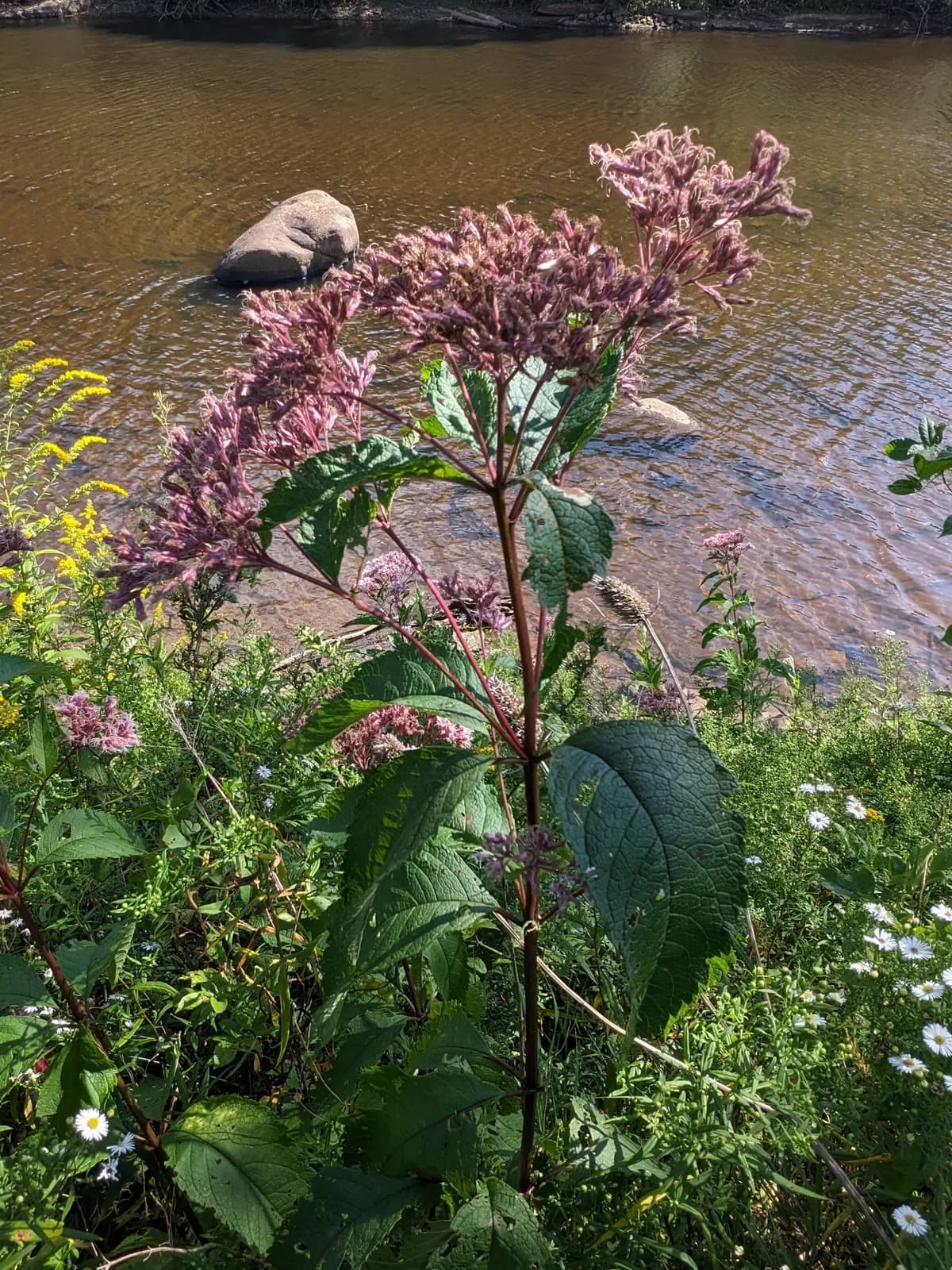
Hollow Joe-pye weed is a tall perennial forb that blooms with clusters of pink-purple flowers from July through September, growing best in full sun to part shade with medium to moist soil.
Toxicity unknown
Hollow Joe-pyeweed (Eutrochium fistulosum) is not listed by the ASPCA Animal Poison Control Center (opens in new tab) or the other sources we check, so we have no verdict for it either way. Absence from those lists is not a clearance. If your pet shows symptoms after eating any plant, call the ASPCA at (888) 426-4435.
The USDA PLANTS Database (opens in new tab) does not flag Hollow Joe-pyeweed as toxic to livestock.
Light
full sun
Water
medium
Size
60"–84" H × 24"–48" W
Bloom
Jun, Jul, Aug
Native to
AL, AR, CT, DE and 25 more states
Pollinators
bees, butterflies, moths
Deer
Resistant (per Prairie Moon Nursery)
Before you buy
Your city may pay you to plant this
Cities and water utilities offer rebates for replacing lawn with native and water-wise plants. We track 459 programs across 44 states, each with a link to the provider and the date we last checked it.
Find rebates in your areaPicture natives in your own yard
Upload a photo of your yard and Patch Vision shows a rendering of it planted with natives for your region, like Hollow Joe-pyeweed.


Browse plants for this ecoregion
Hollow joe-pyeweed is a tall native perennial that produces clusters of pinkish-purple flowers from July through September. This robust plant can reach 5 to 15 feet in height and spreads 2 to 4 feet wide, making it best suited for larger garden spaces. It thrives in full sun with average moisture and dies back completely in winter.
Growing Hollow Joe-pyeweed
Grow Hollow Joe-pyeweed in full sun and medium water. Mature plants reach 60 to 84 inches tall and spread 24 to 48 inches wide. Expect low maintenance to keep it looking intentional in a front yard.
How to care for Hollow Joe-pyeweed, by region
How to care for Hollow Joe-pyeweed where it is actually grown: year-round basics plus what to do each season, region by region, with the sources for each.
Care guidance last updated: August 2026
Arkansas Valley (includes McAlester, OK)
Year-round
Hollow Joe-Pye weed fits the Arkansas Valley's spring-fed creeks and moist bottomland pockets between the Ozarks and Ouachitas. It needs steady moisture and rich soil, so it belongs near a low spot, drainage swale, or streamside rather than a dry front bed. Mature clumps stand tall, often 5 feet or more, topped with rounded mauve-pink flower clusters late in summer.
- Choose a spot with consistently moist soil, a rain garden, low corner, or the shaded margin of a creek works
- Give it full sun to part shade and space plants 2 to 3 feet apart for airflow
- It spreads slowly by rhizome in wet ground, not an aggressive seeder if soil stays consistently moist
- Skip fertilizer, this valley's bottomland soils are usually rich enough already
Keeping the clump inside a defined bed edge along a drainage swale reads as an intentional native planting, not an overgrown wet spot.
Fall
Blooms fade into fluffy tan seed heads that carry into winter, good food for finches and other seed eaters. Early fall is also a solid time to get new plants in the ground here, the soil is still warm and fall rain helps roots settle before frost.
- Leave the seed heads up through fall for birds, no need to deadhead for tidiness
- Plant new starts in early fall while soil is warm and rainfall is more reliable than midsummer
- Check moist beds for self-seeded volunteers and thin them if they're crowding the planting
- Hold off on a hard cutback until late winter unless you want a neater look right away
Thinning any volunteer seedlings each fall keeps the bed edge crisp and clearly intentional.
Winter
The plant goes fully dormant and dies back to the crown. Arkansas Valley winters are mild enough that no protection is needed, just let the old stems stand until late winter, they give overwintering insects a place to shelter.
- Leave dried stems standing through winter to shelter overwintering native bees and other insects
- No winter mulch or protection needed for the crown in this ecoregion's typical winter lows
- Bare, leafless dormancy is normal, don't assume the plant is dead if nothing is visible
- Cut back old growth and divide crowded clumps in late winter, right before new shoots appear
Spring
New shoots emerge from the crown as soil warms, typically by mid spring in the Arkansas Valley. Hold off cutting back last year's dried stalks until you see fresh growth low on the plant, that gives overwintering insects a few extra weeks of shelter.
- Cut back old dried stems once new shoots are a few inches tall at the base
- Early to mid spring is the best time to divide crowded clumps, replant divisions immediately into moist soil
- Check for standing water versus just moist soil, this species wants damp ground but not a permanent pond
- A light mulch layer around the base helps hold spring moisture as new growth takes off
Summer
Mid to late summer is bloom time, big domed clusters of pink-purple flowers that pull in bumblebees, swallowtails, and skippers for weeks. Arkansas Valley summers run hot, so keep the soil from drying out completely, especially if the plant isn't right on a natural drainage line.
- Water deeply during dry stretches, this plant will wilt fast if the soil dries out in peak summer heat
- Expect full bloom from mid to late summer, a strong draw for bumblebees and butterflies
- Deadheading isn't required, seed heads still feed birds later, but you can trim after bloom to tidy the shape
- Tall stems can flop in summer storms, a stake or a spot near a fence line helps if wind is an issue
Staking tall stems near a fence keeps the bloom looking tended instead of leaning into a walkway or a neighbor's yard.
Sources: Flora of North America, Eutrochium fistulosum, Xerces Society, Pollinator Plants: Southeast Region, Lady Bird Johnson Wildflower Center, Eutrochium fistulosum, North Carolina Extension Gardener Plant Toolbox, Eutrochium fistulosum, Missouri Botanical Garden Plant Finder, Eutrochium fistulosum
Atlantic Coastal Pine Barrens (includes Riverhead, NY)
Year-round
Hollow Joe-Pye weed is native to the Atlantic Coastal Pine Barrens around Riverhead, in wet meadows, bog edges, and moist thickets among the pine barrens.
- It's a tall native, often 6 to 10 feet, so give it room at the back of a bed.
- Look for a naturally damp spot, since the surrounding pine barrens are sandy and dry overall.
- Bees and swallowtail butterflies feed heavily on the flower clusters in mid and late summer.
- It grows in a widening clump rather than spreading aggressively through a bed.
Fall
Bloom winds down and seed heads form around Riverhead through fall.
- Leave seed heads standing for goldfinches through fall and into winter.
- Stalks brown but don't need to come down right away.
- Good time to divide or relocate a clump before the ground cools further.
Browning stalks can look untidy in a front bed; a tidy edge nearby helps it read as intentional.
Winter
Dormant through winter around Riverhead.
- Cut stalks back once fully brown, or leave for winter bird cover and trim in early spring.
- No watering needed while dormant.
- Established plants handle Long Island winters without extra protection.
Cutting back dead stalks before spring keeps the bed presentable through winter.
Spring
New shoots emerge in spring around Riverhead.
- Cut back old stalks once new growth appears at the base.
- Divide a crowded clump now if you want to expand into another damp spot.
- Keep soil consistently moist as new growth takes off.
Clearing winter stalks in spring keeps the bed looking tended before new growth fills in.
Summer
Peak bloom around Riverhead through summer.
- Water during dry stretches, since the surrounding sandy soils drain fast and this plant needs steady moisture.
- Pollinators stay busy on the flower heads at peak bloom.
- No deadheading needed. Spent flowers become seed heads for fall birds.
Tall summer bloom reads as an intentional planting.
Sources: Go Botany - Eutrochium fistulosum, Lady Bird Johnson Wildflower Center - Eutrochium fistulosum, North Carolina Extension Gardener Plant Toolbox - Eutrochium fistulosum
Blue Ridge (includes Gettysburg, PA)
Year-round
Hollow Joe-Pye weed is native to the Blue Ridge around Gettysburg, in floodplains, wet meadows, and moist mountain hollows.
- Flora of Pennsylvania lists this as a common statewide species found in floodplains, meadows, and moist thickets.
- It grows 6 to 10 feet, so give it room toward the back of a bed.
- Bees and swallowtail butterflies feed on the flower clusters from July into fall.
- A damp low spot or streamside bed is a better fit than a typical dry front yard.
Fall
Bloom continues into fall around Gettysburg before fading.
- Leave seed heads standing for goldfinches through fall and winter.
- Stalks brown out but can stay in place.
- Good time to divide or move a clump before it turns cold.
Browning stalks can look untidy in a front bed; a clean edge nearby helps it read as intentional.
Winter
Dormant through winter around Gettysburg.
- Cut stalks back once fully brown, or leave for winter bird cover and trim in early spring.
- No watering needed while dormant.
- Established plants handle regional winters without extra protection.
Cutting back dead stalks before spring keeps the bed presentable through winter.
Spring
New shoots come up in spring around Gettysburg.
- Cut back old stalks once new growth appears at the base.
- Divide a crowded clump now if you want to expand into another damp spot.
- Keep soil consistently moist through spring.
Clearing winter stalks in spring keeps the bed looking tended before new growth fills in.
Summer
Peak bloom around Gettysburg from July into fall.
- Water during dry spells to keep soil damp.
- Expect heavy pollinator traffic on the flower clusters at peak bloom.
- No deadheading needed. Spent flowers feed birds later.
Tall summer bloom reads as an intentional planting.
Sources: PA Flora (paenflowered.org) - Eutrochium fistulosum, Lady Bird Johnson Wildflower Center - Eutrochium fistulosum, North Carolina Extension Gardener Plant Toolbox - Eutrochium fistulosum
Boston Mountains (includes Fayetteville)
Year-round
Hollow Joe-Pye weed is a tall late-summer native that wants steady moisture, so put it in the low, damp spots of a Boston Mountains yard.
- Plant it where the ground stays damp: near a downspout, a low swale, a seep, or the bottom of a shady slope, since it wilts in dry cherty ground.
- It handles the acidic rocky Ozark soil here, but mix in leaf compost so the root zone holds water through humid July and August.
- Give it full sun to part shade; more sun means it needs more water to stay upright.
- It grows 5 to 7 feet tall, so set it at the back of a bed or along a fence where its height reads as planned.
Fall
In fall you can leave the seed heads standing for birds or tidy them up if the yard needs to look neat.
- Leave the dried flower heads standing into fall so songbirds can eat the seeds and the stems shelter insects.
- Fall is a good time to divide or move clumps while the soil is still warm and moisture returns after summer.
- Collect a few seed heads now if you want to spread this plant to other damp corners of the yard.
If a front-yard bed needs to read as tended, cut the spent stalks back in fall instead of leaving them up; a clean fall cutback signals intent and heads off a violation letter.
Winter
This plant is fully hardy through Boston Mountains winters and needs almost nothing until you cut it back.
- It is hardy well below the coldest Boston Mountains winters, so the roots need no special protection at zones 6b to 7a.
- Leave the tan standing stems through winter for structure and overwintering insects, then cut them to the ground in late winter before new growth.
- No watering is needed while the plant is dormant.
A row of standing tan stems can look messy from the curb, so if your HOA-conscious neighbors expect a tidy winter yard, do the cutback in late winter to keep the front bed looking intentional.
Spring
Spring is for cutting last year's stalks down and letting new shoots come up in the damp soil.
- Cut the old dead stalks to the ground once new green shoots appear at the base in early spring.
- Divide crowded clumps now with a spade if you want more plants; spring division roots well before summer heat.
- Top-dress the root zone with leaf compost to hold moisture through the coming dry spells.
- If a late Ozark frost is coming after shoots emerge, they usually shrug it off, so no cover is needed.
Doing the dead-stalk cutback in early spring keeps the bed reading as intentional and tended, which is the kind of tidy edge that avoids a violation letter.
Summer
Summer is all about water, because humid Ozark heat and quick-draining rocky soil can dry this plant out fast.
- Water deeply during dry stretches; if the leaves droop by afternoon, the soil is too dry and it needs a soak.
- Keep a 2 to 3 inch mulch ring over the roots to slow evaporation on hot, sunny days.
- Let the pink-to-purple flower heads open in mid to late summer; they pull in bees and butterflies.
- Stems in full sun and rich soil can flop, so plant it against a fence or thin the clump in late spring if height gets unruly.
Sources: Lady Bird Johnson Wildflower Center, Eutrochium fistulosum (moist to wet, acidic soil, sun, native range includes Arkansas), BONAP North American Plant Atlas, Eutrochium county map (native/present in northwest and north-central Arkansas), ASPCA Animal Poison Control Center plant database (Joe-Pye weed not on the ASPCA toxic plant list), North Carolina Extension Gardener Plant Toolbox, Eutrochium fistulosum (songbirds eat the seeds, division in fall), USDA PLANTS Database, Eutrochium fistulosum profile (native distribution and hardiness)
Central Appalachians (includes Johnstown, PA)
Year-round
Hollow Joe-Pye weed is native to the Central Appalachians around Johnstown, in wet meadows and moist mountain valleys.
- Flora of Pennsylvania lists it as common statewide, including mountain floodplains and moist thickets.
- It reaches 6 to 10 feet, so give it room at the back of a bed.
- Bees and swallowtail butterflies work the flower clusters from July into fall.
- A damp valley-bottom or streamside spot suits it better than a dry hillside bed.
Fall
Bloom continues into fall around Johnstown before fading.
- Leave seed heads standing for goldfinches through fall and winter.
- Stalks brown out but don't need to come down right away.
- Good time to divide or move a clump before it turns cold.
Browning stalks can look untidy in a front bed; a clean edge nearby helps it read as intentional.
Winter
Dormant through winter around Johnstown.
- Cut stalks back once fully brown, or leave for winter bird cover and trim in early spring.
- No watering needed while dormant.
- Established plants handle mountain winters without extra protection.
Cutting back dead stalks before spring keeps the bed presentable through winter.
Spring
New shoots emerge in spring around Johnstown.
- Cut back old stalks once new growth appears at the base.
- Divide a crowded clump now if you want to expand into another damp spot.
- Keep soil moist through spring growth.
Clearing winter stalks in spring keeps the bed looking tended before new growth fills in.
Summer
Peak bloom around Johnstown from July into fall.
- Water during dry stretches to keep the soil consistently damp.
- Pollinators stay busy on the flower heads at peak bloom.
- No deadheading needed. Spent flowers become seed heads for birds.
Tall summer bloom reads as an intentional planting.
Sources: PA Flora (paenflowered.org) - Eutrochium fistulosum, Lady Bird Johnson Wildflower Center - Eutrochium fistulosum, North Carolina Extension Gardener Plant Toolbox - Eutrochium fistulosum
Central Corn Belt Plains (includes Chicago)
Year-round
Hollow Joe-Pye weed is native to the Central Corn Belt Plains around Chicago, found in wet prairies, marshes, and floodplains.
- This is one of the tallest native perennials for a Chicago-area yard, often reaching 6 to 10 feet.
- It needs consistently moist to wet soil, so a rain garden or low, damp corner suits it better than a typical dry lawn bed.
- Butterflies and bees crowd the pink flower clusters from mid to late summer.
- Give it space at the back of a planting since it gets tall and can flop without support in rich soil.
Fall
Bloom tapers and seed heads form around Chicago through fall.
- Leave seed heads up for goldfinches and other birds through fall and into winter.
- Stalks will brown but don't need to be cut back immediately.
- A good time to divide or transplant before the ground freezes.
Browning stalks left standing can draw complaints in a visible front bed; a trimmed edge nearby helps it read as intentional.
Winter
Plant is fully dormant through Chicago-area winters.
- Cut old stalks down once fully brown, or leave standing for winter bird cover and cut back in early spring.
- No supplemental watering needed while dormant.
- Established plants handle Chicago winters without extra protection.
Dead stalks left up all winter can look neglected; cutting back in late winter keeps the bed tidy.
Spring
New shoots emerge from the crown in spring around Chicago.
- Cut back last year's dead stalks once new growth is visible at the base, typically mid to late spring.
- Divide crowded clumps now if you want to expand into another damp spot.
- Keep an eye on spring rain. This plant tolerates standing water better than most yard perennials.
Clearing winter stalks in spring keeps the bed looking maintained before the plant leafs out.
Summer
Peak bloom around Chicago runs through summer.
- Water during dry stretches. It will wilt noticeably if the soil dries out for long.
- Expect heavy traffic from swallowtails, bumblebees, and other pollinators on the flower heads.
- No deadheading required. Spent blooms turn into seed heads birds use later in the season.
Full bloom is tall and showy, which reads as an intentional garden feature rather than overgrowth.
Sources: Illinois Wildflowers - Wetland Wildflowers of Illinois, Lady Bird Johnson Wildflower Center - Eutrochium fistulosum, North Carolina Extension Gardener Plant Toolbox - Eutrochium fistulosum
Cross Timbers (includes Fort Worth, TX)
Year-round
Hollow Joe Pye Weed is a tall, moisture-loving perennial that grows 4 to 7 feet high and blooms with big, dusty pink flower clusters late in the summer. It is not on the ASPCA toxic plant list for dogs or cats, and it is one of the best butterfly nectar plants you can add to a North Texas yard.
- Give it full sun to light afternoon shade and soil that stays consistently moist, a low spot or an area near a downspout works well.
- Plan for a mature size of 4 to 7 feet tall and 2 to 4 feet wide, so give it 3 to 4 feet of clearance from walkways and the front of the bed.
- Not on the ASPCA toxic plant list for dogs or cats.
- Deadhead the spent flower clusters after bloom fades to keep the plant looking tended rather than leggy.
Fall
Bloom color fades through October, and the seed heads that follow are worth leaving up for a while before cutting the plant back for winter.
- Let the spent seed heads stand into fall, seed-eating birds like sparrows will visit them.
- Expect bloom color to fade by October as the plant moves into seed set.
- If dividing or relocating a clump, do it in early fall once daytime highs drop below 90 degrees rather than in the July or August heat.
- Taper watering as the plant goes dormant, but do not let it dry out completely before the first freeze.
- Cut stems back to the ground after the first hard freeze, typically mid November, or leave them standing for winter interest and cut back in late February instead.
Standing seed heads can start to look weedy near the front of a bed by late fall. Cutting back to the ground after the first freeze, or confining standing stems to a less visible side yard, keeps the front view tidy through the transition.
Winter
Hollow Joe Pye Weed dies back to the ground and goes fully dormant over winter. It is winter hardy through North Texas's USDA zone 8a to 8b range, so normal cold snaps need no special protection.
- Cut dormant stems back to 2 to 4 inches above the ground by late February if you did not already cut back in fall.
- Spread 2 to 3 inches of mulch over the crown ahead of any hard freeze or a severe Arctic outbreak.
- Skip supplemental watering while the plant is dormant, normal North Texas winter rainfall is enough.
- Leave the crown undisturbed, new shoots emerge from it in spring.
- No covering is needed for routine winter cold, this species is hardy through zone 8a to 8b.
Cutting the dead stalks down to a few inches by late winter clears the bed before spring green-up, so bare brown stems are not the most visible thing in the front yard.
Spring
Spring, after the mid March last frost, is the best window to plant Hollow Joe Pye Weed and get its roots established before North Texas summer heat arrives.
- Plant out after the mid March last frost into soil amended with compost so it holds moisture well.
- Water deeply 2 to 3 times a week through spring while roots are establishing, tapering only if spring rain is steady.
- Spread 2 to 3 inches of mulch around the base to hold moisture and keep weeds down.
- Divide overcrowded 3 to 4 year old clumps in early spring if you want to spread the planting or share starts.
- If the spot is windy or exposed, plan a stake or a spot near a fence line now, stems can reach 5 feet or more by summer.
Spring growth stays low and leafy, so it reads as an ordinary green border plant before the tall bloom stalks show up in summer. Plant it toward the back of the bed now so the eventual height does not surprise anyone later.
Summer
Summer is bloom season, dusty pink flower clusters open from July through September and draw a steady stream of butterflies, but the plant needs consistent water to get through 100 degree afternoons.
- Water deeply 2 to 3 times a week through July and August, this is the season new and young plantings are most likely to be lost to drought stress.
- Watch for eastern tiger swallowtail and red admiral butterflies nectaring on the mauve pink flower clusters from July into September.
- Keep the mulch layer topped up to 2 to 3 inches so the root zone stays cooler and holds moisture longer.
- Deadhead finished flower heads through the bloom period to keep the display tidy and limit self seeding.
- Expect a mature height of 4 to 7 feet in bloom, taller plants may lean after a storm and benefit from a simple stake.
In full bloom this plant is showy at 4 to 7 feet with large pink flower domes. Keep it at the back of a bed rather than near the front walk so it reads as an intentional tall backdrop, and stay on top of deadheading so the front-facing view stays neat.
Sources: Missouri Botanical Garden Plant Finder: Eutrochium fistulosum, ASPCA Toxic and Non-Toxic Plant List, Dogs, Lady Bird Johnson Wildflower Center: Eutrochium fistulosum
Eastern Corn Belt Plains (includes Columbus)
Year-round
Hollow Joe-Pye weed is native to the Eastern Corn Belt Plains around Columbus, common in wet meadows, floodplains, and roadside ditches.
- Ohio State University Extension lists it as a facultative wetland species, meaning it usually grows in wet to moist ground.
- It can reach 8 to 12 feet, so give it plenty of room at the back of a bed.
- Rose-pink flower clusters bloom July through September and draw heavy pollinator traffic.
- A damp low spot or rain garden is a better fit than a typical dry front lawn bed.
Fall
Bloom winds down and seed heads form around Columbus through fall.
- Leave seed heads standing for goldfinches and other birds.
- Stalks brown out but don't need to be removed right away.
- Fall is a good window to divide or move a clump before the ground cools.
Browning stalks can look untidy in a front bed; a clean edge nearby helps signal it's intentional.
Winter
Fully dormant through winter around Columbus.
- Cut stalks back once fully brown, or leave up for winter bird cover and trim in early spring.
- No watering needed while dormant.
- Established plants handle Ohio winters without extra protection.
Cutting back dead growth before spring keeps the bed presentable through the dormant season.
Spring
New shoots come up from the crown in spring around Columbus.
- Cut back last year's stalks once new growth appears at the base.
- Divide an established clump now if you want more plants for another damp spot.
- Keep soil consistently moist as it puts on spring growth.
Clearing winter stalks in spring keeps the bed looking tended before the plant fills back in.
Summer
Peak bloom around Columbus runs July through September.
- Water during dry spells. It wilts fast without consistent moisture.
- Butterflies and bees will be on the flower heads most of the day at peak bloom.
- No deadheading needed. Let spent flowers turn to seed for fall and winter birds.
Tall summer bloom reads as an intentional garden feature, not overgrowth.
Sources: Cleveland Metroparks - Landscaping for Biodiversity with Ohio Native Plants, Lady Bird Johnson Wildflower Center - Eutrochium fistulosum, North Carolina Extension Gardener Plant Toolbox - Eutrochium fistulosum
Eastern Great Lakes Lowlands (includes Rochester, NY)
Year-round
Hollow Joe-Pye weed is native to the Eastern Great Lakes and Hudson Lowlands around Rochester, in wet meadows, marshes, and floodplains near the lake.
- It's a tall native, often 6 to 10 feet, so plant it where it has room at the back of a bed.
- The naturally damp, slow-draining soils near the Great Lakes shoreline suit this plant well.
- Bees and swallowtail butterflies feed heavily on the flower clusters through mid and late summer.
- It grows in a slowly widening clump rather than spreading aggressively.
Fall
Bloom winds down and seed heads form around Rochester through fall.
- Leave seed heads standing for goldfinches through fall.
- Stalks brown but don't need immediate cutting.
- Fall is a good time to divide or relocate a clump.
Browning stalks in a visible bed can draw complaints; a trimmed edge nearby helps it read as intentional.
Winter
Dormant through winter around Rochester.
- Cut stalks back once fully brown, or leave for winter bird cover and trim in early spring.
- No watering needed while dormant.
- Established plants tolerate lake-effect winters without extra protection.
Cutting back dead stalks before spring keeps the bed tidy through the off season.
Spring
New shoots appear in spring around Rochester.
- Cut back last year's stalks once new growth shows at the base.
- Divide a crowded clump now if you want to start a planting elsewhere.
- Lake-effect spring moisture generally helps this plant along.
Clearing winter stalks in spring keeps the bed looking tended before new growth fills in.
Summer
Peak bloom around Rochester through summer.
- Water during dry spells since it wilts quickly without steady moisture.
- Bees and butterflies stay busy on the flower heads at peak bloom.
- No deadheading needed. Spent flowers become seed heads for fall birds.
Tall summer bloom reads as an intentional planting rather than overgrowth.
Sources: Go Botany - Eutrochium fistulosum, Michigan Natural Features Inventory - Eutrochium fistulosum, North Carolina Extension Gardener Plant Toolbox - Eutrochium fistulosum, Lady Bird Johnson Wildflower Center - Eutrochium fistulosum
Erie Drift Plain (includes Buffalo, NY)
Year-round
Hollow Joe-Pye weed is native to the Erie Drift Plain around Buffalo, in wet meadows, floodplains, and marshes near the lake.
- It grows tall, 6 to 10 feet, so plant it where it has room to fill out at the back of a bed.
- The naturally damp, slow-draining soils of the Erie Drift Plain suit this plant well.
- It draws heavy butterfly and bee activity through mid and late summer.
- It stays in a slowly widening clump rather than running aggressively through a bed.
Fall
Bloom winds down and seed heads form around Buffalo through fall.
- Leave seed heads standing for goldfinches through fall.
- Stalks brown but don't need immediate cutting.
- Fall is a good time to divide or relocate a clump.
Browning stalks in a visible bed can draw complaints; a trimmed edge nearby helps it read as intentional.
Winter
Dormant through winter around Buffalo.
- Cut stalks back once fully brown, or leave for winter bird cover and trim in early spring.
- No watering needed while dormant.
- Established plants tolerate lake-effect winters without extra protection.
Cutting back dead stalks before spring keeps the bed tidy through the off season.
Spring
New shoots appear in spring around Buffalo.
- Cut back last year's stalks once new growth shows at the base.
- Divide a crowded clump now if you want to start a new planting elsewhere.
- Lake-effect spring moisture generally helps this plant along.
Clearing winter stalks in spring keeps the bed looking tended before new growth fills in.
Summer
Peak bloom around Buffalo through summer.
- Water during dry spells since it wilts quickly without steady moisture.
- Bees and butterflies stay busy on the flower heads at peak bloom.
- No deadheading required. Spent flowers become seed heads for fall birds.
Tall summer bloom reads as an intentional planting rather than overgrowth.
Sources: Go Botany - Eutrochium fistulosum, Michigan Natural Features Inventory - Eutrochium fistulosum, North Carolina Extension Gardener Plant Toolbox - Eutrochium fistulosum, Lady Bird Johnson Wildflower Center - Eutrochium fistulosum
Huron/Erie Lake Plains (includes Toledo)
Year-round
Hollow Joe-Pye weed is native to the Huron/Erie Lake Plains around Toledo, in wet meadows, marshes, and floodplains near the lake.
- It grows 8 to 12 feet tall in good conditions, so plant it where it has room to spread up and out.
- The lake plains region has plenty of naturally damp, poorly drained soil, which suits this plant well.
- Pollinators, including swallowtails and bumblebees, use the flower clusters heavily in mid and late summer.
- It's a Facultative Wetland species in Ohio, meaning it's usually found in wet to moist ground.
Fall
Bloom fades and seed heads form around Toledo through fall.
- Leave seed heads up for goldfinches and other birds through fall.
- Stalks brown but don't need immediate cutting.
- Good time to divide or relocate a clump before the ground freezes.
Browning stalks in a visible bed can draw complaints; a trimmed edge nearby helps it read as intentional.
Winter
Dormant through the winter around Toledo.
- Cut stalks back once fully brown, or leave for winter bird cover and cut in early spring instead.
- No watering needed during dormancy.
- Established plants tolerate lake-effect winters without extra protection.
Cutting back dead stalks before spring keeps the bed tidy through the off season.
Spring
New growth begins in spring around Toledo.
- Cut back old stalks once new shoots show at the base.
- Divide a crowded clump now if you want to start a new planting in another damp area.
- Lake-effect spring moisture is generally a plus for this plant.
Clearing winter stalks in spring keeps the bed looking tended before new growth comes in.
Summer
Peak bloom around Toledo through summer.
- Water during dry stretches since it wilts quickly without consistent moisture.
- Expect heavy pollinator activity on the flower heads at peak bloom.
- Skip deadheading. Spent flowers become seed heads birds use later.
Tall summer bloom reads as an intentional planting rather than overgrowth.
Sources: Cleveland Metroparks - Landscaping for Biodiversity with Ohio Native Plants, Michigan Natural Features Inventory - Eutrochium fistulosum, North Carolina Extension Gardener Plant Toolbox - Eutrochium fistulosum, Lady Bird Johnson Wildflower Center - Eutrochium fistulosum
Interior Plateau (includes Cincinnati)
Year-round
Hollow Joe-Pye weed is native to the Interior Plateau around Cincinnati, in floodplains and wet meadows along the Ohio River valley.
- It's a Facultative Wetland species in Ohio, usually growing in wet to moist ground 8 to 12 feet tall.
- River-adjacent yards with naturally damp soil suit this plant well.
- Bees and butterflies feed heavily on the flower clusters July through September.
- Give it room at the back of a bed since it can flop without support in rich soil.
Fall
Bloom winds down and seed heads form around Cincinnati through fall.
- Leave seed heads standing for goldfinches and other birds.
- Stalks brown out but don't need to come down right away.
- Fall is a good time to divide or move a clump.
Browning stalks can look untidy in a front bed; a clean edge nearby helps it read as intentional.
Winter
Dormant through winter around Cincinnati.
- Cut stalks back once fully brown, or leave for winter bird cover and trim in early spring.
- No watering needed while dormant.
- Established plants handle Ohio River valley winters without extra protection.
Cutting back dead growth before spring keeps the bed presentable through the dormant season.
Spring
New growth begins in spring around Cincinnati.
- Cut back old stalks once new shoots appear at the base.
- Divide a crowded clump now to plant in another damp spot.
- Keep soil consistently moist as it puts on spring growth.
Clearing winter stalks in spring keeps the bed looking tended before new growth fills in.
Summer
Peak bloom around Cincinnati July through September.
- Water during dry spells. It wilts fast without steady moisture.
- Expect heavy pollinator traffic on the flower heads at peak bloom.
- No deadheading needed. Spent flowers feed birds later.
Tall summer bloom reads as intentional, not overgrown.
Sources: Cleveland Metroparks - Landscaping for Biodiversity with Ohio Native Plants, Lady Bird Johnson Wildflower Center - Eutrochium fistulosum, North Carolina Extension Gardener Plant Toolbox - Eutrochium fistulosum
Interior River Valleys and Hills (includes Peoria, IL)
Year-round
Hollow Joe-Pye weed is native to the Interior River Valleys and Hills around Peoria, in floodplains and wet meadows along the rivers.
- It grows tall, often 6 to 10 feet, so plant it where it won't shade out shorter neighbors.
- River valley bottomland with damp soil is exactly the kind of spot this plant wants.
- Bees and butterflies work the flower clusters heavily in mid and late summer.
- It spreads slowly by seed and clump growth, not aggressively, so it stays manageable in a bed.
Fall
Bloom fades and seed heads form around Peoria through fall.
- Leave seed heads standing for goldfinches through fall and winter.
- Stalks brown but can stay in place rather than being cut immediately.
- Fall is a fine time to divide or relocate a clump.
Browning stalks in a front bed can look messy; a neat border nearby helps it read as intentional.
Winter
Dormant through winter around Peoria.
- Cut stalks back once fully brown, or leave for winter bird cover and clean up in early spring.
- No watering needed while dormant.
- Established plants tolerate Illinois winters without extra protection.
Cutting back dead stalks before spring keeps the bed looking maintained through the off season.
Spring
New growth starts in spring around Peoria.
- Cut back old stalks once new shoots appear at the base.
- Divide an established clump now if you want to plant it in another damp spot.
- Spring flooding in river-adjacent yards won't bother this plant.
Removing winter stalks in spring keeps the bed looking tended before new growth fills in.
Summer
Peak bloom around Peoria through summer.
- Keep soil moist during dry summer stretches. It wilts quickly if it dries out.
- Expect steady butterfly and bee activity on the flat pink flower heads.
- No need to deadhead. Spent flowers become seed heads for fall and winter birds.
Peak bloom is a strong visual anchor that reads as a designed planting.
Sources: Illinois Wildflowers - Wetland Wildflowers of Illinois, Lady Bird Johnson Wildflower Center - Eutrochium fistulosum, North Carolina Extension Gardener Plant Toolbox - Eutrochium fistulosum
Middle Atlantic Coastal Plain (includes Philadelphia)
Year-round
Hollow Joe-Pye weed is native to the Middle Atlantic Coastal Plain around Philadelphia, in floodplains, wet meadows, and marsh edges.
- This is a large native, 6 to 10 feet tall, so plant it toward the back of a bed or along a fence.
- It wants steady moisture, so a rain garden or naturally damp spot suits it better than a dry front lawn bed.
- Bees and swallowtail butterflies feed heavily on the pink flower clusters in mid and late summer.
- It grows in expanding clumps rather than spreading aggressively.
Fall
Bloom tapers and seed heads form around Philadelphia through fall.
- Leave seed heads up for goldfinches through fall and winter.
- Stalks brown but don't need to come down right away.
- Good window to divide or relocate a clump before it turns cold.
Browning stalks can look untidy in a front bed; a tidy edge nearby helps it read as intentional.
Winter
Dormant through winter around Philadelphia.
- Cut stalks back once fully brown, or leave for winter bird cover and trim in early spring.
- No watering needed while dormant.
- Established plants handle regional winters without extra care.
Cutting back dead stalks before spring keeps the bed presentable through winter.
Spring
New shoots emerge from the crown in spring around Philadelphia.
- Cut back last year's stalks once new growth is visible at the base.
- Divide crowded clumps now to expand into another damp spot.
- Keep soil consistently moist during spring growth.
Clearing winter debris in spring keeps the bed looking tended before it fills in.
Summer
Peak bloom around Philadelphia through summer.
- Water during dry stretches, it wilts quickly if soil dries out.
- Expect heavy pollinator traffic on the flower heads at peak bloom.
- No deadheading needed. Spent flowers turn to seed for fall birds.
Full summer bloom reads as a designed planting, not overgrowth.
Sources: Go Botany - Eutrochium fistulosum, Lady Bird Johnson Wildflower Center - Eutrochium fistulosum, North Carolina Extension Gardener Plant Toolbox - Eutrochium fistulosum
Mississippi Alluvial Plain (includes Memphis, TN)
Year-round
Hollow Joe-Pye weed is native to the loess bluffs and moist woods around Memphis and works well in a low, damp yard spot.
- This species is native to Tennessee, Mississippi, and Arkansas, per the USDA PLANTS Database, and grows naturally in moist woods, floodplains, and stream banks throughout the Mississippi Valley Loess Plains.
- It grows 4 to 7 feet tall with domed pink to purple flower clusters blooming from summer into fall.
- It needs full sun to part shade and consistently damp to wet, rich soil. A low-lying spot or the edge of a drainage swale suits it well in the Memphis area.
- Not on the ASPCA toxic plant list for dogs or cats.
- No serious pests or diseases are typical, though the straight species can get powdery mildew in the humid Mid-South summer, per NC State Extension.
Fall
Fall bloom carries into the season before the plant fades, then it is a choice between deadheading or leaving seed heads for birds.
- Blooms taper off through fall as days shorten and the first frost approaches in the Mid-South.
- Deadhead spent flower heads before they dry and drop seed if you want to limit self-seeding.
- Leaving seed heads standing feeds goldfinches and other birds into the colder months. This plant is not a monarch host plant but is a good late-season nectar source for migrating monarchs, per the Xerces Society.
Deadheading before frost keeps a front bed looking tended as the rest of the yard slows down for the year.
Winter
Winter dormancy in the Mid-South means cutting stalks back and leaving the hardy crown to rest until spring.
- The plant dies back completely after frost. Cut stalks down to about 4 to 8 inches, per NC State Extension, or leave them standing for winter bird interest and cut back in early spring instead.
- This species is hardy through USDA zones 4 to 8, so Memphis-area winters are well within its range with no extra protection needed.
- Do not disturb the root crown in winter. Save division for spring.
Cutting back dead stalks in late fall or early winter avoids a season of tall brown stems standing in a visible bed.
Spring
Spring shoots emerge as soil warms, a good time to clean up old stalks and divide crowded clumps.
- New shoots come up from the crown once soil warms in spring across the Mid-South.
- Clear any leftover dead stalks from last year if they were not cut back already.
- This is the best window to divide an overcrowded clump before the plant puts energy into its tall summer growth.
Summer
Summer humidity in the Mid-South suits this plant well, bringing on tall stems and big bloom domes.
- Flowers open in summer and continue into early fall, forming large rounded clusters atop tall, hollow stems.
- Pinch back the top third of stems earlier in the season if a shorter, bushier plant is preferred over the full height.
- Keep the soil consistently moist through the hot Mid-South summer. Dry soil leads to scorched leaf edges.
In bloom this reads as an intentional tall pollinator planting rather than an overgrown patch, which helps in a visible front bed.
Sources: USDA PLANTS Database - Eutrochium fistulosum, Tennessee Smart Yards - Eutrochium fistulosum, NC State Extension Gardener Plant Toolbox - Eutrochium fistulosum, ASPCA Toxic and Non-Toxic Plant List - Dogs, Xerces Society - Monarch Nectar Plants, Southeast, Garden Gate - Deadheading Perennials guide (community tip)
Mississippi Valley Loess Plains (includes Memphis, TN)
Year-round
Hollow Joe-Pye weed is a native of the Mississippi Alluvial Plain's bottomland floodplains and thrives in a wet, low-lying yard spot near Memphis.
- This species is native to Tennessee, Arkansas, Mississippi, and Louisiana, per the USDA PLANTS Database, and its documented habitat, alluvial woods and floodplains, is the defining habitat of the Mississippi Alluvial Plain itself.
- It grows 4 to 7 feet tall with large domed pink to purple flower clusters blooming from summer into fall.
- It wants full sun to part shade and damp to wet, rich soil, making it a strong fit for a low spot, drainage area, or rain garden near the river bottoms around Memphis.
- Not on the ASPCA toxic plant list for dogs or cats.
- No serious pests or diseases are typical, though the straight species can get powdery mildew in the humid Delta summer, per NC State Extension.
Fall
Fall bloom continues before the plant winds down, then it is a choice between deadheading or leaving seed heads for birds.
- Blooms taper off through fall as days shorten and the first frost approaches the Mississippi Alluvial Plain.
- Deadhead spent flower heads before they dry and drop seed if you want to limit self-seeding in a low, damp bed.
- Leaving seed heads standing feeds goldfinches and other birds into the colder months. This plant is not a monarch host plant but is a good late-season nectar source, per the Xerces Society.
Deadheading before frost keeps a low, visible bed looking tended as the season winds down.
Winter
Winter dormancy on the Alluvial Plain means cutting stalks back and letting the hardy crown rest in its naturally moist ground until spring.
- The plant dies back completely after frost. Cut stalks down to about 4 to 8 inches, per NC State Extension, or leave standing for winter bird interest and cut back in early spring.
- This species is hardy through USDA zones 4 to 8, so Memphis-area winters are comfortably within its range with no extra protection needed.
- Leave the root crown undisturbed through winter. Division is better saved for spring.
Cutting back dead stalks before winter keeps a visible bed looking maintained rather than leaving tall brown stems standing all season.
Spring
Spring shoots come up as the Delta soil warms, a good time to clear old growth and divide crowded clumps.
- New shoots emerge from the crown as soil warms in spring across the Mississippi Alluvial Plain.
- Clear away any leftover dead stalks from last year if they were not already cut back.
- Divide an overcrowded clump now, before the plant channels energy into its tall summer growth.
Summer
Summer humidity in the Delta is exactly the moisture this plant wants, and it rewards you with tall stems and big bloom domes.
- Flowers open in summer and continue into early fall, forming large rounded clusters atop tall, hollow stems.
- Pinch back the top third of stems earlier in the season for a shorter, bushier plant if the full height does not fit the bed.
- Keep soil consistently moist through the hot Delta summer. Standing in a naturally damp low spot helps it thrive without extra watering.
In bloom this reads as an intentional tall pollinator planting rather than an overgrown patch, which helps it fit a visible bed.
Sources: USDA PLANTS Database - Eutrochium fistulosum, Tennessee Smart Yards - Eutrochium fistulosum, NC State Extension Gardener Plant Toolbox - Eutrochium fistulosum, ASPCA Toxic and Non-Toxic Plant List - Dogs, Xerces Society - Monarch Nectar Plants, Southeast, Garden Gate - Deadheading Perennials guide (community tip)
North Central Appalachians (includes Williamsport, PA)
Year-round
Hollow Joe-Pye weed is a tall native perennial well suited to the moist meadows and floodplain edges around Williamsport, Pennsylvania, where it is part of the region's plant community.
- This plant is native to Pennsylvania, including the north-central part of the state around Williamsport, where it naturally grows in wet meadows, floodplains, and roadside ditches.
- It is a big plant, typically 5 to 7 feet tall and sometimes taller in a good wet spot, so give it room at the back of a bed rather than the front.
- It wants consistently moist to wet soil in full sun, the kind of ground that stays damp along a low spot in the yard or near a downspout.
- The flat clusters of pink to purple flowers open in mid to late summer and keep going into early fall, drawing a steady stream of visiting butterflies and other insects.
Fall
Flowering winds down through fall around Williamsport, and the plant shifts from feeding butterflies to feeding birds.
- Blooming tapers off through September and into October as nights cool, with the flat flower clusters fading into fluffy tan seed heads.
- Leave those seed heads standing instead of cutting the plant down now, they hold up fine in fall weather and give songbirds something to eat.
- Fall is also a fine time to divide an overcrowded clump, the same as spring, if you want to spread it to another damp corner of the yard.
- Once flowering ends the stems mostly hold themselves up, so there is little else to do before the plant goes fully dormant.
Tall dry seed heads left standing through fall can read as untidy from the street, tucking a lower planting in front softens that look while still leaving the seed heads for birds.
Winter
Hollow Joe-Pye weed goes fully dormant for winter around Williamsport and comes back from the same root clump each spring.
- All the above-ground growth dies back after the first hard frost, this is a dormant perennial and not an evergreen, so a bare stem in January is normal.
- Cut the dead stems down to the ground in late winter, shortly before new growth starts, rather than cutting back in fall.
- The hollow stems left standing over winter give shelter to overwintering insects, which is one more reason to wait until late winter to cut back.
- A light layer of mulch over the crown is optional in this zone 6b climate, the plant is cold-hardy enough not to need it.
Leaving the dry stalks up all winter and cutting them back in late winter, right before spring green-up, keeps a front-facing bed tidy again just as the growing season restarts.
Spring
In the Williamsport area, hollow Joe-Pye weed is slow to show itself in spring, then grows fast once the ground warms.
- New shoots usually do not break ground until mid to late April in this zone 6b climate, once nights reliably stay above freezing, so an empty-looking spot is not necessarily a plant that died over winter.
- Once shoots are a few inches tall, spring is a good time to divide a clump that has outgrown its space or move a start to a new spot.
- Keep the soil damp as spring rain slows down, this is a wet-meadow plant and it wilts fast if the bed dries out.
- A spring layer of compost around the base is enough, it does not need regular fertilizer to grow well in ordinary garden soil.
Summer
Summer is peak season for hollow Joe-Pye weed around Williamsport, with the plant at full height and in full bloom.
- Flat clusters of pink to purple flowers open through midsummer and keep going into early fall, staying busy with visiting butterflies most of the day.
- Water during dry stretches, especially if the bed is not naturally low and damp, since dry soil scorches the leaf edges fast.
- In a shadier spot the tall stems can flop, so a stake or a hoop of garden wire early in the season keeps them upright without much fuss.
- No deadheading is needed to keep it flowering, the plant will keep putting out new clusters on its own through the summer.
Staking floppy stems on a shadier planting keeps the bed looking tidy from the street through the height of summer.
Sources: Lady Bird Johnson Wildflower Center, Eutrochium fistulosum, Pennsylvania Flora Project, Eutrochium fistulosum, NC State Extension Gardener Plant Toolbox, Eutrochium fistulosum, Frost Date, Williamsport, PA (community tip)
Northeastern Coastal Zone (includes New York City)
Year-round
Joe-Pye weed is a cold-hardy, tall native for the New York City area, best in a low spot or a bed you keep consistently moist.
- Plant in full sun to part sun in moist soil. It naturally grows in bottomlands, marshes, and ditches and is native across New York (Lady Bird Johnson Wildflower Center).
- It grows 4 to 7 feet tall with hollow, purplish stems that small solitary bees use as nesting sites.
- Adult butterflies, including monarchs on their fall migration, nectar heavily on the flowers. It is not a larval host plant. Only milkweed serves that role for monarch caterpillars.
- Joe-Pye weed is listed by the ASPCA as non-toxic to dogs and cats.
Fall
Dusty pink-purple flower clusters open and pull in migrating monarchs and other late-season butterflies.
- Blooms attract nectaring adult butterflies, including migrating monarchs, through late summer and fall.
- Leave the seed heads standing through fall. They add structure and the hollow stems shelter small bees over winter.
- A light mulch helps first-year plants ahead of their first cold winter.
The tall flower clusters read as an intentional statement plant in a back corner or a rain garden, not an overgrown weed.
Winter
Fully dormant under cold and snow. Established plants are very cold hardy.
- Established plants are reliably winter hardy in the New York City area and need no protection.
- You can leave the dead stalks for winter interest and to shelter overwintering bees in the hollow stems, then trim in spring.
- Do not water dormant plants.
If standing winter stalks read as untidy in your neighborhood, plan one clean cutback in late winter instead of leaving them into spring.
Spring
New growth comes up in spring. Keep the soil moist as it establishes.
- Cut last year's stalks to the ground if you left them standing (Penn State Extension).
- Keep the soil consistently moist through spring growth, especially for first-year plants.
- Decide by late spring whether to pinch it back for a shorter, sturdier plant.
An early-spring cutback clears the old stems so a front bed looks intentional as the season starts.
Summer
Tall growth through the summer. One optional early cutback keeps it shorter and less likely to flop.
- In late May or early June, cut the plant back to 12 to 18 inches for a shorter, sturdier plant with slightly later bloom (Clemson Cooperative Extension). Skip this if you want full height and are ready to stake.
- Water through any dry summer stretch. This plant wants consistent moisture.
- Too much nitrogen fertilizer causes tall, floppy growth that can collapse mid-season. Skip the fertilizer.
The early-summer cutback keeps this tall plant compact and upright, which reads tidier in a front bed than a 6-foot flopped stem.
Sources: Lady Bird Johnson Wildflower Center, ASPCA, Plants to Support Your Local Wildlife, Penn State Extension, Delay Garden Cleanup, Clemson Cooperative Extension, Joe Pye Weed
Northeastern Highlands (includes Montpelier, VT)
Year-round
Hollow Joe-Pye weed is a tall, late-summer bloomer for the Montpelier area. Give it full sun and a spot that stays consistently moist, and expect a big plant by its second or third year.
- Plant in full sun to part sun in moist to wet soil. It naturally grows in wet meadows, stream banks, and low ground, so it wants steady moisture rather than a dry spot.
- It grows 4 to 8 feet tall with hollow, purplish stems that small solitary bees use as nesting sites.
- Adult butterflies, including monarchs on their fall migration, nectar heavily on the flowers. It is not a larval host plant. Only milkweed serves that role for monarch caterpillars.
- Joe-Pye weed is listed by the ASPCA as non-toxic to dogs and cats.
Fall
Flower clusters open in late summer and carry into fall, right up until Vermont's early frost ends the season.
- Blooms attract nectaring adult butterflies, including migrating monarchs, from late summer into fall.
- Leave the seed heads standing once frost ends the bloom. They add winter structure and the hollow stems shelter small bees.
- Taper off watering as nights cool and growth slows, but don't let the soil dry out completely before the first hard frost.
The tall flower clusters read as an intentional planting in a back corner or wet spot, not an overgrown weed, especially once neighboring perennials have finished for the year.
Winter
Winters here are cold and snowy, but this plant is hardy well into zone 4, so established plants need no special protection.
- Established plants handle Vermont winters without protection. This species is hardy from USDA zone 4a through 8b, and Montpelier's zone 4b to 5a climate sits well within that range.
- Leave the dead stalks standing through winter for structure and to shelter overwintering bees in the hollow stems, then cut back in spring once new growth starts.
- Don't water dormant plants. Snow cover carries enough moisture until spring thaw.
If standing stalks look messy for your street, plan one clean cutback in late winter, just before new growth starts, rather than leaving them into a slow Vermont spring.
Spring
Vermont's spring comes late. The last frost here typically lands around mid-May, so new growth takes its time to show.
- Cut last year's stalks to the ground once new growth starts, if you left them standing over winter.
- Keep the soil consistently moist as shoots emerge, especially through a dry stretch after snowmelt.
- Wait until the plant is a foot or so tall before deciding whether to cut it back for a shorter, fuller plant later on.
Cutting back last year's stalks once new growth starts clears the bed so it reads as tended rather than left over from winter.
Summer
This is the main growth season, with warm days and cool nights pushing the plant toward its full height by late summer.
- If it's outgrowing the spot, cut the stems back halfway by mid-June for a shorter, fuller plant with more flower heads. Skip this if you want full height and are ready to stake a tall plant.
- Water through any dry stretch. This plant wilts fast once the soil dries out, and short Vermont dry spells between rains can catch it off guard.
- Rich soil and extra fertilizer push tall, floppy growth that's more likely to topple mid-season. Skip the fertilizer and let it grow in ordinary garden soil with some organic matter.
The mid-June cutback keeps this tall plant fuller and more compact, which reads tidier in a front bed than an unstaked, top-heavy stem.
Sources: Lady Bird Johnson Wildflower Center, Eutrochium fistulosum, ASPCA, Plants to Support Your Local Wildlife, Penn State Extension, Delay Garden Cleanup to Benefit Overwintering Insects, Clemson Cooperative Extension, Joe-Pye Weed, NC State Extension Gardener Plant Toolbox, Eutrochium fistulosum
Northern Allegheny Plateau (includes Binghamton, NY)
Year-round
Hollow Joe-Pye weed is native to the Northern Appalachian Plateau and Uplands around Binghamton, in wet meadows and stream-side habitat.
- It's a tall native, usually 6 to 10 feet, so give it plenty of vertical room.
- It does best in consistently damp soil, so a low spot or stream-adjacent bed is a better fit than a dry front lawn.
- Butterflies and bees feed heavily on the flower clusters through mid and late summer.
- It grows in slowly expanding clumps rather than spreading aggressively.
Fall
Bloom tapers and seed heads form around Binghamton through fall.
- Leave seed heads standing for goldfinches through fall and winter.
- Stalks brown out but can stay in place.
- Good window to divide or relocate a clump before the ground freezes.
Browning stalks can look messy in a front bed; a tidy edge nearby helps it read as intentional.
Winter
Dormant through winter around Binghamton.
- Cut stalks back once fully brown, or leave for winter bird cover and trim in early spring.
- No watering needed while dormant.
- Established plants handle upstate New York winters without extra protection.
Cutting back dead stalks before spring keeps the bed presentable through winter.
Spring
New growth begins in spring around Binghamton.
- Cut back old stalks once new shoots appear at the base.
- Divide an established clump now if you want to expand into another damp spot.
- Keep soil moist through spring growth.
Clearing winter debris in spring keeps the bed looking tended before new growth fills in.
Summer
Peak bloom around Binghamton through summer.
- Water during dry stretches to keep the soil consistently damp.
- Pollinators, including swallowtails, use the flower heads heavily at peak bloom.
- No deadheading needed. Spent blooms feed birds later in the season.
Tall summer bloom is a strong visual that reads as a designed planting.
Sources: Go Botany - Eutrochium fistulosum, Lady Bird Johnson Wildflower Center - Eutrochium fistulosum, North Carolina Extension Gardener Plant Toolbox - Eutrochium fistulosum
Northern Piedmont (includes Poughkeepsie, NY)
Year-round
Hollow Joe-Pye weed is native to the Northern Piedmont around Poughkeepsie, in floodplains and wet meadows along the Hudson Valley.
- It's one of the taller native perennials for this region, often reaching 6 to 10 feet.
- Consistently damp soil, like a low spot or streamside bed, suits it better than a dry front yard.
- Bees and swallowtail butterflies feed heavily on the flower clusters through summer.
- It stays in a widening clump rather than spreading aggressively.
Fall
Bloom fades and seed heads form around Poughkeepsie through fall.
- Leave seed heads standing for goldfinches through fall and winter.
- Stalks brown but don't need immediate cutting.
- Good time to divide or relocate a clump before the ground freezes.
Browning stalks in a front bed can look messy; a tidy edge nearby helps it read as intentional.
Winter
Dormant through winter around Poughkeepsie.
- Cut stalks back once fully brown, or leave for winter bird cover and trim in early spring.
- No watering needed while dormant.
- Established plants handle Hudson Valley winters without extra protection.
Cutting back dead stalks before spring keeps the bed tidy through winter.
Spring
New growth begins in spring around Poughkeepsie.
- Cut back last year's stalks once new shoots appear at the base.
- Divide a crowded clump now to start a new planting in another damp spot.
- Keep soil moist through spring growth.
Clearing winter stalks in spring keeps the bed looking tended before new growth fills in.
Summer
Peak bloom around Poughkeepsie through summer.
- Water during dry spells since it wilts quickly without steady moisture.
- Pollinators stay busy on the flower heads at peak bloom.
- No deadheading needed. Let flowers go to seed for fall birds.
Tall summer bloom reads as intentional, not overgrown.
Sources: Go Botany - Eutrochium fistulosum, Lady Bird Johnson Wildflower Center - Eutrochium fistulosum, North Carolina Extension Gardener Plant Toolbox - Eutrochium fistulosum
Ouachita Mountains (includes Broken Bow, OK)
Year-round
Hollow Joe-Pye weed is a tall native perennial that belongs along creek banks, seeps, and the moist edges of the Ouachita Mountains' oak-hickory-pine forests. It wants wet feet and rich soil, which this ecoregion has plenty of along its spring-fed streams. Give it room, it can reach 5 to 7 feet with dusty pink-purple flower clusters that draw bees and butterflies all late summer.
- Plant in full sun to part shade in soil that stays consistently moist, a low spot, rain garden, or streamside strip works well
- Space plants 2 to 3 feet apart, it forms a clump and spreads slowly by rhizome, not aggressively by seed in wet soil
- Skip fertilizer, rich native soil along Ouachita drainages is usually enough on its own
- Pairs well with other wet-ground natives like ironweed or swamp milkweed if you're building out a rain garden bed
The tall clump reads as an intentional native planting when kept to a defined bed edge or rain garden, not left to sprawl into the lawn.
Fall
Flowering winds down through early fall and the seed heads take over, fluffy and tan, useful for birds and for the plant's own spread along wet ground. This is also a fine window to plant new starts while soil is still warm and fall rains keep them from drying out.
- Leave seed heads standing through fall, goldfinches and other seed-eating birds work them into winter
- Early fall is a good planting window here, soil is warm and Ouachita fall rains help new roots establish
- Cut stems back only if you want a tidier look for the season, otherwise wait until late winter
- Watch for self-seeding into nearby wet ground, thin volunteer seedlings if they crowd a defined bed
Thinning volunteer seedlings each fall keeps the planting inside its bed lines, which reads as intentional rather than a spreading weed patch.
Winter
The plant dies back to the ground and goes fully dormant. Winters in the Ouachita Mountains are mild enough that the crown doesn't need any special protection, just leave the old stalks in place until spring for the insects sheltering in them.
- Leave dead stems standing all winter, they shelter overwintering native bees and other insects
- No mulch or covering needed in this ecoregion's mild winters, the crown handles typical cold snaps fine
- Dormancy with no visible growth is normal, don't dig or disturb the crown thinking it's dead
- Late winter, just before new growth starts, is your last window to cut back old stems and divide crowded clumps
Spring
Spring is when new shoots push up from last year's crown. In the Ouachita Mountains this usually starts by mid to late March once soil warms. Leave the dead stalks up until new growth is a few inches tall, they shelter overwintering insects through the last cold snaps.
- Cut back last year's dried stems once new shoots are visible at the base, usually mid to late spring here
- Divide overcrowded clumps in early spring before much new growth appears, replant divisions right away in moist soil
- Watch for slug damage on tender new shoots in consistently wet spots, hand-pick rather than spraying near a water source
- No fertilizer needed, a light layer of leaf mulch around the base holds moisture as the plant leafs out
Summer
This is peak bloom season. The big rounded flower clusters open in mid to late summer and pull in bumblebees, swallowtails, and skippers all day. In the humid Ouachita summers this plant is right at home and rarely needs babying.
- Deep summer heat and humidity here suit this plant, it's built for southeastern bottomland conditions, water only during extended dry spells
- Deadheading is optional, spent flower heads still feed seed-eating birds into fall, but you can shape the clump by trimming after the main bloom
- Watch bloom time, expect dusty mauve-pink clusters from mid to late summer through the hottest stretch
- Stake or plant near a fence line if wind and heavy summer rain tend to flop the tall stems in your yard
Staking or a fence backdrop keeps the tall bloom stalks looking tended rather than leaning into a neighbor's view.
Sources: Flora of North America, Eutrochium fistulosum, Xerces Society, Pollinator Plants: Southeast Region, Lady Bird Johnson Wildflower Center, Eutrochium fistulosum, North Carolina Extension Gardener Plant Toolbox, Eutrochium fistulosum, Missouri Botanical Garden Plant Finder, Eutrochium fistulosum
Piedmont (includes Atlanta, GA)
Year-round
Hollow Joe-Pye weed is a tall native perennial for moist spots in the Piedmont, good near downspouts, low areas, or stream buffers.
- This plant is native to Georgia and grows naturally in moist woods, floodplains, and stream banks across the Piedmont, per the USDA PLANTS Database and Lady Bird Johnson Wildflower Center.
- It grows 4 to 7 feet tall with domed clusters of pink to purple flowers from July into September, so give it room at the back of a bed.
- It wants full sun to part shade and damp to wet, rich soil. NC State Extension notes leaves can scorch if the soil dries out, so this is not a plant for a dry, exposed front yard bed.
- Not on the ASPCA toxic plant list for dogs or cats.
- No serious pest or disease problems are typical, though powdery mildew can show up on the straight species in a hot, humid Atlanta summer, according to NC State Extension.
Fall
Fall wraps up the bloom show and is decision time on whether to deadhead before seed drops or let seed heads stand for winter.
- Flowers fade through September into October. Deadhead spent blooms before they turn brown and dry if you want to limit self-seeding, per gardener guidance.
- If you leave seed heads standing, goldfinches and other birds will visit them into winter.
- This plant is not a monarch host plant, monarchs need milkweed for that, but Joe-Pye weed is a strong late-season nectar source as fall migration moves through.
Deadheading spent flower heads keeps the bed looking tidy and intentional as the plant transitions out of bloom.
Winter
Winter is dormant season, cut the dead stalks back and leave the crown alone until spring growth starts.
- The plant dies back to the ground after frost. Cut dead stalks down to about 4 to 8 inches, per NC State Extension, or leave them standing through winter for bird interest and cut back in early spring instead.
- No winter protection is needed in the Atlanta area Piedmont climate. This plant is hardy through USDA zones 4 to 8.
- Do not disturb the root crown in winter, division is better saved for spring.
Standing dead stalks can look untidy to a passing neighbor. Cutting back in late fall or early winter keeps the bed looking maintained.
Spring
Spring is when new shoots emerge from the crown, this is the window to divide clumps or move plants around the Piedmont garden.
- New stems push up from the crown as soil warms in spring. Cut back any leftover dead stalks from last year down to 4 to 8 inches if you did not do it in fall, per gardener guidance from NC State Extension.
- This is the best time to divide an overcrowded clump, since the plant is not yet in active bloom growth.
- Keep the soil consistently moist. A dry spring will show up as scorched leaf edges later in summer.
Summer
Summer is bloom season, the big pink flower domes show up and pull in butterflies and bees through the hottest months.
- Flowers open from July and keep going into September, with large domed clusters at the top of tall stems, per the Lady Bird Johnson Wildflower Center.
- Pinching or clipping the top third of stems in early summer, before buds form, will make the plant branch out and stay shorter and bushier, a common technique among home gardeners.
- Keep soil moist through hot stretches. This plant does not tolerate prolonged dry soil well and leaves will scorch.
In bloom this plant reads as a tall, showy pollinator anchor rather than a weed, which helps it read as intentional in a visible front bed.
Sources: USDA PLANTS Database - Eutrochium fistulosum, Lady Bird Johnson Wildflower Center - Eutrochium fistulosum, NC State Extension Gardener Plant Toolbox - Eutrochium fistulosum, ASPCA Toxic and Non-Toxic Plant List - Dogs, Garden Gate - Deadheading Perennials guide (community tip), Xerces Society - Monarch Nectar Plants, Southeast
Ridge and Valley (includes Harrisburg, PA)
Year-round
Hollow Joe-Pye weed is native to the Ridge and Valley region around Harrisburg, in floodplains, wet meadows, and moist thickets.
- Flora of Pennsylvania lists it as common statewide in floodplains, meadows, and roadsides.
- It grows 6 to 10 feet, so plant it where it has room at the back of a bed.
- Bees and butterflies feed heavily on the flower clusters from July into fall.
- A naturally damp spot along a stream or low corner of the yard suits it well.
Fall
Bloom continues into fall around Harrisburg before tapering.
- Leave seed heads standing for goldfinches through fall and winter.
- Stalks brown out but can remain in place.
- Good time to divide or move a clump before cold weather sets in.
Browning stalks can look untidy; a clean bed edge nearby helps it read as intentional.
Winter
Dormant through winter around Harrisburg.
- Cut stalks back once fully brown, or leave for winter bird cover and trim in early spring.
- No watering needed while dormant.
- Established plants handle regional winters without extra protection.
Cutting back dead stalks before spring keeps the bed presentable through winter.
Spring
New growth begins in spring around Harrisburg.
- Cut back old stalks once new shoots appear at the base.
- Divide a crowded clump now to plant it in another damp spot.
- Keep soil consistently moist through spring.
Clearing winter stalks in spring keeps the bed looking tended before new growth fills in.
Summer
Peak bloom around Harrisburg from July into fall.
- Water during dry stretches to keep soil damp.
- Bees and swallowtails feed on the flower heads through peak bloom.
- No deadheading needed. Spent flowers feed birds later on.
Tall summer bloom reads as an intentional planting rather than overgrowth.
Sources: PA Flora (paenflowered.org) - Eutrochium fistulosum, Lady Bird Johnson Wildflower Center - Eutrochium fistulosum, North Carolina Extension Gardener Plant Toolbox - Eutrochium fistulosum
South Central Plains (includes Beaumont)
Year-round
Hollow Joe-Pye weed is a tall, moisture-loving native well suited to the wetter soils of the Piney Woods.
- It grows in moist to wet, acidic soil and does best in alluvial woods, along stream banks, or in low-lying beds that stay damp, common conditions across the Piney Woods (Lady Bird Johnson Wildflower Center, wildflower.org).
- Its native range reaches from the eastern U.S. south to Florida and west into east Texas, where it's found in wet forests, marshes, and ditches (North Carolina Extension Gardener Plant Toolbox, plants.ces.ncsu.edu).
- The large mauve-pink flower clusters are a major late-summer draw for bumblebees and butterflies, and the plant serves as a larval host for several moth species.
- Joe-Pye weed (Eutrochium spp.) is not on the ASPCA toxic plant list for dogs or cats (ASPCA Animal Poison Control Center, aspca.org/pet-care).
Fall
Fall is the best time to divide the clump and is when the last blooms fade into seed heads.
- Divide the plant in fall as it goes dormant, digging up the whole root mass and splitting it into sections with a spade or soil knife (gardening guidance on Eutrochium division practices).
- Leaving some seed heads standing through fall gives songbirds a food source before winter cleanup.
- Cut back only the parts that have fully browned. The plant can stay structurally interesting into early fall if left alone.
dividing an overgrown clump in fall keeps the stand from sprawling into a walkway or sightline next season.
Winter
Winter is dormancy, and cutting the tall stems back to the ground sets the plant up for a clean spring start.
- Cut the plant back to the ground in late winter, once the stalks have fully browned and before new growth starts (North Carolina Extension Gardener Plant Toolbox, plants.ces.ncsu.edu).
- The hollow stems can be left standing into winter if you want to support overwintering beneficial insects, then cleared before spring.
- No extra winter protection is needed in the Piney Woods, since the plant is well adapted to the region's moist winters.
a clean late-winter cutback before spring growth starts keeps the bed from looking neglected during the dormant months.
Spring
Spring is when new shoots emerge and it's your last chance to divide the clump before it takes off.
- New stems emerge from the crown as the weather warms, and this is the best window to divide an overcrowded clump if it wasn't done in fall (North Carolina Extension Gardener Plant Toolbox, plants.ces.ncsu.edu).
- Keep the soil consistently moist. This plant does not tolerate drying out, especially while it's establishing new growth.
- Full sun to part sun gives the tallest, showiest growth, so pick a spot that gets several hours of direct light.
Summer
Summer brings the big mauve-pink flower clusters, and pinching early growth keeps the plant from getting floppy.
- Clipping the top third of the stems in early summer, before buds form, encourages fuller branching and a shorter, sturdier plant (gardening guidance widely cited alongside NC State Extension notes on Eutrochium care).
- Keep watering during dry spells. Hollow Joe-Pye weed can tolerate occasional flooding but struggles if the soil dries out for long.
- Deadheading spent flower clusters can extend bloom slightly and keeps the plant from dropping seed everywhere in the bed.
deadheading spent blooms through summer keeps the tall stand looking maintained instead of ragged.
Sources: Lady Bird Johnson Wildflower Center - Eutrochium fistulosum, NC State Extension Gardener Plant Toolbox - Eutrochium fistulosum, ASPCA - Plants to Support Your Local Wildlife, Gardener's Path - How to Plant and Grow Joe-Pye Weed (community tip)
Southeastern Plains (includes Tallahassee)
Year-round
Hollow Joe-Pye weed is native to the Southeastern Plains around Tallahassee, growing in wet meadows, ditches, and moist woodland edges.
- This is a big plant, often 6 to 10 feet tall, so give it room at the back of a bed or along a fence line.
- It wants consistently moist to wet soil. A low spot that stays damp after rain is a better home for it than a dry front bed.
- Butterflies and bees use the flat pink flower clusters heavily from mid to late summer.
- The stem is hollow, which is where the common name comes from, and it helps tell this species apart from other Joe-Pye weeds.
Fall
Bloom winds down and seed heads form in the Tallahassee area through fall.
- Leave the seed heads standing. Goldfinches and other birds feed on them into winter.
- Stalks start to brown and can be left in place rather than cut down right away.
- This is a fine time to divide or move a clump before the ground cools further.
Leaving seed heads up can look messy to a passing HOA inspector; a neat edge or border nearby helps signal it's intentional.
Winter
Plant dies back to the ground for winter in the Tallahassee area.
- Cut old stalks down once they've gone fully brown, or leave them for winter bird cover and cut back in early spring instead.
- No watering needed while dormant unless the season is unusually dry.
- Mulch lightly if a hard freeze is expected, though established plants handle panhandle winters fine.
Dead stalks left standing through winter can draw complaints; cutting them back keeps the bed tidy for the off season.
Spring
New shoots emerge from the crown in spring in the Tallahassee area.
- Wait for new growth before cutting back last year's dead stalks, usually by mid spring.
- Divide crowded clumps now if you want to spread the plant to a new wet spot.
- A light layer of compost around the base helps it settle into moist soil for the season.
Cutting back dead winter stalks in early spring keeps the bed looking tended before new growth fills in.
Summer
Peak bloom and peak pollinator traffic in the Tallahassee area through summer.
- Keep soil damp during dry stretches. This species struggles and wilts fast if it dries out.
- Watch for swallowtails and bumblebees working the flower heads most of the day.
- No need to deadhead. Spent flowers turn into seed heads that birds will use later.
Full bloom is showy and reads as an intentional planting rather than an overgrown patch.
Sources: Lady Bird Johnson Wildflower Center - Eutrochium fistulosum, Florida Native Plant Society - Eutrochium fistulosum, North Carolina Extension Gardener Plant Toolbox - Eutrochium fistulosum
Southern Coastal Plain (includes Orlando)
Year-round
Hollow Joe-Pye weed reaches disjunct populations in the Southern Coastal Plain around Orlando, in moist hammocks and flatwoods.
- Populations here are scattered, not everywhere, so match it to a genuinely damp spot rather than a typical dry Florida yard bed.
- It can top 8 feet, so plant it where it won't crowd a walkway or block a window.
- The flat pink flower clusters bring in butterflies and bees through mid and late summer.
- Central Florida heat and humidity suit it fine as long as the roots stay in moist soil.
Fall
Flowering tapers off and seed heads form around Orlando in fall.
- Leave seed heads standing for goldfinches and other seed eating birds.
- Stalks brown out but don't need to come down right away.
- Good time to move or divide a clump before cooler weather sets in.
Browning stalks can look unkempt to neighbors; a clean bed edge nearby helps signal it's intentional, not neglect.
Winter
Dormant season around Orlando, mild winters mean less dieback than farther north.
- Cut old stalks back once fully brown, or leave for a bit of winter bird cover.
- Little to no extra water needed while dormant.
- Central Florida winters are mild enough that no frost protection is usually needed for established plants.
Tidying dead growth in late winter keeps the bed presentable before spring flush.
Spring
New growth begins in spring around Orlando.
- Cut back any leftover dead stalks once fresh shoots appear at the base.
- This is a good window to divide an established clump if you want more plants for another wet spot.
- Keep soil consistently damp as new growth takes off.
Clearing winter debris in spring keeps the bed looking cared for before the plant fills in.
Summer
Peak bloom season around Orlando runs through summer.
- Water during dry spells. Central Florida summer storms usually keep it happy, but a dry week or two can stress it.
- Expect heavy butterfly and bee traffic on the flower heads.
- No deadheading needed. Let the flowers go to seed for birds later in the year.
Full summer bloom is a strong visual that reads as intentional garden design.
Sources: Florida Plant Atlas - Eutrochium fistulosum, Florida Wildflower Foundation - Joe Pye weed, North Carolina Extension Gardener Plant Toolbox - Eutrochium fistulosum, Lady Bird Johnson Wildflower Center - Eutrochium fistulosum
Southern Michigan/Northern Indiana Drift Plains (includes Lansing, MI)
Year-round
Hollow Joe-Pye weed is native to southern Michigan's rich woods and floodplains and works well in a moist, low-lying yard spot.
- This species is native to southern Michigan, documented in rich woods and floodplains statewide in the Lower Peninsula, per the Michigan Natural Features Inventory and USDA PLANTS Database.
- It grows 4 to 7 feet tall with big domed pink to purple flower clusters from midsummer into early fall.
- It needs full sun to part shade and consistently damp to wet soil. A low spot, rain garden edge, or downspout area in the Lansing area suits it well.
- Not on the ASPCA toxic plant list for dogs or cats.
- No serious pests or diseases are typical, though the straight species can get powdery mildew in a humid summer, per NC State Extension.
Fall
Fall bloom wraps up before the first hard frost, decide then whether to deadhead or leave seed heads for birds.
- Blooms taper off through September as days shorten and the first frosts approach in mid-Michigan.
- Deadhead spent flower heads before they dry and drop seed if you want to limit self-seeding in the bed.
- Leaving seed heads standing feeds goldfinches and other birds into the colder months. This plant is not a monarch host plant but is a good late-season nectar source for migrating monarchs and other pollinators.
Deadheading before frost keeps the bed looking tended as the rest of the yard goes dormant.
Winter
Winter dormancy in mid-Michigan means cutting back dead stalks and letting the hardy crown ride out the cold under mulch.
- The plant dies back completely after hard frost. Cut stalks down to about 4 to 8 inches, per NC State Extension guidance, or leave them standing for winter bird interest and cut back in early spring.
- This species is hardy through USDA zones 4 to 8, so mid-Michigan winters are well within its range and no extra winter protection is needed.
- Leave the root crown undisturbed. Save dividing for spring once new growth starts.
Cutting stalks back in late fall or early winter avoids a season of tall, brown dead stems standing in a front bed.
Spring
Spring shoots come up later here than in the South, wait for the soil to warm before expecting growth.
- New shoots emerge from the crown once soil warms, typically later in spring in mid-Michigan than in warmer parts of its range.
- Cut back any leftover dead stalks from last year before new growth gets too tall, if you did not clear them in fall.
- This is a good window to divide a crowded clump before the plant puts energy into summer growth.
Summer
Summer brings the big pink bloom domes and a steady stream of bees and butterflies through the Michigan growing season.
- Flowers open in mid to late summer and continue into early fall, forming large rounded clusters at the top of tall stems.
- Pinch back the top third of stems earlier in summer if you want a shorter, bushier plant instead of the full 4 to 7 foot height.
- Keep soil consistently moist through summer. Dry soil leads to scorched leaf edges.
In bloom this reads as an intentional tall pollinator planting rather than an overgrown weed patch, which helps in a visible bed.
Sources: Michigan Natural Features Inventory - Eutrochium fistulosum, USDA PLANTS Database - Eutrochium fistulosum, NC State Extension Gardener Plant Toolbox - Eutrochium fistulosum, ASPCA Toxic and Non-Toxic Plant List - Dogs, Garden Gate - Deadheading Perennials guide (community tip), Xerces Society - Monarch Nectar Plants, Northeast
Southwestern Appalachians (includes Chattanooga, TN)
Year-round
Hollow Joe-Pye weed grows natively across Tennessee and fits well along streambanks and moist low spots in the Southwestern Appalachians.
- This species is native statewide in Tennessee, per the Tennessee-Kentucky Plant Atlas and USDA PLANTS Database, and grows naturally in wet lowlands, streamsides, and moist meadows across the Appalachian foothills.
- It grows 4 to 7 feet tall, occasionally taller, with large domed pink to purple flower clusters blooming August through October.
- It wants full sun to part shade and moist, rich soil. It thrives along stream buffers, low spots, or rain garden edges in the Chattanooga area.
- Not on the ASPCA toxic plant list for dogs or cats.
- No serious pest or disease problems are typical, though powdery mildew can appear on the straight species during humid Tennessee summers, per NC State Extension.
Fall
Fall is peak and closing bloom time here, with flowers running into October before the plant starts to fade.
- Bloom continues into October in the Chattanooga area before flowers fade with cooler weather.
- Deadhead spent blooms before they dry and drop seed if you want to control self-seeding in the bed.
- Leaving seed heads standing feeds goldfinches and other birds through fall. This plant is not a monarch host plant but is a valuable late-season nectar source for the Southeast, per the Xerces Society.
Deadheading spent flower heads keeps the planting looking tended as it winds down for the season.
Winter
Winter is dormant season in the Southwestern Appalachians, cut back dead stalks and let the crown rest until spring.
- The plant dies back to the ground after frost. Cut dead stalks down to about 4 to 8 inches, per NC State Extension, or leave standing for winter bird interest and cut back in early spring.
- This species is hardy through USDA zones 4 to 8, so Chattanooga area winters are comfortably within its range with no extra protection needed.
- Leave the root crown undisturbed through winter. Division is better done in spring.
Cutting stalks back before winter keeps a visible bed looking maintained rather than leaving tall dead stems standing all season.
Spring
Spring shoots come up from the crown once soil warms, a good window for division before summer growth kicks in.
- New shoots emerge from the root crown as spring soil warms across the Tennessee Valley.
- Clear away any leftover dead stalks from last year if they were not cut back in fall or winter.
- Divide overcrowded clumps now, before the plant puts its energy into the tall summer growth spurt.
Summer
Summer heat in the Tennessee Valley is when this plant hits its stride, with tall stems and big bloom domes drawing pollinators.
- Blooming runs from August through October, later than in cooler climates, with large rounded flower clusters at the top of tall, hollow stems.
- Pinch or clip the top third of stems earlier in summer to encourage a shorter, bushier plant if the full height is too much for the bed.
- Keep soil consistently moist through hot Tennessee summers. This plant is prone to scorched leaf edges if the soil dries out.
In full bloom this reads as a tall, intentional pollinator planting rather than an overgrown patch, which helps it fit a visible bed.
Sources: Tennessee-Kentucky Plant Atlas - Eutrochium fistulosum, USDA PLANTS Database - Eutrochium fistulosum, Tennessee Smart Yards - Eutrochium fistulosum, ASPCA Toxic and Non-Toxic Plant List - Dogs, Xerces Society - Monarch Nectar Plants, Southeast, Garden Gate - Deadheading Perennials guide (community tip)
Texas Blackland Prairies (includes Dallas)
Year-round
Joe-Pye weed is a tall, late-summer bloomer for the Dallas and Austin area, best in a low spot or a bed you can keep consistently moist.
- Plant in full sun to part sun in moist soil. It naturally grows in bottomlands and along ditches, so it wants steady moisture, not dry Blackland clay on its own (Lady Bird Johnson Wildflower Center).
- It grows 4 to 7 feet tall with hollow, purplish stems that small solitary bees use as nesting sites.
- Adult butterflies, including monarchs on their fall migration, nectar heavily on the flowers. It is not a larval host plant. Only milkweed serves that role for monarch caterpillars.
- Joe-Pye weed is listed by the ASPCA as non-toxic to dogs and cats.
Fall
Dusty pink-purple flower clusters open and pull in migrating monarchs and other late-season butterflies.
- Blooms attract nectaring adult butterflies, including migrating monarchs, through late summer and fall.
- Leave the seed heads standing through fall. They add structure and the hollow stems shelter small bees over winter.
- Keep watering through any dry fall stretch, tapering as temperatures drop.
The tall flower clusters read as an intentional statement plant in a back corner or a rain garden, not an overgrown weed.
Winter
The plant dies back and rests. Mild Blackland winters ask little of you.
- Established plants are cold hardy here and need no protection.
- You can leave the dead stalks for winter interest and to shelter overwintering bees in the hollow stems, then trim in spring.
- Do not water dormant plants.
If standing stalks read as messy in your neighborhood, plan one clean cutback in late winter rather than leaving them into spring.
Spring
New growth comes up in spring. Keep the soil moist as it establishes.
- Cut last year's stalks to the ground if you left them standing (Penn State Extension).
- Keep the soil consistently moist through spring growth, especially for first-year plants.
- Wait until after the plant is a few inches tall before deciding whether to pinch it back in early summer.
An early-spring cutback clears the old stems so the bed looks tidy as it greens up.
Summer
This is the tall growth season. One optional early cutback keeps it shorter and less likely to flop.
- In late May or early June, cut the plant back to 12 to 18 inches for a shorter, sturdier plant with slightly later bloom (Clemson Cooperative Extension). Skip this if you want full height and are ready to stake.
- Water through the Blackland summer. This plant wants consistent moisture and will wilt if the soil dries out.
- Too much nitrogen fertilizer causes tall, floppy growth that can collapse mid-season. Skip the fertilizer.
The early-summer cutback keeps this tall plant compact and upright, which reads tidier in a front bed than a 6-foot flopped stem.
Sources: Lady Bird Johnson Wildflower Center, ASPCA, Plants to Support Your Local Wildlife, Penn State Extension, Delay Garden Cleanup, Clemson Cooperative Extension, Joe Pye Weed
Western Allegheny Plateau (includes Pittsburgh)
Year-round
Hollow Joe-Pye weed is native to the Western Allegheny Plateau around Pittsburgh, in floodplains, wet meadows, and moist thickets.
- Flora of Pennsylvania lists it as common statewide, including the western plateau region.
- It grows 6 to 10 feet, so give it plenty of room toward the back of a bed.
- Bees and swallowtail butterflies feed on the flower clusters from July into fall.
- A damp low spot or streamside bed is a better fit than a dry front lawn area.
Fall
Bloom continues into fall around Pittsburgh before tapering.
- Leave seed heads standing for goldfinches through fall and winter.
- Stalks brown out but don't need to come down right away.
- Good time to divide or move a clump before it turns cold.
Browning stalks can look untidy in a front bed; a clean edge nearby helps it read as intentional.
Winter
Dormant through winter around Pittsburgh.
- Cut stalks back once fully brown, or leave for winter bird cover and trim in early spring.
- No watering needed while dormant.
- Established plants handle regional winters without extra protection.
Cutting back dead stalks before spring keeps the bed presentable through winter.
Spring
New growth begins in spring around Pittsburgh.
- Cut back old stalks once new shoots appear at the base.
- Divide a crowded clump now to expand into another damp spot.
- Keep soil consistently moist through spring.
Clearing winter stalks in spring keeps the bed looking tended before new growth fills in.
Summer
Peak bloom around Pittsburgh from July into fall.
- Water during dry stretches to keep soil damp.
- Bees and butterflies stay busy on the flower heads at peak bloom.
- No deadheading needed. Spent flowers feed birds later on.
Tall summer bloom reads as an intentional planting rather than overgrowth.
Sources: PA Flora (paenflowered.org) - Eutrochium fistulosum, Lady Bird Johnson Wildflower Center - Eutrochium fistulosum, North Carolina Extension Gardener Plant Toolbox - Eutrochium fistulosum
Western Gulf Coastal Plain (includes Houston)
Year-round
Joe-Pye weed is right at home in the Houston area, a tall native for the moist, low spots common along the Gulf Coast.
- Plant in full sun to part sun in moist soil. It naturally grows in bottomlands, marshes, and ditches, and its native range reaches into east Texas (Lady Bird Johnson Wildflower Center).
- It grows 4 to 7 feet tall with hollow, purplish stems that small solitary bees use as nesting sites.
- Adult butterflies, including monarchs on their fall migration, nectar heavily on the flowers. It is not a larval host plant. Only milkweed serves that role for monarch caterpillars.
- Joe-Pye weed is listed by the ASPCA as non-toxic to dogs and cats.
Fall
Dusty pink-purple flower clusters open and pull in migrating monarchs and other butterflies.
- Blooms attract nectaring adult butterflies, including migrating monarchs, through late summer and fall.
- Leave the seed heads standing through fall. They add structure and the hollow stems shelter small bees.
- Ease off supplemental water as the weather cools.
The tall flower clusters read as an intentional statement plant in a back corner or a rain garden, not an overgrown weed.
Winter
A short, mild dormancy. The plant needs almost nothing.
- Mild Gulf winters mean established plants need no protection.
- Leave the dead stalks for winter interest and to shelter bees in the hollow stems, then trim in late winter.
- No watering needed.
Plan a single late-winter cutback so the bed looks intentional heading into the early Gulf spring.
Spring
New growth comes up in spring, right at home in the region's moisture.
- Cut last year's stalks to the ground if you left them standing (Penn State Extension).
- Gulf spring rain usually keeps the soil moist enough. Water if a dry spell sets in.
- Decide by late spring whether to pinch it back for a shorter plant.
An early-spring cutback clears the old stems so the bed looks tidy heading into the long Gulf season.
Summer
Tall growth through the heat and humidity, this plant's natural conditions. One optional early cutback keeps it shorter.
- In late May or early June, cut the plant back to 12 to 18 inches for a shorter, sturdier plant (Clemson Cooperative Extension). Skip this if you want full height.
- Established plants rarely need extra water in a normal rainy Gulf summer.
- Skip the fertilizer. Rich, wet soil plus extra nitrogen is what causes floppy, collapsing growth.
- Space plants for airflow. Gulf humidity can bring powdery mildew to the foliage (Clemson Cooperative Extension).
The early-summer cutback keeps this tall plant compact and upright, which reads tidier in a front bed than a 6-foot flopped stem.
Sources: Lady Bird Johnson Wildflower Center, ASPCA, Plants to Support Your Local Wildlife, Penn State Extension, Delay Garden Cleanup, Clemson Cooperative Extension, Joe Pye Weed
In an HOA neighborhood
Hollow Joe-pyeweed takes more care to keep looking intentional in a front yard. Maintenance level: low. Consider it for backyard or mid-zone beds rather than the street edge.
Works well in: backyard only.
- Extremely tall height appears wild and unmanicured
- Spreads aggressively to form large colonies
- Dormant winter appearance looks very rough
Wildlife value
Host plant for eastern tiger swallowtail, red admiral butterfly.
This plant is exceptional for pollinators, attracting bees, butterflies, and moths with its late-season blooms. The flowers provide crucial nectar when many other plants have finished blooming.
Common questions
- When does Hollow Joe-pye weed bloom?
- It typically flowers from July through September, producing large domed clusters of pink to purple flowers atop tall stems.
- What growing conditions does Hollow Joe-pye weed prefer?
- It grows best in full sun to part shade with medium to consistently moist soil, often thriving near stream banks, wet meadows, and low-lying areas that stay damp through the growing season.
- What pollinators are attracted to this plant?
- Bees, butterflies, and moths are common visitors to its nectar-rich flower clusters during the summer bloom period.
- How tall does Hollow Joe-pye weed grow?
- It is a tall herbaceous perennial that can reach five to seven feet in height when growing in favorable, consistently moist conditions.
- Is Hollow Joe-pyeweed toxic to livestock?
- The USDA PLANTS Database does not flag Hollow Joe-pyeweed as toxic to livestock.
- Is Hollow Joe-pyeweed HOA-friendly?
- Hollow Joe-pyeweed takes more care to look intentional in a front yard. Consider it for backyard or mid-zone beds rather than the street edge.
These answers were drafted with an AI model from this plant's data. Verify care details with a local expert.
Native range data from the World Checklist of Vascular Plants (Kew). Pollinator and host plant associations compiled from GBIF, iNaturalist, and published ecological literature.
If something looks wrong
Common plant problems, and what to check first
These come up on almost any plant. Each guide lists the likely causes in the order they are worth ruling out, with one thing to check before you act on any of them, and links to the source it came from.
- It is dying right after planting
- Leaves turning yellow
- Wilting even though I watered it
- Brown crispy leaf tips
- Bugs on the plant
Ready to grow Hollow Joe-pyeweed? Add it to your garden in Pollinator Patch to track it and get season-by-season care guidance.