Moss Phlox
Phlox subulata
Last reviewed: October 2026
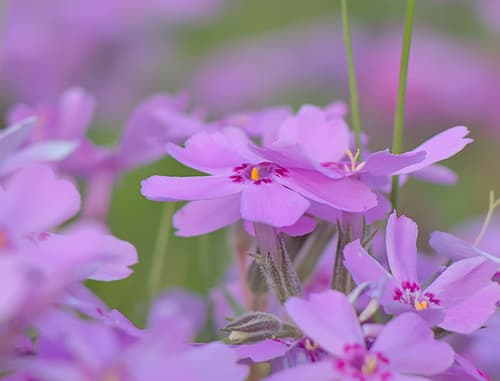
Phlox subulata, or moss phlox, is a low, mat-forming groundcover that blooms in April and May with pink, magenta, or white flowers. It thrives in full sun and well-drained, dry to average soil.
Moss Phlox (Phlox subulata) is not on the ASPCA Animal Poison Control Center toxic plant list for dogs or cats (aspca.org (opens in new tab), last reviewed 2026-05-21). If your pet shows symptoms after eating any plant, call the ASPCA at (888) 426-4435.
The USDA PLANTS Database (opens in new tab) does not flag Moss Phlox as toxic to livestock.
Light
full sun
Water
medium
Size
4"–6" H × 12"–24" W
Bloom
Apr, May
Native to
AR, DE, GA, IA and 16 more states
Pollinators
bees, butterflies
Before you buy
Your city may pay you to plant this
Cities and water utilities offer rebates for replacing lawn with native and water-wise plants. We track 459 programs across 44 states, each with a link to the provider and the date we last checked it.
Find rebates in your areaPicture natives in your own yard
Upload a photo of your yard and Patch Vision shows a rendering of it planted with natives for your region, like Moss Phlox.


Browse plants for this ecoregion
Moss phlox is a low-growing evergreen groundcover that forms dense mats of needle-like foliage. In spring, it produces masses of small, colorful flowers that completely blanket the plant for several weeks. This hardy perennial thrives in sunny locations with well-drained soil and requires minimal care once established.
Growing Moss Phlox
Grow Moss Phlox in full sun and medium water. Mature plants reach 4 to 6 inches tall and spread 12 to 24 inches wide. Expect low maintenance to keep it looking intentional in a front yard.
How to care for Moss Phlox, by region
How to care for Moss Phlox where it is actually grown: year-round basics plus what to do each season, region by region, with the sources for each.
Care guidance last updated: October 2026
Atlantic Coastal Pine Barrens (includes Riverhead, NY)
Year-round
Moss phlox is native to Long Island's sandy, rocky ground, which makes Riverhead's well-drained soils a genuinely good match for it. It forms a low evergreen mat under 6 inches tall that is covered in flowers each spring.
- Riverhead's sandy, glacial-outwash soil is close to this plant's native rocky, sandy habitat, so it typically needs less soil amendment here than in heavier-soil regions.
- Give it full sun. It tolerates coastal wind and some salt exposure better than most low groundcovers.
- It is not on the ASPCA toxic plant list for dogs, cats, or horses.
Fall
Fall asks little of moss phlox in Riverhead. The foliage stays evergreen through the season, so there is no cutback, just a decision on planting or dividing before it turns cold.
- Plant or divide in early fall, at least six weeks before the first frost, commonly early-to-mid November on the North Fork, later than most of New York State.
- No fall cutback is needed since this plant does not die back like most perennials.
- Clear fallen leaves off the mat so they do not trap moisture against the crown heading into winter.
Because it holds its green foliage rather than dying back for fall, this bed continues to read as maintained through leaf season with no extra work needed.
Winter
Winters on eastern Long Island are milder than inland New York, and moss phlox stays evergreen through them with no active protection needed.
- No winter mulch is necessary. This plant grows naturally in thin, sandy, rocky ground, and heavy mulch holds more moisture than it wants.
- Coastal wind can dry out exposed foliage, causing some winter bronzing. It is cosmetic and greens back up with spring growth.
- Keep foot traffic off the mat when frozen, since brittle winter foliage breaks easily and leaves bare spots until it fills back in.
Because it holds green foliage through a relatively mild Riverhead winter, a moss phlox bed keeps visible structure at the front of the house instead of going bare, which matters for winter curb appeal.
Spring
Spring is bloom time on the North Fork, generally April into May, and coastal Long Island's milder spring often brings the flowers on a bit earlier than inland areas.
- Plant or divide in early-to-mid spring once the soil has warmed, taking advantage of Long Island's relatively mild spring compared to inland New York.
- Hold off on fertilizer. Sandy Riverhead soil is already lean, which is exactly what this plant wants, and feeding produces weak, floppy growth instead of a tight mat.
- Shear lightly right after the main bloom to keep the mat dense and prompt a smaller rebloom.
A full sheet of spring bloom along a driveway or front slope reads as a deliberate planting, not an overgrown patch, right when spring walk-throughs tend to happen.
Summer
Through the Riverhead summer, moss phlox is a low-maintenance green mat that handles the area's sandy, fast-draining soil and occasional dry spells well.
- Shear the mat back by about half after flowering to keep it tight through the summer instead of letting it sprawl.
- Because Riverhead's soil drains fast, established plants may need occasional watering during a dry August, more than they would in a clay-soil region.
- Watch for spider mites in hot, dry stretches. A stronger hose spray on the foliage helps knock them back.
The post-bloom shear is the visible task worth doing. A sheared mat looks like tended edging along a walk, while a shaggy one can start to look neglected by mid-summer.
Sources: Lady Bird Johnson Wildflower Center - Phlox subulata, ASPCA - Toxic and Non-Toxic Plants: Moss Phlox, Penn State Extension - Phlox in the Home Garden, NC State Extension Gardener Plant Toolbox - Phlox subulata
Cross Timbers (includes Fort Worth, TX)
Year-round
Moss phlox (Phlox subulata) is a low evergreen groundcover that carpets slopes and bed edges in pink, purple, or white for a few weeks each spring, and it is a popular garden plant in Fort Worth even though it is not native to Texas.
- This species is native to rocky slopes and open woods from the Northeast down through the Appalachians, not to North Texas. It has no native range claim here, it is simply a well established garden plant in Fort Worth yards.
- It wants soil that drains fast. The heavy clay common around Fort Worth holds too much water for its roots, so mix in coarse sand or compost, or plant it on a slope or in a raised bed.
- Give it close to a full day of direct sun. In heavy shade the mat thins out and stops flowering well.
- Moss phlox (Phlox subulata) is not on the ASPCA's list of plants toxic to dogs, cats, or horses.
Fall
Fall is a good working season for moss phlox in Fort Worth, with mild days for planting or dividing before winter and no die-back to clean up.
- The average first fall freeze for the area lands around November 22, which leaves a long stretch of cooling but still-warm soil for new transplants or divided clumps to root in before real cold arrives.
- The foliage stays evergreen through a North Texas winter, so unlike a perennial that dies back to the ground, there is no fall cutback required.
- Fall is also a fine time to lift and separate an overgrown mat into new sections for another bed, since the plant roots along its stems where they touch the soil.
Because the mat stays green and low through fall, a front border planted in moss phlox needs no fall cleanup to keep its tidy look.
Winter
Winter is the easy season for moss phlox in Fort Worth. Ordinary zone 8b cold is well within what this plant handles, so the bigger risk is wet soil, not frost.
- Moss phlox is rated hardy across USDA zones 3 through 9, so an ordinary North Texas winter freeze is not a real threat to an established planting.
- The mat stays low and evergreen through winter, holding its tidy look at the curb without dying back the way many perennials do.
- Cold, slow-draining soil is when root rot is most likely to set in, so good drainage matters even more in winter than in summer, especially after a run of wet weather.
An evergreen mat that holds its shape through winter reads as a maintained bed rather than a dormant, bare one.
Spring
Spring is bloom season for moss phlox in Fort Worth, and also the right window to plant new starts and shear the mat back once the flowers fade.
- The average last spring freeze for the Fort Worth area lands around March 12, so hold off setting out new moss phlox until after that date to protect young roots from a late cold snap.
- Flowers open anywhere from March into May, with the heaviest show usually landing in April as the whole mat turns color for two to three weeks.
- Once the bloom fades, shear the plant back by about half its height. That keeps the mat dense, can bring on a lighter second round of flowers, and keeps the center from going bare and woody.
A quick shear right after the spring bloom keeps a front bed or walkway edge looking tended instead of leggy.
Summer
By summer the flowers are done and moss phlox is just a low green mat that needs very little from you in Fort Worth heat, as long as its roots stay on the dry side.
- Once established, moss phlox handles a Texas summer on very little supplemental water and does not want extra moisture sitting around its base.
- Water at the soil line rather than overhead, and skip a watering day if the top couple inches of soil are still damp. A wet crown in summer humidity is the main way this plant fails here, not the heat itself.
- In the hottest part of a Fort Worth summer, some afternoon shade or dappled light through the day can help the foliage hold its color better than a spot in full baking sun.
- This species holds up well against the powdery mildew that shows up on taller garden phlox varieties in humid summers, so mildew is not usually something to watch for here.
Sources: Lady Bird Johnson Wildflower Center - Phlox subulata ssp. subulata, Texas Master Gardener (Henderson County) - Phlox Creeping Pink, Clemson HGIC - Phlox, ASPCA - Moss Phlox, National Weather Service Fort Worth/Dallas - Average Freeze Dates, Penn State Extension - Phlox in the Home Garden
Eastern Great Lakes Lowlands (includes Rochester, NY)
Year-round
Year-round care for moss phlox around Rochester, NY: sun, soil that drains, and a trim after the spring bloom.
- Plant it in full sun. It also takes light, dappled shade.
- It needs good drainage. Sandy, rocky, or loamy soil all work, and it spreads even in poor soil.
- It has moderate drought tolerance and handles hot, dry spells better than other phlox. Water it in a long dry stretch.
- It stays 4 to 6 inches tall and spreads 2 to 3 feet wide, which makes it a good cover for a slope, a rock garden, or the edge of a bed.
- It blooms in spring.
- After it finishes flowering, cut the stems back by about half. That keeps the mat dense and in shape.
- Watch for spider mites in hot, dry weather.
A dense spring-blooming mat along a walk or over a slope looks tidy from the street, and the trim after bloom keeps it that way.
Sources: NC State Extension Gardener Plant Toolbox: Phlox subulata, Lady Bird Johnson Wildflower Center: Phlox subulata
North Central Appalachians (includes Williamsport, PA)
Year-round
Year-round care for moss phlox around Williamsport, PA: sun, soil that drains, and a trim after the spring bloom.
- Plant it in full sun. It also takes light, dappled shade.
- It needs good drainage. Sandy, rocky, or loamy soil all work, and it spreads even in poor soil.
- It has moderate drought tolerance and handles hot, dry spells better than other phlox. Water it in a long dry stretch.
- It stays 4 to 6 inches tall and spreads 2 to 3 feet wide, which makes it a good cover for a slope, a rock garden, or the edge of a bed.
- It blooms in spring.
- After it finishes flowering, cut the stems back by about half. That keeps the mat dense and in shape.
- Watch for spider mites in hot, dry weather.
A dense spring-blooming mat along a walk or over a slope looks tidy from the street, and the trim after bloom keeps it that way.
Sources: NC State Extension Gardener Plant Toolbox: Phlox subulata, Lady Bird Johnson Wildflower Center: Phlox subulata
North Central Hardwood Forests (includes Minneapolis, MN)
Year-round
Moss phlox is a low, evergreen groundcover that stays under 6 inches tall and covers itself in small flowers each spring. In the Twin Cities it needs full sun and sharp drainage more than it needs rich soil, since the area's clay tends to hold water it does not like.
- Plant in full sun on a slope, berm, or raised bed rather than a low spot, since Twin Cities clay drains slowly and moss phlox is prone to crown rot in standing water.
- Work sand or fine gravel into heavy clay before planting to mimic the rocky, well-drained soil it prefers.
- It is not on the ASPCA toxic plant list for dogs, cats, or horses, which is one reason it works well along a front walk where pets roam.
- It holds its evergreen, needle-like foliage through Minnesota winters, so it does not leave a bare patch even when it is not blooming.
Fall
Fall is a quiet season for moss phlox in Minnesota. There is no cutback needed since the foliage is evergreen, and the main task is deciding whether this is a good year to divide or plant more.
- Early fall, at least six weeks before the ground freezes, is fine for planting or dividing so roots can establish before winter.
- Leave the foliage in place. Unlike perennials that die back, moss phlox stays green and does not need fall cleanup.
- Clear fallen leaves off the mat so they do not trap moisture against the crown over winter.
Because there is no fall cutback needed, this bed keeps its tidy, green look right through leaf season without extra work, which helps if a fall walk-through is when yard upkeep gets a second look.
Winter
Moss phlox is evergreen and needs no active winter protection in the Twin Cities, but its foliage can dry out and bronze on open, windy sites, which is normal and not a sign the plant has died.
- Plant it away from open, wind-exposed spots and south-facing walls if possible. Winter sun and wind on frozen ground cause more foliage damage than the cold itself.
- Anti-desiccant sprays are not a reliable fix. University of Massachusetts Extension notes their performance against winter burn is inconsistent enough that routine use is hard to justify.
- Leave snow cover in place over the mat. It insulates the crown and roots better than any manual covering would.
Because the foliage stays green under snow, a moss phlox bed keeps some winter structure and color instead of reading as bare dirt, which is a plus on a front slope an HOA can see from the street.
Spring
Spring is peak bloom for moss phlox in the Twin Cities, usually landing in May once the ground has warmed. It is also the best time to plant or divide it, before summer heat sets in.
- Wait until the soil is workable in May to divide or transplant, since Minnesota's frozen ground rules out earlier work.
- Skip a spring fertilizer application. This plant flowers best in lean soil, and heavy feeding produces floppy growth instead of a tight mat.
- Watch drainage during spring snowmelt and rain. Standing water around the crown is the most common way this plant fails in Twin Cities clay.
A full mat of spring bloom along a front walk or slope reads as an intentional planting bed rather than a weed patch, which is the look that avoids a landscaping complaint.
Summer
Once the spring flowers fade, moss phlox spends summer as a tight green mat that needs very little from you. A quick trim after bloom keeps it dense and can coax out a few repeat flowers.
- Shear the mat back by about half right after flowering ends to keep it compact and encourage a smaller second flush.
- Water only during extended dry stretches once established. Overwatering in summer humidity is a bigger risk than underwatering.
- Watch for spider mites during hot, dry weeks. A stronger hose spray on the foliage helps keep populations down.
The post-bloom shearing is the one summer task that visibly matters. An unsheared mat looks scraggly by midsummer, while a sheared one reads as deliberately maintained edging.
Sources: Lady Bird Johnson Wildflower Center - Phlox subulata, ASPCA - Toxic and Non-Toxic Plants: Moss Phlox, Minnesota Seasons - Moss Phlox (community tip), UMass Amherst Extension - Protecting Evergreens in Winter Q&A, NC State Extension Gardener Plant Toolbox - Phlox subulata, University of Maryland Extension - Moss Phlox
Northeastern Coastal Zone (includes New York, NY)
Year-round
Moss Phlox is a low evergreen mat that stays about 6 inches tall and slowly widens into a dense green cushion. Around New York City it wants the sunniest, fastest draining ground you have, because what kills it here is wet soil, not cold. Winters in this region are cold and summers are hot and sticky, so the plant needs air moving over it and soil that lets water pass through quickly. The area gets roughly 45 inches of rain spread across the whole year, which is more water than this plant actually wants, so raising the bed or working coarse sand and fine gravel into heavy city soil matters far more than watering ever will. It flowers in April and May, then holds a tidy evergreen mat the rest of the year. ASPCA lists Moss Phlox as not on its toxic plant list for dogs and cats.
- Give it six or more hours of direct sun, since shade makes the mat thin and floppy.
- Fix drainage before planting by working coarse sand or fine gravel into clay or urban fill.
- Once it is settled in, water only during long dry stretches, because normal rain here is enough.
- Shear the mat back by about half right after the April to May flowering finishes.
- Skip rich fertilizer, because lean soil keeps the mat tight and full of flowers.
This is one of the easiest plants to keep looking intentional from the sidewalk, because it stays about 6 inches tall and holds a clean edge all year, which reads as HOA-friendly in a small, highly visible front bed.
Fall
Fall is the best planting window in this region. From early September to about mid October the soil is still warm and the rain keeps coming, which gives roots time to settle before the first frost in early November. Do not cut the mat down for winter, because the foliage stays green and is what shelters the crown. The one job that really matters now is keeping falling tree leaves from smothering it, since a wet leaf pile sitting on a low mat through a damp autumn causes rot. Skip fertilizer and skip hard pruning too, because soft new growth heading into a cold winter only sets the plant back.
- Plant or split from early September to mid October so roots settle before the November frost.
- Lift or blow tree leaves off the mat every couple of weeks through October and November.
- Leave the evergreen foliage standing, because it is the crown's winter cover.
- Do not fertilize now, since it pushes soft growth that winter will damage.
- Water anything newly planted about once a week until the ground starts to freeze.
Clearing tree leaves off the mat doubles as curb appeal, because an uncovered green cushion is what keeps the front bed reading as maintained through November.
Winter
Winter is a hands off season for this plant, with one real exception, and that is de-icing salt. In city and suburban front yards the mat often sits within a few feet of a salted walkway or driveway, and salt spray plus salty snow shoveled onto the bed is the most common winter damage here. Use sand or a gentler de-icer on the pavement right beside the bed, and throw snow away from the planting rather than onto it. Snow lying on the mat is actually good, because it shields the green foliage from cold wind and from repeated freezing and thawing. Otherwise leave it alone, do not prune, and after a big thaw check for plants pushed partly out of the ground by heaving soil.
- Shovel snow away from the bed instead of piling salty street snow onto the mat.
- Use sand or a lower salt de-icer on the pavement right next to the planting.
- Do not prune or cut back, because the green mat is what carries the plant through winter.
- After a big thaw, press any plants heaved up by freezing soil back down firmly.
- If road spray reaches the bed, screen the edge with a low board or a burlap barrier.
The mat is one of the few green things left at the curb in January, so leaving it uncut keeps a front bed looking intentional through the bare months.
Spring
Spring is the whole show. Flowers open in April and are usually finished by late May, starting right around the mid April last frost and running through the warm weeks after it. Before the flowers open, rinse the mat and the ground around it with plain water if it sits near a walkway or driveway that got winter de-icing salt, because flushing the root zone with fresh water early is how you undo salt damage. Rake the winter leaf litter and street grit off the top of the mat so light and air reach the foliage again. When flowering ends, shear the whole mat back by about half, which keeps it dense instead of woody and bare in the middle. Late spring, right after that shearing, is also the easiest time to split a mat that has crept past where you want it.
- Rake off winter leaf litter and street grit as soon as the mat greens up in March.
- Flush the ground near walkways and driveways with plain water in early spring to wash out road salt.
- Hold off on fertilizer, since a thin ring of compost at the edge is plenty.
- Shear the mat back by half once the last flowers fade in late May.
- Split and replant crowded sections right after shearing, then water the pieces in.
The shear after flowering is what keeps a street facing bed looking deliberate instead of shaggy, so do it within a week or two of the last flower.
Summer
Summer is when this plant is most likely to be lost, and the reason is almost always water sitting around the crown. New York area summers are hot and humid with regular thunderstorms, so the ground under a low mat can stay damp for days at a time. Leave the mat alone in that weather instead of adding water, and make sure nothing is crowding it or blocking the breeze across the top. Cut back any taller perennial flopping over the mat, because shade plus trapped humidity is what turns the middle brown and mushy. In a genuinely dry two or three week stretch, one slow deep soak a week is all it wants.
- Do not water during a normal rainy summer week, because the mat holds plenty of moisture on its own.
- Trim back taller neighbors leaning over the mat so air can move across it.
- Look for browning in the center after heavy storm weeks and pull out any mushy stems.
- In a long dry stretch, one slow deep soak a week beats a daily sprinkle.
- If fine pale speckling shows up on the leaves in a hot dry spell, rinse the foliage with a hose.
Sources: Lady Bird Johnson Wildflower Center, Phlox subulata, NC State Extension Gardener Plant Toolbox, Phlox subulata, ASPCA Toxic and Non-Toxic Plants, Moss Phlox, Mt. Cuba Center, Moss phlox (Phlox subulata), Rutgers Plant and Pest Advisory, Impact of Road Salt on Adjacent Vegetation, Penn State Extension, Phlox in the Home Garden
Northern Lakes and Forests (includes Bemidji, MN)
Year-round
Year-round care for moss phlox around Bemidji, MN: sun, soil that drains, and a trim after the spring bloom.
- Plant it in full sun. It also takes light, dappled shade.
- It needs good drainage. Sandy, rocky, or loamy soil all work, and it spreads even in poor soil.
- It has moderate drought tolerance and handles hot, dry spells better than other phlox. Water it in a long dry stretch.
- It stays 4 to 6 inches tall and spreads 2 to 3 feet wide, which makes it a good cover for a slope, a rock garden, or the edge of a bed.
- It blooms in spring.
- After it finishes flowering, cut the stems back by about half. That keeps the mat dense and in shape.
- Watch for spider mites in hot, dry weather.
A dense spring-blooming mat along a walk or over a slope looks tidy from the street, and the trim after bloom keeps it that way.
Sources: NC State Extension Gardener Plant Toolbox: Phlox subulata, Lady Bird Johnson Wildflower Center: Phlox subulata
Northern Piedmont (includes Lancaster, PA)
Year-round
Moss phlox is native to Pennsylvania's rocky, open ground, and the Piedmont habitat around Lancaster is within its general range. It forms a low evergreen mat under 6 inches tall that is covered in flowers each spring.
- Give it full sun and a well-drained spot. Lancaster's Piedmont clay-loam holds more moisture than this plant's native rocky, sandy habitat, so a slope, raised bed, or gravel-amended spot works better than a low corner of the yard.
- It tolerates the region's summer humidity better than most phlox, since unlike garden phlox, moss phlox resists powdery mildew.
- It is not on the ASPCA toxic plant list for dogs, cats, or horses.
Fall
Fall is low-effort for moss phlox in Lancaster. The foliage stays evergreen, so there is no cutback, and the main decision is whether to plant or divide before the ground cools.
- Early-to-mid fall, at least six weeks before the first hard frost (typically mid-to-late October in Lancaster County), is a good planting or dividing window.
- Leave the mat as-is. It does not die back like a herbaceous perennial, so fall cleanup is unnecessary.
- Rake fallen tree leaves off the mat so they do not smother the foliage or trap moisture against the crown.
Since it never needs a fall cutback, this bed stays green and tended-looking through leaf season without any extra effort on your part.
Winter
Moss phlox stays evergreen through a typical Lancaster winter and needs no covering or protection. Some purpling or bronzing of the foliage in cold weather is normal and not a problem.
- No winter mulch is needed over the crown. This plant is used to growing in thin, rocky soil, and heavy mulch can trap moisture it does not want.
- If a bed sits in a windy, exposed spot, expect more winter foliage bronzing than in a sheltered spot. It is cosmetic and the plant greens back up in spring.
- Avoid walking on the mat when frozen, since brittle winter foliage can snap and leave bare patches until spring growth fills back in.
The evergreen winter mat gives a front bed visible structure instead of bare dirt, which is worth keeping in mind when siting it somewhere visible from the street.
Spring
Spring is bloom season for moss phlox around Lancaster, typically April into May, and it is also a good window for planting or dividing it before summer heat arrives.
- Plant or divide any time after the last hard frost, generally mid-to-late April in Lancaster County, so roots can establish before summer.
- Skip heavy spring fertilizer. Rich Piedmont soil plus feeding produces loose, floppy growth instead of a tight mat.
- A light shearing right after bloom keeps the mat dense and can bring on a smaller second flush of flowers.
A full spring bloom along a walkway or slope reads as an intentional planting bed, which matters most right when spring inspections tend to happen.
Summer
After the spring flowers fade, moss phlox settles into a low green mat for the rest of the Lancaster summer and asks for very little water once established.
- Shear the stems back by about half right after flowering to keep the mat tight and prevent it from getting leggy in summer heat.
- Water only during extended dry spells. In a normal Piedmont summer with regular rain, established plants rarely need supplemental watering.
- Good air circulation and full sun are the best defense against fungal problems in Pennsylvania's humid summers, even though this species resists powdery mildew better than most phlox.
The mid-summer shearing is the visible upkeep task here. A sheared mat reads as a tended groundcover bed, while an unsheared one can look weedy by August.
Sources: Flora of Pennsylvania - Phlox, ASPCA - Toxic and Non-Toxic Plants: Moss Phlox, NC State Extension Gardener Plant Toolbox - Phlox subulata, Penn State Extension - Phlox in the Home Garden
Piedmont (includes Atlanta, GA)
Year-round
Year-round care for moss phlox around Atlanta, GA: sun, soil that drains, and a trim after the spring bloom.
- Plant it in full sun. It also takes light, dappled shade.
- It needs good drainage. Sandy, rocky, or loamy soil all work, and it spreads even in poor soil.
- It has moderate drought tolerance and handles hot, dry spells better than other phlox. Water it in a long dry stretch.
- It stays 4 to 6 inches tall and spreads 2 to 3 feet wide, which makes it a good cover for a slope, a rock garden, or the edge of a bed.
- It blooms in spring.
- After it finishes flowering, cut the stems back by about half. That keeps the mat dense and in shape.
- Watch for spider mites in hot, dry weather.
A dense spring-blooming mat along a walk or over a slope looks tidy from the street, and the trim after bloom keeps it that way.
Sources: NC State Extension Gardener Plant Toolbox: Phlox subulata, Lady Bird Johnson Wildflower Center: Phlox subulata
Ridge and Valley (includes Harrisburg, PA)
Year-round
Moss phlox is a low, mat forming native groundcover that fits Harrisburg's Ridge and Valley ecoregion well. It grows in the dry, rocky, sunny conditions common here, spreads slowly into a tidy evergreen mat, and needs very little upkeep once it's established.
- Give it full sun to light shade and well drained soil, even rocky or sandy ground is fine, it does poorly in wet spots or heavy clay.
- Once established it handles drought with little to no extra watering, a good match for Harrisburg's dry summer stretches.
- It's listed as non-toxic to dogs, cats, and horses by ASPCA, a good, low-stress groundcover choice for yards with pets.
- It's native to Pennsylvania and grows well in this region's rocky, well drained sites, so it fits the local landscape without extra soil amending.
Fall
Fall is a good window to plant or divide moss phlox in central Pennsylvania, and otherwise there is little to do since the foliage stays evergreen through the season.
- Cooler weather and steadier fall rain make this a good time to plant new moss phlox or divide an established mat.
- The foliage stays evergreen into fall, there's no cutback or deadheading needed at season's end.
- Skip fertilizer this late in the year, pushing new growth now leaves it too soft to harden off before frost.
- Rake fallen leaves off the mat so the low foliage isn't smothered heading into winter.
Winter
Moss phlox needs no winter protection in Harrisburg. It's hardy well beyond the zone 6b to 7a range here and stays evergreen, though its color can dull in cold weather.
- It's rated hardy to USDA zone 3, well within Harrisburg's zone 6b to 7a range, so no mulching or covering is needed.
- The mat stays evergreen through winter, foliage sometimes takes on a bronze or purple tint in cold weather, that's normal and temporary.
- There's nothing to prune or cut back now, wait until after next spring's bloom.
- Avoid walking on the mat when it's frozen or snow covered, the low stems can be damaged underfoot.
Spring
Spring is bloom season for moss phlox in Harrisburg, usually April into May. After the flowers fade this is also the one seasonal task worth doing, a light shear or high mow keeps the mat dense and tidy for the rest of the year.
- Expect flowers from about April into May in white, pink, or purple depending on the variety, this is the plant's showiest stretch.
- Once the bloom fades, shear the mat back or mow it on a high setting. Penn State Extension notes moss phlox specifically tolerates this, and it encourages denser regrowth.
- Keep water off the foliage during humid spring weather, wet leaves invite powdery mildew, a common issue across the phlox genus.
- No fertilizer needed this time of year, established moss phlox grows fine on its own in average garden soil.
A quick post-bloom shearing is the one task that keeps this groundcover looking neat along a front walkway or bed edge.
Summer
Summer is the low maintenance stretch. The evergreen mat holds up well through Harrisburg's dry, hot weeks and mostly just needs to be left alone.
- Established plants tolerate drought and heat well, extra watering usually is not needed once the roots are settled in.
- The mat stays low and evergreen through summer, it does not die back or need the seasonal cleanup that many perennials do.
- If growth looks sparse or leggy after the spring shearing, a light trim any time in summer helps keep it dense.
- Good spacing and airflow between plants continues to help avoid powdery mildew in humid weather.
Sources: Lady Bird Johnson Wildflower Center: Phlox subulata (Moss phlox), ASPCA: Moss Phlox (Phlox subulata), Toxic and Non-Toxic Plants, Penn State Extension: Phlox in the Home Garden
Southeastern Plains (includes Tallahassee, FL)
Year-round
Moss phlox is a low, spreading plant that covers itself in small flowers each spring. It is a popular nursery plant around Tallahassee, but it is not native to Florida. Its wild range runs from Long Island down through Kentucky and only as far south as the mountains of North Carolina and Arkansas, so this area is well outside where it grows on its own.
- This is a plant people choose for their yard. It does not grow wild anywhere near Tallahassee.
- It forms a mat only a few inches tall, so it works well along a path edge or the front of a bed.
- It wants full sun to part shade and soil that drains fast, sandy or rocky ground is ideal.
- Because it is not native here, it will not feed local wildlife the way a true native groundcover would.
Fall
As Tallahassee's heat breaks in fall, moss phlox tends to perk back up. Mild fall weather here is a reasonable window for planting new starts or dividing an established mat.
- Cooler, less humid fall days are a better time to plant than the middle of summer.
- Cut back any foliage that looks tired from summer to make room for fresh growth.
- Keep watering through dry fall spells until new roots settle in.
- The plant will not bloom again now, its next show is in spring.
Winter
Tallahassee winters are mild with only occasional light frost, well within what moss phlox can handle since it is hardy much farther north than here. The mat stays low and semi evergreen through the season.
- Cold is not the concern here, this plant is hardy well into the Northeast, so a Tallahassee winter is easy on it.
- Winter is a fine time to plant a new mat since the ground is cool and moist without summer stress.
- Skip fertilizer during winter, the plant is resting, not actively growing.
- Watch for occasional freeze warnings and cover new, unestablished plants if a hard freeze is forecast.
Spring
Late winter into spring is when moss phlox puts on its show here, matching its natural March through June bloom window. Tallahassee's mild spring weather suits it well before summer heat sets in.
- Full sun gives the fullest bloom. A little afternoon shade is fine if your spot heats up fast.
- Skip heavy fertilizer right now, too much pushes leafy growth instead of flowers.
- Water during dry spells while it blooms, but do not let it sit wet.
- Once flowers fade, trim the mat lightly to keep it dense and ready for next year.
A tidy, low carpet of spring color like this is the kind of HOA-friendly front bed planting that reads as cared for rather than overgrown.
Summer
Tallahassee summers bring real heat and heavy humidity, and moss phlox is built for cooler summers farther north. Expect it to slow down, and give it the driest, brightest spot you can to help it cope.
- Some afternoon shade helps in a hot, humid summer here, all day full sun can stress it once temperatures climb.
- Good drainage matters most right now, wet soil in high humidity invites foliar nematode damage.
- Hold off on planting new starts until it cools down, summer heat makes it hard for new roots to take hold.
- Do not be surprised if the mat looks ragged by late summer, that is a normal reaction to a tough season for this plant.
Sources: Lady Bird Johnson Wildflower Center, Native Plant Database: Phlox subulata, Atlas of Florida Plants, University of South Florida: Phlox genus species list, UF/IFAS Gardening Solutions: Phlox, Missouri Botanical Garden Plant Finder: Phlox subulata
Southern Coastal Plain (includes Orlando, FL)
Year-round
Moss phlox is a low, mat forming plant with a burst of small flowers in spring. It is sold and planted around Orlando, but it is not native to Florida. Its wild range runs from Long Island south to the mountains of North Carolina and Arkansas, nowhere close to central Florida, so this is a plant grown well outside its natural home.
- This is a garden plant here, not something that grows on its own in central Florida.
- It stays just a few inches tall and spreads into a mat, useful for the edge of a bed or a small slope.
- It needs full sun to part shade and sharp drainage, wet roots are its biggest problem.
- Because it is not native, it will not support local pollinators the way a true Florida native groundcover would.
Fall
Orlando's fall stays warm and humid longer than it does farther north in the state, but the drop from peak summer heat still gives moss phlox a chance to recover if it made it through summer. Fall here is a reasonable window for a fresh planting.
- Wait for the humidity to ease before planting new starts, even early fall can feel like summer here.
- Cut away any growth that died back over summer to make room for new leaves.
- Keep an eye on watering, fall dry spells still happen even in a humid climate.
- Do not expect flowers now, this plant blooms in spring, not fall.
Winter
Orlando winters are mild with rare frost, easy on a plant that is hardy much farther north. The bigger challenge for moss phlox here is always the summer before, not the winter.
- Cold is basically a non issue in Orlando for this plant, it tolerates far colder winters than it will ever see here.
- Winter and early spring are the best times to plant, before summer heat and humidity return.
- No need to fertilize in winter, the plant is not actively growing.
- If a rare freeze warning comes through, cover any new or weak plants overnight.
Spring
Spring is moss phlox's bloom season here too, though Orlando's warm up comes earlier and faster than it does farther north. Get any planting or bloom care done before the real heat of early summer arrives.
- Full sun brings the best bloom, but plan for some afternoon shade later as the season warms.
- Do not overfeed during bloom, it can trade flowers for leafy growth.
- Water during dry spells but keep the bed well drained, soggy soil is worse than a dry week.
- Trim the mat lightly once flowering slows to keep it tight and ready for next year.
A tidy, low spring bloom like this counts as an HOA-conscious choice for a front bed, it reads as maintained rather than wild.
Summer
Orlando summers are hotter and more humid than almost anywhere else in this plant's comfort zone, and this is the season moss phlox struggles most here. Many Orlando gardeners find it behaves more like a short lived annual than a plant that reliably comes back year after year.
- Give it afternoon shade if you can, all day Orlando summer sun on top of the humidity is a lot for this plant.
- Drainage is critical, summer humidity plus wet soil is when foliar nematode damage tends to show up.
- Do not plant new starts in the middle of summer here, the heat makes it very hard for roots to establish.
- If the mat dies back after a hard summer, treat that as expected for this plant in a climate this warm and plan to replant in fall or spring.
Sources: Lady Bird Johnson Wildflower Center, Native Plant Database: Phlox subulata, Atlas of Florida Plants, University of South Florida: Phlox genus species list, UF/IFAS Gardening Solutions: Phlox, Missouri Botanical Garden Plant Finder: Phlox subulata
Texas Blackland Prairies (includes Dallas, TX)
Year-round
Moss phlox (Phlox subulata) is a low evergreen groundcover that carpets slopes and bed edges in pink, purple, or white for a few weeks each spring, and it is a popular garden plant in Dallas even though it is not native to Texas.
- This species is native to rocky slopes and open woods from the Northeast down through the Appalachians, not to North Texas. It has no native range claim here, it is simply a well established garden plant in Dallas yards.
- It wants soil that drains fast. The heavy clay common around Dallas holds too much water for its roots, so mix in coarse sand or compost, or plant it on a slope or in a raised bed.
- Give it close to a full day of direct sun. In heavy shade the mat thins out and stops flowering well.
- Moss phlox (Phlox subulata) is not on the ASPCA's list of plants toxic to dogs, cats, or horses.
Fall
Fall is a good working season for moss phlox in Dallas, with mild days for planting or dividing before winter and no die-back to clean up.
- The average first fall freeze for the area lands around November 22, which leaves a long stretch of cooling but still-warm soil for new transplants or divided clumps to root in before real cold arrives.
- The foliage stays evergreen through a North Texas winter, so unlike a perennial that dies back to the ground, there is no fall cutback required.
- Fall is also a fine time to lift and separate an overgrown mat into new sections for another bed, since the plant roots along its stems where they touch the soil.
Because the mat stays green and low through fall, a front border planted in moss phlox needs no fall cleanup to keep its tidy look.
Winter
Winter is the easy season for moss phlox in Dallas. Ordinary zone 8b cold is well within what this plant handles, so the bigger risk is wet soil, not frost.
- Moss phlox is rated hardy across USDA zones 3 through 9, so an ordinary North Texas winter freeze is not a real threat to an established planting.
- The mat stays low and evergreen through winter, holding its tidy look at the curb without dying back the way many perennials do.
- Cold, slow-draining soil is when root rot is most likely to set in, so good drainage matters even more in winter than in summer, especially after a run of wet weather.
An evergreen mat that holds its shape through winter reads as a maintained bed rather than a dormant, bare one.
Spring
Spring is bloom season for moss phlox in Dallas, and also the right window to plant new starts and shear the mat back once the flowers fade.
- The average last spring freeze for the Dallas area lands around March 12, so hold off setting out new moss phlox until after that date to protect young roots from a late cold snap.
- Flowers open anywhere from March into May, with the heaviest show usually landing in April as the whole mat turns color for two to three weeks.
- Once the bloom fades, shear the plant back by about half its height. That keeps the mat dense, can bring on a lighter second round of flowers, and keeps the center from going bare and woody.
A quick shear right after the spring bloom keeps a front bed or walkway edge looking tended instead of leggy.
Summer
By summer the flowers are done and moss phlox is just a low green mat that needs very little from you in Dallas heat, as long as its roots stay on the dry side.
- Once established, moss phlox handles a Texas summer on very little supplemental water and does not want extra moisture sitting around its base.
- Water at the soil line rather than overhead, and skip a watering day if the top couple inches of soil are still damp. A wet crown in summer humidity is the main way this plant fails here, not the heat itself.
- In the hottest part of a Dallas summer, some afternoon shade or dappled light through the day can help the foliage hold its color better than a spot in full baking sun.
- This species holds up well against the powdery mildew that shows up on taller garden phlox varieties in humid summers, so mildew is not usually something to watch for here.
Sources: Lady Bird Johnson Wildflower Center - Phlox subulata ssp. subulata, Texas Master Gardener (Henderson County) - Phlox Creeping Pink, Clemson HGIC - Phlox, ASPCA - Moss Phlox, Penn State Extension - Phlox in the Home Garden, National Weather Service Fort Worth/Dallas - Average Freeze Dates
Western Allegheny Plateau (includes Pittsburgh, PA)
Year-round
Moss phlox is a low, needle leaved evergreen mat that is native to Pennsylvania, including the Pittsburgh area, and it is one of the easiest early spring bloomers for a front yard. It wants full sun and soil that drains fast, which is the one thing to watch for in this region's clay heavy yards.
- Give it a spot with 6 or more hours of direct sun. Less sun means a thinner mat and fewer flowers.
- The biggest risk here is wet feet, not cold. Western PA clay holds water, so work 2 to 4 inches of compost and coarse sand into the top 8 to 12 inches of soil before planting, or set plants on a slight mound.
- Space new plants 12 to 18 inches apart. They fill in on their own within a season or two and crowd out most weeds once established.
- It is not on the ASPCA's toxic plant list for dogs, cats, or horses, so it is a low worry pick along a walkway or near a pet run.
The tidy, low evergreen mat and the spring flower show read as intentional, tended landscaping, which is the look HOA-conscious homeowners want from a front-yard groundcover.
Fall
Fall is a light touch season for moss phlox here. Cooler nights slow growth, and there is little to actively do besides basic cleanup and any dividing or new planting.
- Early to mid fall, September into October, is a good second planting window for new moss phlox or moved divisions, alongside spring.
- Clear off any fallen tree leaves that pile up on the mat. Trapped wet leaves against the evergreen foliage invite rot and mildew over winter.
- No need to cut the plant back hard in fall. Light shaping is enough. Save the bigger half back trim for right after spring bloom.
- Skip heavy fertilizing this time of year. New soft growth pushed late in fall is more likely to get damaged by an early frost.
Keeping the bed clear of matted leaves through fall is a small task that keeps a front-yard groundcover from looking neglected right before winter.
Winter
Pittsburgh winters, Zone 6a to 6b, are cold enough that moss phlox foliage often looks ragged, thin, or bronze rather than staying bright green, even though the plant itself handles the cold here without trouble.
- Moss phlox is rated hardy to USDA Zone 3, so a Pittsburgh winter is well inside its range. The plant is not at risk in a typical winter.
- The evergreen foliage can look worn, dull, or purplish bronze by late winter. That is a normal seasonal look here, not a sign the plant is dying.
- Avoid piling mulch over the crown of the plant. Trapped moisture against the base in cold, wet conditions is more likely to cause problems than the cold itself.
- Leave any cleanup for late winter or very early spring, right before new growth starts, rather than cutting the plant back now.
A dull winter mat is normal and temporary. It is worth a quick word to a board or neighbor if anyone raises it, since the plant fills back in and blooms fully once spring arrives.
Spring
Spring is moss phlox's big moment. The whole mat covers itself in flowers for two to three weeks, usually running from late April into early May in the Pittsburgh area.
- Peak bloom typically lands late April through early May here, a bit later than warmer regions because of the cooler Zone 6a to 6b spring.
- If the mat looks sparse or pale, a light feed with a balanced fertilizer or a thin layer of compost as new growth starts can help. Plants already in decent soil usually do not need it.
- Once flowers fade, shear the mat back by about half with hedge shears or a string trimmer set high. This keeps growth dense and can trigger a light second bloom later in summer.
- Right after flowering is also the best time to divide an overgrown patch or take stem cuttings to start a new area.
A full flush of pink or purple blooms across a tidy edge reads as high end, tended landscaping to anyone walking by, including a board doing a spring walkthrough.
Summer
After the spring show, moss phlox settles into a quiet, low green mat for the rest of the growing season. Pittsburgh's humid stretches are the main thing to watch for.
- Watch for powdery mildew, a white dusty coating on the foliage, during humid July and August stretches. Moss phlox resists it better than tall garden phlox, but it can still show up.
- Give plants room to breathe. Avoid crowding new divisions too close together, and avoid overhead watering that wets the foliage.
- It handles short dry spells well once established. Water only during an extended dry stretch, and water at the base rather than overhead.
- If a few stems brown out in the heat, snip them out. This keeps the mat looking tidy without needing a full replant.
A trimmed, mildew-free mat through the summer keeps the bed looking maintained during the season boards tend to notice landscaping most.
Sources: ASPCA Toxic and Non-Toxic Plants: Moss Phlox, USDA PLANTS Database: Phlox subulata, Flora of Pennsylvania: Phlox, Penn State Extension: Phlox in the Home Garden, NC State Extension Gardener Plant Toolbox: Phlox subulata, Missouri Botanical Garden Plant Finder: Phlox subulata
In an HOA neighborhood
Moss Phlox is an HOA-friendly choice. Maintenance level: low. Tidiness: 4 out of 5.
Works well in: front yard, foundation, street edge, mid zone.
Wildlife value
The abundant spring blooms attract bees and butterflies during an important early season nectar period. The dense mat structure can also provide shelter for small beneficial insects.
Common questions
- When does moss phlox bloom?
- Moss phlox blooms in April and May, forming a dense, colorful carpet of small five-petaled flowers over its needle-like foliage.
- What pollinators visit moss phlox?
- Bees and butterflies commonly visit moss phlox flowers for nectar during its spring bloom period.
- How much water does moss phlox need?
- Moss phlox prefers low to medium moisture and does best in well-drained soil. Once established, it handles dry spells well and resents soggy ground.
- What light does moss phlox need to flower well?
- Moss phlox flowers most heavily in full sun, though it can tolerate a few hours of light shade without a major drop in bloom.
- Does moss phlox keep its foliage in winter?
- In many regions moss phlox holds onto its needle-like leaves through winter, giving it a semi-evergreen appearance rather than dying back completely.
- Is Moss Phlox toxic to dogs?
- Moss Phlox is not on the ASPCA Animal Poison Control Center toxic plant list for dogs (aspca.org).
- Is Moss Phlox toxic to cats?
- Moss Phlox is not on the ASPCA Animal Poison Control Center toxic plant list for cats (aspca.org).
- Is Moss Phlox toxic to livestock?
- The USDA PLANTS Database does not flag Moss Phlox as toxic to livestock.
- Is Moss Phlox HOA-friendly?
- Moss Phlox is generally an HOA-friendly choice in the right placement, with low maintenance.
These answers were drafted with an AI model from this plant's data. Verify care details with a local expert.
Native range data from the World Checklist of Vascular Plants (Kew). Pollinator and host plant associations compiled from GBIF, iNaturalist, and published ecological literature.
If something looks wrong
Common plant problems, and what to check first
These come up on almost any plant. Each guide lists the likely causes in the order they are worth ruling out, with one thing to check before you act on any of them, and links to the source it came from.
- It is dying right after planting
- Leaves turning yellow
- Wilting even though I watered it
- Brown crispy leaf tips
- Bugs on the plant
Ready to grow Moss Phlox? Add it to your garden in Pollinator Patch to track it and get season-by-season care guidance.