Pigeonberry
Rivina humilis
Last reviewed: October 2026
Rivina humilis, or pigeonberry, is a low-growing forb that blooms from March through November in full sun with low water needs. It is often found along woodland edges, fence lines, and disturbed ground in warm southern and southwestern climates.
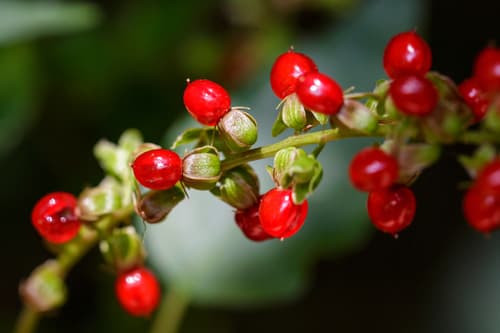
Toxicity unknown
Pigeonberry (Rivina humilis) is not listed by the ASPCA Animal Poison Control Center (opens in new tab) or the other sources we check, so we have no verdict for it either way. Absence from those lists is not a clearance. If your pet shows symptoms after eating any plant, call the ASPCA at (888) 426-4435.
Light
full sun
Water
low
Size
12"–18" H × 6"–18" W
Bloom
Mar, Apr, May, Jun, Jul, Aug, Sep, Oct, Nov
Native to
AR, AZ, FL, LA and 3 more states
Before you buy
Your city may pay you to plant this
Cities and water utilities offer rebates for replacing lawn with native and water-wise plants. We track 459 programs across 44 states, each with a link to the provider and the date we last checked it.
Find rebates in your areaPicture natives in your own yard
Upload a photo of your yard and Patch Vision shows a rendering of it planted with natives for your region, like Pigeonberry.


Browse plants for this ecoregion
Rivina humilis is a compact native perennial that produces small white flowers followed by bright red berries from spring through fall. This low-growing plant works well as groundcover or in naturalized areas, maintaining an informal appearance throughout the growing season.
Growing Pigeonberry
Grow Pigeonberry in full sun and low water. Mature plants reach 12 to 18 inches tall and spread 6 to 18 inches wide. Expect low maintenance to keep it looking intentional in a front yard.
How to care for Pigeonberry, by region
How to care for Pigeonberry where it is actually grown: year-round basics plus what to do each season, region by region, with the sources for each.
Care guidance last updated: September 2026
Central Great Plains (includes Oklahoma City, OK)
Year-round
Pigeonberry is a part-shade perennial native to a range that stretches north to Oklahoma, putting Oklahoma City near the edge of where it grows outdoors. In OKC's harder winters, expect it to die back to the ground most years and regrow from the root each spring.
- Plant in part shade with dappled sun, such as under trees or on the north side of a structure
- Give it moist, well-drained soil, it tolerates clay as long as it does not stay waterlogged
- Water during dry spells, it will go dormant and bounce back once rain returns
- Treat it as a root-hardy perennial here rather than an evergreen shrub, most winters knock it back to the ground
- Keep berries and foliage out of reach of small children and pets, both are documented as toxic if ingested
Fall
Fall brings pigeonberry's namesake red berries in Oklahoma City, right before the season's first hard freeze ends growth for the year.
- Enjoy the mix of pink flowers and red berries the plant often carries at the same time
- Berries feed birds, but both the fruit and leaves are documented as toxic if ingested by people or pets, so site it away from areas where small children play
- Taper off watering as growth slows heading into the season's first freeze
- Leave seed heads in place if you want birds to spread it, or remove them to control spread
Winter
Winter reliably kills pigeonberry back to the ground in Oklahoma City, since the plant is only root-hardy this far north, not evergreen.
- Expect the top growth to die back completely after the first hard freeze
- Leave a couple inches of mulch over the root crown for winter protection
- No watering or pruning needed once it goes fully dormant, just clear away collapsed foliage
- Do not give up on it until well into spring, regrowth from the roots can be slow to start
Spring
Spring is a slow start for pigeonberry in Oklahoma City, since new growth usually waits until after the area's last freeze in late March before pushing up from the roots.
- Do not assume it is dead over a bare winter bed, new shoots often do not appear until well into spring
- Clear away old dead growth once you see new shoots emerging from the base
- Water lightly to support new growth as it establishes
- Hold off on transplanting or dividing until the plant is actively growing
Summer
Summer is the main growing and flowering season for pigeonberry in Oklahoma City, with white to pink flowers appearing through the heat.
- Water during dry stretches, without it the plant will simply go dormant early rather than die
- Keep it in part shade, afternoon sun in Oklahoma's summer heat can scorch the foliage
- Watch for the small white to pink flowers and early berries forming
- No fertilizer needed in typical Oklahoma clay soils
Sources: Lady Bird Johnson Wildflower Center - Rivina humilis
Cross Timbers (includes Fort Worth, TX)
Year-round
Pigeonberry is a low native perennial for shaded to sunny spots in North Texas yards, grown for its months of tiny pink flowers and bright red berries that birds eat.
- Plant it in a spot with full sun to part shade; afternoon shade helps it handle the summer heat.
- It stays low and spreading, about 12 to 18 inches tall, so give it 12 to 18 inches of space from its neighbors.
- Water deeply about once a week for the first growing season, then cut back to occasional deep waterings once it is established, since it handles low water well once rooted in.
- Berries and leaves are documented as toxic to humans, so keep children (and pets, as a precaution) from eating them.
- It is native to the Cross Timbers area and is also a larval host plant for the Goodson's greenstreak butterfly, so a planting here supports local wildlife.
Fall
Fall is a second good planting window, and it is the season pigeonberry's red berries are at their showiest, feeding resident and migrating birds.
- Plant new starts in September or October while the soil is still warm but the worst heat has passed.
- Cut back any leggy or sprawling stems by about a third in late September to keep the plant compact before winter.
- Let ripe red berries stay on the plant instead of deadheading them; they are a fall and winter food source for birds.
- Water new fall plantings twice a week until the first frost, expected mid November in North Texas.
- Rake fallen berries out of walkways or beds you do not want to reseed, since the plant self-seeds readily.
Leaving the red berry clusters in place through fall reads as a deliberate, seasonal planting rather than an untended bed, since the color and form stay tidy on their own.
Winter
Pigeonberry usually dies back to the ground after a hard freeze in North Texas, then resprouts from its roots the following spring.
- Expect the top growth to blacken and collapse after the first hard freeze, typically by late December.
- Cut the dead stems back to 2 to 4 inches once they have browned, rather than leaving them standing all winter.
- Skip fertilizer and heavy watering in winter; the plant is dormant below ground.
- Add about 2 inches of mulch over the root zone ahead of any severe Arctic outbreak to protect the roots.
- Leave the cut-back bed alone until new growth appears in spring, usually by April.
Cutting the dead stems back to a few inches right after they brown keeps the winter bed looking maintained instead of left to die back untidily.
Spring
Spring is the best time to plant pigeonberry in North Texas beds, and established plants push out fresh growth and their first flush of flowers.
- Plant new starts after the last frost, mid March in North Texas, once the soil has warmed.
- Choose a spot with morning sun and afternoon shade if possible; it also tolerates full sun in spring's milder temperatures.
- Water new plants two to three times a week for the first six weeks after planting to help roots establish.
- Work an inch of compost into the top few inches of soil at planting time and skip synthetic fertilizer.
- Watch for the first small pink and white flower clusters by April, an early sign the plant has settled in.
New spring plantings can look sparse for the first few weeks; a couple inches of mulch around the base keeps the bed reading as an intentional planting rather than bare dirt while it fills in.
Summer
North Texas summers are pigeonberry's toughest test; established plants handle the heat on very little water, but they can wilt or look ragged during the worst July and August stretches.
- Water established plants deeply once every 7 to 10 days during 100F-plus stretches, more often for anything planted this spring.
- Expect the foliage to wilt a little by midafternoon on the hottest days; it usually perks back up overnight.
- Berries begin ripening to bright red through summer while the plant keeps flowering at the same time.
- Keep 2 to 3 inches of mulch over the root zone to hold moisture and cut down on how often you need to water.
- Skip fertilizer in summer; feeding a heat-stressed plant does not help it and can push weak new growth.
A light afternoon wilt on the hottest days is normal, not a sign the planting is failing, and the plant recovers by morning, so there is no need to rework the bed.
Sources: Lady Bird Johnson Wildflower Center, Rivina humilis profile, Native Plant Society of Texas, Rivina humilis, Dallas County Master Gardeners Association, Rivina humilis (Pigeonberry)
Edwards Plateau (includes San Antonio, TX)
Year-round
Pigeonberry is native across Texas including the Hill Country, and it settles in happily under live oaks and other part shade spots around San Antonio.
- Plant it in part to full shade, the dappled light under live oaks or mountain laurel mimics its native woodland edge habitat
- Water deeply once a week the first summer to establish roots in San Antonio's caliche soil, then taper off
- Once established it tolerates Hill Country drought by going dormant and dying back, then resprouting when rain returns
- Spread 2 to 3 inches of mulch to hold moisture in the fast draining limestone soil and keep roots cooler through summer heat
- The most common mistake is planting it in full sun, San Antonio's summer sun and reflected heat off pavement will scorch and stunt it
- All parts including the red berries and leaves are toxic if ingested, so keep an eye on kids and pets in the yard
Winter dieback leaves the spot bare from the street until spring regrowth, tuck it among evergreen shrubs if the bed faces the curb.
Fall
Fall is pigeonberry's showiest season in San Antonio, with red berries and flowers together as the weather cools.
- Enjoy the mix of blooms and bright red berries on the same stem, a signature trait of this plant into October
- Cut back on supplemental watering as fall rains and cooler temperatures return to the Hill Country
- Leave the berries in place, they are an important fall and winter food source for mockingbirds and other resident birds
- Do not deadhead, removing the berry clusters cuts off the food source and next year's seed
Winter
San Antonio gets occasional hard freezes, and pigeonberry responds by dying back to the ground rather than staying evergreen.
- Expect the top growth to blacken and die back after a hard freeze, this is normal winter behavior for the species
- Leave the dead stems standing over winter, they protect the crown and root system from further cold
- Hold off on cutting back until you see new growth at the base in late winter or early spring
- Skip winter watering unless the season is unusually dry, the dormant plant needs very little
Spring
Spring is when San Antonio's pigeonberry wakes up from winter dieback and starts pushing new growth.
- Cut back any freeze damaged or dead stems once new growth appears at the base, usually by mid to late February in San Antonio
- Do not fertilize heavily, this plant grows fine in Hill Country soils without it
- Refresh mulch after cutting back to help the soil hold the spring rains
- Watch for the first white to pink blooms, they should appear by March as the plant leafs back out
Summer
San Antonio summers are hot and often dry, and pigeonberry handles that by resting rather than pushing through.
- Water deeply once a week during long dry stretches, more often only if it was planted this year
- Let the plant go dormant and drop leaves during extreme heat and drought rather than forcing it with heavy watering
- Keep it out of afternoon sun, west facing walls and pavement reflect heat that will stress the plant
- Watch for spider mites and aphids in the heat, a strong spray of water knocks most of them off
Sources: Lady Bird Johnson Wildflower Center - Rivina humilis, Dallas County Master Gardeners - Pigeonberry (Rivina humilis)
Southern Coastal Plain (includes Orlando, FL)
Year-round
Pigeonberry is native to Florida and grows naturally as a woodland understory plant, which suits shaded yards around Orlando.
- Give it part to full shade, Orlando's intense summer sun will scorch it in an open bed
- Water regularly the first year to establish, Orlando's sandy soil drains fast so young plants dry out quickly
- Mulch 2 to 3 inches deep, Orlando's sandy soil loses moisture and nutrients fast without it
- The most common mistake is overwatering a spot that is already shaded and moist, which can lead to root rot
- All parts including the berries and leaves are toxic if ingested, so watch pets and kids near the fruit
Fall
Fall in Orlando stays warm, and pigeonberry keeps blooming and fruiting well into the season.
- Continue watching for dry spells as afternoon storms taper off in October and November
- Enjoy the simultaneous flowers and red berries, a hallmark of this plant through fall
- Leave berries on the plant for migrating and resident birds
- After any tropical storm or hurricane wind, check for broken stems and trim only the damaged wood
Winter
Orlando winters are mild, so pigeonberry may hold onto some leaves most years but can still take damage in a rare freeze.
- Expect the plant to keep some leaves through a typical Orlando winter since hard freezes are rare
- If a freeze warning comes through Central Florida, mulch is the best protection for the roots
- Cut back only stems that blacken from cold snaps, wait to see what survives before pruning hard
- Cut watering back significantly, Orlando's dry winter season needs little supplemental water for an established plant
Spring
Spring in Orlando is the tail end of Florida's dry season, so pigeonberry needs a little help before summer rains return.
- Water once or twice a week if spring stays dry, Central Florida's dry season often runs into May
- Trim back any cold damaged stems from winter once new leaves appear
- Refresh mulch before the summer rainy season starts
- Expect flowering to begin as days warm, usually by March or April
Summer
Orlando's summer brings near daily afternoon storms, so pigeonberry gets most of its water for free during this season.
- Skip supplemental watering during the rainy season, daily storms from June through September usually cover it
- Make sure the planting spot drains well even in shade, standing water after storms can cause root rot in sandy soil
- Watch for fungal leaf spots in the humidity, thin out crowded stems for airflow if you see problems
- This is peak growth and bloom season, expect steady flowers and berries through the summer heat
Sources: Lady Bird Johnson Wildflower Center - Rivina humilis, Dallas County Master Gardeners - Pigeonberry (Rivina humilis)
Texas Blackland Prairies (includes Dallas, TX)
Year-round
Pigeonberry is a low shade-loving perennial that flowers and fruits almost nonstop through the warm months. In the Dallas area it wants a shady or dappled spot, light watering once it is settled in, and very little fuss. The whole plant is toxic if eaten, so keep an eye on kids and pets around the red berries.
- Establishment: water about once a week its first summer whenever rain is short, so the roots settle into the shade bed.
- Once established: water sparingly. In a Dallas dry spell it can drop its leaves and go dormant, then come back when rain or water returns, so do not panic if it wilts.
- Mulch: keep 2 to 3 inches of shredded hardwood or leaf mulch over the roots to hold moisture and keep the crown cool under the tree canopy.
- Common mistake: planting it in full afternoon sun. It scorches. It belongs in part to full shade, and the whole plant, especially the berries, is toxic if eaten per the ASPCA Animal Poison Control Center, so site it away from where a child or dog would graze.
Fall
Pigeonberry keeps flowering and fruiting into fall in the Dallas area until the first frost knocks it back. A light tidy-up as it fades keeps the front bed looking cared for going into winter.
- Keep watering lightly through warm fall weeks if rain is short, since it often blooms right up to frost.
- After the first hard frost browns the top growth, trim the spent stems back to keep the bed neat.
- This plant self-seeds readily from its berries. If you do not want new seedlings spreading, snip off the fruiting stems before the berries drop and scatter.
A quick fall trim of the frost-browned stems reads as intentional and tidy from the curb, which helps a front yard look maintained and avoids drawing an HOA violation letter over dead-looking growth.
Winter
Pigeonberry dies back to the ground over a Dallas winter and rests until spring. There is almost nothing to do except protect the roots and leave it be.
- Once frost has fully knocked it back, cut the remaining dead stems down close to the ground.
- Pile a little extra mulch over the crown to shield the roots from the coldest Dallas snaps. It is root-hardy here and will return in spring.
- Do not water a dormant winter plant. The roots are resting and sitting wet in cold soil can rot them.
Cutting the dead stems down and leaving a mulched, level spot gives a clean winter silhouette that reads as intentional to neighbors and avoids an HOA violation letter over a patch of brown, collapsed growth.
Spring
Spring is when Dallas pigeonberry wakes up and starts putting out fresh growth and its first pink-white flower spikes. This is the time to clean up last year's stems and get water going as things warm.
- Cut any old dried stems left over winter down to a few inches so the new spring shoots come up clean.
- Refresh the mulch layer to 2 to 3 inches now, before the summer heat, to lock in the spring rain.
- Start light watering if April turns dry, roughly once a week for young plants, to push steady new growth and early bloom.
Summer
Dallas summers are hot and often dry, and this is pigeonberry's main show, blooming and fruiting at the same time in the shade. Watering is the main job, and it is fine to let the plant coast if a drought hits.
- In a hot dry stretch, give an established plant a deep soak every week or two. It stays fuller and keeps flowering with a little summer water.
- If you skip watering during a hard Dallas drought, it may wilt and go dormant. That is normal, and it will bounce back with rain, so do not overwater trying to revive it.
- Leave the ripe red berries. They feed mockingbirds and other birds through the summer, but remember the whole plant is toxic to dogs and cats per the ASPCA Animal Poison Control Center, so keep pets from chewing the fruit.
Sources: Lady Bird Johnson Wildflower Center Rivina humilis, ASPCA Rouge Plant toxic to dogs and cats, Native Plant Society of Texas Rivina humilis
Western Gulf Coastal Plain (includes Houston, TX)
Year-round
Pigeonberry is a shade-loving perennial native to the Gulf Coast, including Texas, and it grows especially well in the Houston area, where mild winters let it stay evergreen-ish in most years instead of dying back hard.
- Plant in part shade, such as under trees or on a shaded side of the house
- It tolerates Houston's heavy clay soil as long as the spot does not stay waterlogged after storms
- Water during dry spells, it goes dormant without supplemental water and returns once rain resumes
- Blooms and fruits over a long season, often March through October
- Keep berries and foliage out of reach of small children and pets, both are documented as toxic if ingested
As a low, part-shade groundcover-style plant with pink flowers and red berries, it reads as tidy understory planting for an HOA-conscious shaded bed rather than an unruly spreader.
Fall
Fall keeps the show going for pigeonberry in Houston, with pink flowers and scarlet berries often on the plant together into October.
- Enjoy the extended bloom and berry display, Houston's long warm season lets this run later than farther north
- Berries feed birds, but both the fruit and leaves are documented as toxic if ingested by people or pets, so keep them out of reach of small children
- Watering needs drop as temperatures cool
- Leave some berries in place if you want birds to reseed it naturally
Winter
Houston's brief, mild winters mean pigeonberry usually only partially dies back, unlike farther north where it is killed to the ground every year.
- Expect the plant to hold some foliage through a typical mild Houston winter
- A harder freeze can still knock it back to the ground, if so just clear away damaged growth
- No watering needed during winter dormancy
- New growth from the roots resumes quickly once temperatures warm in late winter
Spring
Spring growth picks up early in Houston for pigeonberry, since the area's mild winters mean plants often keep some green growth through the cold months.
- Clear away any winter-damaged foliage to make room for fresh growth
- Water regularly while new growth fills in
- Blooming can start as early as March in the Houston area
- Divide or transplant now if you want to spread coverage in a shaded bed
Summer
Summer is peak bloom and fruiting season for pigeonberry in Houston, with flowers and berries often appearing on the plant at the same time.
- Water during Houston's dry summer stretches, it will go dormant rather than die if it gets too dry
- Keep it in part shade, full Gulf Coast summer sun can stress the foliage
- Make sure the spot drains well, standing water in heavy clay after summer storms can rot the roots
- No fertilizer needed in typical Houston garden soil
Sources: Lady Bird Johnson Wildflower Center - Rivina humilis
In an HOA neighborhood
Pigeonberry is an HOA-friendly choice. Maintenance level: low. Tidiness: 2 out of 5.
Works well in: front yard, foundation, street edge, mid zone.
Wildlife value
The berries provide food for birds, while the long blooming period offers nectar for small pollinators and beneficial insects.
Common questions
- When does pigeonberry bloom?
- Rivina humilis produces small flower spikes across a long season, generally from March through November, with fruit often forming while later flowers are still opening.
- How much sun does pigeonberry need?
- Pigeonberry grows best in full sun locations where it can flower and fruit steadily through the warm months.
- How much water does pigeonberry require?
- Once established, pigeonberry has low water needs and tolerates dry spells well, making it a good fit for well-drained garden beds.
- What kind of plant is pigeonberry?
- Pigeonberry is a soft-stemmed forb, a low mounding herbaceous perennial rather than a woody shrub or vine.
- Is Pigeonberry HOA-friendly?
- Pigeonberry is generally an HOA-friendly choice in the right placement, with low maintenance.
These answers were drafted with an AI model from this plant's data. Verify care details with a local expert.
See Pigeonberry in a real native yard
Pigeonberry is one of the natives used in these Garden Planner yard designs. Tap any one to see the before and after.
The after image is a Garden Planner preview, generated by an AI image model from the real yard photo. It replants the yard with native plants chosen to fit that yard's ecoregion, sun, and HOA strictness. The finished planting will look different.
Native range data from vouchered herbarium specimen records and regional native plant society lists. Pollinator and host plant associations compiled from GBIF, iNaturalist, and published ecological literature.
If something looks wrong
Common plant problems, and what to check first
These come up on almost any plant. Each guide lists the likely causes in the order they are worth ruling out, with one thing to check before you act on any of them, and links to the source it came from.
- It is dying right after planting
- Leaves turning yellow
- Wilting even though I watered it
- Brown crispy leaf tips
- Bugs on the plant
Ready to grow Pigeonberry? Add it to your garden in Pollinator Patch to track it and get season-by-season care guidance.