Red Elderberry
Sambucus pubens
Last reviewed: October 2026
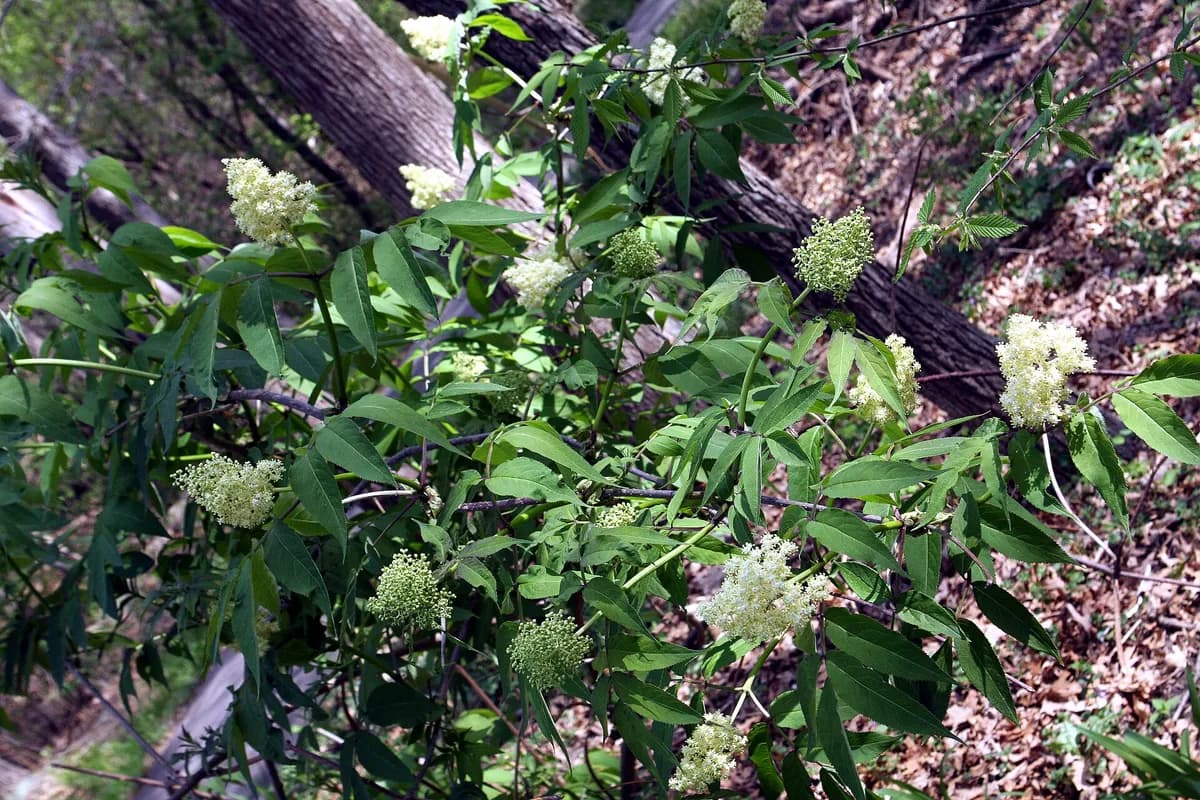
Sambucus pubens is a deciduous shrub of moist woodland edges and streambanks, blooming with clusters of small white flowers in May and June before setting bright red berry clusters.
Toxicity unknown
Red Elderberry (Sambucus pubens) is not listed by the ASPCA Animal Poison Control Center (opens in new tab) or the other sources we check, so we have no verdict for it either way. Absence from those lists is not a clearance. If your pet shows symptoms after eating any plant, call the ASPCA at (888) 426-4435.
Light
part sun
Water
medium
Size
36"–72" H × 36"–72" W
Bloom
May, Jun
Native to
AL, AZ, CA, CT and 34 more states
Pollinators
bees, beetles, flies
Before you buy
Your city may pay you to plant this
Cities and water utilities offer rebates for replacing lawn with native and water-wise plants. We track 459 programs across 44 states, each with a link to the provider and the date we last checked it.
Find rebates in your areaPicture natives in your own yard
Upload a photo of your yard and Patch Vision shows a rendering of it planted with natives for your region, like Red Elderberry.


Browse plants for this ecoregion
Canadian elder is a medium-sized native shrub that produces clusters of white flowers in late spring followed by bright red berries in summer. This deciduous shrub has a rounded, informal growth habit and provides excellent seasonal interest through flowers, fruit, and fall color.
Growing Red Elderberry
Grow Red Elderberry in part sun and medium water. Mature plants reach 36 to 72 inches tall and spread 36 to 72 inches wide. Expect moderate maintenance to keep it looking intentional in a front yard.
How to care for Red Elderberry, by region
How to care for Red Elderberry where it is actually grown: year-round basics plus what to do each season, region by region, with the sources for each.
Care guidance last updated: October 2026
Ridge and Valley (includes Harrisburg, PA)
Year-round
Red elderberry is a large, fast-growing shrub that likes sun to part shade and soil that stays moist but drains. Plan for 6 to 12 feet of width and a plant that sends up new shoots from the base.
- Give it sun to part shade. Afternoon shade helps in Harrisburg's hot, humid summers.
- Plant in loamy, humus-rich soil. Mix compost into heavy clay and mulch deeply.
- Space plants 6 to 10 feet apart so air can move through.
- Treat the raw berries and other plant parts as something not to eat. Wildflower.org warns that parts of this plant are toxic.
Cut back older stems and thin base shoots each year so it reads as an intentional, tidy shrub in a front yard.
Fall
Fall is a good window to plant and to let the soil settle before winter. Rain usually covers water needs, but check during dry stretches.
- Water newly planted shrubs until the ground freezes.
- Top up mulch to protect roots from winter swings.
- Birds eat the red fruit, so leave it on the plant if you like.
- Rake up fallen leaves if spots or mildew showed up this year.
Winter
Winter is the time to rejuvenate a leggy shrub. The plant is hardy to zones 3 to 7, which covers Harrisburg's cold winters.
- Cut a few of the oldest stems to the ground while the plant is dormant.
- Remove dead or diseased branches any time.
- Knock heavy snow or ice off the branches gently, since they are weak.
- No watering is needed once the soil freezes.
A winter cutback keeps the shape compact and neat before spring growth.
Spring
Spring is a good window to plant and to prune out winter damage. White flower clusters open around May and June.
- Plant now, set the crown level with the soil, and water deeply.
- Remove dead or broken twigs. Ice and wind often damage the branches.
- Spread a fresh layer of compost and mulch to hold moisture.
- Water during dry spells while it leafs out and blooms.
Summer
This plant prefers moist to wet soil, so summer water matters most in Harrisburg's heat. Keep the root zone evenly damp and mulched.
- Water deeply once or twice a week when rain is short, more for young plants.
- Keep mulch 2 to 3 inches deep, pulled back from the stems.
- Pull or cut new base shoots if you want to keep it from spreading.
- Check for leaf spots, mildew or mites in humid weather.
Edge the bed and remove stray shoots so the planting looks deliberate from the street.
Sources: Lady Bird Johnson Wildflower Center: Sambucus racemosa, Native Plant Trust: Sambucus racemosa, UT Gardens: Sambucus racemosa (Sambucus pubens)
In an HOA neighborhood
Red Elderberry is an HOA-friendly choice. Maintenance level: moderate. Tidiness: 3 out of 5.
Works well in: foundation, mid zone.
- Informal growth habit may appear unstructured
- Can look sparse in winter without leaves
Wildlife value
The flowers attract various pollinators including bees, beetles, and flies in May and June. The bright red berries are an important food source for birds and other wildlife throughout summer.
Common questions
- What light does Sambucus pubens (Red Elderberry) prefer?
- Red Elderberry does best with part sun, though it tolerates conditions ranging from full sun to part shade, especially where soil moisture stays consistent.
- How much water does Red Elderberry need?
- This shrub grows best in medium to consistently moist soil and struggles in dry conditions, so regular watering helps it establish in garden settings.
- When does Sambucus pubens bloom?
- Red Elderberry produces its flower clusters in May and June, with berries forming later in summer.
- What insects visit Red Elderberry flowers?
- The flowers attract bees, beetles, and flies, which feed on pollen and nectar during the spring bloom period.
- Is Red Elderberry HOA-friendly?
- Red Elderberry is generally an HOA-friendly choice in the right placement, with moderate maintenance.
These answers were drafted with an AI model from this plant's data. Verify care details with a local expert.
Native range data from the World Checklist of Vascular Plants (Kew). Pollinator and host plant associations compiled from GBIF, iNaturalist, and published ecological literature.
If something looks wrong
Common plant problems, and what to check first
These come up on almost any plant. Each guide lists the likely causes in the order they are worth ruling out, with one thing to check before you act on any of them, and links to the source it came from.
- It is dying right after planting
- Leaves turning yellow
- Wilting even though I watered it
- Brown crispy leaf tips
- Bugs on the plant
Ready to grow Red Elderberry? Add it to your garden in Pollinator Patch to track it and get season-by-season care guidance.