Rocky Mountain Juniper
Juniperus scopulorum
Last reviewed: October 2026
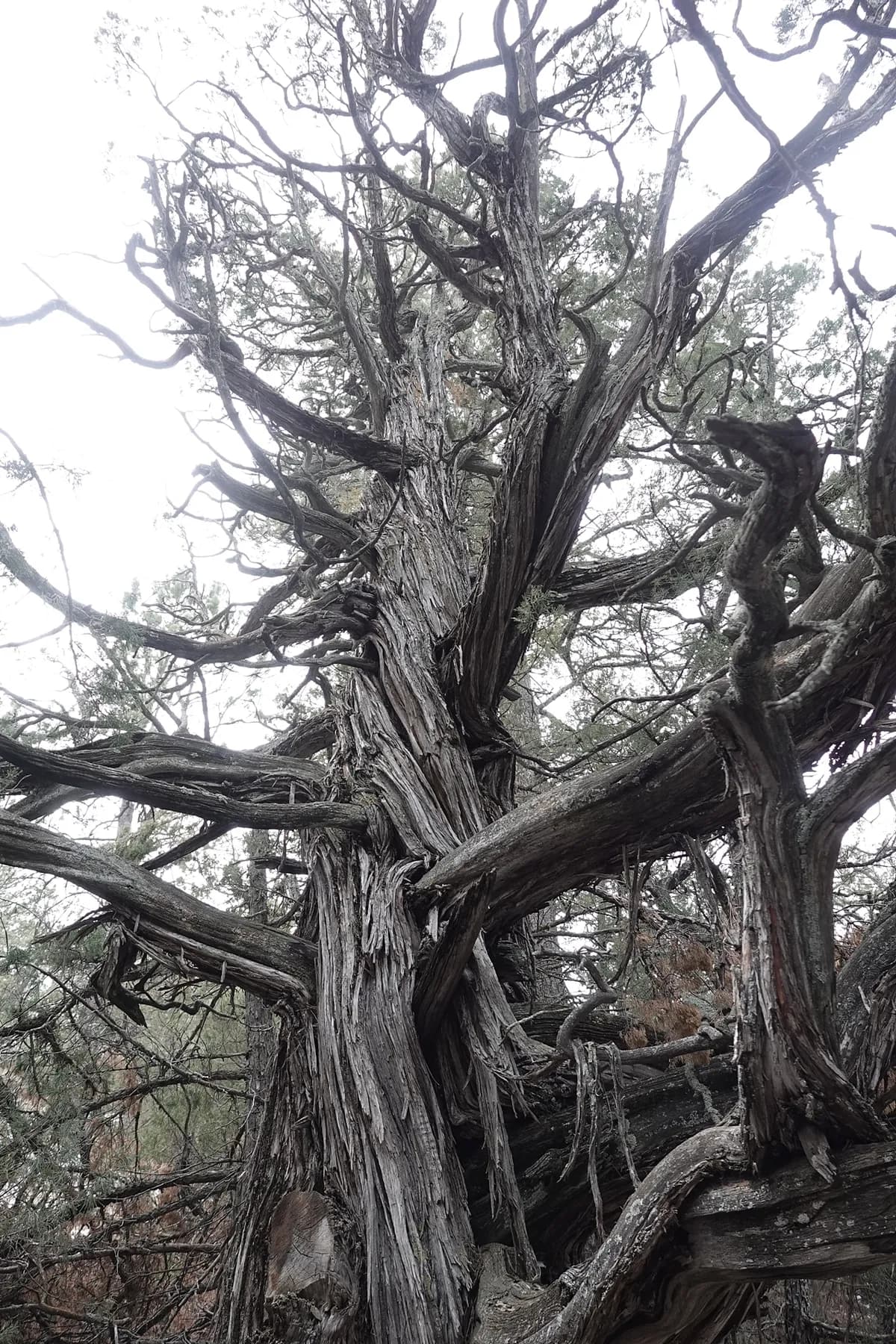
Juniperus scopulorum is a slow growing evergreen conifer that thrives in full sun on dry, rocky slopes and foothills. It tolerates drought and cold, forming a narrow pyramidal shape reaching 20 to 40 feet tall.
Toxicity unknown
Rocky Mountain Juniper (Juniperus scopulorum) is not listed by the ASPCA Animal Poison Control Center (opens in new tab) or the other sources we check, so we have no verdict for it either way. Absence from those lists is not a clearance. If your pet shows symptoms after eating any plant, call the ASPCA at (888) 426-4435.
The USDA PLANTS Database (opens in new tab) does not flag Rocky Mountain Juniper as toxic to livestock.
Light
full sun
Water
low
Size
360"–480" H × 120"–240" W
Bloom
Mar, Apr, May
Native to
AZ, CO, ID, MT and 9 more states
Pollinators
butterflies
Before you buy
Your city may pay you to plant this
Cities and water utilities offer rebates for replacing lawn with native and water-wise plants. We track 459 programs across 44 states, each with a link to the provider and the date we last checked it.
Find rebates in your areaPicture natives in your own yard
Upload a photo of your yard and Patch Vision shows a rendering of it planted with natives for your region, like Rocky Mountain Juniper.


Browse plants for this ecoregion
Rocky Mountain red-cedar is a slow-growing evergreen tree that develops a narrow, columnar shape. This drought-tolerant conifer produces small blue berries and maintains its green foliage year-round, making it an excellent windbreak or specimen tree.
Growing Rocky Mountain Juniper
Grow Rocky Mountain Juniper in full sun and low water. Mature plants reach 360 to 480 inches tall and spread 120 to 240 inches wide. Expect low maintenance to keep it looking intentional in a front yard.
In an HOA neighborhood
Rocky Mountain Juniper is an HOA-friendly choice. Maintenance level: low. Tidiness: 4 out of 5.
Works well in: front yard, foundation, street edge, mid zone.
Wildlife value
The berries provide important winter food for birds including cedar waxwings, robins, and juncos. Dense branching offers excellent nesting sites and winter shelter for various bird species.
Common questions
- How much water does Rocky Mountain Red-cedar need once it is established?
- Once its roots are established, this juniper needs very little supplemental water and handles extended dry spells well, making it suited to arid foothill and rangeland sites.
- What light conditions does this tree prefer?
- It grows best in full sun but can tolerate some light shade, especially when young, before it develops its typical dense, upright form.
- Does Juniperus scopulorum produce showy flowers?
- No. Like other junipers it does not produce true flowers. Instead it forms small pollen cones on male trees and berry-like blue seed cones on female trees.
- What size and shape can I expect from this tree?
- Mature trees typically form a narrow, pyramidal to columnar shape and reach roughly 20 to 40 feet in height, though size varies with site conditions and age.
- Is Rocky Mountain Juniper toxic to livestock?
- The USDA PLANTS Database does not flag Rocky Mountain Juniper as toxic to livestock.
- Is Rocky Mountain Juniper HOA-friendly?
- Rocky Mountain Juniper is generally an HOA-friendly choice in the right placement, with low maintenance.
These answers were drafted with an AI model from this plant's data. Verify care details with a local expert.
Native range data from vouchered herbarium specimen records and regional native plant society lists. Pollinator and host plant associations compiled from GBIF, iNaturalist, and published ecological literature.
If something looks wrong
Common plant problems, and what to check first
These come up on almost any plant. Each guide lists the likely causes in the order they are worth ruling out, with one thing to check before you act on any of them, and links to the source it came from.
- It is dying right after planting
- Leaves turning yellow
- Wilting even though I watered it
- Brown crispy leaf tips
- Bugs on the plant
Ready to grow Rocky Mountain Juniper? Add it to your garden in Pollinator Patch to track it and get season-by-season care guidance.