Rose Mock Vervain
Glandularia canadensis
Last reviewed: October 2026
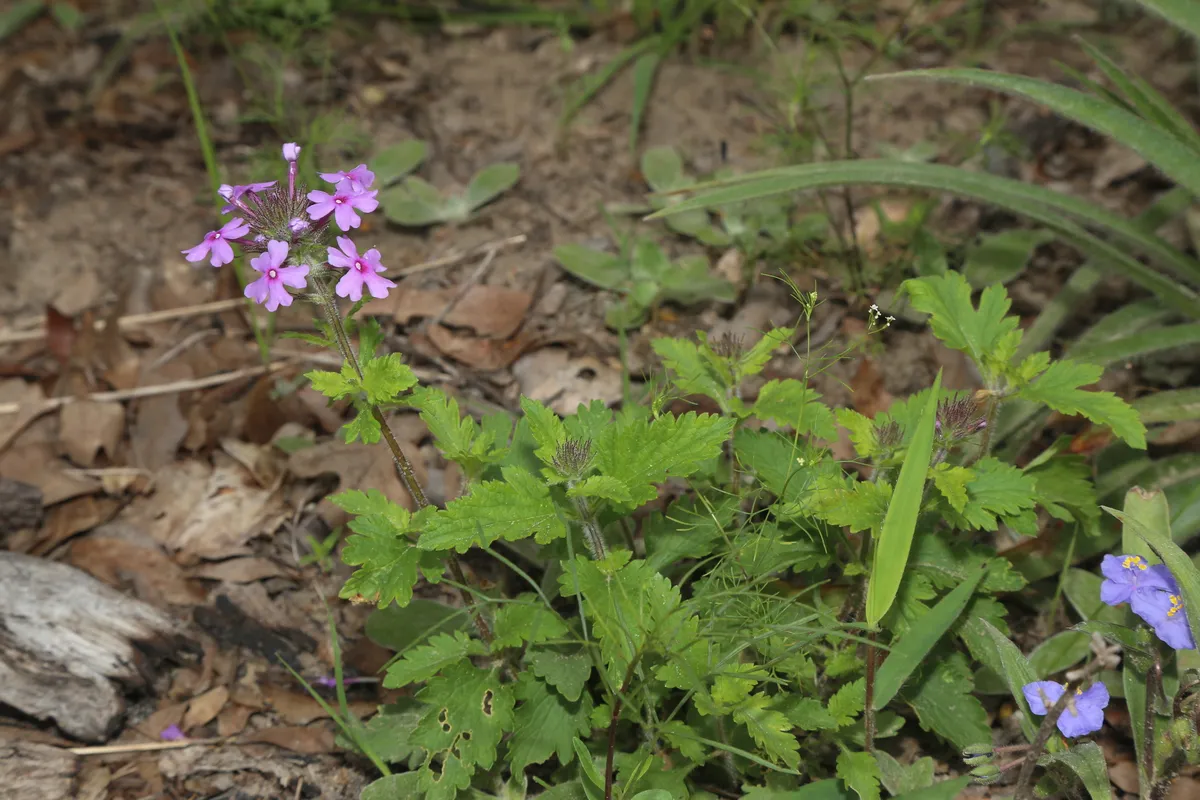
Rose Mock Vervain is a low, spreading forb that blooms from May through August with clusters of pink to purple flowers. It thrives in full sun with medium to low water and suits rock gardens, borders, and open meadow plantings.
Toxicity unknown
Rose Mock Vervain (Glandularia canadensis) is not listed by the ASPCA Animal Poison Control Center (opens in new tab) or the other sources we check, so we have no verdict for it either way. Absence from those lists is not a clearance. If your pet shows symptoms after eating any plant, call the ASPCA at (888) 426-4435.
Light
full sun
Water
medium
Size
6"–18" H × 12"–24" W
Bloom
May, Jun, Jul, Aug
Native to
AL, AR, FL, GA and 23 more states
Pollinators
bees, butterflies
Before you buy
Your city may pay you to plant this
Cities and water utilities offer rebates for replacing lawn with native and water-wise plants. We track 459 programs across 44 states, each with a link to the provider and the date we last checked it.
Find rebates in your areaPicture natives in your own yard
Upload a photo of your yard and Patch Vision shows a rendering of it planted with natives for your region, like Rose Mock Vervain.


Browse plants for this ecoregion
Rose vervain is a low-growing native wildflower that produces clusters of small purple flowers from late spring through summer. This spreading perennial forms a mat-like groundcover that works well in sunny gardens and natural areas.
Growing Rose Mock Vervain
Grow Rose Mock Vervain in full sun and medium water. Mature plants reach 6 to 18 inches tall and spread 12 to 24 inches wide. Expect low maintenance to keep it looking intentional in a front yard.
How to care for Rose Mock Vervain, by region
How to care for Rose Mock Vervain where it is actually grown: year-round basics plus what to do each season, region by region, with the sources for each.
Care guidance last updated: September 2026
Cross Timbers (includes Fort Worth, TX)
Year-round
Rose vervain (also called rose mock vervain) is a low, spreading Texas native wildflower that mats along the ground and covers itself in small pink to rose-purple flower clusters from late spring into late summer. It spreads wider than it grows tall, so give it room.
- Space plants 12 to 18 inches apart. The trailing stems root wherever they touch soil, so a few plants fill in a bed within a season.
- Plant in full sun to light afternoon shade in soil that drains well. Standing water will rot the roots and crown.
- Water new plantings two to three times a week for the first month, then taper off, since established plants handle short dry spells.
- Not on the ASPCA toxic plant list for dogs, cats, or horses.
Reads as an intentional groundcover when the bed has a clean edge, since the spreading, rooting stems will otherwise creep past a bed line into the lawn or a walkway.
Fall
Bloom winds down as days shorten into fall, and cooler weather makes this a good time to tidy the clump and divide it if it has spread further than you want.
- Give the clump one more light shearing in September to clean it up as flowering slows for the year.
- Fall is a good time to dig up rooted stem sections and transplant them to fill bare spots or start a new patch elsewhere in the bed.
- Cut back watering as nights cool in October; established plants need little supplemental water once the heat breaks.
- Before the first frost in mid November, rake fallen leaves off the mat so the crown doesn't sit wet going into winter.
A September cleanup trim keeps the bed looking maintained through fall rather than fading into a ragged, spent look before frost.
Winter
North Texas winters are usually mild enough for rose vervain to stay semi-evergreen, but occasional hard Arctic outbreaks can knock it back to the crown.
- Leave the foliage in place through winter; in a mild year it stays semi-evergreen and helps insulate the crown.
- Add a 2 to 3 inch mulch layer over the base before the first hard freeze to buffer the crown against sudden Arctic cold snaps.
- If a freeze browns the foliage, leave the dead growth in place rather than cutting it back right away; it helps protect the crown from the next cold snap.
- After a severe Arctic outbreak, wait until March before deciding a plant is dead, since it can resprout from the crown once the soil warms.
Winter dieback can look sloppy in a front bed; a light shaping trim of the browned growth keeps a defined groundcover edge without pulling the plant, since it usually resprouts in spring.
Spring
Spring, after the last frost in mid March, is the best time to plant rose vervain in North Texas. It establishes fast and starts its main bloom by May.
- Plant after mid March once frost risk has passed, directly into well-drained soil.
- In heavy black clay, set the root ball a little high on a slight mound or mix in compost so roots don't sit wet; in the sandier soils west of the metro, plan on watering more often through the first summer since it drains fast.
- Pinch the growing tips back once stems reach 4 to 6 inches to encourage branching and a fuller mat before bloom.
- Watch for the first flower clusters by May, and remove spent blooms to keep new ones coming.
A defined bed edge planted this season keeps the spreading habit looking like a deliberate groundcover instead of an encroaching patch as it fills in over the summer.
Summer
Rose vervain keeps blooming through the hottest months, but North Texas summer heat and dry spells are the biggest threat to a planting still getting established.
- Deadhead faded flower clusters every week or two through June and July to keep new blooms coming.
- During 100 degree stretches with no rain, give an established patch one deep soak a week; a planting still in its first summer needs water twice a week.
- If bloom slows in the hardest heat of July and August, a light trim plus one deep watering usually brings flowers back within about two weeks.
- Keep a 2 inch mulch layer around the base to hold soil moisture and keep roots cooler.
Steady summer bloom keeps a front bed looking tended, but let the runners go untrimmed for a few weeks and they can sprawl past the bed line onto a walkway or curb; trim them back to keep the edge crisp.
Sources: Lady Bird Johnson Wildflower Center: Glandularia canadensis, ASPCA Toxic and Non-Toxic Plants, letter R (Rose Vervain/Verbena not listed)
Edwards Plateau (includes San Antonio, TX)
Year-round
Rose Mock Vervain is a low, spreading, mat-forming perennial that is native to central Texas, so it grows well in the San Antonio area with minimal fuss once established. Give it full sun to light shade and well-drained soil, and it will bloom on and off through most of the year in San Antonio's mild winters.
- Native to central Texas prairies, pastures, and rocky meadows, so it is a good fit for San Antonio's soils and climate.
- Give it full sun for the fullest bloom, though it tolerates light shade.
- Plant in well-drained soil. It handles poor, sandy, or rocky ground but struggles in soggy or heavy clay that stays wet.
- Grows low, 8 to 10 inches tall, spreading into a dense mat as stems root where they touch the ground.
- Not on the ASPCA toxic plant list for dogs.
- Watch for aphids, spider mites, and thrips, especially during hot, dry stretches.
Its low, mounding habit and long bloom season make it a tidy, HOA-friendly choice for a front yard border or edge planting.
Fall
Fall in San Antonio brings cooler temperatures and more rain, giving Rose Mock Vervain a second bloom push before the average first frost around mid-November.
- First frost in San Antonio arrives around November 12 on average, so expect blooming to continue well into fall.
- A light fall trim is fine, but avoid a heavy cutback late in the season since it can leave the plant more exposed to winter cold.
- Cooler, wetter fall weather usually means less supplemental watering is needed than in summer.
- Good time to divide or transplant spreading mats before winter.
Fall's second bloom flush keeps the bed looking finished into late autumn.
Winter
San Antonio's mild winters mean Rose Mock Vervain usually behaves as a perennial and can keep some green growth, though an occasional hard freeze can knock it back to the ground.
- South of the Red River, including San Antonio, Rose Mock Vervain typically survives winter as a perennial rather than dying out the way it does farther north.
- A layer of mulch over the root zone helps it ride out an occasional hard freeze.
- Skip heavy pruning in winter, since cutting back hard right before a freeze increases cold damage risk.
- If foliage is knocked back by a freeze, wait for new growth at the base in spring before cutting away dead stems.
Even when frozen back, a mulched bed keeps a neat, intentional look through winter rather than bare dirt.
Spring
Spring is San Antonio's best window to plant or divide Rose Mock Vervain, and established plants hit their heaviest bloom once nights warm past the average last frost.
- San Antonio's average last frost falls around March 20, so wait until then to set out new plants.
- Water regularly, at the base rather than overhead, until new plants are established.
- Pinch growing tips back to encourage a fuller, bushier mat instead of leggy growth.
- Watch new spring growth for aphids, a common early season pest on rose vervain.
Spring's full flush of pink blooms fills in a front bed fast without looking overgrown, an easy HOA-friendly edge planting.
Summer
San Antonio summers bring long stretches of extreme heat and little rain, so established Rose Mock Vervain needs supplemental water to keep blooming instead of stalling out.
- Water deeply during dry summer spells to prevent leaf loss and keep flowers coming.
- Water at the base of the plant rather than overhead to reduce fungal issues in the heat.
- If bloom slows midsummer, trim back about a quarter of the plant's height, then water and feed lightly to push a fresh flush.
- Heat and humidity can bring on spider mites and powdery mildew, so keep an eye on foliage.
A midsummer trim keeps the planting from looking scraggly along a front walk or bed edge.
Sources: Glandularia canadensis, Lady Bird Johnson Wildflower Center Native Plant Database, ASPCA Toxic and Non-Toxic Plant List, Dogs, Rose Verbena Care, Gardening Know How (community tip), Frost Dates for San Antonio, Texas, Garden.org (community tip)
Ouachita Mountains (includes Hot Springs, AR)
Year-round
Rose mock vervain (also sold as rose verbena) is native to Arkansas, including the Ouachita Mountains area around Hot Springs, and does best in the thin, rocky, well drained soil common there. It grows low and spreading in full sun to part shade and tolerates poor, acidic soil better than rich garden beds.
- Give it 4 to 6 or more hours of sun a day, it also tolerates part shade with lighter bloom.
- Plant in fast draining, rocky or sandy soil, it struggles in heavy wet clay.
- Once established, it is drought tolerant and only needs water during extended dry spells.
- Deadhead spent flower clusters through the growing season to keep it blooming and compact.
Fall
Rose mock vervain keeps blooming into September in Arkansas before growth slows with shorter days and cooler nights. Stop hard pruning roughly 45 days before your area's average first frost so the plant has time to harden off, then do a light tidy up cutback once a hard freeze blackens the foliage.
- Bloom typically continues into September before it slows down for the year.
- Stop trimming stems back about 45 days ahead of your average first frost date.
- After a hard freeze blackens the top growth, cut it back to keep the bed from looking scraggly over winter.
- Leave the crown and lower stems in place, do not cut all the way to the ground.
Cutting back blackened foliage after the first freeze reads as intentional seasonal care, not a neglected bed, which helps in an HOA-conscious front yard.
Winter
Rose mock vervain is hardy in USDA zones 6a through 10b, and Hot Springs falls solidly in that range, so established plants should carry through a typical Arkansas winter rather than needing to be replanted each year. Mulch over the root zone once the ground cools to buffer hard freezes, and leave pruning alone until new growth resumes.
- Established plants are winter hardy through zone 6a to 10b, and Hot Springs sits within that range.
- Mulch over the root zone in late fall or early winter to protect roots through hard freezes.
- Leave dead top growth in place through winter, it adds a little extra insulation for the crown.
- Wait until late winter or early spring for the first real cutback.
Spring
Spring is rose mock vervain's biggest bloom flush in Arkansas, with rosy pink flower clusters that can start as early as February and build through the season. In late winter or very early spring, cut plants back by about a third to remove any winter damaged growth so new stems come in full and bushy.
- Expect bloom to begin as early as February and increase through spring.
- Cut stems back by about one third in late winter or early spring if growth looks woody or winter damaged.
- Hold off on hard pruning once daytime temperatures climb, cutting in heat can stress the plant.
- If a hard freeze blackens foliage late in the season, established plants usually recover from the base.
A tidy late winter cutback before the spring flush reads as intentional care rather than a bed left to die back over winter.
Summer
Once established, rose mock vervain handles Arkansas summer heat and short dry spells well, but a long stretch without rain can cause it to drop leaves. Keep it blooming through the hottest months with a couple of light trims instead of one hard cutback, and give it a deep soak if it wilts during a dry spell.
- Water during prolonged dry summer periods to prevent leaf loss.
- Do two to three light trims over summer, cutting stems back by roughly a fourth each time, to keep it from getting leggy.
- Avoid pruning when daytime temperatures are above 80 degrees, cut stems are more likely to sunburn or stress out in that heat.
- Keep deadheading faded flower clusters so new buds keep forming.
Sources: Lady Bird Johnson Wildflower Center, Native Plant Database, Glandularia canadensis, U.S. Fish and Wildlife Service, Rose Mock Vervain species profile, NC State Extension Gardener Plant Toolbox, Verbena canadensis, Wilson Bros Gardens, How To Prune, Trim or Cut Back Verbena Plants
Texas Blackland Prairies (includes Dallas, TX)
Year-round
Rose vervain (also called rose mock vervain) is a low, spreading Texas native wildflower that mats along the ground and covers itself in small pink to rose-purple flower clusters from late spring into late summer. It spreads wider than it grows tall, so give it room.
- Space plants 12 to 18 inches apart. The trailing stems root wherever they touch soil, so a few plants fill in a bed within a season.
- Plant in full sun to light afternoon shade in soil that drains well. Standing water will rot the roots and crown.
- Water new plantings two to three times a week for the first month, then taper off, since established plants handle short dry spells.
- Not on the ASPCA toxic plant list for dogs, cats, or horses.
Reads as an intentional groundcover when the bed has a clean edge, since the spreading, rooting stems will otherwise creep past a bed line into the lawn or a walkway.
Fall
Bloom winds down as days shorten into fall, and cooler weather makes this a good time to tidy the clump and divide it if it has spread further than you want.
- Give the clump one more light shearing in September to clean it up as flowering slows for the year.
- Fall is a good time to dig up rooted stem sections and transplant them to fill bare spots or start a new patch elsewhere in the bed.
- Cut back watering as nights cool in October; established plants need little supplemental water once the heat breaks.
- Before the first frost in mid November, rake fallen leaves off the mat so the crown doesn't sit wet going into winter.
A September cleanup trim keeps the bed looking maintained through fall rather than fading into a ragged, spent look before frost.
Winter
North Texas winters are usually mild enough for rose vervain to stay semi-evergreen, but occasional hard Arctic outbreaks can knock it back to the crown.
- Leave the foliage in place through winter; in a mild year it stays semi-evergreen and helps insulate the crown.
- Add a 2 to 3 inch mulch layer over the base before the first hard freeze to buffer the crown against sudden Arctic cold snaps.
- If a freeze browns the foliage, leave the dead growth in place rather than cutting it back right away; it helps protect the crown from the next cold snap.
- After a severe Arctic outbreak, wait until March before deciding a plant is dead, since it can resprout from the crown once the soil warms.
Winter dieback can look sloppy in a front bed; a light shaping trim of the browned growth keeps a defined groundcover edge without pulling the plant, since it usually resprouts in spring.
Spring
Spring, after the last frost in mid March, is the best time to plant rose vervain in North Texas. It establishes fast and starts its main bloom by May.
- Plant after mid March once frost risk has passed, directly into well-drained soil.
- In heavy black clay, set the root ball a little high on a slight mound or mix in compost so roots don't sit wet; in the sandier soils west of the metro, plan on watering more often through the first summer since it drains fast.
- Pinch the growing tips back once stems reach 4 to 6 inches to encourage branching and a fuller mat before bloom.
- Watch for the first flower clusters by May, and remove spent blooms to keep new ones coming.
A defined bed edge planted this season keeps the spreading habit looking like a deliberate groundcover instead of an encroaching patch as it fills in over the summer.
Summer
Rose vervain keeps blooming through the hottest months, but North Texas summer heat and dry spells are the biggest threat to a planting still getting established.
- Deadhead faded flower clusters every week or two through June and July to keep new blooms coming.
- During 100 degree stretches with no rain, give an established patch one deep soak a week; a planting still in its first summer needs water twice a week.
- If bloom slows in the hardest heat of July and August, a light trim plus one deep watering usually brings flowers back within about two weeks.
- Keep a 2 inch mulch layer around the base to hold soil moisture and keep roots cooler.
Steady summer bloom keeps a front bed looking tended, but let the runners go untrimmed for a few weeks and they can sprawl past the bed line onto a walkway or curb; trim them back to keep the edge crisp.
Sources: Lady Bird Johnson Wildflower Center: Glandularia canadensis, ASPCA Toxic and Non-Toxic Plants, letter R (Rose Vervain/Verbena not listed)
In an HOA neighborhood
Rose Mock Vervain takes more care to keep looking intentional in a front yard. Maintenance level: low. Consider it for backyard or mid-zone beds rather than the street edge.
Works well in: backyard only.
- Has wild, informal appearance typical of prairie plants
- Spreading habit may appear uncontrolled
- Common name includes 'vervain' which some associate with weeds
Wildlife value
The abundant small flowers attract various native bees, butterflies, and other beneficial insects throughout the long blooming season.
Common questions
- When does Glandularia canadensis bloom?
- Rose Mock Vervain typically flowers from May through August, producing rounded clusters of pink to purple blooms throughout the growing season.
- What pollinators does Rose Mock Vervain attract?
- Its nectar-rich flowers draw a variety of bees and butterflies, making it a useful addition to pollinator gardens.
- How much sun and water does this plant need?
- It grows best in full sun and tolerates part sun as well. Once established it prefers medium moisture but handles drier, well-drained soils without much trouble.
- What growth habit does Glandularia canadensis have?
- It is a low, spreading forb that often forms mats or trailing mounds, making it useful as a groundcover in sunny beds and borders.
- Is Rose Mock Vervain HOA-friendly?
- Rose Mock Vervain takes more care to look intentional in a front yard. Consider it for backyard or mid-zone beds rather than the street edge.
These answers were drafted with an AI model from this plant's data. Verify care details with a local expert.
Native range data from the World Checklist of Vascular Plants (Kew). Pollinator and host plant associations compiled from GBIF, iNaturalist, and published ecological literature.
If something looks wrong
Common plant problems, and what to check first
These come up on almost any plant. Each guide lists the likely causes in the order they are worth ruling out, with one thing to check before you act on any of them, and links to the source it came from.
- It is dying right after planting
- Leaves turning yellow
- Wilting even though I watered it
- Brown crispy leaf tips
- Bugs on the plant
Ready to grow Rose Mock Vervain? Add it to your garden in Pollinator Patch to track it and get season-by-season care guidance.