Showy Goldenrod
Solidago speciosa
Last reviewed: September 2026
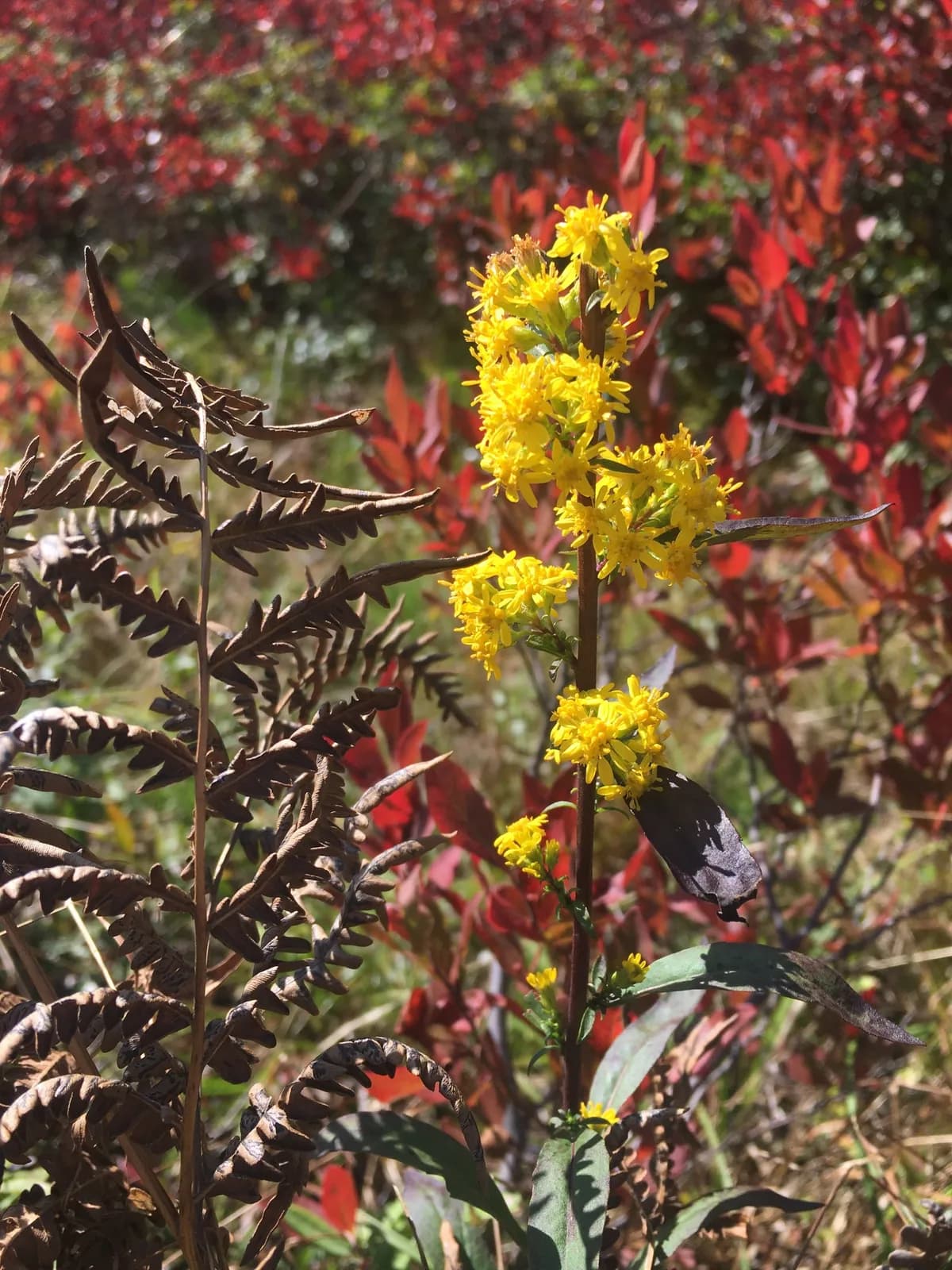
Solidago speciosa, or showy goldenrod, is a full-sun forb that produces dense yellow flower spikes from July through September and grows best in dry to medium, well-drained soil.
Toxicity unknown
Showy Goldenrod (Solidago speciosa) is not listed by the ASPCA Animal Poison Control Center (opens in new tab) or the other sources we check, so we have no verdict for it either way. Absence from those lists is not a clearance. If your pet shows symptoms after eating any plant, call the ASPCA at (888) 426-4435.
Light
full sun
Water
low
Size
24"–48" H × 12"–24" W
Bloom
Jul, Aug, Sep
Native to
AL, CT, DE, GA and 15 more states
Pollinators
bees, butterflies, beetles
Deer
Resistant (per Prairie Moon Nursery)
Before you buy
Your city may pay you to plant this
Cities and water utilities offer rebates for replacing lawn with native and water-wise plants. We track 459 programs across 44 states, each with a link to the provider and the date we last checked it.
Find rebates in your areaPicture natives in your own yard
Upload a photo of your yard and Patch Vision shows a rendering of it planted with natives for your region, like Showy Goldenrod.


Browse plants for this ecoregion
Showy goldenrod produces bright yellow flower clusters on sturdy stems from mid-summer through early fall. This native perennial forms neat clumps that spread slowly, making it easier to control than some other goldenrod species. The flowers attract numerous pollinators during late summer when few other plants are blooming.
Growing Showy Goldenrod
Grow Showy Goldenrod in full sun and low water. Mature plants reach 24 to 48 inches tall and spread 12 to 24 inches wide. Expect moderate maintenance to keep it looking intentional in a front yard.
How to care for Showy Goldenrod, by region
How to care for Showy Goldenrod where it is actually grown: year-round basics plus what to do each season, region by region, with the sources for each.
Care guidance last updated: October 2026
Central Corn Belt Plains (includes Chicago, IL)
Year-round
Showy goldenrod is a sturdy fall bloomer with upright stems and bright yellow flower clusters. Illinois is within its range, mostly the northern half, so Chicago is a reasonable fit, though the state level listing may not match every local spot.
- Give full to part sun
- Average to dry soil is best, avoid rich or soggy ground
- Water new plants weekly, then rarely
- Stems can flop with too much water or fertilizer
Stems are tall and can lean, so give it a back-of-bed spot away from the sidewalk.
Fall
Fall is bloom time, roughly August through October, and a good nectar stop for bees and butterflies.
- Enjoy the flowers and leave them for wildlife
- Cut off faded flower heads if you do not want self seeding
- Clean up mildewed leaves if they bother you
- Fall is also a good time to plant
Winter
The plant is dormant and cold hardy in Chicago winters.
- No watering needed
- Leave seed heads standing for winter interest
- Cut back in late winter
- Avoid piling salt near the base
Spring
Spring is for planting and setting up a strong clump.
- Plant after frost danger passes
- Water new plants weekly for the first season
- Skip fertilizer
- Divide large clumps if they get crowded
Summer
Summer is growing season. Established plants need little water.
- Water only in long dry spells
- Pinch stems in early June if you want a shorter plant
- Space for airflow
- Watch for powdery mildew on leaves late in summer
Sources: Lady Bird Johnson Wildflower Center: Solidago speciosa, Chicago Botanic Garden: Solidago speciosa, Illinois Wildflowers: Showy Goldenrod (community tip)
Piedmont (includes Atlanta, GA)
Year-round
Showy goldenrod is a tough perennial that tolerates clay soil and dry spells. Both sources list its range as reaching Georgia, though the Wildflower Center says the Georgia range is in the mountains.
- Full sun and good drainage suit it, and it tolerates clay and occasional drought.
- It grows 2 to 7 feet tall, so give it space of 3 to 6 feet.
- The Wildflower Center warns it can become aggressive in moist soils.
- Bees, butterflies and songbirds use it.
Cut it back neatly after bloom and plant it mid-bed or toward the back for an HOA-friendly look.
Fall
Fall is bloom season.
- Flowers open from August into October.
- Bees and butterflies visit the golden-yellow clusters.
- Removing spent flower clusters encourages more bloom, per NC State.
Winter
Winter needs almost nothing.
- Seed can be collected in October.
- Rust, powdery mildew and leaf spot may show up occasionally, so cleaning up old stems helps.
Spring
Spring is the time to plant or divide.
- Divide established clumps, which may need it every 2 years to control size.
- Plant in full sun.
- Space plants well apart.
Summer
Once settled, it needs little water.
- It is drought tolerant per NC State.
- Avoid constant moisture since moist soils can make it aggressive.
- Expect it to grow tall before bloom.
Sources: NC State Extension Plant Toolbox: Solidago speciosa, Lady Bird Johnson Wildflower Center: Solidago speciosa
Ridge and Valley (includes Harrisburg, PA)
Year-round
Showy goldenrod is an easy, tall perennial that likes full sun and tolerates clay and dry spells. It blooms late in the season with golden yellow clusters.
- Give it 6 or more hours of direct sun and soil that drains well.
- It handles clay soil and drought once settled in.
- Plan for about 4 feet tall. Divide every 2 years or so if it gets too big.
- Rust, powdery mildew, and leaf spot can show up but serious problems are rare.
A tidy clump near the back of a bed reads as intentional. Deadhead and divide to keep it neat.
Fall
Fall is bloom time, with yellow flower clusters from August through October. Seed can be collected in October.
- Remove spent flower clusters to encourage more bloom.
- Collect seed in October if you want more plants.
- Fall is a good window to plant or divide while the soil is still warm.
Cutting spent flower heads keeps the clump looking tended and intentional.
Winter
The plant rests in winter and needs almost no care. Cold winters in Harrisburg, PA are not a concern for this perennial.
- No watering or feeding is needed while it is dormant.
- Mark the spot so you do not dig it up when planting nearby.
- Plan any division for spring, not midwinter.
Spring
Spring is a good window to divide clumps and tidy up. New growth starts as the weather warms in Harrisburg, PA.
- Divide crowded clumps in spring if they have outgrown their spot, about every 2 years.
- Seed can be started with a cold period beforehand, but it is not strictly needed.
- Water new plants regularly until they settle in.
Summer
Summer needs little work. Established plants handle heat and dry spells, so water only during long dry stretches.
- Established plants tolerate drought and clay soil, so skip frequent watering.
- Very wet soil can make it spread more, so avoid keeping it soggy.
- Watch for powdery mildew or leaf spot in humid weather.
Sources: NC State Extension Plant Toolbox: Solidago speciosa, Lady Bird Johnson Wildflower Center: Solidago speciosa
In an HOA neighborhood
Showy Goldenrod is an HOA-friendly choice in the right placement. Maintenance level: moderate. Tidiness: 3 out of 5.
Works well in: mid zone.
- May be confused with weedy goldenrods by neighbors
- Dies back completely in winter leaving bare spots
- Can self-seed if not deadheaded
Wildlife value
Host plant for wavy-lined emerald moth.
Excellent late-season nectar source for bees, butterflies, and beneficial beetles when most other flowers have finished blooming. The seeds provide food for goldfinches and other songbirds in fall and winter.
Common questions
- When does showy goldenrod bloom?
- Showy goldenrod blooms from July through September, sending up tall wand-like spikes of small yellow flowers.
- What pollinators visit showy goldenrod?
- Bees, butterflies, and beetles regularly visit showy goldenrod for nectar and pollen, and it serves as a valuable late-season nectar source as many other plants finish flowering.
- How much sun and water does showy goldenrod need?
- Showy goldenrod does best in full sun with low to medium water, and it tolerates dry, well-drained soils once it is established.
- What kind of habitat does showy goldenrod prefer?
- It is often found in dry prairies, open woodlands, and along roadsides or fields where soil drains well and taller competing plants are sparse.
- Is Showy Goldenrod HOA-friendly?
- Showy Goldenrod is generally an HOA-friendly choice in the right placement, with moderate maintenance.
These answers were drafted with an AI model from this plant's data. Verify care details with a local expert.
Native range data from vouchered herbarium specimen records and regional native plant society lists. Pollinator and host plant associations compiled from GBIF, iNaturalist, and published ecological literature.
If something looks wrong
Common plant problems, and what to check first
These come up on almost any plant. Each guide lists the likely causes in the order they are worth ruling out, with one thing to check before you act on any of them, and links to the source it came from.
- It is dying right after planting
- Leaves turning yellow
- Wilting even though I watered it
- Brown crispy leaf tips
- Bugs on the plant
Ready to grow Showy Goldenrod? Add it to your garden in Pollinator Patch to track it and get season-by-season care guidance.