Texas Virgin's Bower
Clematis drummondii
Last reviewed: August 2026
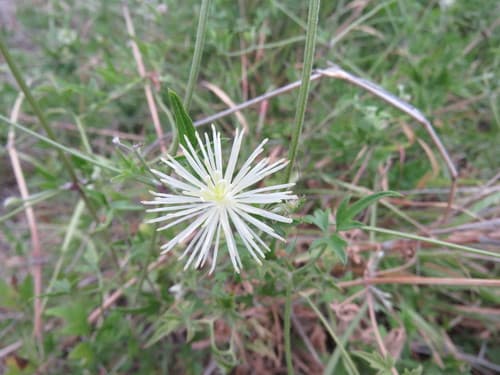
Clematis drummondii is a fast-growing vine that blooms from March through August, producing small cream flowers followed by feathery seed heads. It thrives in full sun with low water once established, making it a good fit for hot, dry landscapes across the southern plains and desert Southwest.
Texas Virgin's Bower is toxic to dogs and cats.
Listed as toxic by the ASPCA Animal Poison Control Center (opens in new tab) (last reviewed 2026-05-21). If your pet has been exposed, call the ASPCA Animal Poison Control Center at (888) 426-4435and your veterinarian's emergency line.
Pollinator Patch flags toxic plants so you can choose a pet-safe native alternative for your yard.
Light
full sun
Water
low
Size
36"–72" H × 36"–72" W
Bloom
Mar, Apr, May, Jun, Jul, Aug
Native to
AZ, CA, CO, NM and 2 more states
Pollinators
butterflies, bees
Before you buy
Your city may pay you to plant this
Cities and water utilities offer rebates for replacing lawn with native and water-wise plants. We track 452 programs across 44 states, each with a link to the provider and the date we last checked it.
Find rebates in your areaBrowse plants for this ecoregion
Texas Virgin's Bower is a native climbing vine that produces masses of small, fragrant white flowers from spring through summer. It grows vigorously and can quickly cover fences, arbors, or trellises with its delicate foliage and showy blooms.
Growing Texas Virgin's Bower
Grow Texas Virgin's Bower in full sun and low water. Mature plants reach 36 to 72 inches tall and spread 36 to 72 inches wide. Expect low maintenance to keep it looking intentional in a front yard.
How to care for Texas Virgin's Bower, by region
How to care for Texas Virgin's Bower where it is actually grown: year-round basics plus what to do each season, region by region, with the sources for each.
Care guidance last updated: September 2026
Mississippi Valley Loess Plains (includes Memphis, TN)
Year-round
Old man's beard is a fast climbing vine with lacy leaves and clusters of small white flowers that turn into fluffy silver seed puffs. It comes from a hot, dry stretch of the Desert Southwest and Texas, not Tennessee, but it grows easily in a Memphis yard once it has sun and something to climb.
- This vine is native to a hot, dry stretch of the Desert Southwest and Texas, not Tennessee, so treat it as a garden plant here rather than a native one.
- Give it full sun to part shade and a fence, trellis, or shrub to climb. It can put on 15 feet or more of growth in a season.
- It tolerates dry spells and average garden soil, including clay, once it is established, so it needs less watering than most vines.
- Every part of the Clematis family carries a bitter, irritating sap. Keep dogs and cats from chewing on the leaves or stems.
- The tiny flowers give way to fluffy silvery seed heads, which is where the plant gets its old man's beard nickname.
Fall
Fall is when the plant earns its name. Small flowers give way to masses of silvery, feathery seed plumes that usually last until the first frost, typically in early November for the Memphis area.
- Let the fluffy seed heads develop. They are the plant's main fall show and stand out against a fence or trellis.
- If the vine has spread past its support or into a walkway, trim it back once the seed heads fade rather than mid bloom.
- The average first frost for the Memphis area lands around November 3, with an average first freeze around November 12. Growth slows and leaves drop after that.
- Rake up any seed fluff that blows loose if you want a tidier bed underneath.
Trimming the vine back to its trellis or fence line once the fall seed show fades keeps the yard reading as tended instead of overgrown, which helps avoid a violation letter.
Winter
Winter is the quiet season. The vine drops its leaves and goes fully dormant, and its roots are built to handle an average Memphis winter without extra protection.
- Expect the vine to lose its leaves and go dormant for winter. This species is listed as cold tolerant, and its roots should handle typical Memphis area winters on their own.
- Leave the bare vine on its support through winter rather than pulling it down. It gives the yard some structure and keeps the roots undisturbed.
- For a tidier winter look, cut the vine back to a few feet of its trellis or fence once it is fully dormant and all the leaves have dropped.
- New growth will not start again until after the average last frost, around mid to late March for the Memphis area.
Cutting the dormant vine back to a neat shape on its trellis gives the yard an intentional, tidy look for the offseason instead of a tangle of bare vine, which helps avoid a violation letter.
Spring
Spring is when old man's beard wakes up and starts climbing fast. In the Memphis area, plant it or set up its support after the average last frost, around mid to late March, and it should be flowering by April.
- Wait until after the average last frost for the Memphis area, around March 18 to 30, before planting or moving this vine outdoors.
- Put a trellis, fence, or other support in place early. New growth is brittle and climbs quickly once the weather warms.
- Water new plantings regularly until the roots settle in, then ease off. This vine handles dry spells well once it is established.
- Cut back any stems that died over winter to the first live bud before new leaves take over.
Summer
Summer is peak bloom and peak Memphis heat, and old man's beard is built for both. Once established, it is a low-fuss vine through the hot months.
- Expect small white flowers to keep coming through summer, sometimes into early fall.
- Established vines tolerate Memphis heat and dry stretches well and do not need the frequent watering that most garden clematis do.
- Check the trellis or fence line and redirect any stems wandering onto siding, gutters, or a neighbor's yard.
- This vine grows quickly in summer heat and humidity, so keep it from crowding out nearby plants.
Sources: Clematis drummondii species profile, Lady Bird Johnson Wildflower Center, Clematis toxicity to dogs, cats and horses, ASPCA Animal Poison Control, Memphis area average frost and freeze dates, National Weather Service
Want these tasks as reminders timed to your yard? Pollinator Patch turns this guidance into a season-by-season care plan for the plants you actually grow.
In an HOA neighborhood
Texas Virgin's Bower takes more care to keep looking intentional in a front yard. Maintenance level: low. Consider it for backyard or mid-zone beds rather than the street edge.
Works well in: backyard only.
- Requires support structure
- Can appear messy
Wildlife value
The abundant flowers attract butterflies and bees throughout its long blooming season. Birds often use the dense growth for nesting sites.
Common questions
- When does Clematis drummondii bloom?
- Clematis drummondii typically flowers from March through August, with small clusters of cream colored blooms opening across spring and summer.
- What pollinators visit Clematis drummondii?
- Bees and butterflies regularly visit the flowers of Clematis drummondii for nectar and pollen during its spring and summer bloom period.
- How much sun and water does Clematis drummondii need?
- This vine grows best in full sun to part shade and tolerates low water once established, making it well suited to hot, dry sites such as fence lines, brush, and open scrub.
- Is Clematis drummondii a good vine for a dry garden?
- Yes, it handles low water and intense heat well, though it can also tolerate occasional medium moisture without trouble, which suits it to xeric or low-maintenance plantings.
- Is Texas Virgin's Bower toxic to dogs?
- Yes. Texas Virgin's Bower is listed as toxic to dogs by the ASPCA Animal Poison Control Center (aspca.org). If your pet has been exposed, call the ASPCA Animal Poison Control Center at (888) 426-4435.
- Is Texas Virgin's Bower toxic to cats?
- Yes. Texas Virgin's Bower is listed as toxic to cats by the ASPCA Animal Poison Control Center (aspca.org). If your cat has been exposed, call the ASPCA Animal Poison Control Center at (888) 426-4435.
- Is Texas Virgin's Bower HOA-friendly?
- Texas Virgin's Bower takes more care to look intentional in a front yard. Consider it for backyard or mid-zone beds rather than the street edge.
These answers were drafted with an AI model from this plant's data. Verify care details with a local expert.
Native range data from vouchered herbarium specimen records and regional native plant society lists. Pollinator and host plant associations compiled from GBIF, iNaturalist, and published ecological literature.
If something looks wrong
Common plant problems, and what to check first
These come up on almost any plant. Each guide lists the likely causes in the order they are worth ruling out, with one thing to check before you act on any of them, and links to the source it came from.
- It is dying right after planting
- Leaves turning yellow
- Wilting even though I watered it
- Brown crispy leaf tips
- Bugs on the plant
Pollinator Patch flags toxic plants like Texas Virgin's Bower and shows pet-safe natives for your ecoregion instead.
Planning a bed around it? Start a free plan with this plant
Not sure where to start? Take the 2-minute yard quiz