Bigtree Plum
Prunus mexicana
Last reviewed: August 2026
Bigtree Plum is a small deciduous tree that blooms white in May and June and grows well in full sun with moderate water once established.
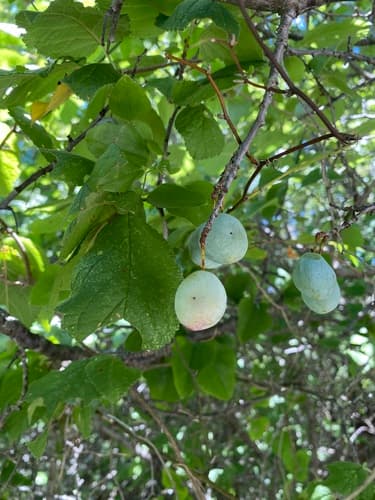
Bigtree Plum is toxic to dogs and cats.
Listed as toxic by the ASPCA Animal Poison Control Center (opens in new tab) (last reviewed 2026-05-21). If your pet has been exposed, call the ASPCA Animal Poison Control Center at (888) 426-4435and your veterinarian's emergency line.
Pollinator Patch flags toxic plants so you can choose a pet-safe native alternative for your yard.
Light
full sun
Water
medium
Size
240"–600" H × 180"–360" W
Bloom
May, Jun
Native to
AL, AR, IA, IL and 10 more states
Pollinators
bees, beetles
Before you buy
Your city may pay you to plant this
Cities and water utilities offer rebates for replacing lawn with native and water-wise plants. We track 452 programs across 44 states, each with a link to the provider and the date we last checked it.
Find rebates in your areaBrowse plants for this ecoregion
Mexican plum is a small native tree that produces fragrant white flowers in spring before the leaves emerge. It develops into a rounded canopy and provides good shade for smaller spaces while supporting local ecosystems.
Growing Bigtree Plum
Grow Bigtree Plum in full sun and medium water. Mature plants reach 240 to 600 inches tall and spread 180 to 360 inches wide. Expect low maintenance to keep it looking intentional in a front yard.
How to care for Bigtree Plum, by region
How to care for Bigtree Plum where it is actually grown: year-round basics plus what to do each season, region by region, with the sources for each.
Care guidance last updated: July 2026
Cross Timbers (includes Fort Worth, TX)
Year-round
Bigtree Plum (also called Mexican plum) is a small native tree that grows 20 to 50 feet tall, blooms very early in the year with fragrant white flowers, and needs little upkeep once it settles in.
- Give it full sun for the best bloom and fruit set
- Plant it in well drained soil, it tolerates sandy loam, clay loam, or limestone based ground
- Water regularly the first one to two growing seasons, then it needs very little supplemental water once established
- Leave the natural single trunk form alone, it does not sucker or spread like some plums
- Expect small yellow to purple plums from July through September that drop and can be swept or raked from a front walk
A single clean trunk and rounded canopy read as an intentional ornamental tree, not a wild thicket, which is an easy sell for a front yard.
Fall
Fall is the best time to plant this tree in North Texas, and it is also when leaf drop begins ahead of winter dormancy.
- Fall (after temperatures cool in October or November) is the recommended planting window for this and other woody trees here
- Water a newly planted tree deeply once a week for the first couple of months to help roots establish before winter
- Leaves begin dropping through October and November as the tree goes dormant
- Rake fallen leaves off a front lawn or walkway if a tidy look matters, they are not a hazard left in place
- Hold off on major structural pruning until the tree is fully dormant in winter
A newly planted young tree with a stake and mulch ring reads as an active landscaping project, which is worth flagging to a neighbor or HOA contact if asked.
Winter
Winter is dormant season and the right time for any structural pruning, this tree handles the mild North Texas winters well with only occasional hard freezes to watch for.
- Prune for shape or to remove dead and crossing branches while the tree is bare and fully dormant, typically December through February
- Established trees do not need supplemental water in a normal winter
- During a severe Arctic outbreak with hard freezes, a newly planted tree benefits from a layer of mulch over the root zone to buffer soil temperature
- Wilting or damaged leaves and fallen seed pits should be raked up and kept away from dogs and cats, they are on the ASPCA's toxic plant list for both
- Wait until after this dormant pruning window closes (by late February) since flower buds begin swelling soon after
Spring
Spring is when this tree puts on its show, fragrant white flowers open on bare branches in February and March, often before anything else in the yard has leafed out.
- Expect flowers to open February through March, ahead of the leaves
- Plant new trees in spring after the last frost (mid March in North Texas) if you are adding one to the yard, though fall is generally the better window for young trees
- Do not fertilize while it is flowering, wait until after bloom if a soil test shows a real need
- In the sandier soils west of the metro, water a newly planted tree weekly through spring while roots establish; it generally does not need this once mature
- Skip pruning until after bloom finishes, cutting live wood before flowering removes the year's flower buds
An early, all-white bloom before neighboring trees leaf out reads as a deliberately chosen ornamental, worth mentioning if a neighbor asks what is flowering so early.
Summer
Summer is fruiting season, small plums ripen from yellow to purple, and the tree's low water needs make it one of the easier trees to carry through the hot months.
- Ripe plums drop from July into September, expect some litter on a walkway or driveway underneath the canopy
- A tree in its first or second summer still needs a deep soak roughly once a week during the July and August stretch of 100F-plus days with no rain
- An established tree (three or more years in the ground) generally does not need supplemental water through summer heat
- Do not prune in summer heat, wait for dormant season to avoid stressing the tree further
- Rake up dropped fruit near the front walk regularly if a tidy look matters
Dropped fruit on a front walk or driveway can look neglected fast, a quick weekly sweep during ripening keeps the front yard looking maintained.
Sources: Lady Bird Johnson Wildflower Center, Prunus mexicana, ASPCA, Toxic and Non-toxic Plants: Plum, Native Plant Society of Texas, Plant of the Month: Mexican Plum
Northeastern Coastal Zone (includes New York, NY)
Year-round
Mexican plum is a small single-trunk flowering tree. In the New York area it can grow, but the big ongoing job is watching for black knot, a fungal disease common on plums in the Northeast. Water well for the first two years, mulch, and prune in late winter.
- For the first two growing seasons, soak the root ball deeply about once a week. After that, water mainly during long summer dry spells.
- Spread 2 to 3 inches of wood mulch out toward the drip line, kept back from the trunk, to hold moisture and keep mowers off the bark.
- Inspect every winter for black knot, which shows up as dark, warty swellings on branches. Prune infected wood 6 to 12 inches below each knot in late winter and disinfect pruners between cuts with a 10 percent bleach solution.
- Common mistake: leaving black knot in place. Bury or remove the cut prunings offsite, because spores spread to healthy branches and nearby cherries and plums.
Reads as intentional and helps avoid a violation letter: promptly cutting out black-knot swellings keeps the tree from looking diseased and gnarled from the curb.
Fall
Fall is a good planting window in the New York area, and a fine time to do a leaf and cleanup pass. Leaves turn and drop, which is normal.
- Fall planting lets roots settle before the following summer; water in a new tree well at planting.
- Rake fallen leaves and any dropped fruit off the lawn to keep the front bed looking tended.
- Do a leaf-off inspection walk as the canopy thins, noting any black knot swellings for late-winter removal.
- Give one deep soak before the ground freezes if fall has been dry.
Reads as intentional and helps avoid a violation letter: clearing dropped leaves and fruit keeps the yard looking maintained through leaf-drop rather than neglected.
Winter
Winter is the key maintenance window in the New York area. The bare branches make black knot easy to spot, and cutting it out in cold, dry weather is the single most effective thing you can do for a plum here.
- Prune out every black-knot swelling in late winter, cutting 6 to 12 inches below each knot while temperatures are cold and the tree is dormant.
- Disinfect pruners between cuts with a 10 percent bleach solution, and bury or bag the prunings offsite so spores do not reinfect the tree.
- Do any structural pruning now too, removing dead or crossing branches, but keep it light since the tree blooms very early.
- The bare silhouette should look clean and open after knot removal, not stubby or gnarled.
Reads as intentional and helps avoid a violation letter: a clean bare-branch silhouette with the black-knot swellings removed signals a cared-for tree rather than a diseased one.
Spring
Spring brings early white blooms and the start of the black knot infection window in the New York area. Enjoy the flowers, but do not prune now; wet spring weather spreads the fungus.
- Watch for the fragrant white bloom in early spring, opening before or with the leaves.
- Avoid pruning during wet spring weather, since black knot spores are released and spread by rain from spring into early summer.
- If you set out a new tree this spring, begin deep weekly watering to establish the roots.
- Refresh mulch to 2 to 3 inches, kept back from the trunk, as growth resumes.
Summer
New York area summers are warmer and more humid than the tree's usual range. Keep a young tree watered and watch foliage for new black knot swellings, but hold pruning until winter.
- Water a first- or second-year tree deeply about once a week during summer dry stretches.
- An established tree usually gets by on rainfall and needs extra water only in an extended drought.
- Scan branches through the summer for new dark, swelling knots and mark them so you can find them for winter pruning.
- Keep the mulch layer at 2 to 3 inches to steady soil moisture through the warm months.
Sources: Cornell hosted PSU Extension Black Knot of Prunus, University of Maine Extension Black Knot of Plum and Cherry, Missouri Botanical Garden Prunus mexicana
Texas Blackland Prairies (includes Dallas, TX)
Year-round
Mexican plum is a small single-trunk tree that stays tidy in a Dallas front yard once it settles in. Water it well the first two years, then it mostly takes care of itself. Prune lightly and only right after it blooms, because next spring's flowers form on last year's wood.
- For the first two growing seasons, soak the root ball deeply about once a week so the roots reach down. After that it handles most Dallas dry spells and only needs water in a long summer drought.
- Spread 2 to 3 inches of wood mulch out to the drip line, kept a few inches back from the trunk, to hold soil moisture and keep the string trimmer away from the bark.
- Keep pruning light and do it right after the white spring bloom fades, since flowers form on old wood. Remove only dead, crossing, or rubbing branches to build one clear central trunk.
- Common mistake: this is a non-suckering tree, so if you see shoots from the base they are usually rootstock or a nearby seedling, not the tree spreading. Pull volunteer seedlings while small if you want a single specimen.
Reads as intentional and helps avoid a violation letter: a single trunk with the base kept clear of volunteer shoots keeps this looking like a chosen ornamental tree rather than a scrubby thicket.
Fall
Fall is the best planting window in the Dallas area, giving roots the cool months to settle before summer. Leaves turn yellow to orange and drop, which is normal.
- Fall is the ideal time to plant a new Mexican plum here so roots establish over the mild season.
- Rake and clear fallen leaves and any dropped fruit from the lawn to keep the front bed looking cared for.
- Give the tree a deep soak going into winter if fall has been dry, then let natural rainfall take over.
- Hold off on pruning; wait for late winter dormancy for any structural cuts.
Reads as intentional and helps avoid a violation letter: clearing dropped leaves and fruit off the lawn keeps the yard looking tended through leaf-drop instead of neglected.
Winter
Winter dormancy in the Dallas area is the one window for any real pruning, but keep it light because the tree blooms very early. This is also when the smooth blue-gray bark shows off.
- Do structural pruning in late winter while the tree is bare, removing dead, damaged, or crossing branches only.
- Keep cuts minimal and finish before the flower buds swell, since blooms can open as early as February here.
- Leave the attractive blue-gray trunk unwrapped; a mature Mexican plum needs no winter trunk protection in this climate.
- The bare silhouette should look clean and open, not stubby, so avoid heading back the whole canopy.
Reads as intentional and helps avoid a violation letter: a clean, open bare-branch silhouette in winter signals a maintained ornamental tree rather than a dead or overgrown one.
Spring
Spring is bloom season in the Dallas area, with fragrant white flowers opening as early as February before the leaves. Enjoy the show, then do any light shaping right after petals drop.
- Watch for the early white bloom, often February into April, and hold off on pruning until it finishes so you do not cut off the flowers.
- Right after the bloom fades, remove any dead or crossing branches to keep one clean central trunk.
- Refresh mulch to 2 to 3 inches as the weather warms to hold spring moisture, keeping it back from the trunk.
- If you planted a new tree this spring, start deep weekly watering to get the roots established before summer heat.
Summer
Summers on the Dallas Blackland Prairie are hot and often dry. An established Mexican plum handles this well, but a young tree needs help getting through its first couple of summers.
- For a tree in its first two summers, soak deeply about once a week during hot dry stretches instead of light daily sprinkles.
- An established tree usually needs water only in an extended drought; a deep soak every couple of weeks then is plenty.
- Keep the mulch layer topped up at 2 to 3 inches to shade the roots and slow evaporation through the heat.
- Skip pruning now; summer cuts stress the tree in the heat and can invite disease.
Sources: Lady Bird Johnson Wildflower Center Prunus mexicana, Native Plant Society of Texas Mexican Plum, Native Gardeners care for Mexican plum in North Texas
Want these tasks as reminders timed to your yard? Pollinator Patch turns this guidance into a season-by-season care plan for the plants you actually grow.
In an HOA neighborhood
Bigtree Plum is an HOA-friendly choice. Maintenance level: low. Tidiness: 4 out of 5.
Works well in: front yard, mid zone, street edge.
Wildlife value
The spring blooms attract bees and beetles for pollination. Birds enjoy the small plums that develop in summer, and the tree provides nesting sites and shelter.
Common questions
- When does Bigtree Plum bloom?
- Bigtree Plum produces white flowers in May and June, typically before or as the leaves emerge.
- What pollinates Bigtree Plum flowers?
- The spring blossoms attract bees and beetles, which move between flowers to feed on pollen and nectar.
- How much water does Bigtree Plum need?
- It grows best with moderate, consistent moisture but can handle drier conditions once its root system is established.
- What growing conditions does Bigtree Plum prefer?
- This tree does best in full sun to part sun, often found along woodland edges, fencerows, and stream margins in the central and southern United States.
- How large does Bigtree Plum get?
- Despite its common name, it typically stays a small to medium sized tree, often reaching modest heights with a rounded canopy.
- Is Bigtree Plum toxic to dogs?
- Yes. Bigtree Plum is listed as toxic to dogs by the ASPCA Animal Poison Control Center (aspca.org). If your pet has been exposed, call the ASPCA Animal Poison Control Center at (888) 426-4435.
- Is Bigtree Plum toxic to cats?
- Yes. Bigtree Plum is listed as toxic to cats by the ASPCA Animal Poison Control Center (aspca.org). If your cat has been exposed, call the ASPCA Animal Poison Control Center at (888) 426-4435.
- Is Bigtree Plum HOA-friendly?
- Bigtree Plum is generally an HOA-friendly choice in the right placement, with low maintenance.
These answers were drafted with an AI model from this plant's data. Verify care details with a local expert.
Native range data from vouchered herbarium specimen records and regional native plant society lists. Pollinator and host plant associations compiled from GBIF, iNaturalist, and published ecological literature.
If something looks wrong
Common plant problems, and what to check first
These come up on almost any plant. Each guide lists the likely causes in the order they are worth ruling out, with one thing to check before you act on any of them, and links to the source it came from.
- It is dying right after planting
- Leaves turning yellow
- Wilting even though I watered it
- Brown crispy leaf tips
- Bugs on the plant
Pollinator Patch flags toxic plants like Bigtree Plum and shows pet-safe natives for your ecoregion instead.
Planning a bed around it? Start a free plan with this plant
Not sure where to start? Take the 2-minute yard quiz