Carolina buckthorn
Frangula caroliniana
Last reviewed: September 2026
Carolina buckthorn is a deciduous shrub that blooms from April through June with small greenish yellow flowers. It grows in woodland understories and forest edges across the southeastern and central United States, where bees visit the blossoms.
Toxicity unknown
Carolina buckthorn (Frangula caroliniana) is not listed by the ASPCA Animal Poison Control Center (opens in new tab) or the other sources we check, so we have no verdict for it either way. Absence from those lists is not a clearance. If your pet shows symptoms after eating any plant, call the ASPCA at (888) 426-4435.
Light
part sun
Water
medium
Size
120"–240" H × 96"–180" W
Bloom
Apr, May, Jun
Native to
AL, AR, FL, GA and 14 more states
Pollinators
bees
Before you buy
Your city may pay you to plant this
Cities and water utilities offer rebates for replacing lawn with native and water-wise plants. We track 452 programs across 44 states, each with a link to the provider and the date we last checked it.
Find rebates in your areaBrowse plants for this ecoregion
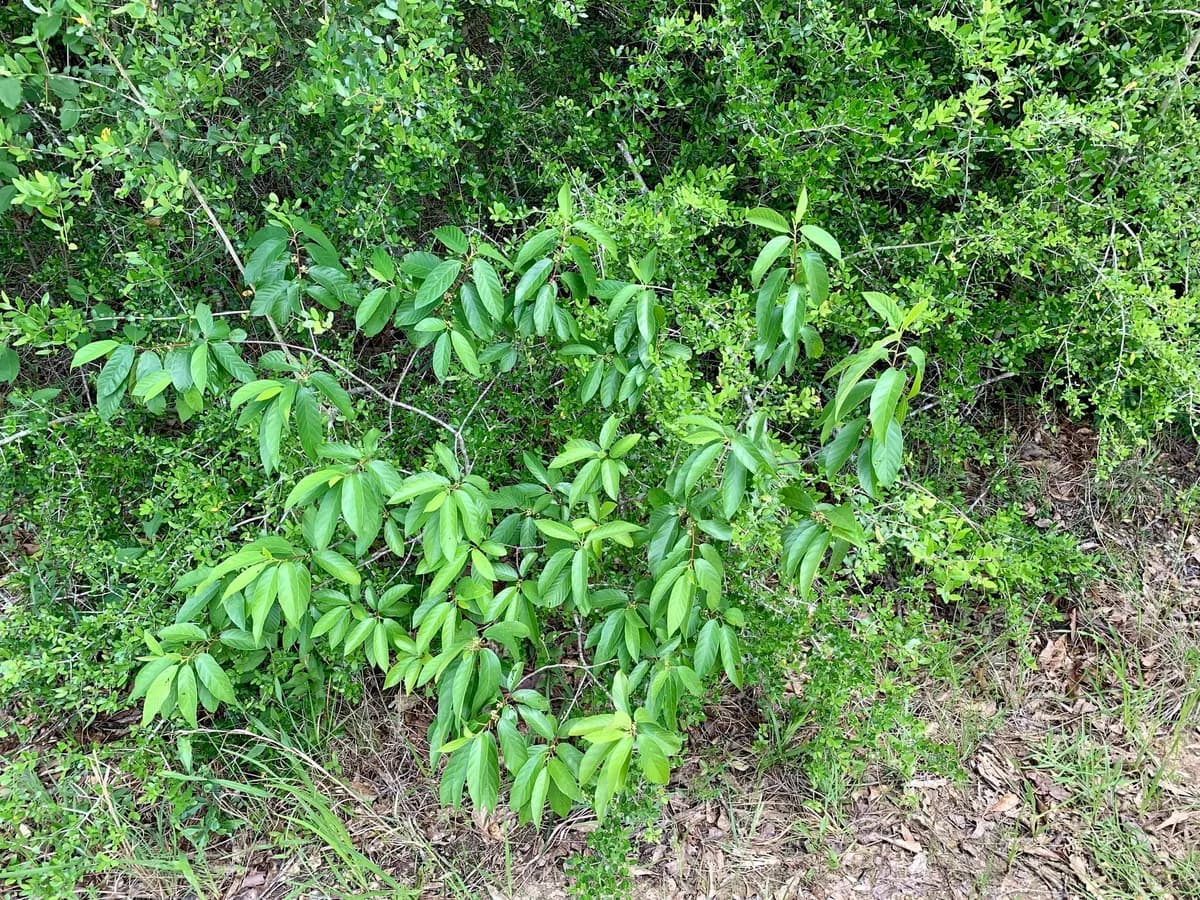
A deciduous large shrub or small tree with an upright, rounded form and glossy, oval leaves that turn yellow in fall. Small, inconspicuous greenish flowers in late spring are followed by pea-sized fruit that ripens from red to black over the growing season. Tolerates a range of light conditions from full sun to partial shade and average garden moisture.
Growing Carolina buckthorn
Grow Carolina buckthorn in part sun and medium water. Mature plants reach 120 to 240 inches tall and spread 96 to 180 inches wide. Expect low maintenance to keep it looking intentional in a front yard.
How to care for Carolina buckthorn, by region
How to care for Carolina buckthorn where it is actually grown: year-round basics plus what to do each season, region by region, with the sources for each.
Care guidance last updated: July 2026
Cross Timbers (includes Fort Worth, TX)
Year-round
Carolina buckthorn is a slow growing native shrub or small tree that stays tidy with almost no care once it is established, making it an easy foundation planting or screen for a North Texas front yard.
- Give it part sun (about 3 to 4 hours of direct sun a day) or light shade; full sun works too and tends to keep it denser and more compact.
- Plan on roughly 10 to 20 feet tall with a similar spread over several years, so leave that much room from the house, fence line, or walkway.
- Water deeply once or twice a week through the first two growing seasons; after that it only needs supplemental water during long dry spells.
- In the heavy black clay soils on the east side of the metro area, plant it high on a slight mound or work in compost for drainage; in the sandier soils to the west it drains faster but dries out sooner, so it will need water more often through its first summer.
- The red to black berries are not on the ASPCA toxic plant list for dogs or cats, but they have not been formally cleared as edible either, so treat them as a normal precaution and keep kids and pets from snacking on them.
Its neat, upright habit and glossy leaves read as an intentional foundation shrub rather than an overgrown thicket once it settles into its mature shape.
Fall
Fall is the better season to plant or transplant a Carolina buckthorn in North Texas, since cooler air and still warm soil let roots establish before winter.
- Plant or transplant in October or November; for a woody shrub like this one, fall is a better window than spring.
- Cut back only dead or crossing branches; the shrub naturally holds a neat, upright shape and needs little pruning.
- Rake fallen leaves near the base if you want a tidier look, though leaving some in place as mulch is fine.
- Expect the last of the black berries to drop in fall; plan on some cleanup if the shrub sits close to a walkway or driveway.
A light fall cleanup of dead wood and dropped berries keeps the shrub looking tended if it is visible from the street; heavy shearing is not needed and can spoil its natural form.
Winter
Carolina buckthorn is deciduous and drops its leaves for winter; in North Texas's mild winters it needs little more than a little protection during hard freezes.
- Expect bare branches from late fall through late winter; that is normal dormancy, not plant decline.
- Before a hard freeze or an Arctic outbreak, add mulch (3 to 4 inches) over the root zone, especially for a shrub planted within the last year.
- Skip fertilizer and heavy watering while the plant is dormant; water only if the soil is dry and no freeze is expected within 48 hours.
- Hold off on any structural pruning until late winter (February), just before new growth starts.
Bare winter branches can look sparse from the street; fresh mulch and clean bed edges keep the planting looking tended even while dormant.
Spring
Spring is the best time to get a newly bought Carolina buckthorn into the ground so it can establish roots before summer heat arrives.
- Plant between March and early May, after the last frost (mid March in North Texas), so roots have time to settle in before summer heat.
- Water a new planting two to three times a week for the first several weeks, until you see fresh leaf growth.
- Small yellowish green flowers open April through June and draw bees and other pollinators; no action needed, just let them bloom.
- Spread a 2 to 3 inch layer of mulch around the base, keeping it a few inches back from the trunk, to hold moisture as temperatures climb.
The spring flowers are small and subtle rather than showy, so the shrub keeps a neat, low key look through bloom season.
Summer
July and August are the hardest months for a young Carolina buckthorn, so the main job is keeping it watered through the heat until it gets through its first summer.
- Water newly planted shrubs (first year) two to three times a week during 100F-plus stretches with no rain; established plants (2 years or older) usually need only a weekly deep soak.
- Watch for red berries ripening toward black from around August into fall; leave them in place for birds rather than deadheading.
- Keep mulch topped up to 2 to 3 inches to buffer soil temperature and cut down on watering frequency.
- Hold off on fertilizing during peak heat; wait until fall or the following spring if the plant needs feeding.
Sources: Frangula caroliniana, Lady Bird Johnson Wildflower Center, ASPCA Toxic and Non-Toxic Plant List, Dogs, Frangula caroliniana, NC State Extension Gardener Plant Toolbox
Texas Blackland Prairies (includes Dallas, TX)
Year-round
Carolina buckthorn is a slow growing native shrub or small tree that stays tidy with almost no care once it is established, making it an easy foundation planting or screen for a North Texas front yard.
- Give it part sun (about 3 to 4 hours of direct sun a day) or light shade; full sun works too and tends to keep it denser and more compact.
- Plan on roughly 10 to 20 feet tall with a similar spread over several years, so leave that much room from the house, fence line, or walkway.
- Water deeply once or twice a week through the first two growing seasons; after that it only needs supplemental water during long dry spells.
- In the heavy black clay soils on the east side of the metro area, plant it high on a slight mound or work in compost for drainage; in the sandier soils to the west it drains faster but dries out sooner, so it will need water more often through its first summer.
- The red to black berries are not on the ASPCA toxic plant list for dogs or cats, but they have not been formally cleared as edible either, so treat them as a normal precaution and keep kids and pets from snacking on them.
Its neat, upright habit and glossy leaves read as an intentional foundation shrub rather than an overgrown thicket once it settles into its mature shape.
Fall
Fall is the better season to plant or transplant a Carolina buckthorn in North Texas, since cooler air and still warm soil let roots establish before winter.
- Plant or transplant in October or November; for a woody shrub like this one, fall is a better window than spring.
- Cut back only dead or crossing branches; the shrub naturally holds a neat, upright shape and needs little pruning.
- Rake fallen leaves near the base if you want a tidier look, though leaving some in place as mulch is fine.
- Expect the last of the black berries to drop in fall; plan on some cleanup if the shrub sits close to a walkway or driveway.
A light fall cleanup of dead wood and dropped berries keeps the shrub looking tended if it is visible from the street; heavy shearing is not needed and can spoil its natural form.
Winter
Carolina buckthorn is deciduous and drops its leaves for winter; in North Texas's mild winters it needs little more than a little protection during hard freezes.
- Expect bare branches from late fall through late winter; that is normal dormancy, not plant decline.
- Before a hard freeze or an Arctic outbreak, add mulch (3 to 4 inches) over the root zone, especially for a shrub planted within the last year.
- Skip fertilizer and heavy watering while the plant is dormant; water only if the soil is dry and no freeze is expected within 48 hours.
- Hold off on any structural pruning until late winter (February), just before new growth starts.
Bare winter branches can look sparse from the street; fresh mulch and clean bed edges keep the planting looking tended even while dormant.
Spring
Spring is the best time to get a newly bought Carolina buckthorn into the ground so it can establish roots before summer heat arrives.
- Plant between March and early May, after the last frost (mid March in North Texas), so roots have time to settle in before summer heat.
- Water a new planting two to three times a week for the first several weeks, until you see fresh leaf growth.
- Small yellowish green flowers open April through June and draw bees and other pollinators; no action needed, just let them bloom.
- Spread a 2 to 3 inch layer of mulch around the base, keeping it a few inches back from the trunk, to hold moisture as temperatures climb.
The spring flowers are small and subtle rather than showy, so the shrub keeps a neat, low key look through bloom season.
Summer
July and August are the hardest months for a young Carolina buckthorn, so the main job is keeping it watered through the heat until it gets through its first summer.
- Water newly planted shrubs (first year) two to three times a week during 100F-plus stretches with no rain; established plants (2 years or older) usually need only a weekly deep soak.
- Watch for red berries ripening toward black from around August into fall; leave them in place for birds rather than deadheading.
- Keep mulch topped up to 2 to 3 inches to buffer soil temperature and cut down on watering frequency.
- Hold off on fertilizing during peak heat; wait until fall or the following spring if the plant needs feeding.
Sources: Frangula caroliniana, Lady Bird Johnson Wildflower Center, ASPCA Toxic and Non-Toxic Plant List, Dogs, Frangula caroliniana, NC State Extension Gardener Plant Toolbox
Want these tasks as reminders timed to your yard? Pollinator Patch turns this guidance into a season-by-season care plan for the plants you actually grow.
In an HOA neighborhood
Carolina buckthorn is an HOA-friendly choice. Maintenance level: low. Tidiness: 3 out of 5.
Works well in: mid zone, foundation.
Wildlife value
Fruit ripening in stages provides an extended food source for birds through summer and fall, and flowers offer nectar for bees.
Common questions
- When does Carolina buckthorn bloom?
- Carolina buckthorn typically flowers from April through June, producing small clusters of greenish yellow blooms along its branches.
- What pollinates Carolina buckthorn?
- Bees are the main pollinators, visiting the small, nectar-producing flowers during the spring bloom period.
- How much light does Carolina buckthorn need?
- It grows well in part sun but adapts to conditions ranging from full sun to fairly shady understory sites.
- How much water does Carolina buckthorn need?
- It does best with medium soil moisture but can tolerate drier conditions once it becomes established.
- What kind of plant is Carolina buckthorn?
- It is a deciduous shrub often found along woodland edges, growing several feet tall with smooth gray bark and rounded leaves.
- Is Carolina buckthorn HOA-friendly?
- Carolina buckthorn is generally an HOA-friendly choice in the right placement, with low maintenance.
These answers were drafted with an AI model from this plant's data. Verify care details with a local expert.
Native range data from the World Checklist of Vascular Plants (Kew). Pollinator and host plant associations compiled from GBIF, iNaturalist, and published ecological literature.
If something looks wrong
Common plant problems, and what to check first
These come up on almost any plant. Each guide lists the likely causes in the order they are worth ruling out, with one thing to check before you act on any of them, and links to the source it came from.
- It is dying right after planting
- Leaves turning yellow
- Wilting even though I watered it
- Brown crispy leaf tips
- Bugs on the plant
Ready to grow Carolina buckthorn? Add it to your garden in Pollinator Patch to track it and get season-by-season care guidance.
Planning a bed around it? Start a free plan with this plant
Not sure where to start? Take the 2-minute yard quiz