Downy Wood-mint
Blephilia ciliata
Last reviewed: September 2026
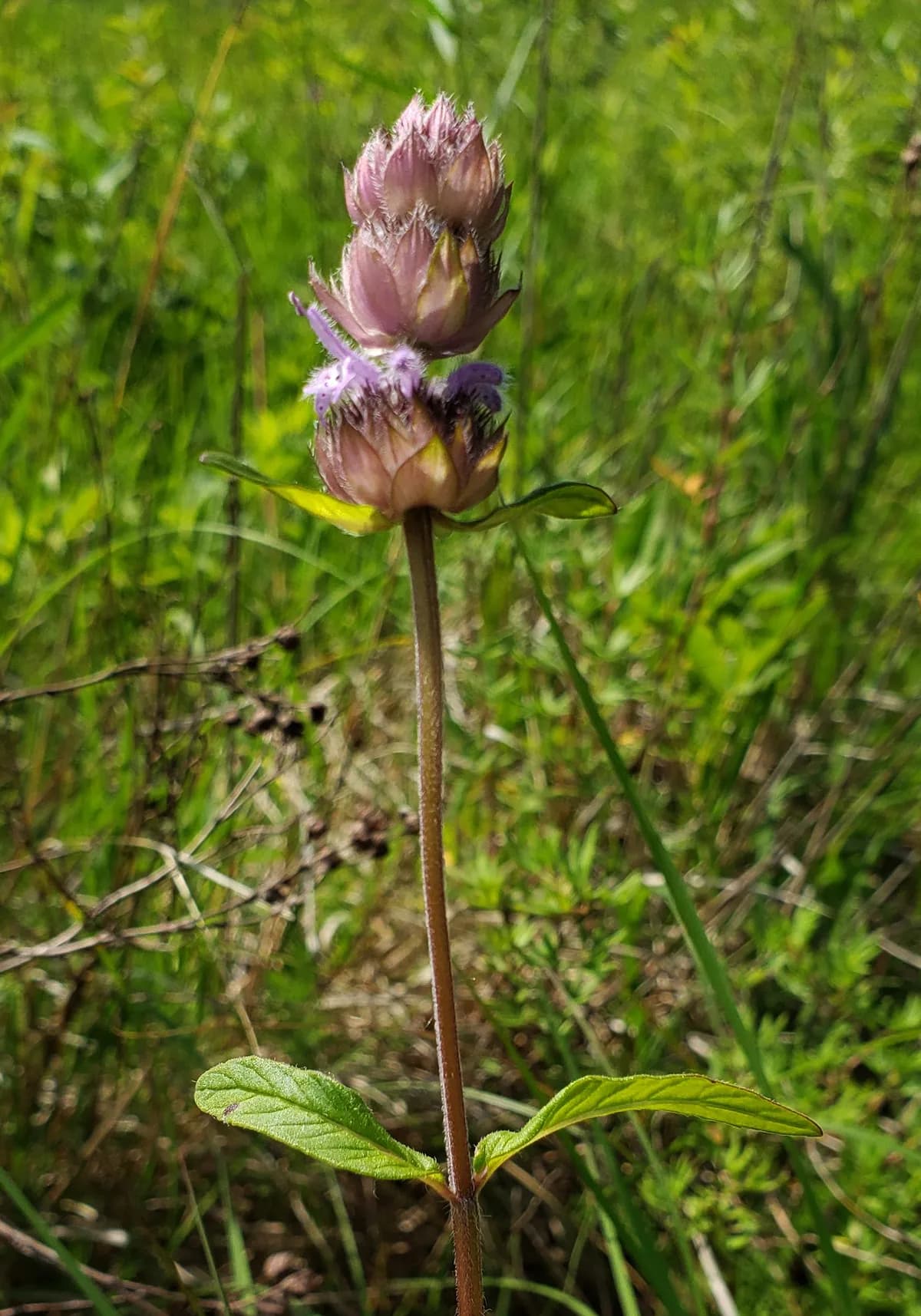
Downy Wood-mint is a low, clump-forming forb that blooms from June through August with pale purple, spotted flowers that draw bees and butterflies. It does well in part sun on rocky slopes, open woodlands, and glades with medium to dry soil.
Toxicity unknown
Downy Wood-mint (Blephilia ciliata) is not listed by the ASPCA Animal Poison Control Center (opens in new tab) or the other sources we check, so we have no verdict for it either way. Absence from those lists is not a clearance. If your pet shows symptoms after eating any plant, call the ASPCA at (888) 426-4435.
Light
part sun
Water
medium
Size
12"–24" H × 8"–12" W
Bloom
Jun, Jul, Aug
Native to
AL, AR, CT, GA and 18 more states
Pollinators
bees, butterflies
Deer
Resistant (per Prairie Moon Nursery)
Before you buy
Your city may pay you to plant this
Cities and water utilities offer rebates for replacing lawn with native and water-wise plants. We track 459 programs across 44 states, each with a link to the provider and the date we last checked it.
Find rebates in your areaPicture natives in your own yard
Upload a photo of your yard and Patch Vision shows a rendering of it planted with natives for your region, like Downy Wood-mint.


Browse plants for this ecoregion
Downy wood-mint is a compact native perennial that produces clusters of small white to pale lavender flowers from June through August. This well-behaved mint relative stays in neat clumps without aggressive spreading and tolerates partial shade conditions well.
Growing Downy Wood-mint
Grow Downy Wood-mint in part sun and medium water. Mature plants reach 12 to 24 inches tall and spread 8 to 12 inches wide. Expect low maintenance to keep it looking intentional in a front yard.
How to care for Downy Wood-mint, by region
How to care for Downy Wood-mint where it is actually grown: year-round basics plus what to do each season, region by region, with the sources for each.
Care guidance last updated: October 2026
Eastern Corn Belt Plains (includes Columbus, OH)
Year-round
Downy wood mint is an easygoing native mint relative that fits well into a Columbus yard with average sun and well drained soil.
- Give it full sun to part shade and soil that drains well, it does not like sitting in a wet spot
- It grows about 1 to 2 feet tall and spreads slowly from a central root, so it stays a tidy clump instead of running through a bed
- Small white to pale lavender flowers open from late spring into midsummer and are one of the better bee plants in the whole mint family
- It shrugs off dry stretches better than most mints and is rarely bothered by deer or rabbits
- It is native across a wide swath of the eastern and central US that includes Ohio, so it belongs naturally in a Columbus yard rather than being an import
Its low mounding habit and slow, well behaved spread make it an easy pick for a front bed that needs to look tidy
Fall
Fall in Columbus usually stays frost free well into October, giving the seed heads time to stand before the season winds down.
- Columbus typically gets its first fall frost in the second half of October, though it can arrive as early as the first half in a cooler year, so watch the forecast rather than one fixed date
- Leaving the dried seed heads up for a few weeks feeds birds and lets the plant reseed lightly if you want more of it next year
- Once frost blackens the top growth, cut the dead stems down to keep a front bed looking neat through winter
- The low basal leaves underneath usually stay green, so there is no need to cut all the way to bare ground
Cutting the dead stalks back after frost keeps a front facing bed looking clean for the rest of the season
Winter
Columbus winters sit well within this plant's comfort range, and it needs basically nothing from you once it goes dormant.
- This species is hardy from USDA zone 4a to 8b, and Columbus falls in zone 6a to 6b on the current map, so a normal winter here is not a concern
- The low basal leaf rosette usually stays green under snow, giving a little winter color close to the ground
- No winter mulch or wrapping is needed for an established plant, a first year planting can get a light layer of leaf mulch for extra insurance if you want it
- Hold off on watering once the ground freezes, the plant is dormant and dry cold is normal for it
Spring
Spring in Columbus is when this plant wakes up from its evergreen winter rosette, and it is a good window to plant or divide it once frost lets up.
- The low basal leaves often stay green right through winter, so by early spring you will already see fresh growth close to the ground
- Columbus usually sees its last spring frost around mid to late April, so that is a good window to plant new starts or divide an older clump
- Clear away last year's dry flower stalks so new stems have room, but leave the green basal rosette in place
- Growth is slow while the soil is still cool, do not expect much height until things warm up into May
Summer
Summer is bloom season here, with flowers running from late spring into July, and Columbus humidity means a little extra attention to leaf health.
- Expect white to pale lavender flower spikes from late spring through July, a strong draw for native bees and bumble bees
- This plant handles a dry summer stretch better than most mints, but a deep watering during a long dry spell helps keep the bloom going
- Ohio's humid summers can bring on powdery mildew on the leaves, giving plants a little breathing room helps keep it in check
- If you do not want it to spread by seed into nearby beds, snip off the flower heads once they fade instead of letting them dry out
Sources: Lady Bird Johnson Wildflower Center, Blephilia ciliata plant profile, NC State Extension Gardener Plant Toolbox, Blephilia ciliata, Prairie Moon Nursery, Blephilia ciliata Downy Wood Mint (self sowing control), NWS Wilmington OH, average last spring freeze dates for central Ohio, NWS Wilmington OH, average first fall freeze dates for central Ohio, Ohio State University Extension BYGL, Ohio's 2023 Plant Hardiness Zones
Erie Drift Plain (includes Buffalo, NY)
Year-round
Downy pagoda plant prefers part shade and well-drained soil, and it does not like to stay wet.
- Plant in part shade to shade.
- Use well-drained, slightly acidic soil.
- Propagate by division.
Fall
In fall the plant slows down and needs very little.
- Skip extra watering unless it is very dry.
- Fall frost around mid October ends growth.
- Avoid heavy mulch that holds water against the crown.
Winter
In winter it rests, and good drainage matters most.
- Do not water or fertilize.
- Good drainage helps it get through snowmelt.
- Snow cover in Buffalo is normal.
Spring
Spring is a good time to divide the clump and check that the soil drains.
- Divide the clump in spring to make more plants.
- Make sure water does not pool around the roots.
- Late frost in Buffalo may nip new growth.
Summer
Summer is bloom time, and this plant likes drier conditions.
- Flowers are white, blue, or purple from May through August.
- Water only in long dry spells once established.
- Keep it in part shade.
Sources: Lady Bird Johnson Wildflower Center: Downy Pagoda-plant
Piedmont (includes Atlanta, GA)
Year-round
Downy wood mint is native to Georgia's Piedmont woodland edges and granite outcrop margins, including the hills around Atlanta, so it settles into a partly shaded bed here about as easily as anywhere in its range.
- Give it morning sun or dappled shade rather than a full blazing afternoon spot, especially with Atlanta's humid summer heat.
- Plant it in well drained soil. Piedmont red clay works if the bed does not stay soggy after storms, since this plant dislikes wet feet.
- It is a short lived perennial with shallow, fibrous roots, so a light mulch helps it get through Atlanta's summer dry spells without extra watering once established.
- The leaves are minty and have traditionally been used in tea. It is not on the ASPCA toxic plant list for cats or dogs, so it is a reasonably low worry pick near pets, though any new plant is worth watching a curious pet around.
Fall
Fall in the Piedmont is a quiet season for downy wood mint. The flowers are long finished, and the main jobs are a light tidy up and, if you want more plants, letting some seed drop.
- Once the flower spikes have fully browned, cut the spent stalks back to the basal leaves. Leaving a few lets seed drop naturally if you want the clump to fill in.
- Fall's cooler, wetter weather in Atlanta makes this a decent secondary planting window for new starts, alongside spring.
- This plant is not aggressive. It spreads slowly by short rhizomes and stays in a clump rather than running through the bed.
Cutting back the browned flower stalks after bloom keeps the front bed looking neat through fall, which matters most if the planting is visible from the street.
Winter
Downy wood mint dies back to the ground for winter and is reliably hardy through Atlanta's mild Piedmont winters, so it needs little more than being left alone until spring.
- Atlanta sits around USDA zone 7b to 8a, well within this plant's zone 4 to 8 hardiness range, so no winter protection is needed in a typical year.
- The above ground growth dies back after the first hard fall frost. A light layer of mulch over the shallow, fibrous root system helps even out soil temperature through any hard freezes.
- Winter is a fine time to plan where to add or divide clumps for spring, since the plant is dormant and the bed layout is easy to see without foliage in the way.
Spring
Spring is when downy wood mint wakes up from winter dormancy, and it is the best time to plant new starts in the Atlanta area once the last frost has passed.
- Atlanta's average last frost lands in late March, so wait until then to set out new plants or transplant divisions outdoors.
- New spring growth is soft and low to the ground at first. Keep the soil evenly moist while it establishes, then ease off watering as roots take hold.
- This is also a good window to divide an established clump before it puts its energy into summer flowers.
Summer
Summer is bloom season for downy wood mint, with tight pagoda shaped clusters of pale purple flowers opening from June into July and drawing in native bees.
- Expect flowers from roughly June through July, opening in stacked whorls that give the plant its pagoda plant nickname.
- Bees are the main visitors here. This plant is noted for its value to native and bumble bees, along with some bee flies and small butterflies.
- Atlanta's hot, humid summers can bring on powdery mildew on the leaves. Give plants some airflow and avoid overhead watering late in the day to keep it in check.
- Once established, this plant handles dry stretches well and usually does not need extra watering beyond a normal dry summer week.
Sources: Blephilia ciliata (downy pagoda plant) profile, native range and habitat, NC State Extension Plant Toolbox, Blephilia ciliata care guide, ASPCA toxic and non-toxic plant list for cats, Prairie Moon Nursery, Blephilia ciliata Downy Wood Mint growing info
Southwestern Appalachians (includes Chattanooga, TN)
Year-round
Year-round care for downy wood-mint around Chattanooga, TN: part shade to sun and well-drained soil.
- It grows in part shade, and NC State Extension also lists full sun.
- Plant it in well-drained soil. It does not tolerate waterlogged soil or flooding.
- It has some drought tolerance once established.
- It forms a clump about 1 to 2.5 feet tall and 8 inches to 1.5 feet wide.
- Flowers open from late spring into midsummer.
- NC State Extension lists it as hardy in USDA zones 4 to 8.
A modest clump 1 to 2 feet tall with a defined bed edge reads as a tidy, planned planting.
Sources: Lady Bird Johnson Wildflower Center: Blephilia ciliata, NC State Extension Gardener Plant Toolbox: Blephilia ciliata
In an HOA neighborhood
Downy Wood-mint is an HOA-friendly choice. Maintenance level: low. Tidiness: 4 out of 5.
Works well in: front yard, foundation, street edge, mid zone.
Wildlife value
The tubular flowers are particularly attractive to native bees and provide nectar for butterflies throughout the summer blooming period.
Common questions
- When does Downy Wood-mint bloom?
- Downy Wood-mint typically blooms from June through August, producing dense clusters of pale purple, spotted flowers on square stems.
- What pollinators visit Downy Wood-mint?
- Bees and butterflies are the main visitors, feeding on nectar from the flower clusters during the summer bloom period.
- What growing conditions does Downy Wood-mint prefer?
- It grows best in part sun with medium moisture, and it tolerates drier, well-drained soil on rocky slopes, open woodlands, and glades.
- How tall does Downy Wood-mint get?
- Plants usually reach one to two feet in height, with square, softly hairy stems typical of the mint family.
- Is Downy Wood-mint HOA-friendly?
- Downy Wood-mint is generally an HOA-friendly choice in the right placement, with low maintenance.
These answers were drafted with an AI model from this plant's data. Verify care details with a local expert.
Native range data from vouchered herbarium specimen records and regional native plant society lists. Pollinator and host plant associations compiled from GBIF, iNaturalist, and published ecological literature.
If something looks wrong
Common plant problems, and what to check first
These come up on almost any plant. Each guide lists the likely causes in the order they are worth ruling out, with one thing to check before you act on any of them, and links to the source it came from.
- It is dying right after planting
- Leaves turning yellow
- Wilting even though I watered it
- Brown crispy leaf tips
- Bugs on the plant
Ready to grow Downy Wood-mint? Add it to your garden in Pollinator Patch to track it and get season-by-season care guidance.