Early lowbush blueberry
Vaccinium angustifolium
Last reviewed: October 2026
Vaccinium angustifolium is a low, spreading shrub that blooms in April and May and grows well in full sun on lean, acidic, well-drained soils across cool northeastern and upper midwestern landscapes.
Toxicity unknown
Early lowbush blueberry (Vaccinium angustifolium) is not listed by the ASPCA Animal Poison Control Center (opens in new tab) or the other sources we check, so we have no verdict for it either way. Absence from those lists is not a clearance. If your pet shows symptoms after eating any plant, call the ASPCA at (888) 426-4435.
Light
full sun
Water
medium
Size
6"–24" H × 12"–24" W
Bloom
Apr, May
Native to
CT, DE, IA, IL and 18 more states
Pollinators
bumble bees, mason bees
Before you buy
Your city may pay you to plant this
Cities and water utilities offer rebates for replacing lawn with native and water-wise plants. We track 459 programs across 44 states, each with a link to the provider and the date we last checked it.
Find rebates in your areaPicture natives in your own yard
Upload a photo of your yard and Patch Vision shows a rendering of it planted with natives for your region, like Early lowbush blueberry.


Browse plants for this ecoregion
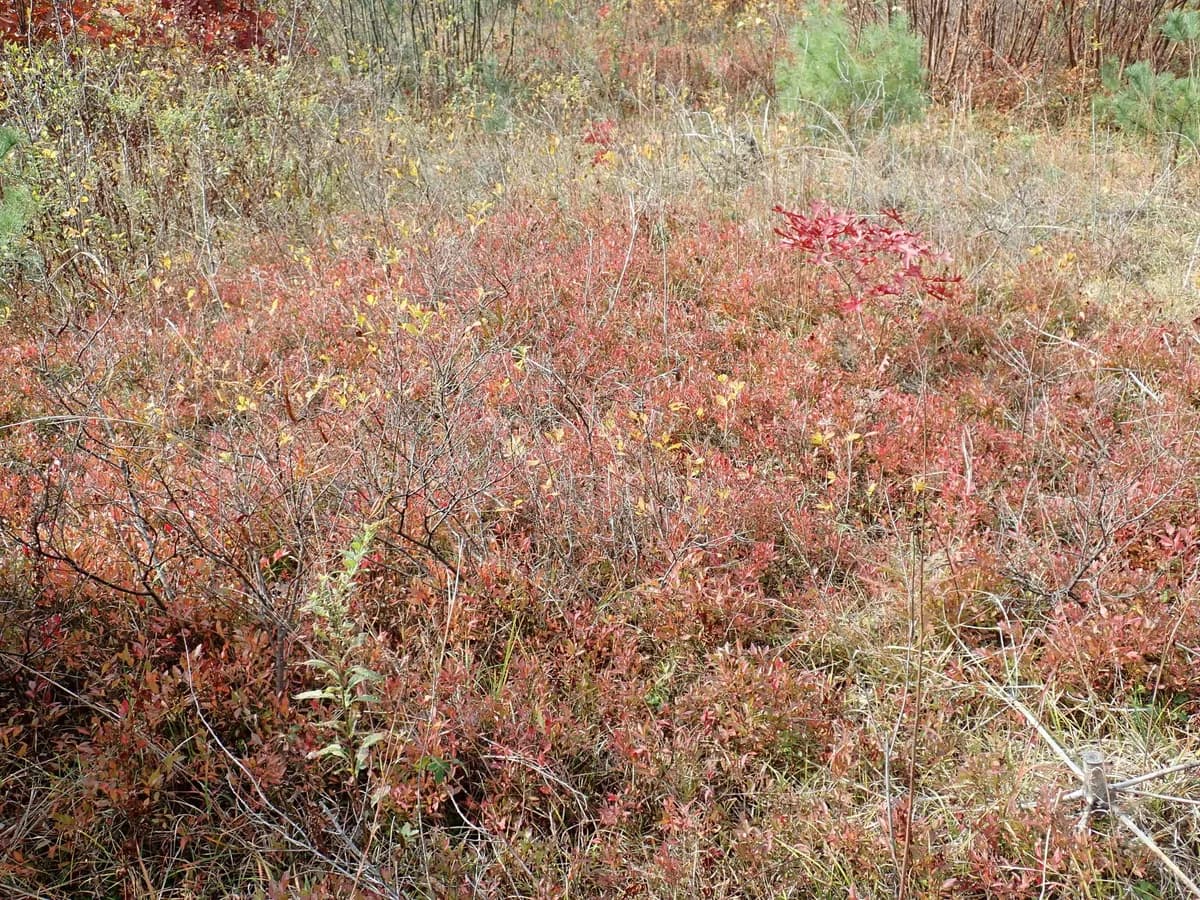
A low spreading shrub with tiny glossy leaves, white urn flowers, and sweet blue summer fruit. It forms dense colonies by rhizome in acidic sandy or rocky ground and turns brilliant scarlet in fall.
Growing Early lowbush blueberry
Grow Early lowbush blueberry in full sun and medium water. Mature plants reach 6 to 24 inches tall and spread 12 to 24 inches wide.
How to care for Early lowbush blueberry, by region
How to care for Early lowbush blueberry where it is actually grown: year-round basics plus what to do each season, region by region, with the sources for each.
Care guidance last updated: September 2026
Piedmont (includes Atlanta, GA)
Year-round
In the Atlanta Piedmont this plant sits at the warm edge of where it can be grown, it will live and grow fine but needs acidic soil and steady moisture to perform well.
- This species' native range runs from Labrador and Saskatchewan south through New England, Delaware, West Virginia, Ohio and the northern Midwest. It is not documented as native to Georgia or the Atlanta area, so here it is a garden planting rather than a native one.
- Atlanta sits in USDA hardiness zone 8a on the current map. Lowbush blueberry is rated hardy from zone 2a up through 8b, so winter cold on its own is not the limiting factor here.
- This plant generally wants close to 1,000 hours of winter chill below about 45 degrees to flower and fruit well. Atlanta's mild winters often fall short of that, so expect it to grow fine as a foliage shrub even in years when bloom and fruit set are light.
- It wants moist, acidic soil, below pH 6 and ideally 4.5 to 5.5, with plenty of organic matter. It tolerates clay as long as the bed drains and doesn't stay soggy. Work compost or pine bark fines into the planting hole either way.
This shrub stays low and mounded, usually under two feet tall, which makes it an HOA-friendly shape for a front yard border or foundation bed without much pruning to maintain.
Fall
Fall is the payoff season for foliage color here and the start of the dormant window, with the first freeze usually landing in mid November.
- Foliage typically turns maroon to red in fall, one of the better ornamental traits of this plant even in years with little fruit.
- Atlanta's average first freeze falls around November 13. Ease off fertilizing by late summer so any new growth has time to harden off before then.
- Keep watering through dry fall stretches until the plant goes dormant. Fall drought stress can reduce next year's flower buds since this plant blooms on wood grown the previous season.
- Leave fallen leaves as mulch around the base if they are not diseased, they break down into the acidic organic matter this plant wants.
Winter
Winter here is mild by this plant's standards, which is easy on the shrub itself but is also why bloom the following spring can be unpredictable.
- Atlanta's zone 8a winters are far milder than this species is built for. Mild winters are a likely reason fruiting is inconsistent here, since this plant wants close to 1,000 hours below about 45 degrees to bloom fully the following spring.
- The plant is dormant and needs little water, just enough that the root zone doesn't fully dry out during a rainless stretch.
- This is the window for structural pruning if it was skipped in late winter last year, cut out dead or crowded stems while the plant is leafless and the framework is easy to see.
- No winter protection against cold is needed here. The bigger risk in this climate is a warm spell followed by a hard freeze after buds have started to swell, not the cold itself.
Spring
Spring arrives early in Atlanta, so pruning and frost watching need to run on a Piedmont calendar, not a Northeast one.
- Prune while it is still dormant, in late winter before new growth starts, cutting out dead, damaged or crowded stems. In the Atlanta area that usually means finishing by late February or the first half of March, well before the average last frost.
- Flower buds open early here. Atlanta's average last freeze is around mid to late March, so a late cold snap can still nip open flowers. Watch the forecast and cover the plant if a freeze is called after it has bloomed.
- Water deeply and regularly as new leaves and flowers emerge. The root system is shallow and fine, and it dries out fast in Piedmont clay during a dry spring.
- Refresh mulch, pine straw or pine bark, to 2 to 3 inches to hold moisture and keep the soil acidic as it warms.
Summer
Atlanta summers are hot, humid and long, tougher than what this plant experiences in its native range, so the main job is keeping roots cool and moist.
- July and August regularly bring highs in the low to mid 90s with high humidity, well above conditions in this plant's native New England and Canadian range. Watch for scorched leaf edges and wilting during heat waves.
- Water deeply once or twice a week during dry stretches rather than light daily sprinkling. Consistent moisture matters more here than in a cooler climate because heat pulls water out of the shallow roots faster.
- Keep the mulch layer topped up through summer, it buffers root temperature and holds the moisture this plant needs in Piedmont heat.
- Watch for spotted wing drosophila on any ripening fruit, and for yellowing between the leaf veins, a sign the soil has drifted too alkaline for this plant. A soil test is the most reliable way to check pH.
Sources: Lady Bird Johnson Wildflower Center - Vaccinium angustifolium native range, USDA Plant Hardiness Zone Map, Establishment and Management of the Cultivated Lowbush Blueberry (peer-reviewed), NC State Extension Gardener Plant Toolbox - Vaccinium angustifolium, National Weather Service Atlanta - average freeze dates, Piedmont Master Gardeners - Highbush or Lowbush Blueberries
Wildlife value
Buzz-pollinated by bumble bees; the fruit and the low dense cover both support ground-nesting birds.
Common questions
- When does early lowbush blueberry bloom?
- Vaccinium angustifolium typically flowers in April and May, producing small white bell-shaped blooms before the berries develop.
- What pollinates Vaccinium angustifolium?
- Bumble bees and mason bees are the primary pollinators visiting the spring flowers of this shrub.
- How much sun and water does this shrub need?
- It performs best in full sun and prefers low, consistent moisture rather than wet or heavily irrigated soil.
- What soil conditions suit this plant?
- It grows best in acidic, sandy or rocky, well-drained soil, the kind typically found in open barrens and dry woodland edges.
- Does this shrub spread on its own?
- Yes, it spreads by underground rhizomes and often forms low, dense colonies over time rather than staying as a single stem.
These answers were drafted with an AI model from this plant's data. Verify care details with a local expert.
Native range data from the World Checklist of Vascular Plants (Kew). Pollinator and host plant associations compiled from GBIF, iNaturalist, and published ecological literature.
If something looks wrong
Common plant problems, and what to check first
These come up on almost any plant. Each guide lists the likely causes in the order they are worth ruling out, with one thing to check before you act on any of them, and links to the source it came from.
- It is dying right after planting
- Leaves turning yellow
- Wilting even though I watered it
- Brown crispy leaf tips
- Bugs on the plant
Ready to grow Early lowbush blueberry? Add it to your garden in Pollinator Patch to track it and get season-by-season care guidance.