Long Flower Beeblossom
Oenothera filiformis
Last reviewed: October 2026
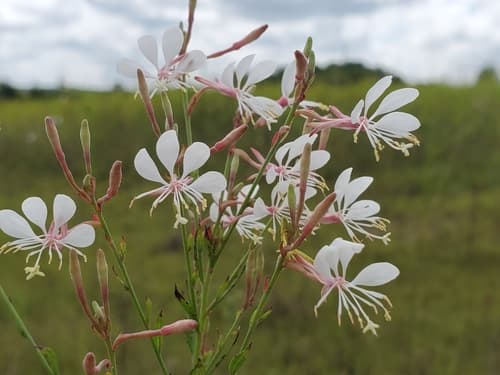
Long-Flower Gaura is a slender, wiry prairie forb that blooms from June through September, drawing bees and moths to dry, sunny grasslands and open woodland edges.
Toxicity unknown
Long Flower Beeblossom (Oenothera filiformis) is not listed by the ASPCA Animal Poison Control Center (opens in new tab) or the other sources we check, so we have no verdict for it either way. Absence from those lists is not a clearance. If your pet shows symptoms after eating any plant, call the ASPCA at (888) 426-4435.
Light
full sun
Water
low
Size
120"–144" H × 12"–24" W
Bloom
Jun, Jul, Aug, Sep
Native to
AL, AR, CO, IA and 14 more states
Pollinators
bees, moths, butterflies, hummingbirds
Before you buy
Your city may pay you to plant this
Cities and water utilities offer rebates for replacing lawn with native and water-wise plants. We track 459 programs across 44 states, each with a link to the provider and the date we last checked it.
Find rebates in your areaPicture natives in your own yard
Upload a photo of your yard and Patch Vision shows a rendering of it planted with natives for your region, like Long Flower Beeblossom.


Browse plants for this ecoregion
Thread-leaf evening primrose is a delicate annual wildflower with narrow, thread-like foliage and small yellow flowers that open in the evening. This compact plant blooms from June through September and thrives in sunny, dry conditions with minimal care.
Growing Long Flower Beeblossom
Grow Long Flower Beeblossom in full sun and low water. Mature plants reach 120 to 144 inches tall and spread 12 to 24 inches wide. Expect low maintenance to keep it looking intentional in a front yard.
How to care for Long Flower Beeblossom, by region
How to care for Long Flower Beeblossom where it is actually grown: year-round basics plus what to do each season, region by region, with the sources for each.
Care guidance last updated: September 2026
Mississippi Alluvial Plain (includes Memphis, TN)
Year-round
Long-Flower Gaura is a tall, airy wildflower whose documented native range covers the Tennessee, Mississippi, and Arkansas tri-state area around Memphis, and it grows well in a sunny, well-drained spot.
- This plant's documented native range includes Tennessee, Mississippi, and Arkansas, the three states that make up the Memphis metro area, so it fits well into native or wildlife-friendly plantings here.
- It grows in full sun to partly shaded spots and tolerates many soil types, including clay, loam, sand, and gravel, as long as the spot is not constantly soggy.
- Give it well-drained soil. It can handle dry spells once it is established and also tolerates occasional wet periods, but standing water for long stretches will hurt it.
- It grows tall, up to several feet, with a loose, airy habit. White flowers that fade to pink open in the evening from midsummer into early fall.
- It behaves as a biennial or short-lived perennial: young plants form a low rosette the first year and send up the tall flowering stalk the next year.
Fall
After the first Memphis frost, this gaura dies back for the year, and a fall cleanup plus limiting reseeding keeps beds tidy and manageable.
- After the first fall frost, usually mid to late November in Memphis, the flowering stalks die back for the year.
- This plant self-seeds readily. Trimming off spent flower spikes before seed drop in early fall helps keep it from spreading into spots you do not want it.
- Because it often behaves as a biennial or short-lived perennial, some plants will die out completely after their one strong bloom year. New rosettes from self-sown seed often take their place the next spring.
- Once the stalks turn brown after frost, most gardeners cut them back to keep beds looking maintained through winter.
A fall cutback after frost keeps this plant's dead stalks from looking untidy and is HOA-friendly for front yard beds.
Winter
Winter in Memphis is mild enough that this gaura needs no protection, it just sits dormant as a rosette or bare crown until spring.
- Rosettes and established plants are hardy through typical Memphis winters. This species tolerates USDA zones 4 through 8, and Memphis sits in zone 7b to 8a.
- Do not pile on heavy mulch over the crown. It prefers to stay on the drier side, and soggy winter mulch can cause rot.
- First-year rosettes from seed sit low to the ground through winter. They will send up the tall flowering stalk the following growing season.
- No pruning or feeding is needed in winter. Wait until new growth resumes in spring.
Spring
In the Memphis area, spring after the last frost is the time to plant or let this gaura resume growth, in a spot with good drainage for the season's heavy rain.
- In the Memphis area (USDA zone 7b to 8a), the last frost usually passes by early April. After that, it is a good time to direct sow seed or set out young plants.
- If you already have this plant, new growth will emerge from the base as the soil warms through March and April.
- Memphis gets heavy spring rain and thunderstorms, so make sure the planting spot drains well instead of holding water.
- Skip heavy fertilizing. Rich soil makes the tall stems grow even floppier later in the season.
Summer
Summer is bloom season for this gaura in Memphis, with evening flowers that hold up in the heat and humidity but tall stems that benefit from a little support.
- It blooms from July through September, with white flowers that fade to pink and open in the evening, so it is nice near a spot where you sit outside after dinner.
- Once established, it handles Memphis's hot, humid summers on normal rainfall. Only water extra during a multi-week dry stretch.
- The tall stems can flop over after summer storms and wind, especially without support nearby.
- Trimming off spent flower spikes can tidy the look, though it is not required for the plant's health.
A stake or planting it behind sturdier neighbors keeps the summer growth tidy and HOA-friendly along the front walk.
Sources: Lady Bird Johnson Wildflower Center, Oenothera filiformis (Longflower Beeblossom) native range and description, Tennessee-Kentucky Plant Atlas, Oenothera filiformis species page (soil and moisture habitat), Prairie Moon Nursery, Oenothera filiformis (Large-flowered Gaura) growing requirements
In an HOA neighborhood
Long Flower Beeblossom takes more care to keep looking intentional in a front yard. Maintenance level: low. Consider it for backyard or mid-zone beds rather than the street edge.
Works well in: backyard only.
- Annual lifecycle means gaps in coverage
- Thread-like foliage can appear sparse or weedy
- Evening primrose family often viewed as wildflower rather than ornamental
Wildlife value
The evening-blooming flowers attract night-flying moths and other nocturnal pollinators. Bees also visit the flowers during daytime hours when blooms remain open.
Common questions
- When does Long-Flower Gaura bloom?
- It typically flowers from June through September, with small white to pink blossoms opening along tall, wispy stems.
- What pollinators visit Long-Flower Gaura?
- Bees and moths are the main visitors, drawn to the plant's evening-opening flowers for nectar.
- How much water does this plant need?
- It prefers low to moderate moisture and handles dry spells well once established, making it suited to well-drained soils.
- What light conditions does Long-Flower Gaura need to thrive?
- Full sun is ideal, though it can tolerate light afternoon shade and still bloom reliably.
- Is Long Flower Beeblossom HOA-friendly?
- Long Flower Beeblossom takes more care to look intentional in a front yard. Consider it for backyard or mid-zone beds rather than the street edge.
These answers were drafted with an AI model from this plant's data. Verify care details with a local expert.
Native range data from the World Checklist of Vascular Plants (Kew). Pollinator and host plant associations compiled from GBIF, iNaturalist, and published ecological literature.
If something looks wrong
Common plant problems, and what to check first
These come up on almost any plant. Each guide lists the likely causes in the order they are worth ruling out, with one thing to check before you act on any of them, and links to the source it came from.
- It is dying right after planting
- Leaves turning yellow
- Wilting even though I watered it
- Brown crispy leaf tips
- Bugs on the plant
Ready to grow Long Flower Beeblossom? Add it to your garden in Pollinator Patch to track it and get season-by-season care guidance.