Sweet Crab Apple
Malus coronaria
Last reviewed: October 2026
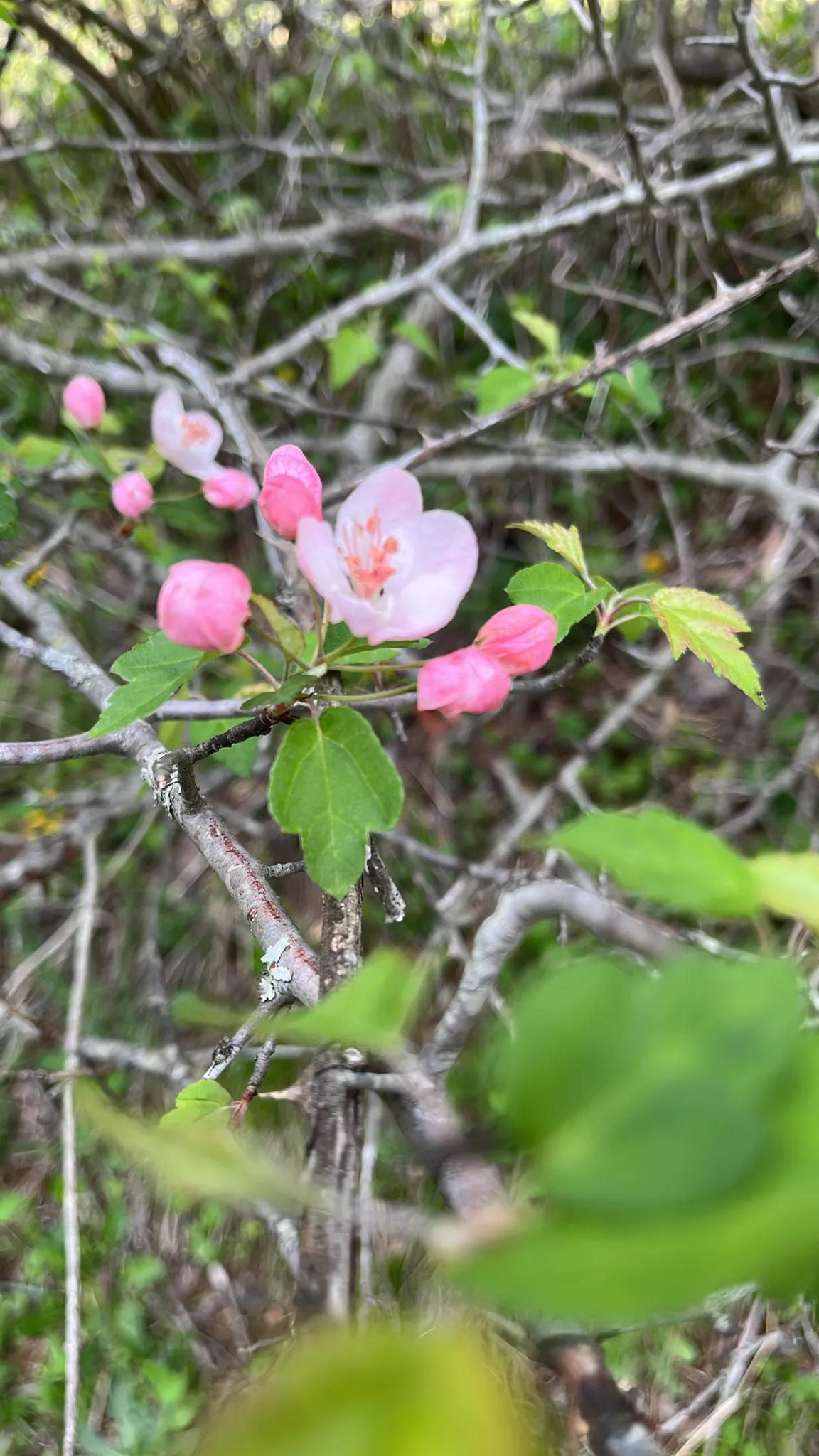
Malus coronaria, the sweet crab apple, is a small deciduous tree that blooms in May and June with fragrant pink and white flowers, drawing bees and butterflies to open woods and fields.
Toxicity unknown
Sweet Crab Apple (Malus coronaria) is not listed by the ASPCA Animal Poison Control Center (opens in new tab) or the other sources we check, so we have no verdict for it either way. Absence from those lists is not a clearance. If your pet shows symptoms after eating any plant, call the ASPCA at (888) 426-4435.
Light
full sun
Water
medium
Size
240"–480" H × 180"–360" W
Bloom
May, Jun
Native to
AL, AR, DE, GA and 18 more states
Pollinators
bees, butterflies, beetles
Before you buy
Your city may pay you to plant this
Cities and water utilities offer rebates for replacing lawn with native and water-wise plants. We track 459 programs across 44 states, each with a link to the provider and the date we last checked it.
Find rebates in your areaPicture natives in your own yard
Upload a photo of your yard and Patch Vision shows a rendering of it planted with natives for your region, like Sweet Crab Apple.


Browse plants for this ecoregion
Sweet crab apple produces fragrant white to pink flowers in late spring, followed by small yellow-green fruits. It typically grows 20-40 feet tall with a rounded crown and provides excellent seasonal interest with spring blooms and fall color.
Growing Sweet Crab Apple
Grow Sweet Crab Apple in full sun and medium water. Mature plants reach 240 to 480 inches tall and spread 180 to 360 inches wide. Expect moderate maintenance to keep it looking intentional in a front yard.
How to care for Sweet Crab Apple, by region
How to care for Sweet Crab Apple where it is actually grown: year-round basics plus what to do each season, region by region, with the sources for each.
Care guidance last updated: September 2026
Southern Rockies (includes Durango, CO)
Year-round
Sweet crab apple handles Durango's climate fine once it's established, but this high, dry mountain setting means paying attention to sun, watering rhythm, and a couple of disease and pet safety risks that come with the territory.
- Give it full sun, at least 6 hours of direct light a day. It can handle some afternoon shade, but too much shade means fewer flowers and more powdery mildew on the leaves.
- Once established, this tree is fairly drought tolerant and only needs around 15 to 20 inches of total moisture a year between rain, snowmelt, and any watering you do. Durango's annual precipitation runs close to that on its own, so extra watering is mainly for dry stretches.
- Skip planting it right next to junipers or red cedar. Crabapples and junipers pass a fungus called cedar-apple rust back and forth, and junipers are common in Durango yards and open space nearby.
- Keep fallen fruit and wilting or dropped leaves cleared away from where pets can reach them. The seeds and wilting leaves contain a compound that turns into cyanide if chewed, so it's worth staying on top of cleanup.
- Prune out dead, damaged, or crossing wood in late winter or very early spring, and finish by around June 1. Next year's flower buds start forming on the branches in June and July, so pruning later can cut down next spring's bloom.
Fall
Fall is when Durango's mountain climate calls for a few tree-specific chores before the ground freezes, wrapping the trunk and building up mulch.
- Wrap the trunk with a commercial tree wrap in fall, from the base up to the first main branches, to prevent sunscald from intense high-elevation winter sun on bark that hasn't thickened yet. Take the wrap off again in spring.
- Add or refresh 3 to 4 inches of mulch over the root area, pulled back from touching the trunk. It slows the soil from freezing and holds moisture into winter.
- Rake up and dispose of fallen leaves and fruit rather than leaving them under the tree, especially if it had scab or rust spots this year. It cuts down on next year's infection.
- Check whether the trunk needs fencing or a guard against deer, elk, or rodents, since bark browsing tends to pick up in fall as other forage dies back.
- Give the tree a deep, final watering in late fall before the ground freezes solid, especially if autumn has been dry. It helps the roots head into winter without added drought stress.
Raking up dropped fruit and fallen leaves through fall keeps the front yard looking tidy, an easy low-effort win on an HOA-conscious property.
Winter
Durango winters are cold mountain winters, and the main job is watering during dry stretches and protecting the trunk, not much else.
- Water only during extended dry periods with no snow cover, and only when air temperatures are above 40 degrees, about once or twice a month. Never water frozen ground.
- Aim for a slow soak reaching about 12 inches deep, roughly 10 gallons of water for each inch of trunk diameter measured 6 inches above the ground.
- Snow cover is actually good insulation for the roots. A dry stretch with bare ground is when winter watering matters most, not right after a fresh snow.
- Keep the tree wrap on the trunk through winter if one went on in fall. It protects thin bark from sunscald caused by intense high-elevation winter sun.
- Hold off on any pruning until late winter, closer to when growth is about to resume, rather than doing it in the coldest part of the season.
A tree wrap on the trunk reads as normal winter tree care to most HOA-conscious neighbors, not an eyesore, so there's no need to pull it off early for appearance.
Spring
Spring bloom timing shifts with Durango's elevation, and a late frost browning the blossoms is normal here, not a sign something is wrong with the tree.
- Bloom happens anywhere from April into May depending on the variety and how high up you are. At Durango's elevation, expect it on the later side of that window.
- A late frost turning open blossoms brown is common at this elevation and isn't a sign of a sick tree. It usually just means a lighter fruit crop that year.
- Start watering again once daytime air temperatures are reliably above 40 degrees and the ground has thawed. Don't water frozen soil.
- Water with a soaker hose, drip line, or hose-end wand aimed at the soil rather than overhead sprinklers. Keeping the leaves dry cuts down on scab and rust.
- Check new growth for aphids. A firm spray of water most mornings usually keeps a small outbreak in check without needing anything else.
Summer
Summer in Durango runs hot and dry, so watering is the main job, and dry heat brings its own set of pests to watch for.
- This tree is drought tolerant once established, needing only around 15 to 20 inches of total moisture a year. In a dry summer stretch with no rain, a deep soak every couple of weeks usually beats frequent light watering.
- Water slowly so it soaks down about 12 inches, using a soaker hose, deep-root fork, or soft spray wand rather than an overhead sprinkler. Wetting the leaves invites scab and rust.
- Watch for spider mites in hot, dry spells. They show up as fine speckling or webbing on the leaves, and a strong hose rinse on the undersides usually handles a light case.
- Small green fruit forms through summer and ripens toward fall. A home tree doesn't need thinning.
- Keep 3 to 4 inches of mulch out to the dripline, pulled back from touching the trunk, to hold soil moisture through the dry heat.
Sources: Flowering Crabapple Trees, Colorado State University Extension, Apple, ASPCA Animal Poison Control, Trees and Shrubs for Mountain Areas, Colorado State University Extension, Fall and Winter Watering of Plants and Trees, Colorado State University Extension, Malus coronaria, NC State Extension Gardener Plant Toolbox
In an HOA neighborhood
Sweet Crab Apple is an HOA-friendly choice. Maintenance level: moderate. Tidiness: 4 out of 5.
Works well in: front yard, mid zone, street edge.
- Fruit drop may require occasional cleanup
Wildlife value
The flowers attract bees, butterflies, and beetles in late spring. The small fruits are eaten by birds and wildlife throughout fall and winter.
Common questions
- When does sweet crab apple bloom?
- Sweet crab apple flowers in May and June, producing clusters of pink buds that open to pale pink or white blossoms with a strong fragrance.
- What pollinators visit sweet crab apple flowers?
- Bees, butterflies, and beetles regularly visit the flowers for nectar and pollen during the spring bloom period.
- What growing conditions suit sweet crab apple best?
- It grows best in full sun with medium moisture but tolerates part sun and somewhat drier soil once established.
- How large does sweet crab apple get?
- It typically grows as a small, rounded tree, often reaching 20 to 30 feet tall with a similar spread.
- Does sweet crab apple keep its leaves year round?
- No, it is deciduous and drops its leaves each fall after they turn yellow to orange.
- Is Sweet Crab Apple HOA-friendly?
- Sweet Crab Apple is generally an HOA-friendly choice in the right placement, with moderate maintenance.
These answers were drafted with an AI model from this plant's data. Verify care details with a local expert.
Native range data from vouchered herbarium specimen records and regional native plant society lists. Pollinator and host plant associations compiled from GBIF, iNaturalist, and published ecological literature.
If something looks wrong
Common plant problems, and what to check first
These come up on almost any plant. Each guide lists the likely causes in the order they are worth ruling out, with one thing to check before you act on any of them, and links to the source it came from.
- It is dying right after planting
- Leaves turning yellow
- Wilting even though I watered it
- Brown crispy leaf tips
- Bugs on the plant
Ready to grow Sweet Crab Apple? Add it to your garden in Pollinator Patch to track it and get season-by-season care guidance.