Tufted Hairgrass
Deschampsia cespitosa
Last reviewed: September 2026
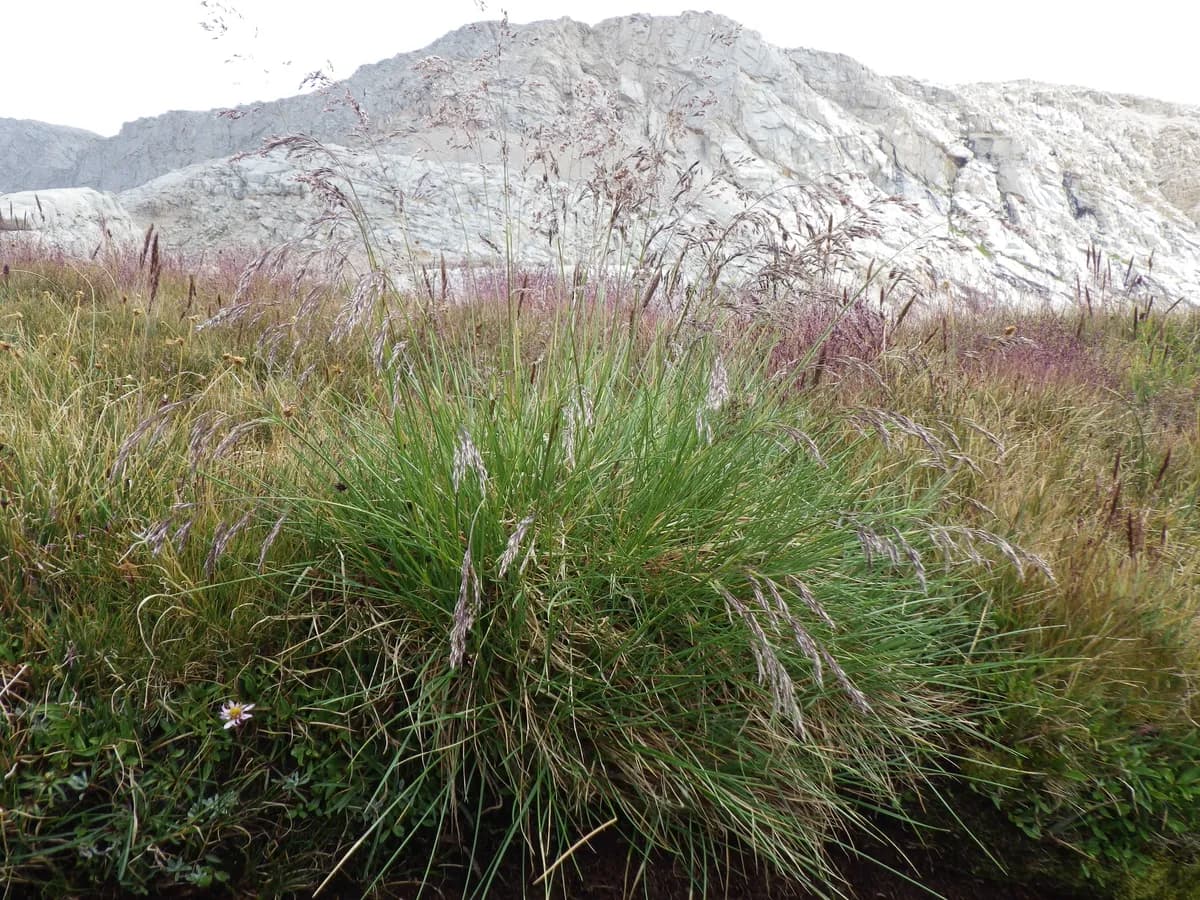
Deschampsia cespitosa, tufted hairgrass, forms dense grassy clumps topped with airy, shimmering flower panicles from June through August. It thrives in cool, moist meadows, woodland edges, and mountain slopes.
Tufted Hairgrass (Deschampsia cespitosa) is not flagged as toxic to dogs or cats by Plants For A Future (PFAF) (opens in new tab) (last reviewed 2026-05-21). This verdict does not come from the ASPCA. If your pet shows symptoms after eating any plant, call the ASPCA at (888) 426-4435.
The USDA PLANTS Database (opens in new tab) does not flag Tufted Hairgrass as toxic to livestock.
Light
part shade
Water
medium
Size
12"–48" H × 12"–24" W
Bloom
Jun, Jul, Aug
Native to
AZ, CA, CO, CT and 29 more states
Pollinators
bees, beetles, flies
Before you buy
Your city may pay you to plant this
Cities and water utilities offer rebates for replacing lawn with native and water-wise plants. We track 459 programs across 44 states, each with a link to the provider and the date we last checked it.
Find rebates in your areaPicture natives in your own yard
Upload a photo of your yard and Patch Vision shows a rendering of it planted with natives for your region, like Tufted Hairgrass.


Browse plants for this ecoregion
Tufted hairgrass is an elegant, cool-season bunchgrass with fine-textured foliage and airy, bronze-tinged flower plumes that appear in summer. It forms neat, rounded clumps of slender green leaves that provide year-round structure and movement in gardens.
Growing Tufted Hairgrass
Grow Tufted Hairgrass in part shade and medium water. Mature plants reach 12 to 48 inches tall and spread 12 to 24 inches wide. Expect low maintenance to keep it looking intentional in a front yard.
How to care for Tufted Hairgrass, by region
How to care for Tufted Hairgrass where it is actually grown: year-round basics plus what to do each season, region by region, with the sources for each.
Care guidance last updated: October 2026
Eastern Corn Belt Plains (includes Columbus, OH)
Year-round
A low-fuss grass that likes light shade and soil that stays moist.
- Plant it in light to moderate shade. It will grow in full sun but the foliage and flowers look worse.
- Give it humus-rich soil that stays moist. It tolerates wet soil.
- Maintenance is rated low.
- It self seeds, so expect some new seedlings nearby.
Fall
Little to do in fall besides watching for seedlings.
- It self seeds, so pull or move any seedlings you do not want.
- Leave the foliage in place for now. The care page puts the haircut in late winter.
- Keep the soil from drying out completely.
Winter
Winter is quiet, with one job at the very end.
- Cut old foliage to the ground in late winter before new growth starts.
- The plant is hardy in USDA zones 4a through 9b.
Spring
New growth starts early, so finish any trimming first.
- If you did not trim last year's foliage yet, cut it to the ground before new growth starts.
- Divide clumps in spring if you want more plants, since division is a recommended way to propagate it.
- Keep the soil moist and rich in organic matter.
Summer
Moist soil matters most when it is hot.
- Keep the soil moist. The plant prefers moist to soggy ground.
- Light shade is best. Full sun can reduce the quality of the foliage and flowers.
- It is salt tolerant, and some cultivars are drought tolerant.
Sources: NC State Extension Plant Toolbox, Deschampsia cespitosa
Southern Rockies (includes Durango, CO)
Year-round
Tufted hairgrass is a cool-season clumping grass that wants steady moisture and does best with some afternoon shade at Durango's elevation.
- It grows naturally in wet meadows and moist high-elevation sites across Colorado's mountains, so a consistently damp spot in a Durango yard is a reasonable match for it.
- Give it morning sun and afternoon shade if you can. Full sun works too, but the leaf tips can look rough by midsummer without enough water.
- It is rated hardy from about USDA zone 4 through 9, so Durango's zone 6a to 6b winters sit well inside its comfort range.
- The main yearly job is cutting the old foliage down to the ground in late winter before new growth starts.
- Established clumps handle short dry spells better than you might expect, but this is still a moisture-loving grass, not a true low-water xeriscape plant.
It grows as a neat, non-spreading clump rather than running or reseeding aggressively, which tends to read as tidy and HOA-friendly once you keep up the late-winter cutback.
Fall
Fall brings Durango's first frost around late September, and it is one of the two good windows for dividing a clump before winter.
- The average first frost lands around September 21 to 30, so plan on tapering watering as nights cool through September.
- Fall is one of the two good windows for dividing an overgrown clump, and it is often the easier one since the new divisions get a full fall and winter to settle in before next summer's heat.
- Leave the seed heads standing once they turn tan. They add winter interest and give birds something to feed on through the cold months.
- Do not cut the foliage back now. Wait until late winter, since the standing growth helps buffer the crown through Durango's cold nights.
Winter
Winter is the low-maintenance season for this grass. It is cold hardy well below Durango's typical lows and mostly takes care of itself under snow.
- It is rated hardy to about USDA zone 4, with some nursery sources listing it as hardy to zone 2, so Durango's zone 6a to 6b cold is not a concern.
- Leave the tan winter foliage and seed heads standing. They hold up well through snow and look better left alone until late winter.
- There is nothing to water or feed this time of year. Save the cutback for late February or March, right before new growth starts.
- A heavy, wet snow load can flatten a clump temporarily, but it typically stands back up once the snow melts.
Spring
Spring is cutback and green-up season in Durango, with an average last frost that lands in mid-May.
- Cut back any foliage left standing from winter before new blades push up, ideally by late February to March at this elevation.
- Durango's average last frost falls around May 11 to 20, so a late cold snap can still nip fresh spring growth. That is normal and the clump comes back on its own.
- Start regular watering as soon as new growth shows. Spring here tends to run dry before the summer thunderstorm pattern kicks in.
- Early spring is an option for dividing an overcrowded clump, but plan on watering it through the first summer, since a spring split has less time to root in before hot, dry weather arrives.
Summer
Durango summers start hot and dry before monsoon storms arrive in July, so this grass needs the closest watering attention in June.
- June is usually the driest, hottest stretch before the summer monsoon pattern sets in, so this is when tufted hairgrass needs the most supplemental water to keep the soil from drying out.
- Afternoon shade helps a lot here. Plants in full sun with inconsistent water tend to brown and look ragged by midsummer.
- Once July and August monsoon storms start, you can usually ease off hand watering since natural rainfall picks up some of the load.
- This is not a good plant to treat as low-water landscaping in a Durango summer. If the bed dries out for more than a few days it will show stress fast.
Sources: Lady Bird Johnson Wildflower Center: Deschampsia cespitosa, USDA Forest Service FEIS: Deschampsia cespitosa, NC State Extension Plant Toolbox: Deschampsia cespitosa, High Country Gardens: Deschampsia cespitosa 'Pixie Fountain', Almanac.com: Frost Dates for Durango, CO (community tip), Nature & Garden: Tufted Hairgrass Growing Guide (community tip)
In an HOA neighborhood
Tufted Hairgrass is an HOA-friendly choice. Maintenance level: low. Tidiness: 4 out of 5.
Works well in: front yard, foundation, street edge, mid zone.
- Seed heads may be perceived as untidy if not trimmed after flowering
Wildlife value
The seeds provide food for small birds, while the structure offers shelter for beneficial insects. During its summer bloom period, it attracts various pollinators including bees, beetles, and flies.
Common questions
- When does tufted hairgrass bloom?
- Tufted hairgrass blooms from June through August, sending up fine, arching flower panicles that shift from golden to purplish tones as they mature.
- What insects are associated with tufted hairgrass?
- Bees, beetles, and flies are commonly observed around tufted hairgrass, though as a grass it relies mainly on wind for pollen movement.
- What growing conditions suit tufted hairgrass best?
- It grows well in part shade to full sun with medium moisture, and tolerates both wetter low spots and drier upland soils once established.
- How is tufted hairgrass used in garden design?
- Gardeners often use it in rain gardens, meadow plantings, and on slopes for erosion control, valuing its fine texture and long bloom display from early to late summer.
- Is Tufted Hairgrass toxic to dogs?
- Tufted Hairgrass is not flagged as toxic to dogs by Plants For A Future (PFAF). This verdict does not come from the ASPCA.
- Is Tufted Hairgrass toxic to cats?
- Tufted Hairgrass is not flagged as toxic to cats by Plants For A Future (PFAF). This verdict does not come from the ASPCA.
- Is Tufted Hairgrass toxic to livestock?
- The USDA PLANTS Database does not flag Tufted Hairgrass as toxic to livestock.
- Is Tufted Hairgrass HOA-friendly?
- Tufted Hairgrass is generally an HOA-friendly choice in the right placement, with low maintenance.
These answers were drafted with an AI model from this plant's data. Verify care details with a local expert.
Native range data from the World Checklist of Vascular Plants (Kew). Pollinator and host plant associations compiled from GBIF, iNaturalist, and published ecological literature.
If something looks wrong
Common plant problems, and what to check first
These come up on almost any plant. Each guide lists the likely causes in the order they are worth ruling out, with one thing to check before you act on any of them, and links to the source it came from.
- It is dying right after planting
- Leaves turning yellow
- Wilting even though I watered it
- Brown crispy leaf tips
- Bugs on the plant
Ready to grow Tufted Hairgrass? Add it to your garden in Pollinator Patch to track it and get season-by-season care guidance.