Wavy Hairgrass
Avenella flexuosa
Last reviewed: August 2026
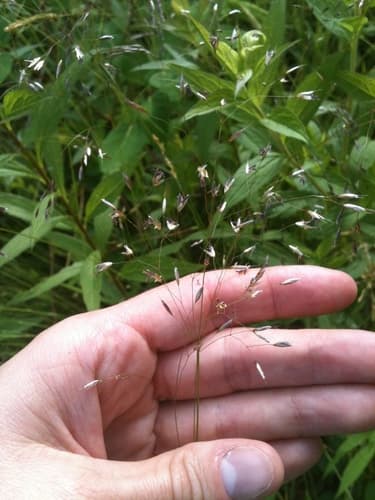
Wavy hairgrass is a fine textured, clump forming grass with airy gold bronze flower panicles from late spring into summer. It grows well on dry, rocky slopes and open woodland edges in part shade across the northeastern United States.
Toxicity unknown
Wavy Hairgrass (Avenella flexuosa) is not listed by the ASPCA Animal Poison Control Center (opens in new tab) or the other sources we check, so we have no verdict for it either way. Absence from those lists is not a clearance. If your pet shows symptoms after eating any plant, call the ASPCA at (888) 426-4435.
Light
part shade
Water
medium
Size
12"–24" H × 6"–12" W
Bloom
May, Jun, Jul, Aug
Native to
AL, AR, CT, DE and 29 more states
Before you buy
Your city may pay you to plant this
Cities and water utilities offer rebates for replacing lawn with native and water-wise plants. We track 459 programs across 44 states, each with a link to the provider and the date we last checked it.
Find rebates in your areaPicture natives in your own yard
Upload a photo of your yard and Patch Vision shows a rendering of it planted with natives for your region, like Wavy Hairgrass.


Browse plants for this ecoregion
Wavy hairgrass is a delicate native bunch grass that forms small, tidy clumps with fine-textured foliage. It produces airy, graceful seed heads from late spring through summer that sway gently in the breeze. This compact grass works well as an accent plant or groundcover in partially shaded areas.
How to care for Wavy Hairgrass, by region
How to care for Wavy Hairgrass where it is actually grown: year-round basics plus what to do each season, region by region, with the sources for each.
Care guidance last updated: October 2026
Northern Piedmont (includes Lancaster, PA)
Year-round
Wavy hairgrass is a small tufted grass that likes acidic, free-draining soil and avoids chalk and limestone. Lancaster's limestone-based soils and humid summers may not suit it, so expect a modest plant and give it the sharpest-draining spot you have.
- Pick well-drained, acidic soil if you can.
- Avoid heavy, wet or limy spots.
- Stays low, about 5 to 20 cm before flowering and up to 30 cm in flower.
- Skip rich soil and extra fertilizer.
Fall
Fall is a good time for fresh growth and the best time to fix thin spots. Cooler nights help.
- Plant or divide in early fall.
- Water new tufts until the ground freezes.
- Leave the seed heads for winter looks.
- Skip fertilizer.
Winter
In winter the wiry tufts can stay in place. Good drainage matters most, since wet cold soil is what hurts it.
- Leave the tufts alone until late winter.
- Do not pile mulch on the crown.
- Do not water while frozen.
- Trim tired leaves in late winter.
Spring
Spring is the time to plant or divide and to watch the new tufts. Cool weather is when this grass looks its best.
- Plant in spring so roots settle before summer heat.
- Water weekly the first season.
- Rake out dead leaves from the tuft.
- Do not bury the crown in mulch.
Summer
Summer heat and humidity are the hard part here. Keep it from sitting wet and do not overwater.
- Water only when the soil is dry a few inches down.
- Morning sun or light afternoon shade is easier on it.
- If the tuft browns in heat, leave it and see if it greens up in fall.
- Keep neighbors from crowding the tuft.
Sources: Wikipedia: Avenella flexuosa (community tip)
In an HOA neighborhood
Wavy Hairgrass is an HOA-friendly choice. Maintenance level: low. Tidiness: 4 out of 5.
Works well in: front yard, foundation, street edge, mid zone.
Wildlife value
The seeds provide food for small birds and the grass offers nesting material. As a native grass, it supports various insects that serve as food sources for birds.
Common questions
- When does wavy hairgrass bloom?
- Wavy hairgrass typically produces its delicate, shimmering flower panicles from May through August, with the display often peaking in early summer.
- What growing conditions does wavy hairgrass prefer?
- This grass does best in low water, well drained soil and part shade, though it can handle brighter or somewhat shadier spots once established. It is a good choice for dry, sandy or rocky sites.
- What insects are associated with wavy hairgrass?
- Bees and beetles are commonly observed visiting wavy hairgrass, drawn to the plant during its bloom period.
- Is wavy hairgrass evergreen?
- The narrow foliage is semi-evergreen in many climates, staying green or bronze through much of the year before dieback in harsher winters.
- Is Wavy Hairgrass HOA-friendly?
- Wavy Hairgrass is generally an HOA-friendly choice in the right placement, with low maintenance.
These answers were drafted with an AI model from this plant's data. Verify care details with a local expert.
Native range data from the World Checklist of Vascular Plants (Kew). Pollinator and host plant associations compiled from GBIF, iNaturalist, and published ecological literature.
If something looks wrong
Common plant problems, and what to check first
These come up on almost any plant. Each guide lists the likely causes in the order they are worth ruling out, with one thing to check before you act on any of them, and links to the source it came from.
- It is dying right after planting
- Leaves turning yellow
- Wilting even though I watered it
- Brown crispy leaf tips
- Bugs on the plant
Ready to grow Wavy Hairgrass? Add it to your garden in Pollinator Patch to track it and get season-by-season care guidance.