White Sage
Salvia apiana
Last reviewed: September 2026
Salvia apiana is an evergreen shrub with silvery white leaves that thrives in full sun and dry, well drained soil. It blooms May through August with spikes of white to pale lavender flowers that draw bees, butterflies and hummingbirds.
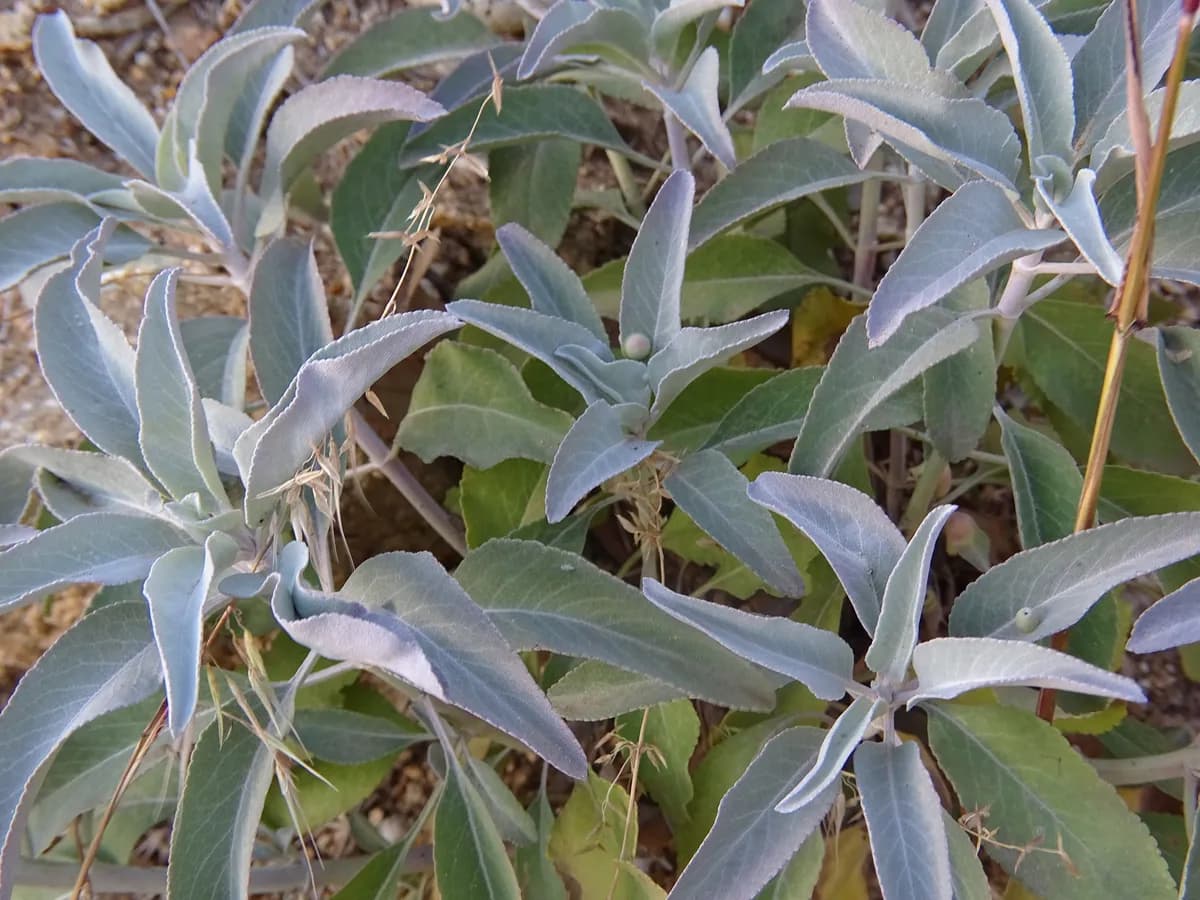
White Sage (Salvia apiana) is not flagged as toxic to dogs or cats by Plants For A Future (PFAF) (opens in new tab) (last reviewed 2026-05-21). This verdict does not come from the ASPCA. If your pet shows symptoms after eating any plant, call the ASPCA at (888) 426-4435.
Light
full sun
Water
low
Size
36"–60" H × 36"–60" W
Bloom
May, Jun, Jul, Aug
Native to
CA
Pollinators
bees, butterflies, hummingbirds
Before you buy
Your city may pay you to plant this
Cities and water utilities offer rebates for replacing lawn with native and water-wise plants. We track 459 programs across 44 states, each with a link to the provider and the date we last checked it.
Find rebates in your areaPicture natives in your own yard
Upload a photo of your yard and Patch Vision shows a rendering of it planted with natives for your region, like White Sage.


Browse plants for this ecoregion
White sage is a striking native shrub with silvery-gray foliage and tall flower stalks that bloom from spring through summer. It forms an attractive mounded shape and gives off a pleasant aromatic scent when brushed against or after rain. Highly drought tolerant once established.
Growing White Sage
Grow White Sage in full sun and low water. Mature plants reach 36 to 60 inches tall and spread 36 to 60 inches wide. Expect low maintenance to keep it looking intentional in a front yard.
How to care for White Sage, by region
How to care for White Sage where it is actually grown: year-round basics plus what to do each season, region by region, with the sources for each.
Care guidance last updated: September 2026
Driftless Area (includes Galena, IL)
Year-round
Honest hardiness and container care for white sage in a Galena winter.
- White sage is a Southern California shrub. The Lady Bird Johnson Wildflower Center lists its range as southern California and nearby Mexico, so Galena is well outside it.
- Calscape says it tolerates cold to about 0 degrees F. Galena winters often drop below that, so plan to grow it in a pot, or treat it as an annual you replace each spring.
- It needs full sun and fast-draining soil. Use a gritty mix with plenty of sand or perlite and a pot with drainage holes.
- It wants dry summers, and wet feet are what kill it. Water only when the top few inches of soil are dry.
- It reaches 3 to 5 feet tall in the ground, and a pot will keep it smaller.
Container plantings by a front step are HOA-friendly and easy to move indoors or to a garage.
Fall
Fall move-in timing for potted white sage in Galena.
- Bring the pot to shelter before the first hard freeze. Galena's first frost usually comes around early October, so watch the forecast in late September.
- Trim spent flower stalks and any sprawling branches before you move it. Calscape says these can be removed at any time.
- Cut watering back as growth slows, and never leave the pot sitting in a saucer of water.
- If you skip overwintering, treat it as an annual and take a cutting or two for a windowsill if you want to try again.
Winter
Winter protection for white sage in a cold Galena winter.
- White sage will not reliably survive outdoors here. Calscape lists cold tolerance to about 0 degrees F, and Galena winters go lower.
- Overwinter the pot in a bright, cool spot like an unheated garage window or a sunny room. It needs as much light as you can give it.
- Water sparingly, about once a month or when the soil is fully dry. Wet soil in the cool months invites root rot.
- Do not fertilize until spring. If the plant dies, it is a normal outcome in this climate, so replace it in spring.
Spring
Spring hardening off and repotting for white sage in Galena.
- Wait until nights stay well above freezing before moving the pot outside. Galena's last frost usually lands in mid May.
- Harden it off over about a week, with a few hours of sun a day at first, so the silvery leaves do not scorch.
- Repot into fresh, gritty, fast-draining mix if roots fill the pot. Do not add rich compost.
- Water only when the soil is dry a few inches down. Spring rain can waterlog a pot, so tip it or move it under an eave.
Summer
Summer sun and dry-side watering for potted white sage in Galena.
- Put the pot in the hottest, sunniest spot you have. This shrub grows on dry, sunny slopes in its home range.
- Water deeply but rarely. Let the soil dry out fully between waterings, and check that the pot drains freely after rain.
- Blooming runs spring into summer. Calscape says you can remove flower stalks once they finish in late summer to keep it tidy.
- Bees and hummingbirds visit the flowers, so hold off on spraying nearby.
Sources: Lady Bird Johnson Wildflower Center: Salvia apiana, Calscape: Salvia apiana (community tip)
Southern California/Northern Baja Coast (includes Los Angeles, CA)
Year-round
White sage is native to Southern California's coastal sage scrub, documented in the Transverse and Peninsular Ranges, the same mountain systems that frame the Los Angeles area, on dry slopes, foothills, canyons, and mesas. Its silvery leaves and white, lavender-streaked flower spikes are a strong draw for native bees, including the carpenter and bumble bees the species name apiana refers to, along with hummingbirds. Because wild stands face real poaching pressure, buy only nursery-propagated plants or seed rather than wild-harvested material.
- Give it full sun and fast to medium draining soil on a dry slope if you have one. It does not want to sit in a low, wet spot.
- Once established, it needs very little water, at most once a month during the dry season, and even less is often fine.
- Expect a sprawling, mounding shrub 3 to 5 feet tall and up to 8 feet wide. Give it real room or plan on pruning to control its spread.
- Remove spent flower stalks after summer bloom, and trim sprawling branches any time to keep the plant neat and compact.
Fall
Fall brings cooler temperatures and the start of the rainy season, making it one of the best times to plant white sage or do any reshaping pruning.
- Fall is a strong planting window for new white sage. Cooler air and coming rain reduce transplant stress.
- Trim sprawling or leggy branches now to keep the mound compact heading into winter.
- Established plants generally need little to no supplemental water once fall rains begin in a normal year.
- If you are adding more plants, buy only nursery-propagated stock. Wild populations are under real pressure from poaching and habitat loss.
Because it is a sprawling shrub, a fall shaping prune once a year keeps a front-yard planting looking tended and intentional rather than untidy.
Winter
Winter is the wet season in the Los Angeles area, and white sage's silvery foliage should stay full and healthy through the mild, mostly frost-free winters typical of its native coastal sage scrub range.
- Established plants typically need no supplemental water during a normal rainy winter.
- Make sure the planting site drains well. Standing water during winter rains is a bigger risk to this plant than winter cold.
- The plant is generally hardy through the Los Angeles area's mild winter lows, but protect young transplants if an unusual hard freeze is forecast.
- Winter's silvery, full foliage is this plant's best-looking season, a contrast to its more sprawling summer look.
Spring
Spring is bloom season for white sage in the Los Angeles area, when tall flower spikes open in white blooms streaked with lavender and draw heavy pollinator traffic.
- Spring is a fine window to plant new white sage, while the Mediterranean climate's rains are still available to help roots establish.
- Water new plantings regularly through establishment, then start tapering off as the plant roots in.
- Expect steady bee and hummingbird activity around the flower spikes. This is the plant's biggest pollinator draw of the year.
- Avoid heavy pruning now. Wait until after bloom finishes later in summer.
Summer
Bloom continues into early summer in milder years, and established white sage needs very little water through the Los Angeles area's dry summer months.
- Water at most once a month, and many established plants do fine with no supplemental water at all through summer.
- Once flowering wraps up, remove the spent flower stalks to tidy the plant and encourage compact growth.
- Watch for sprawling branches that flop under their own weight in the heat. Trim them back any time for a neater shape.
- Avoid watering it on the same schedule as thirstier plants nearby. Overwatering is the more common problem for this species in a home garden.
In an HOA neighborhood
White Sage is an HOA-friendly choice in the right placement. Maintenance level: low. Tidiness: 3 out of 5.
Works well in: foundation, mid zone.
- Can look slightly untidy after flowering
- Silvery foliage may not match traditional landscape aesthetics
- Should be pruned annually to maintain shape
Wildlife value
Valuable plant for multiple pollinators including native bees, butterflies, and hummingbirds. The blooms provide nectar throughout the warm season.
Common questions
- What does White Sage look like?
- White Sage grows as a rounded, woody shrub with narrow, silvery white leaves. In summer it sends up tall flower stalks bearing whorls of white to pale lavender blooms.
- How much water does White Sage need?
- White Sage is a low water plant once established. It prefers infrequent, deep watering and struggles in soil that stays consistently moist, reflecting its adaptation to dry, sunny slopes and scrubland.
- When does White Sage bloom?
- White Sage typically flowers from May through August, with tall spikes of white to pale lavender blooms appearing above the foliage.
- What pollinators does White Sage attract?
- Bees, butterflies and hummingbirds regularly visit White Sage flowers for nectar, making it a useful plant in a pollinator friendly garden.
- What kind of light does White Sage need to grow well?
- White Sage grows best in full sun and can tolerate some part sun conditions, but flowering and form are strongest with several hours of direct light each day.
- Is White Sage toxic to dogs?
- White Sage is not flagged as toxic to dogs by Plants For A Future (PFAF). This verdict does not come from the ASPCA.
- Is White Sage toxic to cats?
- White Sage is not flagged as toxic to cats by Plants For A Future (PFAF). This verdict does not come from the ASPCA.
- Is White Sage HOA-friendly?
- White Sage is generally an HOA-friendly choice in the right placement, with low maintenance.
These answers were drafted with an AI model from this plant's data. Verify care details with a local expert.
Native range data from vouchered herbarium specimen records and regional native plant society lists. Pollinator and host plant associations compiled from GBIF, iNaturalist, and published ecological literature.
If something looks wrong
Common plant problems, and what to check first
These come up on almost any plant. Each guide lists the likely causes in the order they are worth ruling out, with one thing to check before you act on any of them, and links to the source it came from.
- It is dying right after planting
- Leaves turning yellow
- Wilting even though I watered it
- Brown crispy leaf tips
- Bugs on the plant
Ready to grow White Sage? Add it to your garden in Pollinator Patch to track it and get season-by-season care guidance.