Wholeleaf rosinweed
Silphium integrifolium
Last reviewed: September 2026
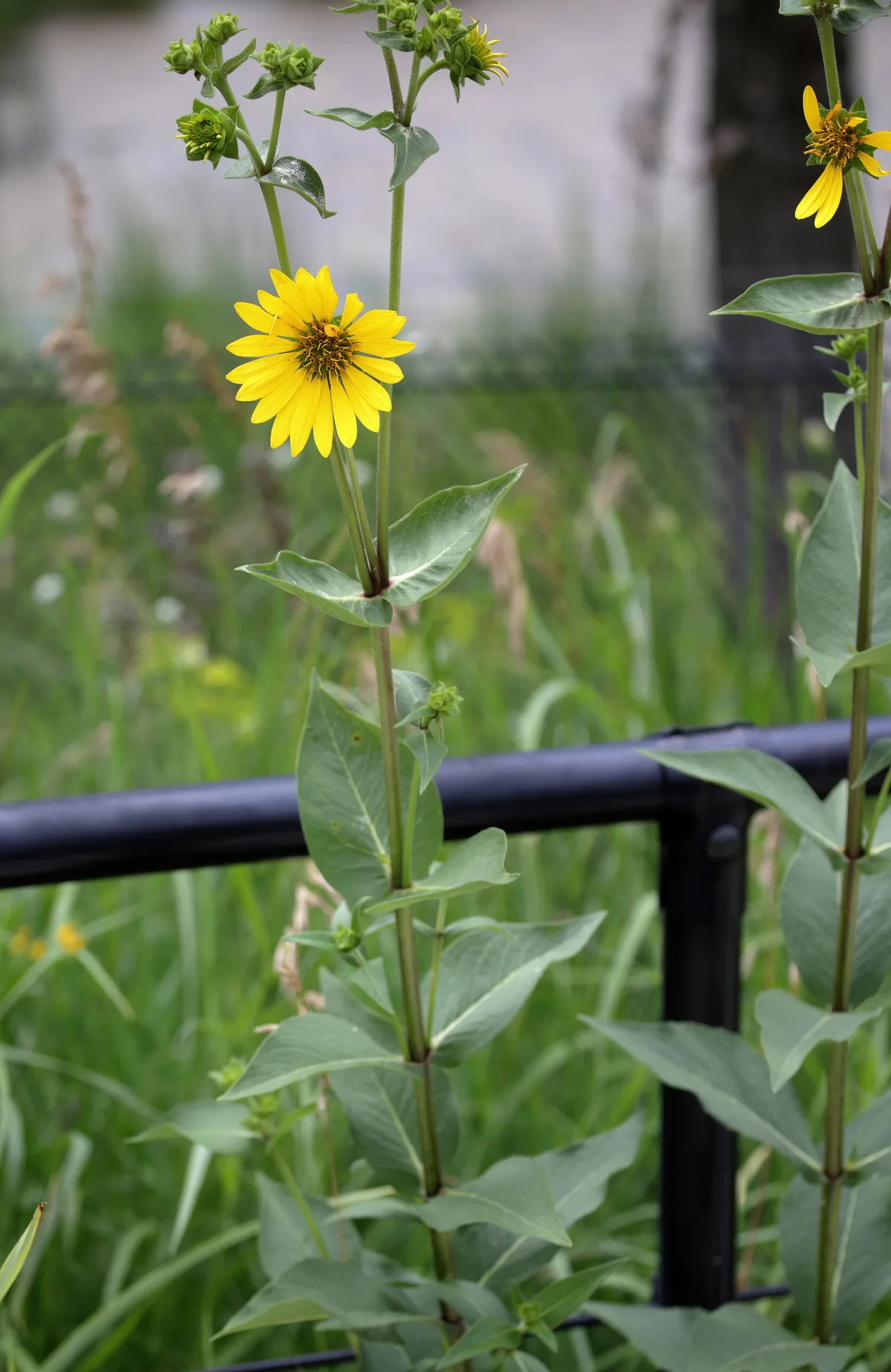
Wholeleaf rosinweed is a tall prairie forb that blooms with yellow, sunflower-like flowers from July through September. It grows in full sun with medium water needs and draws bees, butterflies, and beetles.
Toxicity unknown
Wholeleaf rosinweed (Silphium integrifolium) is not listed by the ASPCA Animal Poison Control Center (opens in new tab) or the other sources we check, so we have no verdict for it either way. Absence from those lists is not a clearance. If your pet shows symptoms after eating any plant, call the ASPCA at (888) 426-4435.
Light
full sun
Water
medium
Size
36"–72" H × 24"–36" W
Bloom
Jul, Aug, Sep
Native to
AL, AR, IA, IL and 16 more states
Pollinators
bees, butterflies, beetles
Deer
Resistant (per Prairie Moon Nursery)
Before you buy
Your city may pay you to plant this
Cities and water utilities offer rebates for replacing lawn with native and water-wise plants. We track 459 programs across 44 states, each with a link to the provider and the date we last checked it.
Find rebates in your areaPicture natives in your own yard
Upload a photo of your yard and Patch Vision shows a rendering of it planted with natives for your region, like Wholeleaf rosinweed.


Browse plants for this ecoregion
A tall, coarse-textured perennial forb with stiff, upright stems and large, rough-textured, opposite leaves. Produces bright yellow, sunflower-like blooms atop sturdy stems in mid to late summer. Develops a deep taproot that makes it very drought tolerant once established.
Growing Wholeleaf rosinweed
Grow Wholeleaf rosinweed in full sun and medium water. Mature plants reach 36 to 72 inches tall and spread 24 to 36 inches wide. Expect moderate maintenance to keep it looking intentional in a front yard.
How to care for Wholeleaf rosinweed, by region
How to care for Wholeleaf rosinweed where it is actually grown: year-round basics plus what to do each season, region by region, with the sources for each.
Care guidance last updated: July 2026
Cross Timbers (includes Fort Worth, TX)
Year-round
Wholeleaf rosinweed is a tall, sturdy native prairie perennial that spends most of the year building a deep taproot, then puts up yellow, sunflower-like blooms in mid to late summer. It is a caterpillar host plant, so it earns its keep even when it is not in flower.
- Give it full sun and a spot with room to reach 3 to 6 feet tall and 1 to 3 feet wide.
- Plant it once and leave it alone: the deep taproot means it does not like being dug up and divided later.
- Expect a coarse, somewhat rangy look rather than a tidy mound, it reads best in a native bed or border rather than a formal foundation planting.
- It is a larval host plant for the silvery checkerspot butterfly, so some chewed leaves in summer are a sign the plant is doing its job, not a problem to spray.
Fall
Bloom continues into September, then the plant shifts into forming seed heads that goldfinches and other seed-eating birds visit through the fall.
- Let the last flowers finish and go to seed rather than deadheading in September, the seed heads are the wildlife payoff for the season.
- This is not the best month to plant a new rosinweed, fall in North Texas is better saved for trees and shrubs; hold new forb plantings for next spring.
- Watch for self-sown seedlings nearby, this species readily self-seeds in good conditions, pull unwanted ones while they are small if you want to control spread.
- Cut back only stems that have fully browned and dropped their leaves, leave green growth alone.
Browning seed heads and self-sown seedlings can look unkempt by late fall; a quick edge trim along the bed line keeps the surrounding area tidy even while the plant itself is left standing for birds.
Winter
The plant dies back to the ground after the first hard freeze and spends winter dormant as a root system underground.
- Leave the dead stems standing through winter rather than cutting them back right away, hollow stems can shelter overwintering insects and the seed heads still feed birds into the cold months.
- Cut the dried stalks down to 4 to 6 inches once new growth is not visible and before new spring shoots appear, typically late February.
- No winter watering is needed in a normal year, North Texas winters are mild with only short hard freezes, but protect new fall transplants if a severe Arctic outbreak is forecast.
- Do not attempt to dig and move an established plant in winter, the taproot does not tolerate transplanting well at any time of year.
Standing dead stems through winter can read as an unmowed area to a neighbor or HOA inspector; a note on file or a small sign explaining the wildlife purpose, or simply cutting back by late December if that risk matters more to you, keeps the look intentional.
Spring
Spring is the best time to get this plant in the ground in North Texas, and once it is planted, its job for the season is just building roots before the summer heat arrives.
- Plant from mid March through April, after the last frost, while the soil is still cool and moist.
- In the heavy black clay found in the eastern part of the metro, set the crown slightly high or on a low mound so the taproot is not sitting in standing water; in the sandier soils west of the metro, water more often through the first few weeks since it drains faster.
- Water two to three times a week for the first month if spring rain is light, tapering off as new leaves fill in.
- Do not fertilize heavily, average soil is enough and pushes a floppier, weaker stem.
New spring growth is low and leafy, not yet the tall summer stalks, so it reads as a compact green clump from the sidewalk with nothing to explain to a neighbor.
Summer
This is the plant's showtime: tall yellow, sunflower-like blooms open from July into September, right through the hottest stretch of the year.
- Once established (its second summer), it tolerates the 100F-plus afternoons and dry spells with little help; a first-year plant still needs a deep soak once a week if three or more weeks pass without rain.
- Stems can reach 5 to 6 feet by midsummer and may lean after a storm, a single stake or a spot tucked behind sturdier neighbors keeps it upright without looking staked-up.
- Deadhead spent flower heads if you want a longer bloom window and a neater front-yard look, or leave some on to feed birds later.
- Leaves are naturally rough and coarse to the touch, that texture is normal for this species, not a sign of stress.
A single tall rosinweed can look like a stray weed to a passerby; grouping three or more together, or pairing it with a lower shrub in front, reads as an intentional planting rather than something that got away.
Sources: Missouri Botanical Garden Plant Finder: Silphium integrifolium, Butterflies and Moths of North America: Chlosyne nycteis (Silvery Checkerspot), Lady Bird Johnson Wildflower Center: Silphium integrifolium
Texas Blackland Prairies (includes Dallas, TX)
Year-round
Wholeleaf rosinweed is a tall, sturdy native prairie perennial that spends most of the year building a deep taproot, then puts up yellow, sunflower-like blooms in mid to late summer. It is a caterpillar host plant, so it earns its keep even when it is not in flower.
- Give it full sun and a spot with room to reach 3 to 6 feet tall and 1 to 3 feet wide.
- Plant it once and leave it alone: the deep taproot means it does not like being dug up and divided later.
- Expect a coarse, somewhat rangy look rather than a tidy mound, it reads best in a native bed or border rather than a formal foundation planting.
- It is a larval host plant for the silvery checkerspot butterfly, so some chewed leaves in summer are a sign the plant is doing its job, not a problem to spray.
Fall
Bloom continues into September, then the plant shifts into forming seed heads that goldfinches and other seed-eating birds visit through the fall.
- Let the last flowers finish and go to seed rather than deadheading in September, the seed heads are the wildlife payoff for the season.
- This is not the best month to plant a new rosinweed, fall in North Texas is better saved for trees and shrubs; hold new forb plantings for next spring.
- Watch for self-sown seedlings nearby, this species readily self-seeds in good conditions, pull unwanted ones while they are small if you want to control spread.
- Cut back only stems that have fully browned and dropped their leaves, leave green growth alone.
Browning seed heads and self-sown seedlings can look unkempt by late fall; a quick edge trim along the bed line keeps the surrounding area tidy even while the plant itself is left standing for birds.
Winter
The plant dies back to the ground after the first hard freeze and spends winter dormant as a root system underground.
- Leave the dead stems standing through winter rather than cutting them back right away, hollow stems can shelter overwintering insects and the seed heads still feed birds into the cold months.
- Cut the dried stalks down to 4 to 6 inches once new growth is not visible and before new spring shoots appear, typically late February.
- No winter watering is needed in a normal year, North Texas winters are mild with only short hard freezes, but protect new fall transplants if a severe Arctic outbreak is forecast.
- Do not attempt to dig and move an established plant in winter, the taproot does not tolerate transplanting well at any time of year.
Standing dead stems through winter can read as an unmowed area to a neighbor or HOA inspector; a note on file or a small sign explaining the wildlife purpose, or simply cutting back by late December if that risk matters more to you, keeps the look intentional.
Spring
Spring is the best time to get this plant in the ground in North Texas, and once it is planted, its job for the season is just building roots before the summer heat arrives.
- Plant from mid March through April, after the last frost, while the soil is still cool and moist.
- In the heavy black clay found in the eastern part of the metro, set the crown slightly high or on a low mound so the taproot is not sitting in standing water; in the sandier soils west of the metro, water more often through the first few weeks since it drains faster.
- Water two to three times a week for the first month if spring rain is light, tapering off as new leaves fill in.
- Do not fertilize heavily, average soil is enough and pushes a floppier, weaker stem.
New spring growth is low and leafy, not yet the tall summer stalks, so it reads as a compact green clump from the sidewalk with nothing to explain to a neighbor.
Summer
This is the plant's showtime: tall yellow, sunflower-like blooms open from July into September, right through the hottest stretch of the year.
- Once established (its second summer), it tolerates the 100F-plus afternoons and dry spells with little help; a first-year plant still needs a deep soak once a week if three or more weeks pass without rain.
- Stems can reach 5 to 6 feet by midsummer and may lean after a storm, a single stake or a spot tucked behind sturdier neighbors keeps it upright without looking staked-up.
- Deadhead spent flower heads if you want a longer bloom window and a neater front-yard look, or leave some on to feed birds later.
- Leaves are naturally rough and coarse to the touch, that texture is normal for this species, not a sign of stress.
A single tall rosinweed can look like a stray weed to a passerby; grouping three or more together, or pairing it with a lower shrub in front, reads as an intentional planting rather than something that got away.
Sources: Missouri Botanical Garden Plant Finder: Silphium integrifolium, Butterflies and Moths of North America: Chlosyne nycteis (Silvery Checkerspot), Lady Bird Johnson Wildflower Center: Silphium integrifolium
In an HOA neighborhood
Wholeleaf rosinweed is an HOA-friendly choice in the right placement. Maintenance level: moderate. Tidiness: 2 out of 5.
Works well in: mid zone.
- Tall coarse growth habit may read as weedy to HOA reviewers if not maintained in a defined bed
Wildlife value
Host plant for Silvery checkerspot butterfly.
Abundant summer flowers attract bees, butterflies, and beetles; the foliage serves as a larval host for the silvery checkerspot butterfly, and birds feed on the seed heads in fall.
Common questions
- When does wholeleaf rosinweed bloom?
- Wholeleaf rosinweed blooms from July through September, producing bright yellow flower heads on tall, rough stems.
- What pollinators visit wholeleaf rosinweed?
- Bees, butterflies, and beetles commonly visit the flowers for nectar and pollen during the summer bloom period.
- How much sun and water does wholeleaf rosinweed need?
- It grows best in full sun with medium moisture soil, though established plants can handle drier stretches once their deep roots are in place.
- What kind of habitat does wholeleaf rosinweed grow in?
- It is typically found in tallgrass prairies, open meadows, and roadsides across the central and eastern United States, favoring well-drained soils and open exposure.
- How tall does wholeleaf rosinweed grow?
- Mature plants often reach three to six feet, with sturdy, coarse stems that support clusters of daisy-like blooms.
- Is Wholeleaf rosinweed HOA-friendly?
- Wholeleaf rosinweed is generally an HOA-friendly choice in the right placement, with moderate maintenance.
These answers were drafted with an AI model from this plant's data. Verify care details with a local expert.
Native range data from the World Checklist of Vascular Plants (Kew). Pollinator and host plant associations compiled from GBIF, iNaturalist, and published ecological literature.
If something looks wrong
Common plant problems, and what to check first
These come up on almost any plant. Each guide lists the likely causes in the order they are worth ruling out, with one thing to check before you act on any of them, and links to the source it came from.
- It is dying right after planting
- Leaves turning yellow
- Wilting even though I watered it
- Brown crispy leaf tips
- Bugs on the plant
Ready to grow Wholeleaf rosinweed? Add it to your garden in Pollinator Patch to track it and get season-by-season care guidance.