Anisescented Goldenrod
Solidago odora
Last reviewed: September 2026
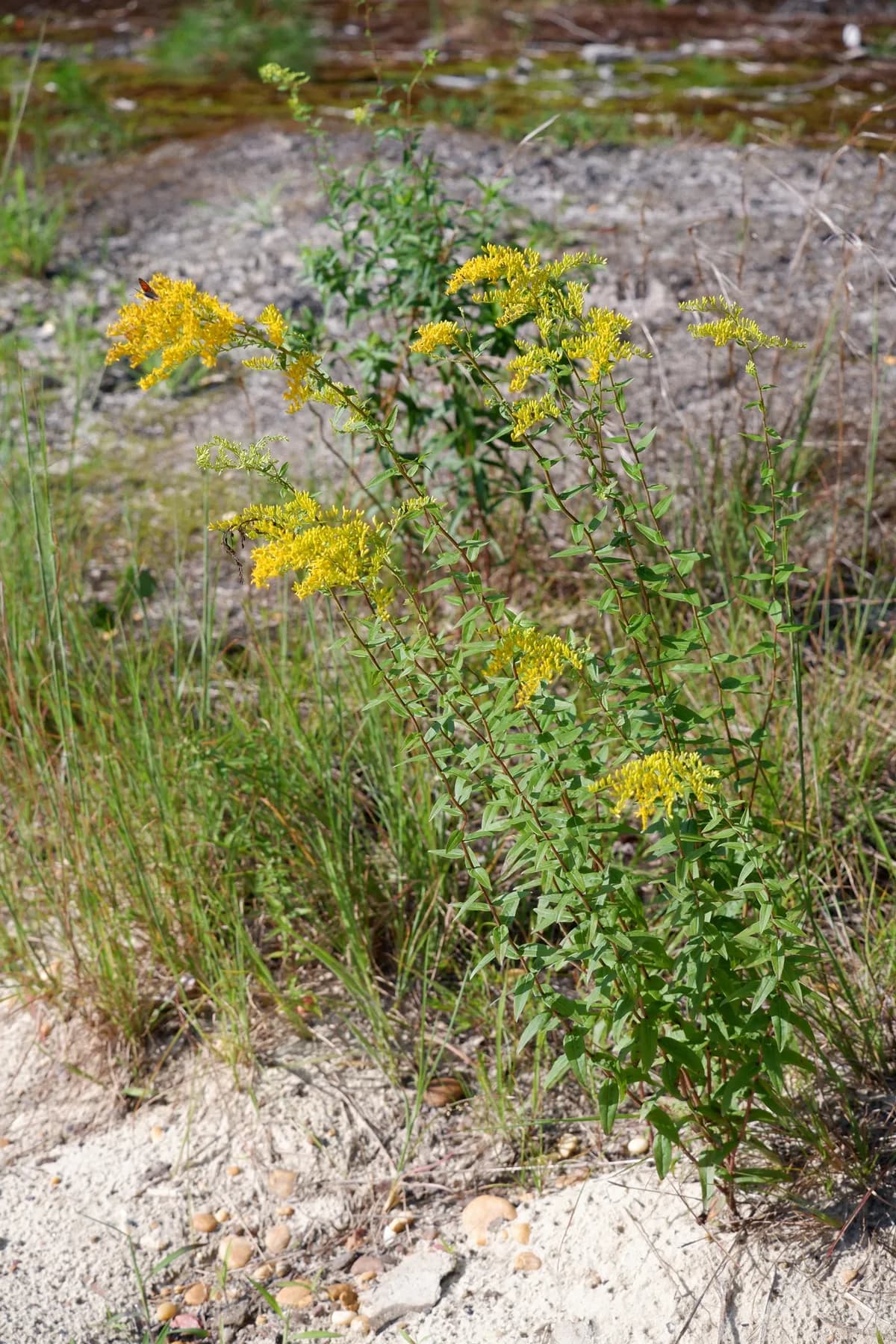
Solidago odora, or Anisescented Goldenrod, blooms from July through October in dry, sunny sites and open woodlands across much of the eastern and southeastern United States. Its crushed leaves give off a distinct anise scent.
Toxicity unknown
Anisescented Goldenrod (Solidago odora) is not listed by the ASPCA Animal Poison Control Center (opens in new tab) or the other sources we check, so we have no verdict for it either way. Absence from those lists is not a clearance. If your pet shows symptoms after eating any plant, call the ASPCA at (888) 426-4435.
Light
full sun
Water
low
Size
24"–48" H × 12"–24" W
Bloom
Jul, Aug, Sep, Oct
Native to
AL, AR, CT, DE and 22 more states
Pollinators
bees, butterflies, wasps
Before you buy
Your city may pay you to plant this
Cities and water utilities offer rebates for replacing lawn with native and water-wise plants. We track 459 programs across 44 states, each with a link to the provider and the date we last checked it.
Find rebates in your areaPicture natives in your own yard
Upload a photo of your yard and Patch Vision shows a rendering of it planted with natives for your region, like Anisescented Goldenrod.


Browse plants for this ecoregion
Anise-scented goldenrod is a native perennial wildflower that produces bright yellow flower clusters from summer through fall. It grows 2-4 feet tall with a narrow, upright habit and releases a pleasant anise fragrance when the leaves are crushed. This drought-tolerant plant thrives in full sun and poor soils where other plants struggle.
Growing Anisescented Goldenrod
Grow Anisescented Goldenrod in full sun and low water. Mature plants reach 24 to 48 inches tall and spread 12 to 24 inches wide. Expect low maintenance to keep it looking intentional in a front yard.
How to care for Anisescented Goldenrod, by region
How to care for Anisescented Goldenrod where it is actually grown: year-round basics plus what to do each season, region by region, with the sources for each.
Care guidance last updated: October 2026
Northern Piedmont (includes Lancaster, PA)
Year-round
Sweet goldenrod is a clumping perennial with anise-scented leaves and yellow plumes from July to October. It likes sun and drains well.
- Plant in full sun, or partial shade where it gets 2 to 6 hours.
- It tolerates clay and drought and prefers good drainage.
- Low maintenance and a clumper that does not spread aggressively.
- Rust, powdery mildew or leaf spot can show up occasionally.
Its clumping habit keeps a border neat, and the late flowers stay tidy.
Fall
Peak bloom runs into October, which helps pollinators late in the season.
- Flowers continue through October.
- The source says it provides special value to native and honey bees and attracts birds.
- Leave it standing so birds can use it.
Winter
Rated hardy to zone 4, so Lancaster winters are fine.
- Hardy in zones 4 to 9.
- It is deciduous, so stems die back for winter.
- Keep drainage good so the crown does not sit wet.
Spring
Spring is a good time to plant or to divide mature clumps.
- Divide mature clumps or plant new ones in full sun.
- Choose a spot with good drainage.
- Water new plants until they establish.
Summer
Established plants handle dry spells, and bloom starts in July.
- Drought resistant once established.
- Yellow plumes begin opening in July.
- Watch for rust, powdery mildew or leaf spots, which are occasional.
Sources: NC State Extension Plant Toolbox: Solidago odora, Lady Bird Johnson Wildflower Center: Solidago odora
Southern Coastal Plain (includes Orlando, FL)
Year-round
Anisescented goldenrod does well in Orlando's sandy soil and full sun, and once it settles in it needs very little upkeep.
- Give it full sun and sandy, well drained soil, the kind found across most of central Florida.
- Once established, it handles the dry season from November through April without extra watering.
- It spreads by underground stems called rhizomes, so a clump can widen over a few growing seasons.
- Chapman's goldenrod, the form of this species found on the Florida peninsula, is native to the Orlando area's dry sandy uplands, based on Florida Native Plant Society and Florida Wildflower Foundation records for this species.
- It grows three to five feet tall, so give it room at the back of a bed or away from a walkway.
Fall
Fall is when this goldenrod does its main job, covering itself in gold flowers that pollinators depend on.
- Expect plume shaped, anise scented, golden yellow blooms starting in late summer and continuing into October or November in central Florida's mild fall.
- Bees, butterflies, and other pollinators rely on this bloom as one of the last big nectar sources before winter.
- Once the flowers fade, a good window to prune is to cut the spent flower stems back partway. It keeps the bed looking tidy from the street and can cut down on self seeding.
- Leaving some seed heads standing feeds birds through the fall, so consider trimming the front facing stems and leaving a few toward the back of the bed.
Cutting back spent flower stems after bloom keeps this an HOA-friendly, tidy look from the street.
Winter
Winter is this plant's rest period in Orlando, with just an occasional light frost to plan around.
- Orlando's frost free season usually runs from around December 1 to February 20, so a light frost here and there is normal for this stretch.
- The plant goes dormant and the top growth browns and dies back after cold snaps.
- A good window to prune is once the stems have fully browned. Cut them down to a few inches above the ground.
- Cutting back the dead winter stems keeps the front yard looking neat through the dormant months.
Cutting back the browned winter stems keeps this an HOA-conscious, neat look through the dormant season.
Spring
Spring falls inside Orlando's dry season, so this is mostly a quiet, watch and wait stretch for the plant.
- New shoots come up from the rhizomes as the plant wakes from winter rest, often by late winter or early spring in central Florida.
- Spring is part of Orlando's dry season, which runs November through April, so give a young plant water if there has been no rain for a couple of weeks.
- This is a good window to dig up and separate a crowded clump, before the summer growth spurt starts.
- Skip the fertilizer. This plant is used to poor, sandy soil and does not need feeding to bloom well later in the year.
Summer
Summer is Orlando's rainy season, and the daily storms usually cover this plant's water needs on their own.
- Central Florida gets heavy afternoon thunderstorms from about May through October, which typically meets this plant's water needs without help.
- Make sure the spot drains well. This species does not do well in standing water or soil that stays flooded.
- Warm, humid summers can bring on powdery mildew on the leaves. Give plants room to breathe so air can move between them.
- Keep an eye on the rhizomes spreading into nearby beds or the lawn, and pull any shoots that wander too far.
Sources: Florida Native Plant Society, Solidago odora plant profile, Florida Wildflower Foundation, Chapman's goldenrod (Solidago odora var. chapmanii), Growli, Orlando FL (32801) USDA hardiness zone and frost-free days (community tip), Lady Bird Johnson Wildflower Center, Solidago odora bloom time and pollinator value, NC State Extension Gardener Plant Toolbox, Solidago (goldenrod) disease notes, Lawn Love, Florida planting zones and seasonal rainfall pattern (community tip)
In an HOA neighborhood
Anisescented Goldenrod takes more care to keep looking intentional in a front yard. Maintenance level: low. Consider it for backyard or mid-zone beds rather than the street edge.
Works well in: backyard only.
- Often perceived as a weed due to goldenrod stigma
- Can spread and naturalize beyond intended areas
- Dies back completely in winter leaving bare stems
Wildlife value
Host plant for bordered patch butterfly.
This goldenrod is exceptionally valuable for late-season pollinators, providing crucial nectar for bees, butterflies, and beneficial wasps when few other flowers are blooming. It serves as a host plant for several butterfly species and produces seeds that feed birds in winter.
Common questions
- When does Anisescented Goldenrod bloom?
- Anisescented Goldenrod typically flowers from July into October, producing small clusters of yellow blooms late in the growing season.
- What kind of light and soil moisture does this plant need?
- It grows best in full sun to part sun and prefers low soil moisture, making it a good fit for dry, well drained sites such as open woodlands and sandy or rocky ground.
- What pollinators visit Anisescented Goldenrod?
- Bees, butterflies, and wasps are regular visitors to its late season flowers, drawn to the nectar and pollen when few other plants are blooming.
- Why is it called anise scented goldenrod?
- The common name comes from the light anise or licorice smell released when the leaves are crushed or bruised, which helps distinguish it from other goldenrod species in the field.
- Is this goldenrod a good choice for a dry meadow or woodland edge planting?
- Yes. Solidago odora tolerates low moisture and sunny to lightly shaded conditions, so it fits well along woodland edges, dry meadows, and other lean, well drained sites.
- Is Anisescented Goldenrod HOA-friendly?
- Anisescented Goldenrod takes more care to look intentional in a front yard. Consider it for backyard or mid-zone beds rather than the street edge.
These answers were drafted with an AI model from this plant's data. Verify care details with a local expert.
Native range data from the World Checklist of Vascular Plants (Kew). Pollinator and host plant associations compiled from GBIF, iNaturalist, and published ecological literature.
If something looks wrong
Common plant problems, and what to check first
These come up on almost any plant. Each guide lists the likely causes in the order they are worth ruling out, with one thing to check before you act on any of them, and links to the source it came from.
- It is dying right after planting
- Leaves turning yellow
- Wilting even though I watered it
- Brown crispy leaf tips
- Bugs on the plant
Ready to grow Anisescented Goldenrod? Add it to your garden in Pollinator Patch to track it and get season-by-season care guidance.