Carolina Wild Petunia
Ruellia caroliniensis
Last reviewed: October 2026
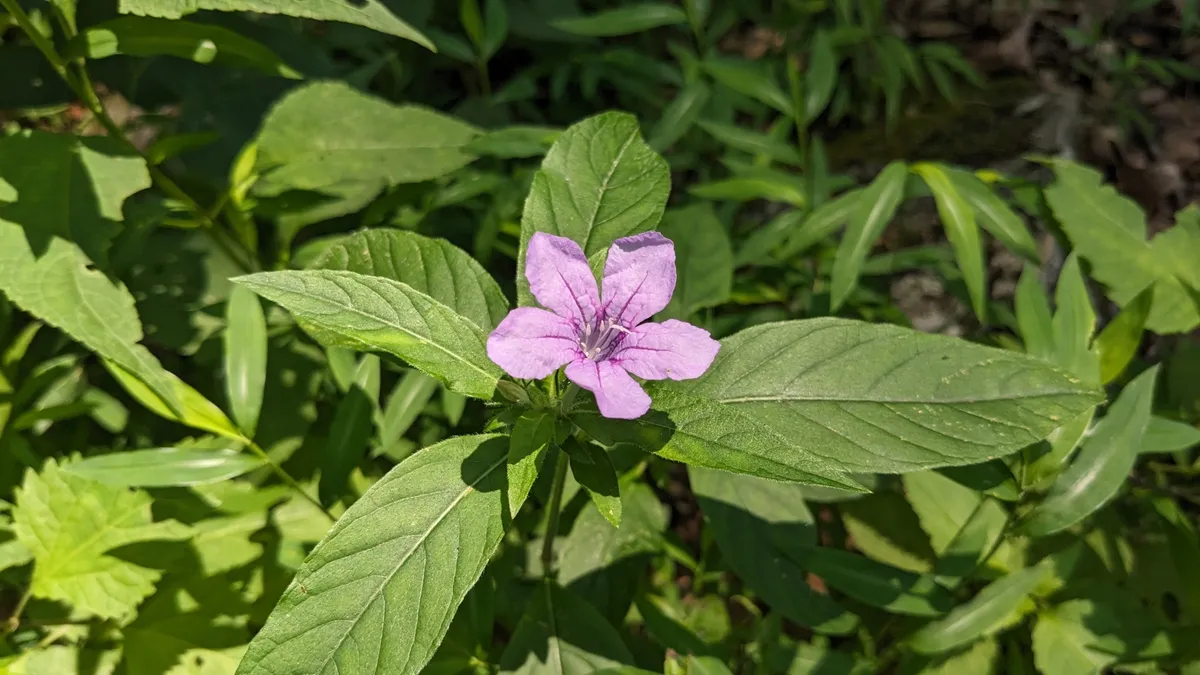
Carolina wild petunia is a low-growing forb that blooms from May through September, producing funnel-shaped lavender flowers favored by bees and butterflies. It grows well in part sun with medium moisture in woodland edges and open meadows.
Toxicity unknown
Carolina Wild Petunia (Ruellia caroliniensis) is not listed by the ASPCA Animal Poison Control Center (opens in new tab) or the other sources we check, so we have no verdict for it either way. Absence from those lists is not a clearance. If your pet shows symptoms after eating any plant, call the ASPCA at (888) 426-4435.
Light
part sun
Water
medium
Size
24"–36" H × 12"–24" W
Bloom
Jun, Jul, Aug
Native to
AL, DE, FL, GA and 14 more states
Pollinators
bees, butterflies, moths
Before you buy
Your city may pay you to plant this
Cities and water utilities offer rebates for replacing lawn with native and water-wise plants. We track 459 programs across 44 states, each with a link to the provider and the date we last checked it.
Find rebates in your areaPicture natives in your own yard
Upload a photo of your yard and Patch Vision shows a rendering of it planted with natives for your region, like Carolina Wild Petunia.


Browse plants for this ecoregion
Wild petunia is a low-growing native perennial with small purple tubular flowers that bloom from late spring through early fall. It forms neat clumps with simple green leaves and produces delicate flowers that open in the morning. This hardy plant tolerates various conditions and provides consistent color throughout the growing season.
Growing Carolina Wild Petunia
Grow Carolina Wild Petunia in part sun and medium water. Mature plants reach 24 to 36 inches tall and spread 12 to 24 inches wide. Expect low maintenance to keep it looking intentional in a front yard.
How to care for Carolina Wild Petunia, by region
How to care for Carolina Wild Petunia where it is actually grown: year-round basics plus what to do each season, region by region, with the sources for each.
Care guidance last updated: September 2026
Mississippi Valley Loess Plains (includes Memphis, TN)
Year-round
Carolina wild petunia is native to this ecoregion and grows as a spreading perennial in the Memphis area, doing best in part shade with well drained soil.
- Plant in part shade to part sun. It handles more shade than full sun in Memphis's hot climate.
- It prefers sandy, well drained, slightly alkaline soil but adapts to average garden soil.
- Once established it has good drought tolerance and needs little supplemental water.
- It spreads by both rhizomes and self seeding, so give it room to fill in over a couple seasons.
- It is a larval host plant for the common buckeye butterfly, and its flowers provide nectar for bees and other butterflies.
It stays under 3 feet tall and reads as a tidy flowering groundcover if kept to garden beds.
Fall
Blooming tapers off into fall in the Memphis area as temperatures cool toward the average first frost around November 3.
- Let some seed pods form in fall if you want the patch to self sow and expand next year.
- Fall is a good time to divide and transplant clumps once flowering slows.
- Leave some plant material standing into fall for any late season pollinator activity.
- No fertilizer is needed heading into the dormant season.
Winter
Carolina wild petunia dies back with frost in Memphis's mild zone 8a winters and returns from its roots in spring.
- Cut back dead top growth in late winter before new shoots emerge, or leave it standing through winter for wildlife cover.
- No winter watering or protection is needed for established plantings.
- Divide dormant clumps in late winter if you want to expand the planting before spring growth starts.
- Check the bed edges for volunteer seedlings, which are easy to transplant while small.
Spring
Carolina wild petunia breaks dormancy and puts out new growth in spring in the Memphis area, once the average last frost passes in late March.
- Cut back any winter dead growth in early spring before new shoots emerge.
- Divide crowded clumps in early spring if you want to spread the planting to new spots.
- No fertilizer is typically needed in average garden soil.
- New growth is soft and can be nibbled by slugs in damp spring weather.
Summer
Purple, trumpet shaped flowers open through Memphis's long, hot summer, each lasting only a day but replaced continuously from early to late summer.
- Water during extended dry spells, though established plants tolerate Memphis's summer heat well.
- Deadheading is not necessary since old flowers drop on their own each day.
- Watch for common buckeye caterpillars feeding on the leaves. This is expected and part of supporting the butterfly's life cycle.
- Divide or thin the patch in summer only if it has spread further than wanted, since this is otherwise its peak bloom season.
Sources: Lady Bird Johnson Wildflower Center: Ruellia caroliniensis, Alabama Butterfly Atlas: Common Buckeye, NC State Extension Gardener Plant Toolbox: Ruellia caroliniensis
Southern Coastal Plain (includes Orlando, FL)
Year-round
Carolina wild petunia is native to Florida and works as a low care groundcover in part shade under Orlando's oaks and pines.
- Plant in part sun to part shade, it handles Orlando's intense summer sun better with some afternoon shade
- Water regularly the first season to establish, then let it lean on rainfall, it tolerates both moist and dry sandy soil once rooted
- Mulch lightly to hold moisture in Orlando's fast draining sandy soil, but keep mulch off the crown
- The most common mistake is treating it like a tidy border plant, it spreads by rhizome and reseeds freely, so give it room or expect volunteers
Its self seeding, spreading habit can look informal in a tidy front bed. A mowed edge or defined border keeps it looking intentional and HOA-friendly.
Fall
Carolina wild petunia keeps blooming into fall around Orlando as the rainy season winds down.
- Continue watching soil moisture as afternoon storms become less frequent in October and November
- Let seed capsules mature and split on their own if you want the patch to fill in next year
- Cut back any leggy stems now to keep the clump tidy going into winter
- Enjoy the extended bloom season, flowers typically continue into fall in Central Florida's mild climate
Winter
Orlando winters are mild enough that Carolina wild petunia often stays evergreen or semi evergreen.
- Expect little to no dieback in a typical Orlando winter since hard freezes are uncommon
- If a rare frost is forecast, a light mulch layer protects the crown and roots
- Cut back any frost blackened foliage after the cold snap passes, new growth will follow from the base
- Hold off on watering, established plants need very little through Orlando's cooler, drier winter
Spring
Spring is when Carolina wild petunia in Orlando starts its long bloom run, which continues into fall.
- Water new plantings weekly through Orlando's spring dry stretch until they are established
- Expect the first lavender purple flowers to open by late spring, each bloom lasts only a day but new ones open constantly
- Divide overgrown clumps now if you want to spread them to new spots in the yard
- Weed around young plants, they compete poorly with aggressive lawn grass until established
Summer
Summer is peak bloom and caterpillar season for Carolina wild petunia in Orlando's rainy months.
- Let the daily summer storms handle watering, this plant tolerates Orlando's wet season soil without trouble
- Expect chewed leaves from Common Buckeye caterpillars, Ruellia species are a documented larval host for that butterfly, so leave the damage alone
- Deadheading is not necessary, spent flowers drop on their own and the plant keeps blooming
- Thin overcrowded clumps for airflow if humidity brings on leaf spotting
Sources: Lady Bird Johnson Wildflower Center - Ruellia caroliniensis, NC State Extension Gardener Plant Toolbox - Ruellia caroliniensis, Butterflies and Moths of North America - Common Buckeye (Junonia coenia)
In an HOA neighborhood
Carolina Wild Petunia is an HOA-friendly choice. Maintenance level: low. Tidiness: 4 out of 5.
Works well in: front yard, foundation, street edge, mid zone.
Wildlife value
The tubular flowers attract bees and butterflies throughout its long blooming period. It serves as a host plant for some butterfly species and provides nectar for various pollinators.
Common questions
- When does Carolina wild petunia bloom?
- Carolina wild petunia typically flowers from May through September, with individual blossoms opening for a single day before new ones take their place.
- What pollinators visit Carolina wild petunia?
- Bees and butterflies regularly visit the tubular lavender flowers for nectar, making this plant a useful addition to a pollinator garden.
- How much sun and water does Carolina wild petunia need?
- This plant does best in part sun to part shade with medium, well-drained soil moisture, though it can tolerate brighter or drier conditions once established.
- Is Carolina wild petunia easy to grow in a home garden?
- Yes, it spreads readily in beds with dappled light and average garden soil, making it a low-maintenance choice for borders and woodland-edge plantings.
- Is Carolina Wild Petunia HOA-friendly?
- Carolina Wild Petunia is generally an HOA-friendly choice in the right placement, with low maintenance.
These answers were drafted with an AI model from this plant's data. Verify care details with a local expert.
Native range data from vouchered herbarium specimen records and regional native plant society lists. Pollinator and host plant associations compiled from GBIF, iNaturalist, and published ecological literature.
If something looks wrong
Common plant problems, and what to check first
These come up on almost any plant. Each guide lists the likely causes in the order they are worth ruling out, with one thing to check before you act on any of them, and links to the source it came from.
- It is dying right after planting
- Leaves turning yellow
- Wilting even though I watered it
- Brown crispy leaf tips
- Bugs on the plant
Ready to grow Carolina Wild Petunia? Add it to your garden in Pollinator Patch to track it and get season-by-season care guidance.