Dwarf Ginseng
Panax trifolius
Last reviewed: September 2026
Toxicity unknown
Dwarf Ginseng (Panax trifolius) is not listed by the ASPCA Animal Poison Control Center (opens in new tab) or the other sources we check, so we have no verdict for it either way. Absence from those lists is not a clearance. If your pet shows symptoms after eating any plant, call the ASPCA at (888) 426-4435.
Light
part shade
Water
medium
Size
6"–12" H × 4"–8" W
Bloom
Jun, Jul, Aug
Native to
CT, DE, GA, IN and 18 more states
Pollinators
bees, flies
Before you buy
Your city may pay you to plant this
Cities and water utilities offer rebates for replacing lawn with native and water-wise plants. We track 460 programs across 44 states, each with a link to the provider and the date we last checked it.
Find rebates in your areaPicture natives in your own yard
Upload a photo of your yard and Patch Vision shows a rendering of it planted with natives for your region, like Dwarf Ginseng.


Browse plants for this ecoregion
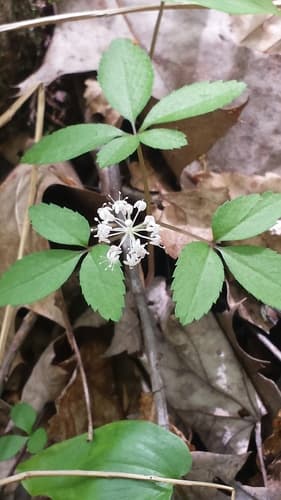
Dwarf ginseng is a delicate woodland wildflower that forms small clumps of three-leaflet foliage topped with tiny white flower clusters in summer. This diminutive native perennial thrives in partially shaded areas with consistent moisture and goes dormant in winter.
How to care for Dwarf Ginseng, by region
How to care for Dwarf Ginseng where it is actually grown: year-round basics plus what to do each season, region by region, with the sources for each.
Care guidance last updated: September 2026
Mississippi Valley Loess Plains (includes Memphis, TN)
Year-round
Dwarf ginseng (Panax trifolius) is a small spring woodland perennial in the ginseng family. USDA PLANTS and the Lady Bird Johnson Wildflower Center list Tennessee within its native range at the state level, but it needs rich, consistently moist, shaded soil to do well.
- Plant in part to full shade, such as under mature trees or on the north or east side of a house, not in open sun.
- Use rich soil with compost or leaf mold worked in, and keep it consistently moist. This is not a plant for an average dry landscape bed.
- Expect the whole plant to disappear above ground by early summer. Mark the spot so it does not get dug into or mulched over while dormant.
- West Tennessee sits in the flatter Mississippi Alluvial Plain, not the cooler upland woods this species favors within the state, so treat it as a shaded, amended garden bed planting rather than something that will spread on its own here.
- Do not dig up or harvest the root. It is a slow growing woodland plant and removing the root kills it.
Fall
Dwarf ginseng is already dormant underground by fall. There is no foliage above ground to manage, so fall care is really about protecting the root for next spring.
- Do not dig, till, or heavily rake the bed. The dormant root is shallow and easy to damage.
- Let fallen tree leaves stay in a light layer over the bed. Natural leaf litter mimics its native forest floor and protects the root over winter.
- If leaves mat down thick, rake off the heaviest layer but leave a thin covering rather than clearing the bed bare.
- Avoid piling fresh bark mulch more than an inch or two deep. A woodland plant like this is used to loose leaf litter, not thick bark mulch.
A light leaf litter layer reads as tended woodland mulch rather than an unraked yard, so it fits an HOA-conscious fall cleanup rather than working against it.
Winter
Dwarf ginseng spends winter fully dormant underground with nothing visible above ground. Winter care is mostly about leaving the site undisturbed.
- Do not dig, edge, or install anything in this bed over winter. There is no visible marker of exactly where the root sits.
- Keep the winter leaf litter layer in place rather than clearing it for a tidy look. It insulates the dormant root.
- No extra winter protection is needed for an established planting beyond the leaf litter layer, since the root is already below the surface.
- Use the dormant season to plan companion shade plants, since this bed will look empty until growth resumes in spring.
A dormant, leaf covered bed reads differently from a neglected one. A small edged border or plant marker keeps it looking like an intentional planting through winter.
Spring
Spring is dwarf ginseng's only active season. It sends up a whorl of three leaflets and a small round cluster of white flowers, then blooms for about three weeks before starting to fade.
- Watch for growth to emerge in mid to late spring, reaching only about 4 to 8 inches tall.
- Keep the soil consistently moist through the bloom period. Do not let this bed dry out in spring.
- Leave the flowers alone once they open. Small bees and flies do the pollinating, and disturbing the bed reduces the berries that follow.
- Avoid foot traffic, mulch dumping, or bed edging right over the plant this time of year, since it is small and easy to bury or crush.
Summer
By early summer the foliage yellows and dies back completely. This is normal dormancy, not a problem, and the plant will not be visible again until next spring.
- Let the foliage die back on its own. Do not pull it while it is yellowing, and do not assume the plant died.
- Mark the spot with a small stake or label before it disappears so it does not get accidentally dug up later in summer.
- Keep the surrounding shaded bed lightly moist through summer even though this plant itself is dormant, since nearby woodland companions may still need water.
- Skip fertilizer during dormancy. There is no foliage above ground to use it.
A bed that empties out by midsummer can look bare from the street. Pairing it with other shade groundcover keeps the space looking intentional and tended.
Sources: USDA PLANTS Database, Panax trifolius, Lady Bird Johnson Wildflower Center, Panax trifolius, UT Extension TN Yards and Neighborhoods, Panax trifolius, USDA Forest Service, Plant of the Week: Dwarf Ginseng, Illinois Wildflowers, Dwarf Ginseng (community tip)
In an HOA neighborhood
Dwarf Ginseng takes more care to keep looking intentional in a front yard. Maintenance level: low. Consider it for backyard or mid-zone beds rather than the street edge.
Works well in: backyard only.
- Extremely small size makes it nearly invisible in landscape
- Disappears completely when dormant
- Looks more like a wildflower than cultivated plant
Wildlife value
The small white flowers attract native bees and flies during the summer blooming period. Seeds may provide food for small woodland birds.
Common questions
- How much sun does Dwarf Ginseng need?
- Dwarf Ginseng grows best in part shade conditions.
- When does Dwarf Ginseng bloom?
- Dwarf Ginseng blooms in June, July, and August.
- Where is Dwarf Ginseng native?
- Dwarf Ginseng (Panax trifolius) is native to CT, DE, GA, IN and 18 more states, per vouchered herbarium specimen records and regional native plant society lists.
- What pollinators does Dwarf Ginseng attract?
- Dwarf Ginseng draws bees and flies.
- Is Dwarf Ginseng HOA-friendly?
- Dwarf Ginseng takes more care to look intentional in a front yard. Consider it for backyard or mid-zone beds rather than the street edge.
Native range data from vouchered herbarium specimen records and regional native plant society lists. Pollinator and host plant associations compiled from GBIF, iNaturalist, and published ecological literature.
If something looks wrong
Common plant problems, and what to check first
These come up on almost any plant. Each guide lists the likely causes in the order they are worth ruling out, with one thing to check before you act on any of them, and links to the source it came from.
- It is dying right after planting
- Leaves turning yellow
- Wilting even though I watered it
- Brown crispy leaf tips
- Bugs on the plant
Ready to grow Dwarf Ginseng? Add it to your garden in Pollinator Patch to track it and get season-by-season care guidance.