Handsome Harry
Rhexia virginica
Last reviewed: September 2026
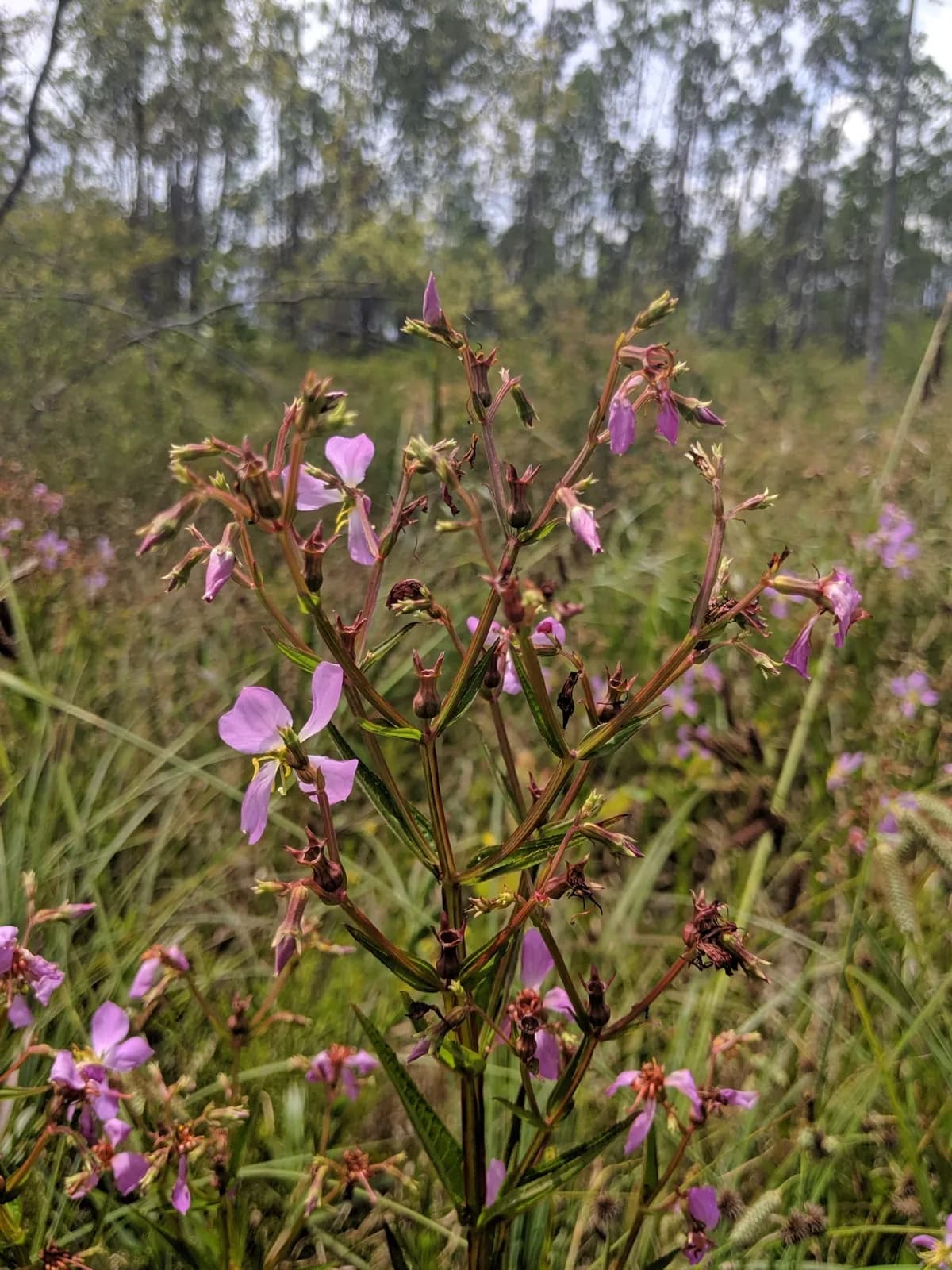
Rhexia virginica, or Handsome Harry, is a wetland forb with bright pink flowers that bloom from July through September, thriving in part sun and consistently moist to wet, acidic soils typical of bogs and pond margins.
Toxicity unknown
Handsome Harry (Rhexia virginica) is not listed by the ASPCA Animal Poison Control Center (opens in new tab) or the other sources we check, so we have no verdict for it either way. Absence from those lists is not a clearance. If your pet shows symptoms after eating any plant, call the ASPCA at (888) 426-4435.
Light
part sun
Water
medium
Size
12"–24" H × 6"–12" W
Bloom
Jul, Aug, Sep
Native to
AL, AR, CT, DE and 28 more states
Pollinators
bees, butterflies
Before you buy
Your city may pay you to plant this
Cities and water utilities offer rebates for replacing lawn with native and water-wise plants. We track 459 programs across 44 states, each with a link to the provider and the date we last checked it.
Find rebates in your areaPicture natives in your own yard
Upload a photo of your yard and Patch Vision shows a rendering of it planted with natives for your region, like Handsome Harry.


Browse plants for this ecoregion
Handsome Harry is a compact native wildflower that produces bright pink to purple four-petaled blooms from July through September. This low-growing perennial forms neat clumps and thrives in partial sun with moderate moisture, making it suitable for naturalized areas and informal gardens.
Growing Handsome Harry
Grow Handsome Harry in part sun and medium water. Mature plants reach 12 to 24 inches tall and spread 6 to 12 inches wide. Expect low maintenance to keep it looking intentional in a front yard.
How to care for Handsome Harry, by region
How to care for Handsome Harry where it is actually grown: year-round basics plus what to do each season, region by region, with the sources for each.
Care guidance last updated: September 2026
Ouachita Mountains (includes Hot Springs, AR)
Year-round
Handsome Harry is a native wetland wildflower for the Ouachita Mountains area, closely related to Maryland meadowbeauty and needing the same kind of consistently moist, acidic site.
- Native to Arkansas and much of eastern North America in moist, often acidic open ground, per the Lady Bird Johnson Wildflower Center.
- Grows about 2 feet tall with rose-pink, four-petaled flowers in loose clusters.
- Needs a consistently moist to wet site, a rain garden or pond margin works, an ordinary dry bed does not.
- Blooms June through August, with each flower lasting about a day.
- Spreads slowly by rhizomes in a favorable wet site.
- Bees that buzz-pollinate the flowers do most of the pollinating.
Like its Rhexia mariana relative, keeping it inside a defined rain garden or wet-edge bed helps the colony read as planned rather than as a soggy, weedy patch.
Fall
Fall brings seed set and natural dieback as the growing season winds down toward Hot Springs' average first frost in late October.
- Seed capsules form after summer bloom, leave them in place to mature and self-sow.
- Foliage yellows and begins dying back with shorter days and cooler nights.
- No need to cut back before frost, the dying top growth still feeds the rhizomes.
- Fine to let the first frost near late October finish it off naturally, this perennial dies back every year.
- Note how well the site held moisture through the season, and adjust before next year if it fell short.
Winter
Handsome Harry dies back to its rhizomes for the mild Ouachita Mountains winter and needs little beyond a cleanup cut.
- Top growth dies back fully to the ground after frost, cut back dead stems anytime over winter.
- Rhizomes overwinter without protection in Hot Springs' Zone 7b to 8a climate.
- Keep the site from drying out over winter, it remains a wetland species even while dormant.
- A warm winter spell bringing up early growth is not usually harmful.
- A good time to plan or expand a wet-site bed for the next growing season.
Spring
Spring is when Handsome Harry resprouts from its rhizomes in Hot Springs, and the main task is confirming the site is still wet enough heading into the growing season.
- New growth appears after Hot Springs' last frost, typically late March to early April.
- Confirm the site still holds consistent moisture this time of year, this species declines quickly in a spot that dries out.
- Divide and transplant rhizomes now if establishing a new patch.
- Skip fertilizer in a naturally wet, organic soil.
- Slower emergence during a cool spring is normal.
Summer
Summer is bloom time for Handsome Harry, and Hot Springs' heat and humidity suit it fine as long as the roots never dry out.
- Rose-pink flowers open in succession from June through August.
- Keep soil consistently moist through Hot Springs' hottest, driest weeks in July and August.
- A brief dry-out during a heat wave is the main risk to the planting in summer.
- Bees do most of the pollinating, visiting to collect pollen from the anthers.
- No common pest or disease issues turn up in a properly wet site.
Sources: Rhexia virginica, Lady Bird Johnson Wildflower Center Native Plant Database
In an HOA neighborhood
Handsome Harry takes more care to keep looking intentional in a front yard. Maintenance level: low. Consider it for backyard or mid-zone beds rather than the street edge.
Works well in: backyard only.
- Has wildflower appearance that may look too informal for front yards
- Can appear sparse or weedy when not in bloom
- Name and appearance may not be recognized as intentional landscaping
Wildlife value
The showy flowers attract bees and butterflies during the late summer blooming period. This native plant provides nectar for pollinators when many other flowers are finishing their season.
Common questions
- When does Handsome Harry (Rhexia virginica) bloom?
- Rhexia virginica typically flowers from July through September, with each individual blossom lasting only a single day before a new one opens.
- What pollinators visit Rhexia virginica?
- Bees, particularly bumblebees, are the main pollinators and use buzz pollination to release pollen from the flower's anthers. Butterflies also visit the blooms for nectar.
- What growing conditions does Rhexia virginica need?
- This forb does best in part sun with medium to consistently wet soil, and is often found growing in bogs, wet meadows, ditches, and along pond edges.
- Does Rhexia virginica spread once established?
- Yes, it spreads by underground rhizomes and self-seeding when soil moisture and sun conditions are favorable, often forming loose colonies over a few seasons.
- Is Handsome Harry HOA-friendly?
- Handsome Harry takes more care to look intentional in a front yard. Consider it for backyard or mid-zone beds rather than the street edge.
These answers were drafted with an AI model from this plant's data. Verify care details with a local expert.
Native range data from the World Checklist of Vascular Plants (Kew). Pollinator and host plant associations compiled from GBIF, iNaturalist, and published ecological literature.
If something looks wrong
Common plant problems, and what to check first
These come up on almost any plant. Each guide lists the likely causes in the order they are worth ruling out, with one thing to check before you act on any of them, and links to the source it came from.
- It is dying right after planting
- Leaves turning yellow
- Wilting even though I watered it
- Brown crispy leaf tips
- Bugs on the plant
Ready to grow Handsome Harry? Add it to your garden in Pollinator Patch to track it and get season-by-season care guidance.