Joe Pye Weed
Eutrochium purpureum
Last reviewed: November 2026
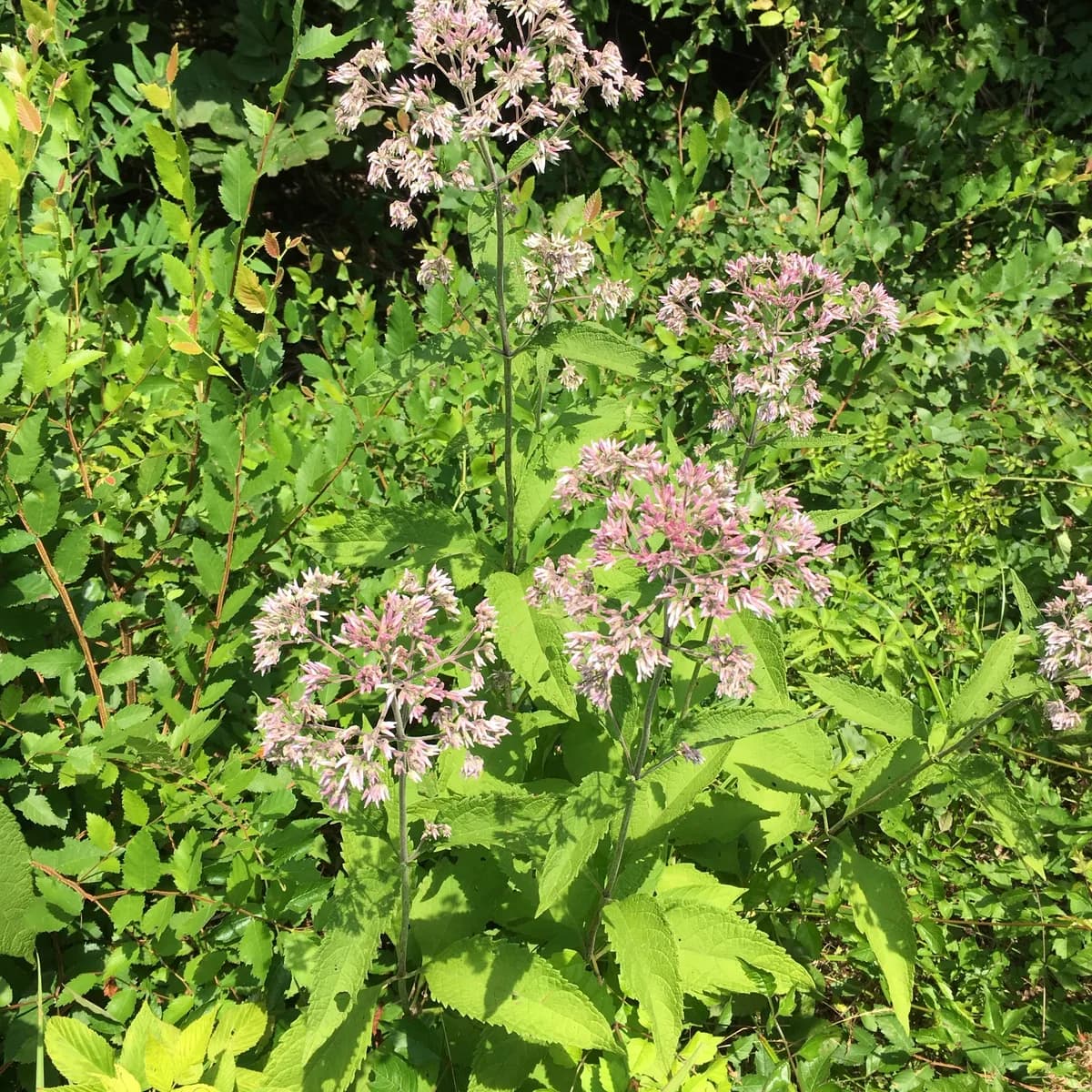
Eutrochium purpureum, or Joe Pye weed, produces dusty pink to purple flower clusters from July through September and thrives in moist meadows, woodland edges, and stream banks in full sun to part shade.
Watering reminders and freeze alerts for Joe Pye Weed, free in the app.


Toxicity unknown
Joe Pye Weed (Eutrochium purpureum) is not listed by the ASPCA Animal Poison Control Center (opens in new tab) or the other sources we check, so we have no verdict for it either way. Absence from those lists is not a clearance. If your pet shows symptoms after eating any plant, call the ASPCA at (888) 426-4435.
Light
full sun
Water
medium
Size
48"–96" H × 24"–48" W
Bloom
Jul, Aug, Sep
Native to
AL, AR, CT, DE and 29 more states
Pollinators
bees, butterflies, moths
Deer
Resistant (per Prairie Moon Nursery)
Before you buy
Your city may pay you to plant this
Cities and water utilities offer rebates for replacing lawn with native and water-wise plants. We track 461 programs across 44 states, each with a link to the provider and the date we last checked it.
Find rebates in your areaPicture natives in your own yard
Upload a photo of your yard and Patch Vision shows a rendering of it planted with natives for your region, like Joe Pye Weed.
Browse plants for this ecoregion
Sweet Joe Pye Weed is a tall native perennial that produces large, dome-shaped clusters of pinkish-purple flowers in late summer. This robust plant forms upright clumps with sturdy stems and can reach heights of 4 to 8 feet, making it an excellent choice for the back of flower borders or naturalized areas.
Growing Joe Pye Weed
Grow Joe Pye Weed in full sun and medium water. Mature plants reach 48 to 96 inches tall and spread 24 to 48 inches wide. Expect low maintenance to keep it looking intentional in a front yard.
How to care for Joe Pye Weed, by region
How to care for Joe Pye Weed where it is actually grown: year-round basics plus what to do each season, region by region, with the sources for each.
Care guidance last updated: October 2026
Central Corn Belt Plains (includes Chicago, IL)
Year-round
Sweet Joe-Pye weed is native to Illinois and occurs occasionally through most of the state, including the Chicago area, in open woodland edges, thickets, and partly shaded seeps. It is a tall, clump forming perennial with vanilla scented foliage and dome shaped mauve pink flower clusters that draw bees, butterflies, and moths from midsummer into fall. The ASPCA lists Joe-Pye (Eutrochium) as non-toxic to dogs and cats.
- Give it light shade to partial sun and moist, rich soil. It tolerates more shade than many prairie natives, which makes it a good fit along a fence line or the north side of a house.
- Expect it to reach 4 to 7 feet tall, so plant it toward the back of a bed rather than the front, and give it room to spread as the clump matures.
- Keep the soil from drying out for more than a few days at a time, especially in its first year. It tolerates average garden soil but grows best with steady moisture.
- Full, intense sun can turn the foliage a washed out yellow green. If leaves look pale in a very sunny spot, that is a sign to give it a bit more shade, not more water.
Fall
Sweet Joe-Pye weed blooms from midsummer into early fall in the Chicago area, with dome shaped mauve pink flower clusters that keep drawing bees, butterflies, and moths right up until frost. Several moth species use it as a caterpillar host plant.
- Let the flower clusters finish their bloom before any cutback. They are still feeding late season pollinators into fall.
- Leave spent seed heads standing into fall if you can. Songbirds feed on the seeds, and several moth caterpillars use the plant as a host.
- This is a good time to divide an overgrown clump if needed, once bloom has finished and cooler weather has set in.
- Cut stems back to a few inches once frost has fully ended the season, or leave them standing through fall for wildlife value and winter interest.
Cutting the tall stems back once bloom is done and frost has hit keeps a front bed from looking overgrown heading into the quieter months.
Winter
Sweet Joe-Pye weed dies back completely to the ground for winter in the Chicago area and returns from its roots each spring. Its documented native range reaches west into Minnesota, so Chicago's winter cold is well within what this plant handles.
- Cut the dead stems down to a few inches if you did not do it in fall, or leave them standing through winter for birds and overwintering insects.
- No mulch or winter covering is needed for cold protection. Its native range extends into Minnesota, which is colder than Chicago in winter.
- Mark the spot if you cut stems flush to the ground, since there will be no visible growth until the plant re-emerges, often later than other perennials.
- Avoid walking on the root area during freeze and thaw cycles, since the crown can be damaged in soft, saturated soil.
Spring
Sweet Joe-Pye weed is slow to show growth in spring in the Chicago area, so it is easy to assume a clump did not survive winter. Spring is also the best window to plant new divisions or transplants before the season's main growth spurt begins.
- Wait for new shoots before assuming a clump is gone. It is often one of the later perennials to emerge from dormancy.
- Plant new divisions in spring once the soil is workable, watering regularly while roots establish.
- Work compost into the planting area. This plant grows best in rich, moisture retentive soil.
- Watch soil moisture closely through a dry spring, since young plants have shallow roots and dry out faster than established clumps.
Summer
Summer is the main growth season for sweet Joe-Pye weed in the Chicago area, with the clump reaching its full height and budding up for its midsummer to early fall bloom. Consistent moisture during this stretch matters more than in almost any other season.
- Water during dry stretches of a week or more. This plant tolerates average soil but performs best without long gaps between rain.
- Stake tall clumps in windy spots or very wet, soft soil, since a mature plant can lean or flop under its own height.
- Hold off on pesticides. The flower buds forming now will become a major nectar source for bees, butterflies, and moths once they open.
- Thin overcrowded stems in early summer if the clump is getting dense, to improve airflow in humid weather.
Sources: Illinois Wildflowers, Sweet Joe-Pye Weed (Eutrochium purpureum): Illinois range, habitat, light and moisture needs, ASPCA, Plants to Support Your Local Wildlife (Joe-Pye, Eutrochium spp., listed non-toxic to dogs and cats), Lady Bird Johnson Wildflower Center, Eutrochium purpureum plant profile (native range extending west to Minnesota)
Driftless Area (includes Galena, IL)
Year-round
Siting, soil, water, and size basics for sweet Joe Pye weed in Galena.
- Sweet Joe Pye weed is native to Illinois per the Lady Bird Johnson Wildflower Center, so Galena's climate already suits it.
- It grows 5 to 7 feet tall and 2 to 4 feet wide, so give it the back of a bed with room around it.
- Full sun to part shade works. It leans toward part shade and slightly drier ground than other Joe Pye weeds, but it still wants soil that stays moist.
- It handles clay, loam, and sand, and struggles in dry soil. Plan on watering during dry spells, especially in the first two years.
- Its pink to purple flowers pull in bees and butterflies from July into September.
Give it a spot at the back of a border or mid-bed. Cutting it back by early July keeps it shorter and tidier.
Fall
Fall seed heads, division, and mulch for sweet Joe Pye weed in Galena.
- Leave the seed heads standing into fall. Birds eat the seed and the dried stems add structure to the bed.
- Fall is a good time to divide the clump. Do it after bloom has finished and water the divisions well until the ground freezes.
- To grow from seed, collect it when the nutlets turn shiny black and sow outdoors in fall. It needs about three months of cold, and germination tends to be low.
- Keep watering during dry autumn weeks until the ground freezes, since Galena's first frost usually comes around early October.
Winter
Winter care for sweet Joe Pye weed in a cold Galena winter.
- This plant is hardy through USDA zones 4 to 9 per NC State Extension, so Galena's winter cold is not a problem.
- It goes dormant and the stems die back. Leaving them standing until early spring gives birds seed to eat.
- Skip winter watering and fertilizing. The dormant roots handle snow cover well.
- A light layer of leaf mulch over the crown is enough. Pull it back in early spring.
Spring
Spring cleanup, division, and early growth in Galena.
- Cut last year's stems down to a few inches in early spring, before new shoots get tall. Galena's last frost usually lands in mid May, and the new growth is tough enough to shrug off a light frost.
- Early spring or fall is the time to divide crowded clumps. Replant divisions at the same depth and water them in.
- Mulch around the base with a couple of inches of shredded bark or leaves to hold moisture, and keep it off the crown.
- Water once a week if spring rain is light. New plants need moisture to establish.
Summer
Summer watering and pinching for tall sweet Joe Pye weed in Galena.
- Water deeply in dry spells. Leaves droop and edges crisp when the soil dries out, and this plant recovers slowly from repeated drought stress.
- If you want a shorter, sturdier plant, cut it back by about a third before early July. It will rebloom with stronger stems.
- Blooms open in July and last into September. Bees and butterflies work the flowers all day, so skip spraying anything nearby.
- Tall stems can lean in wind. A light support ring early in the season helps if the plant sits in an exposed spot.
Sources: Lady Bird Johnson Wildflower Center: Eutrochium purpureum, NC State Extension Gardener Plant Toolbox: Eutrochium purpureum
Eastern Corn Belt Plains (includes Columbus, OH)
Year-round
Sweet Joe Pye Weed is native to Ohio, including the Columbus area, and is a tall native perennial that draws butterflies and bees to its late summer flowers.
- Native to Ohio, found naturally in meadows and open woodlands, per Ohio State University's BYGL program
- Grows 4 to 7 feet tall with a 2 to 4 foot spread, in full sun to part shade and damp to average soil
- A strong nectar source for butterflies and bees during its mid summer to early fall bloom; it is not a confirmed larval host plant for the skipper species sometimes associated with it, so treat any host plant claim for this species with caution
- Tolerates a wider range of moisture in Columbus's milder climate than it needs farther north, from damp to fairly dry once established
- Deadheading after bloom discourages the abundant self seeding this species is known for
- Long taproot and clumping habit mean it rarely needs staking despite its height
Its height and self seeding habit read as informal, so deadheading after bloom and giving it space toward the back of a bed keeps it looking intentional rather than weedy.
Fall
Fall is peak bloom, and Columbus's longer growing season gives it more time to flower before frost than areas farther north.
- Blooms from mid summer into early fall, later into the season than in colder parts of its range
- Columbus's average first fall frost is around mid October, later than Milwaukee, which extends the bloom window
- Leave seed heads standing for fall and winter interest and for birds, rather than deadheading everything
- A good time to divide crowded clumps before the ground freezes
Winter
The plant dies back and overwinters without needing special care in Columbus's milder zone 6b winters.
- Stems die back to the ground after frost and can be left standing through winter for habitat value
- Hardy through Columbus's USDA zone 6b winters with no protection needed
- Cut old stems down in late winter before new growth resumes
- No feeding or watering needed while dormant
Spring
Spring growth starts a bit earlier in Columbus's milder climate than it does farther north.
- New shoots emerge in April as soil warms, generally a couple weeks ahead of where the same species leafs out in Wisconsin
- Columbus's average last spring frost is around mid April, so hold off on cutting back old stems until new growth is well underway
- Water regularly while establishing, then taper off once roots are settled in
- No fertilizer needed in average garden soil
Summer
Summer is active growth leading into bloom, and Columbus's longer, hotter season means this plant can handle drier conditions than it would tolerate farther north.
- Reaches its full height of 4 to 7 feet by mid to late summer
- Tolerates Columbus's occasional dry summer stretches better than gardeners in cooler climates might expect, though consistent moisture gives the best bloom
- Flower buds form in midsummer, with vanilla-scented pink to purple clusters opening as summer progresses
- Watch for powdery mildew in humid, still air; giving plants good air circulation helps prevent it
Sources: Ohio State University BYGL: Perennial of the Week, Joe Pye Weed, Lady Bird Johnson Wildflower Center: Eutrochium purpureum, ASPCA Toxic and Non-Toxic Plants List (A-Z database, searched directly for this species with no matching entry), National Weather Service Wilmington OH: Fall Frost/Freeze, National Weather Service Wilmington OH: Spring Frost/Freeze
Piedmont (includes Atlanta, GA)
Year-round
Sweet Joe Pye weed is a tall, moisture-loving perennial that needs sun and steady water.
- Give it full sun to part shade, with at least 2 to 6 hours of direct sun. Too little sun makes it leggy and floppy.
- Keep the soil moist. It tolerates wet soil, but dry soil scorches the leaves.
- It reaches 5 to 7 feet tall and 2 to 4 feet wide. A cultivar called Little Red stays 3 to 4 feet.
- Pinkish-purple, vanilla-scented flowers open from summer to early fall.
- It is rated for USDA zones 4a through 9b.
Tall plants can look wild in a front yard, so a compact cultivar or a backyard spot may suit better.
Fall
Fall is bloom time's tail end, so enjoy the flowers and plan the cutback.
- Flowers continue into early fall.
- Keep watering in dry fall weather so the plant stays healthy.
- An end-of-season cutback is recommended once the plant is done.
Winter
Winter is quiet. Cut it back if you have not and let it rest.
- Do the end-of-season cutback if you have not yet.
- Hardy to USDA zone 4a, so Atlanta winters are not a worry.
Spring
Spring is for planting and for the early cutback that makes stems sturdier.
- Plant in a moist spot with sun.
- Cut back before early July for stockier, sturdier stems that rebloom.
- Mulch to hold soil moisture.
Summer
Summer heat in Atlanta means watering. Dry soil scorches the leaves.
- Water during dry spells. Too dry soil makes leaves look scorched.
- Any trimming for sturdier stems should happen before early July.
- Watch for powdery mildew and rust, which can occur.
Sources: NC State Extension Plant Toolbox, Eutrochium purpureum
Southeastern Wisconsin Till Plains (includes Milwaukee, WI)
Year-round
Sweet Joe Pye Weed is native to southern Wisconsin, including the Milwaukee area, and is a tall native perennial valued for its late summer flower clusters and its value to pollinators.
- Native to the southern third of Wisconsin, per the UW-Madison Arboretum, which places Milwaukee well within its natural range
- Grows 3 to 7 feet tall in light shade to partial sun with consistently moist soil
- Found naturally in woodlands, savannas, and thickets along the edges of wetter ground
- A strong nectar source for butterflies and bees during its mid summer to early fall bloom; it is not a confirmed larval host plant for the skipper species sometimes associated with it, so treat any host plant claim for this species with caution
- Spreads slowly by shallow, clumping roots rather than aggressively
- Cut stems to the ground in late winter as the main yearly maintenance task
Its height and need for about 3 feet of space work best toward the back of a bed or along a fence line rather than up front, where it can read as an overgrown weed to an unfamiliar eye despite being a native perennial.
Fall
Fall is peak bloom in Milwaukee, and the flowers are an important late season nectar source before frost ends the year.
- Blooms mid summer into early fall, with pink to purple dome shaped flower clusters that draw butterflies and bees
- Milwaukee's average first fall freeze arrives around late October, which typically ends bloom for the year
- Leave seed heads standing after bloom rather than deadheading, since they provide fall and winter interest and food for birds
- A good time to divide crowded clumps, before the ground freezes
Winter
The plant dies back completely and needs no winter care beyond an optional late winter cutback.
- Stems die back to the ground after hard frost and can be left standing through winter for habitat and visual interest
- Hardy through Milwaukee's colder USDA zone 5b winters with no special protection needed
- Cut old stems to the ground in late winter, before new growth starts, as the main yearly maintenance task
- No watering or feeding needed during dormancy
Spring
Spring in Milwaukee is slow to start for this plant, since it is one of the later perennials to emerge.
- New shoots emerge later than many perennials, often not until mid to late April in the Milwaukee area, so do not assume it died over winter if the bed still looks bare
- Milwaukee's average last spring freeze is around mid April, so wait until active growth is visible before cutting back any old stems
- Water new spring plantings regularly, since Wisconsin's shorter, cooler season leaves less time to establish before summer
- No fertilizer needed if planted in reasonably moist, average soil
Summer
Summer is the main growing season, with the plant reaching full height ahead of a late summer bloom.
- Grows quickly through Wisconsin's shorter summer, reaching its full 3 to 7 foot height by mid to late summer
- Needs consistently moist soil through the growing season, since it naturally grows near wetland edges
- Flower buds form in mid to late summer, with vanilla-scented pink clusters opening as summer winds down
- Watch for powdery mildew on foliage during humid stretches, though it rarely causes serious damage
- Space plants about 3 feet apart, since crowding increases mildew risk in Wisconsin's humid summers
Sources: UW-Madison Arboretum: Eutrochium purpureum (Sweet Joe-Pye Weed) fact sheet, Lady Bird Johnson Wildflower Center: Eutrochium purpureum, ASPCA Toxic and Non-Toxic Plants List (A-Z database, searched directly for this species with no matching entry), National Weather Service Milwaukee/Sullivan: Frost/Freeze Probabilities
In an HOA neighborhood
Joe Pye Weed takes more care to keep looking intentional in a front yard. Maintenance level: low. Consider it for backyard or mid-zone beds rather than the street edge.
Works well in: backyard only.
- Extremely tall height may violate landscaping restrictions
- Can appear wild or unstructured to conservative HOAs
- Large spread may overwhelm typical foundation plantings
Wildlife value
Host plant for silver-spotted skipper, clouded skipper.
The flowers are magnets for butterflies, bees, and moths during late summer bloom period. Seeds provide food for birds in fall and winter.
Common questions
- When does Joe Pye weed bloom?
- Eutrochium purpureum typically blooms from July through September, producing large domed clusters of pink to purple flowers atop tall stems.
- What pollinators visit Joe Pye weed?
- Bees, butterflies, and moths regularly visit Eutrochium purpureum, feeding on the nectar produced by its dense flower clusters.
- How much water does Joe Pye weed need?
- This plant does best with consistently moist soil and is often found along stream banks, ditches, and low meadows, though it can handle brief dry periods once established.
- What light conditions does Joe Pye weed prefer?
- Eutrochium purpureum grows best in full sun but also does well in part sun or part shade, particularly where afternoon shade offers relief from intense summer heat.
- How tall does Joe Pye weed get?
- Eutrochium purpureum is a tall herbaceous perennial that often reaches four to seven feet in height when grown in favorable, moist conditions.
- Is Joe Pye Weed HOA-friendly?
- Joe Pye Weed takes more care to look intentional in a front yard. Consider it for backyard or mid-zone beds rather than the street edge.
These answers were drafted with an AI model from this plant's data. Verify care details with a local expert.
Native range data from vouchered herbarium specimen records and regional native plant society lists. Pollinator and host plant associations compiled from GBIF, iNaturalist, and published ecological literature.
If something looks wrong
Common plant problems, and what to check first
These come up on almost any plant. Each guide lists the likely causes in the order they are worth ruling out, with one thing to check before you act on any of them, and links to the source it came from.
- It is dying right after planting
- Leaves turning yellow
- Wilting even though I watered it
- Brown crispy leaf tips
- Bugs on the plant
Ready to grow Joe Pye Weed? Add it to your garden in the Pollinator Patch App to track it and get season-by-season care guidance.