Prairie Onion
Allium stellatum
Last reviewed: September 2026
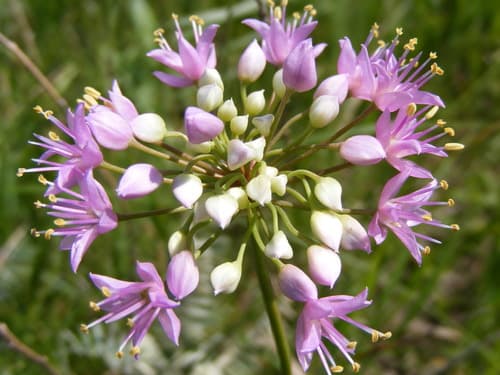
Allium stellatum, or prairie onion, is a bulb forming forb that produces rounded clusters of pink flowers from midsummer into fall and grows well in dry prairies and rocky open ground.
Toxicity unknown
Prairie Onion (Allium stellatum) is not listed by the ASPCA Animal Poison Control Center (opens in new tab) or the other sources we check, so we have no verdict for it either way. Absence from those lists is not a clearance. If your pet shows symptoms after eating any plant, call the ASPCA at (888) 426-4435.
Light
full sun
Water
medium
Size
12"–24" H × 12"–24" W
Bloom
Jun, Jul, Aug, Sep, Oct, Nov
Native to
AR, IA, IL, KS and 11 more states
Pollinators
butterflies, bees
Deer
Resistant (per Prairie Moon Nursery)
Before you buy
Your city may pay you to plant this
Cities and water utilities offer rebates for replacing lawn with native and water-wise plants. We track 459 programs across 44 states, each with a link to the provider and the date we last checked it.
Find rebates in your areaPicture natives in your own yard
Upload a photo of your yard and Patch Vision shows a rendering of it planted with natives for your region, like Prairie Onion.


Browse plants for this ecoregion
Prairie Onion is a compact perennial bulb that produces clusters of small pink to purple flowers on slender stems. It blooms reliably from summer through fall, then goes dormant in winter. The narrow, grass-like foliage emerges in spring and provides a neat, upright appearance.
Growing Prairie Onion
Grow Prairie Onion in full sun and medium water. Mature plants reach 12 to 24 inches tall and spread 12 to 24 inches wide. Expect low maintenance to keep it looking intentional in a front yard.
How to care for Prairie Onion, by region
How to care for Prairie Onion where it is actually grown: year-round basics plus what to do each season, region by region, with the sources for each.
Care guidance last updated: September 2026
Cross Timbers (includes Fort Worth, TX)
Year-round
Prairie onion is a low-maintenance native bulb that handles Fort Worth's rocky, limestone-heavy ground and does its best work in a sunny bed with a little afternoon shade.
- The Native Plant Society of Texas lists this plant growing in the Cross Timbers and Grand Prairie region, which covers the Fort Worth area, so it fits local conditions well.
- Give it full sun to part shade. In Fort Worth's hot summers it does best with morning sun and afternoon shade.
- It likes rocky, gravelly, limestone soil and handles Fort Worth's clay and limestone ground fine as long as water can drain away instead of pooling.
- Water it regularly the first year to help it settle in. After that, its deep bulb roots let it get through dry stretches on rainfall alone.
- It's cold hardy across USDA zones 3 through 8, so North Central Texas winters are well within its range.
- Clusters of pink to purple, sometimes white, star-shaped flowers open from summer into fall and draw in butterflies.
- Prairie onion is a wild relative of onion, garlic, and chives. The ASPCA lists onion (Allium) as toxic to dogs, cats, and horses, so keep grazing pets away from the leaves and bulbs.
Fall
Fall wraps up the bloom season and is also the best time to divide crowded clumps.
- Flowering can carry on into fall before the plant finishes for the season.
- Fall is the best time to divide bulb clusters, about once every three years, to keep the clump vigorous.
- As flowers fade, the dried seed heads take on a starburst shape that some gardeners leave standing for fall interest.
- If a tidy front bed matters more than the dried seed heads, cut the flower stalks back once they've browned.
Cutting back the browned flower stalks once blooming ends keeps the front bed looking tidy for fall curb appeal.
Winter
Winter is a quiet, dormant season. The bulb rests underground and needs little attention.
- The bulb goes fully dormant through winter. Foliage and flower stalks die back completely.
- No regular watering is needed in winter. North Central Texas rainfall covers a dormant bulb just fine.
- This plant is hardy through USDA zone 8, so a typical Fort Worth winter is not a concern.
- If dried stalks were left standing for fall interest, late winter is a good time to clear them out before new growth starts.
Spring
Spring is when prairie onion pushes out its grassy, chive-like foliage. There is no bloom yet, just steady green growth.
- Chive-like leaves come up from the bulb early in spring, then die back later as the flower stalks take over.
- If spring stays dry, give it a deep watering every so often. Otherwise Fort Worth's spring rain usually covers it.
- Spring is a fine time to add new plants or bulbs to a bed, spaced about 4 to 8 inches apart.
- Don't worry if you don't see flowers yet. Prairie onion blooms in summer and fall, not spring.
Summer
Summer is prairie onion's main show, with rounded clusters of pink to purple flowers opening on tall bare stalks.
- Round clusters of star-shaped pink, purple, or white flowers open through the heat of summer.
- Established plants handle Fort Worth's dry summer stretches without extra watering, thanks to a deep bulb root system built for drought.
- Full sun works, but afternoon shade during the hottest part of the day keeps the plant looking its best.
- The strong onion smell keeps deer and rabbits from bothering it, a nice bonus in a mixed bed.
Sources: Native Plant Society of Texas: Allium stellatum, Lady Bird Johnson Wildflower Center: Allium stellatum, Prairie Moon Nursery: Allium stellatum, ASPCA: Toxic and Non-Toxic Plants, Onion
Interior River Valleys and Hills (includes Peoria, IL)
Year-round
Prairie onion is a small, tough bulb plant that wants full sun and sharp drainage more than anything else. It's native to Illinois, found on rocky bluffs and limestone glades mostly in the southwest part of the state, and it grows well in an average home garden as long as the soil doesn't stay wet.
- Give it full sun. It will take a little afternoon shade in hot weather but blooms best with a full day of sun.
- Well-drained soil matters more than soil richness. This plant naturally grows in rocky, limestone ground, so avoid low spots or heavy clay where water sits.
- Water regularly the first year to help the bulb establish, then let it dry out between waterings. Once it's settled in, it handles dry spells well.
- Space new plants 4 to 8 inches apart.
- It's a slow grower from seed and can take a couple years to flower. Established clumps do better if you divide them every few years.
- The strong onion smell keeps deer and rabbits from bothering it.
Fall
Fall is a second good planting and dividing window for prairie onion, and it's when the foliage finishes dying back for the year as the plant goes dormant.
- You can plant new bulbs or divide clumps in fall as an alternative to spring.
- Once the foliage is fully brown and dry, cut it back or leave it standing for winter interest. Either is fine for the plant.
- Dormant plants don't need supplemental water. Let fall rain handle it.
Cutting back the dried, browned foliage once it's fully dormant keeps a front-yard bed looking tidy through fall instead of showing bare, straw-colored leaves.
Winter
Winter is a no-maintenance season for prairie onion. The bulb sits dormant underground and this species is cold hardy well beyond what Peoria winters bring.
- No watering or feeding is needed. The bulb is dormant below ground.
- This plant is rated hardy in USDA zones 3 through 8, so Peoria's winter cold is well within what it handles without protection.
- Skip mulch unless you want it for looks. A light layer of leaf litter is fine but not required.
- Avoid walking on or digging into the bed while the ground is frozen or soggy, since compacting the soil works against the sharp drainage this plant needs.
Spring
Spring is a planting and dividing window for prairie onion in the Peoria area, and it's also the season to watch soil drainage closest, since spring rain is when this plant is most likely to sit in water it doesn't want.
- Plant new bulbs or divide crowded clumps now, or wait for fall. Both windows work.
- Grass-like foliage comes up early. Let it grow and don't mistake it for a weed.
- Check that spring rain isn't pooling around the planting spot. Standing water is the main way this plant struggles, since it needs sharp drainage.
- Skip heavy fertilizer. Rich, wet soil makes the foliage floppy and works against the dry conditions this plant wants.
Summer
Summer is bloom time for prairie onion in Peoria, usually July into August, with a few weeks of pink to lavender star-shaped flower clusters. Peoria's hot, sometimes dry summers suit it fine once it's established.
- Expect flowering in July and August, lasting a few weeks.
- A newly planted bulb still benefits from a deep soak if Peoria goes through a multi-week dry stretch. An established plant with deep roots usually doesn't need extra water.
- The grassy foliage often yellows and dies back after the bloom is done. That's normal for this plant going dormant, not a problem to fix with more water.
- Deadheading the spent flower heads is optional. Leave them for seed pods and a more natural look, or trim for a tidier bed.
Sources: Illinois Wildflowers: Cliff Onion (Allium stellatum), USDA PLANTS Profile: Allium stellatum (autumn onion), Prairie Moon Nursery: Allium stellatum - Prairie Onion
North Central Hardwood Forests (includes Minneapolis, MN)
Year-round
Prairie onion is native to Minnesota's dry prairies, so it already fits the Minneapolis climate as long as it gets full sun and soil that drains well.
- This is a true Minnesota prairie native, not just cold hardy here, so it is well matched to this ecoregion.
- Give it full sun and well drained soil, rocky or sandy ground is fine, it does not want to sit wet.
- It stays small, about 8 to 18 inches tall, with grass-like leaves and round clusters of star shaped pink to lavender flowers.
- Every part of the plant smells like onion or garlic when crushed, and like the onions and garlic in your kitchen, it is toxic to dogs, cats, and horses if eaten in quantity.
- Once established it needs very little care, just let the soil dry out between waterings and skip regular fertilizing.
Fall
Fall is mostly about deciding whether to leave the dried seed heads up or cut them back for a tidier look.
- After the flowers fade, the round seed heads dry out and turn tan, they can be left standing or snipped off.
- Leaving the dried seed heads gives a little texture through fall and lets the plant reseed if you want more of it.
- If you would rather have a tidier front yard, cutting the dried stems to the ground is a quick way to clean up the bed.
Cutting the dried stems back in fall keeps the front bed looking tidy, an HOA-friendly option if you would rather not leave seed heads standing.
Winter
The bulb rests dormant underground through winter, and zone 5a is well within this plant's hardy range.
- The bulb goes fully dormant and sits underground, so no foliage shows through a Minneapolis winter.
- This species handles zone 5a winters without extra protection, no mulch or wrapping needed.
- If dried stems were left up in fall, they will look faded and thin through winter and can still be cut down anytime.
If any dried stems are still standing, cutting them to the ground gives the bed a clean, HOA-conscious winter look.
Spring
In spring the thin, grass-like leaves come up first, well before any flowers show.
- New grassy leaves emerge in April or May in the Twin Cities, easy to mistake for grass until it flowers later in summer.
- Skip fertilizing, prairie natives like this one actually do better in average or lean soil.
- Only water if spring turns unusually dry, an established plant does not need regular watering.
- If you planted this recently, mark the spot so you do not accidentally weed out the short early leaves.
Summer
Blooms open in July and August, and it is normal for the leaves to fade right around that time.
- Round clusters of star shaped pink to lavender flowers open on bare stems from July into August.
- It is normal for the grassy leaves to yellow and die back around bloom time, that is just how this plant grows, not a sign of trouble.
- Skip extra watering, this plant is built for dry prairie summers and too much water can rot the bulb.
- Bees and other pollinators visit the flowers, so let a few clusters finish blooming before doing any trimming.
Sources: Minnesota Wildflowers: Allium stellatum (Prairie Onion), Lady Bird Johnson Wildflower Center: Allium stellatum, ASPCA: Onion (Allium) toxicity to dogs, cats, and horses
Northern Glaciated Plains (includes Aberdeen, SD)
Year-round
Prairie onion is a small bulb perennial, about a foot to a foot and a half tall, with grass-like leaves and round pink flower heads in late summer. Cold is not the problem here. It is rated to USDA zone 3, which is a full step colder than the zone 4a to 4b winters around Aberdeen. Drainage is the problem. The glacial till around here is often heavy alkaline clay-loam that holds water, and this bulb rots in soggy ground. Put it in full sun on a high or sloped spot, or work coarse sand or grit into the planting hole. Once it is settled it needs almost nothing from you.
- Hardy in USDA zones 3 to 8, so zone 4a to 4b winters near Aberdeen are well inside its range (Missouri Botanical Garden).
- Full sun, dry to medium moisture, and well drained ground. It does best in rocky or sandy soil, so heavy glacial clay-loam needs grit or a raised planting spot (Missouri Botanical Garden).
- Mature size is roughly 1 to 1.5 feet tall with a 0.5 to 1 foot spread, so set plants 8 to 12 inches apart and use several in a drift rather than one alone (Missouri Botanical Garden).
- South Dakota sits inside the documented native range for this species, along with North Dakota, Minnesota, and Iowa (Lady Bird Johnson Wildflower Center).
- ASPCA lists onion, a member of the same Allium group, as toxic to dogs, cats, and horses, with N-propyl disulfide as the toxic principle. Site the bulbs away from spots where a dog digs (ASPCA).
- No serious insect or disease problems, and it tolerates deer, drought, and shallow rocky soil (Missouri Botanical Garden).
At a foot to a foot and a half tall with upright stems and tidy round flower heads, this reads as a deliberate planting rather than a volunteer, which makes it an easy HOA-friendly choice for a front bed edge or a narrow strip along a walk.
Fall
Fall is the window to plant or move prairie onion, and it closes early here. First frost near Aberdeen is late September and the soil locks up not long after, so aim to get bulbs and offsets in the ground by mid September rather than late October. This is also the easiest time to divide a crowded clump, because the top growth is already gone and you can see the bulb cluster clearly. Leave the dried seed heads standing for winter shape or cut the stems down for a tidier look. Whatever you do, do not pile wet mulch or rich compost directly over the bulbs.
- Plant bulbs and bulb offsets in autumn. Seed is the spring method, so do not mix the two up (Missouri Botanical Garden).
- Divide a crowded clump by lifting the bulb cluster and separating the offsets, which is the standard propagation method for this species (Lady Bird Johnson Wildflower Center).
- Choose stock rated hardy to zone 3 or 4 and get it planted well before the ground freezes solid, which is the standing guidance for perennials in this part of the northern plains (NDSU Extension).
- Keep heavy wet compost off the crown. Soggy ground is what kills this bulb, not cold, so a gritty topdressing beats a rich one (Missouri Botanical Garden).
- Cut spent stems to the ground or leave the dried heads standing. It is a low maintenance plant either way and does not need a fall cleanup to survive (Missouri Botanical Garden).
Standing dried seed heads through winter are the choice most likely to draw a comment in a front yard. If your street reads tidy, cut the stems flush in October and keep the winter interest planting in the back yard instead.
Winter
There is nothing to do above ground, and the cold itself is not the worry. The bulb is fully dormant and rated to zone 3, so Aberdeen lows are within range. What actually loses plants here is water and movement. Snow cover on the northern glaciated plains is variable, and bare, repeatedly freezing and thawing clay can heave a shallow bulb up and out. Wait until the ground is frozen, then lay a loose 3 to 4 inch layer of straw or shredded leaves over the planting, and rake it off in late March before the leaves push up. Also check that roof melt and driveway runoff are not ponding on the spot.
- Rated hardy to USDA zone 3, so 4a to 4b winter lows are inside its tolerance with margin (Missouri Botanical Garden).
- Mulch after the ground freezes, not before, using a loose 3 to 4 inch layer of straw or shredded leaves to steady soil temperature through freeze and thaw cycles (NDSU Extension).
- Rake the mulch back in late March or early April so the early grass-like leaves are not smothered coming up (NDSU Extension).
- Redirect winter runoff and roof melt away from the planting. Standing water in heavy till is a bigger risk to a dry-soil bulb than any cold snap (Missouri Botanical Garden).
- Nothing needs cutting, watering, or feeding now. It is a low maintenance plant with no serious insect or disease problems (Missouri Botanical Garden).
A loose straw blanket in a front bed can read as debris by February. Keep the mulch inside a clean bed edge, use shredded leaves rather than loose hay if your street is tight, and pull it back on the first mild week in spring.
Spring
The one thing to get right in spring is not pulling it by mistake. Prairie onion sends up thin, grass-like leaves early, well before it looks like anything, and it is easy to hoe out with the quackgrass. Mark the clump the previous fall so you know where it is in April. Spring is also the seed sowing window, while bulbs and offsets go in during autumn instead. Hold back on rich compost and lawn fertilizer near the planting, since lean ground suits it better than fed ground.
- Sow seed in spring. Bulbs and bulb offsets go in during autumn instead, so match the method to the season (Missouri Botanical Garden).
- Watch for narrow grass-like leaves coming up early and flag the spot, because the leaves look like a clump of turf until the flower stalk appears (Minnesota Wildflowers).
- Skip the compost and the high nitrogen feed. This plant does well in average to poor, rocky or sandy soil and gets floppy in rich ground (Missouri Botanical Garden).
- Pull cool season grass weeds around the clump early. A 1.5 foot bulb has little chance against brome or quackgrass in fertile glacial till (Missouri Botanical Garden).
- In zone 4a to 4b, hold new nursery plugs until after the mid May frost date and choose stock rated hardy to zone 3 or 4 (NDSU Extension).
Early spring foliage genuinely looks like a tuft of grass, which is the moment a front bed reads as unkempt to a neighbor or a board. A clean cut edge around the bed, or a small plant label, keeps the planting reading as intentional until the flowers open.
Summer
Summer is when this plant earns its spot, and also when it looks worst. Reddish pink flower heads open from July into September, which is after most of the local May through July rain has tapered and after many spring prairie flowers have finished. At the same time the leaves yellow and die back at or just past bloom. That is normal for a summer dormant bulb, not a sign of trouble, so leave the foliage to feed the bulb. Water only in a real drought, and clip spent heads in late August if you do not want seedlings.
- Expect reddish pink flower clusters from July into September in this climate (Missouri Botanical Garden).
- Let the yellowing leaves stay put. Foliage dies back at or slightly past flowering and is doing its last job for the bulb (Missouri Botanical Garden).
- Water only during a genuine dry stretch. It prefers dry to medium moisture and tolerates drought once established, so it usually rides out a hot July on its own (Missouri Botanical Garden).
- Snip the spent seed heads in late August if you do not want volunteers, since it self seeds and spreads by bulb offsets in good conditions (Missouri Botanical Garden).
- Set it among low neighbors that stay green, which is how it is used in rock gardens, borders, and naturalized plantings, so the fading leaves are not the front of the bed (Missouri Botanical Garden).
Midsummer dieback leaves a browning patch right at peak curb appeal season. Planting it behind or between something that holds its green through August keeps the bed reading as maintained without you having to cut the foliage off early.
Sources: Missouri Botanical Garden Plant Finder, Allium stellatum, Lady Bird Johnson Wildflower Center, Allium stellatum, ASPCA Toxic and Non-toxic Plants, Onion, NDSU Extension, Annual and Perennial Flowers for North Dakota, Minnesota Wildflowers, Prairie Onion
Ozark Highlands (includes Springfield, MO)
Year-round
Prairie Onion is a small bulb from the Ozark glades and rocky bluffs around Springfield, so it wants sun, sharp drainage, and to mostly be left alone.
- Give it at least six hours of direct sun a day. Shade cuts down on flowering and makes the thin leaves flop.
- Plant it in rocky, sandy, or gravelly soil that drains fast. A raised bed, gravel garden, or slope works better than a low wet spot.
- The bulb sits a few inches deep and slowly forms a small clump. Divide crowded clumps every three to four years in early spring if you want to spread it to new spots.
- It is native to Missouri's limestone glades and bluffs in the Ozark region, including the hills around Springfield, according to the Lady Bird Johnson Wildflower Center and Missouri Botanical Garden.
- It does not need fertilizer. Rich soil actually works against it, since this plant evolved for thin, low-nutrient ground.
Fall
Bloom often stretches into early fall around Springfield, and this is also a good time to tidy the plant up before its mid-October average first frost.
- Flowering can continue into September in the Ozarks before the seed heads dry out.
- Once the flowers fade, you can leave the dry seed heads standing for winter interest and possible reseeding, or cut the stalks back for a neater bed.
- Foliage starts to yellow and die back on its own as the plant heads into dormancy. Let it go rather than pulling it early, since the leaves are still feeding the bulb.
- No fall fertilizing or extra watering is needed as nights cool toward the average first frost in mid-October.
Cutting the dried flower stalks back after bloom keeps a front bed looking tidy for HOA-conscious yards, though leaving the seed heads is fine too.
Winter
The bulb spends winter dormant underground in Springfield's zone 6b to 7a cold, and the bigger risk is soil that stays too wet, not the cold itself.
- Prairie Onion is hardy well into zone 3, so Springfield's winters are not a concern for the bulb itself.
- Skip winter mulch or use it very lightly. This plant is adapted to thin, exposed glade soil that freezes and dries out, and heavy mulch traps moisture around the bulb.
- Cut back any leftover dead stalks in late winter, before new growth starts, for a clean bed heading into spring.
- Do not water in winter. The dormant bulb needs the soil to stay on the dry side until it resumes growth.
A late-winter cutback of last year's dead stalks gives the bed a tidy, HOA-friendly look before spring growth starts.
Spring
New grasslike leaves come up in early spring around Springfield's mid-April last frost and need almost no attention.
- Leaves emerge as the soil warms, usually a few weeks before the average last frost in mid-April. Cold snaps after that rarely bother the plant.
- Skip supplemental watering unless spring is unusually dry. Overwatering in the cool, wet weeks of an Ozark spring is the most common way to lose the bulb to rot.
- If you want to divide or move a clump, do it now while the plant is still short and before the flower stalk starts to rise.
- Do not mulch heavily. This plant is used to thin, exposed rocky ground, and heavy mulch holds moisture the bulb does not want.
Summer
Prairie Onion blooms through Springfield's hot summer, usually starting in July, and shrugs off the season's dry stretches once it is established.
- Rounded clusters of small pink to rose flowers open on bare stalks, typically starting in July and continuing into August.
- Once established, the deep bulb and roots handle Ozark summer dry spells without extra water. Water only during an extended drought.
- Full sun through the summer keeps the stalks upright and the bloom full. In part shade the flower stalks tend to lean.
- The flowers draw butterflies and other pollinators, so it is worth leaving them alone rather than deadheading right away.
Sources: Lady Bird Johnson Wildflower Center Native Plant Database, Allium stellatum, Missouri Botanical Garden Plant Finder, Allium stellatum, Prairie Moon Nursery, Allium stellatum Prairie Onion growing guide
Texas Blackland Prairies (includes Dallas, TX)
Year-round
Prairie onion is a low-maintenance bulb that grows well in North Central Texas conditions, including Dallas's heavier blackland clay soil, once it has decent drainage.
- Give it full sun to part shade. In Dallas's hot summers it does best with morning sun and afternoon shade.
- It naturally prefers rocky, gravelly, limestone ground. In Dallas's blackland clay prairie soil, working in some coarse sand or grit helps it drain better.
- Water it regularly the first year to help it settle in. After that, its deep bulb roots let it get through dry stretches on rainfall alone.
- It's cold hardy across USDA zones 3 through 8, so North Central Texas winters are well within its range.
- Clusters of pink to purple, sometimes white, star-shaped flowers open from summer into fall and draw in butterflies.
- Prairie onion is a wild relative of onion, garlic, and chives. The ASPCA lists onion (Allium) as toxic to dogs, cats, and horses, so keep grazing pets away from the leaves and bulbs.
Fall
Fall wraps up the bloom season and is also the best time to divide crowded clumps.
- Flowering can carry on into fall before the plant finishes for the season.
- Fall is the best time to divide bulb clusters, about once every three years, to keep the clump vigorous.
- As flowers fade, the dried seed heads take on a starburst shape that some gardeners leave standing for fall interest.
- If a tidy front bed matters more than the dried seed heads, cut the flower stalks back once they've browned.
Cutting back the browned flower stalks once blooming ends keeps the front bed looking tidy for fall curb appeal.
Winter
Winter is a quiet, dormant season. The bulb rests underground and needs little attention.
- The bulb goes fully dormant through winter. Foliage and flower stalks die back completely.
- No regular watering is needed in winter. North Central Texas rainfall covers a dormant bulb just fine.
- This plant is hardy through USDA zone 8, so a typical Dallas winter is not a concern.
- If dried stalks were left standing for fall interest, late winter is a good time to clear them out before new growth starts.
Spring
Spring is when prairie onion pushes out its grassy, chive-like foliage. There is no bloom yet, just steady green growth.
- Chive-like leaves come up from the bulb early in spring, then die back later as the flower stalks take over.
- If spring stays dry, give it a deep watering every so often. Otherwise Dallas's spring rain usually covers it.
- Spring is a fine time to add new plants or bulbs to a bed, spaced about 4 to 8 inches apart.
- Don't worry if you don't see flowers yet. Prairie onion blooms in summer and fall, not spring.
Summer
Summer is prairie onion's main show, with rounded clusters of pink to purple flowers opening on tall bare stalks.
- Round clusters of star-shaped pink, purple, or white flowers open through the heat of summer.
- Established plants handle Dallas's dry summer stretches without extra watering, thanks to a deep bulb root system built for drought.
- Full sun works, but afternoon shade during the hottest part of the day keeps the plant looking its best.
- The strong onion smell keeps deer and rabbits from bothering it, a nice bonus in a mixed bed.
Sources: Lady Bird Johnson Wildflower Center: Allium stellatum, Native Plant Society of Texas: Allium stellatum, Prairie Moon Nursery: Allium stellatum, ASPCA: Toxic and Non-Toxic Plants, Onion
In an HOA neighborhood
Prairie Onion is an HOA-friendly choice. Maintenance level: low. Tidiness: 4 out of 5.
Works well in: front yard, foundation, street edge, mid zone.
Wildlife value
The long blooming period makes this an excellent pollinator plant, attracting butterflies and native bees throughout the growing season. The seed heads also provide food for small birds.
Common questions
- When does prairie onion bloom?
- Prairie onion generally flowers from June through November, with many populations showing their heaviest bloom in mid to late summer.
- What pollinators visit prairie onion flowers?
- The rounded pink flower clusters draw in bees and butterflies, which use the blooms as a nectar source during the summer and fall flowering period.
- How much sun and water does prairie onion need?
- It grows best in full sun to part sun and handles medium to low soil moisture well, which suits it to open, well drained sites rather than consistently wet ground.
- What kind of plant is prairie onion?
- Prairie onion is a herbaceous forb that grows from a bulb, sending up narrow grass like leaves and a slender flowering stem topped with a star shaped cluster of blooms.
- Is Prairie Onion HOA-friendly?
- Prairie Onion is generally an HOA-friendly choice in the right placement, with low maintenance.
These answers were drafted with an AI model from this plant's data. Verify care details with a local expert.
Native range data from the World Checklist of Vascular Plants (Kew). Pollinator and host plant associations compiled from GBIF, iNaturalist, and published ecological literature.
If something looks wrong
Common plant problems, and what to check first
These come up on almost any plant. Each guide lists the likely causes in the order they are worth ruling out, with one thing to check before you act on any of them, and links to the source it came from.
- It is dying right after planting
- Leaves turning yellow
- Wilting even though I watered it
- Brown crispy leaf tips
- Bugs on the plant
Ready to grow Prairie Onion? Add it to your garden in Pollinator Patch to track it and get season-by-season care guidance.