Split bluestem
Anatherum ternarium
Last reviewed: September 2026
Toxicity unknown
Split bluestem (Anatherum ternarium) is not listed by the ASPCA Animal Poison Control Center (opens in new tab) or the other sources we check, so we have no verdict for it either way. Absence from those lists is not a clearance. If your pet shows symptoms after eating any plant, call the ASPCA at (888) 426-4435.
Light
full sun
Water
low
Size
24"–48" H × 18"–24" W
Bloom
Sep, Oct
Native to
AL, AR, DC, DE and 17 more states
Before you buy
Your city may pay you to plant this
Cities and water utilities offer rebates for replacing lawn with native and water-wise plants. We track 452 programs across 44 states, each with a link to the provider and the date we last checked it.
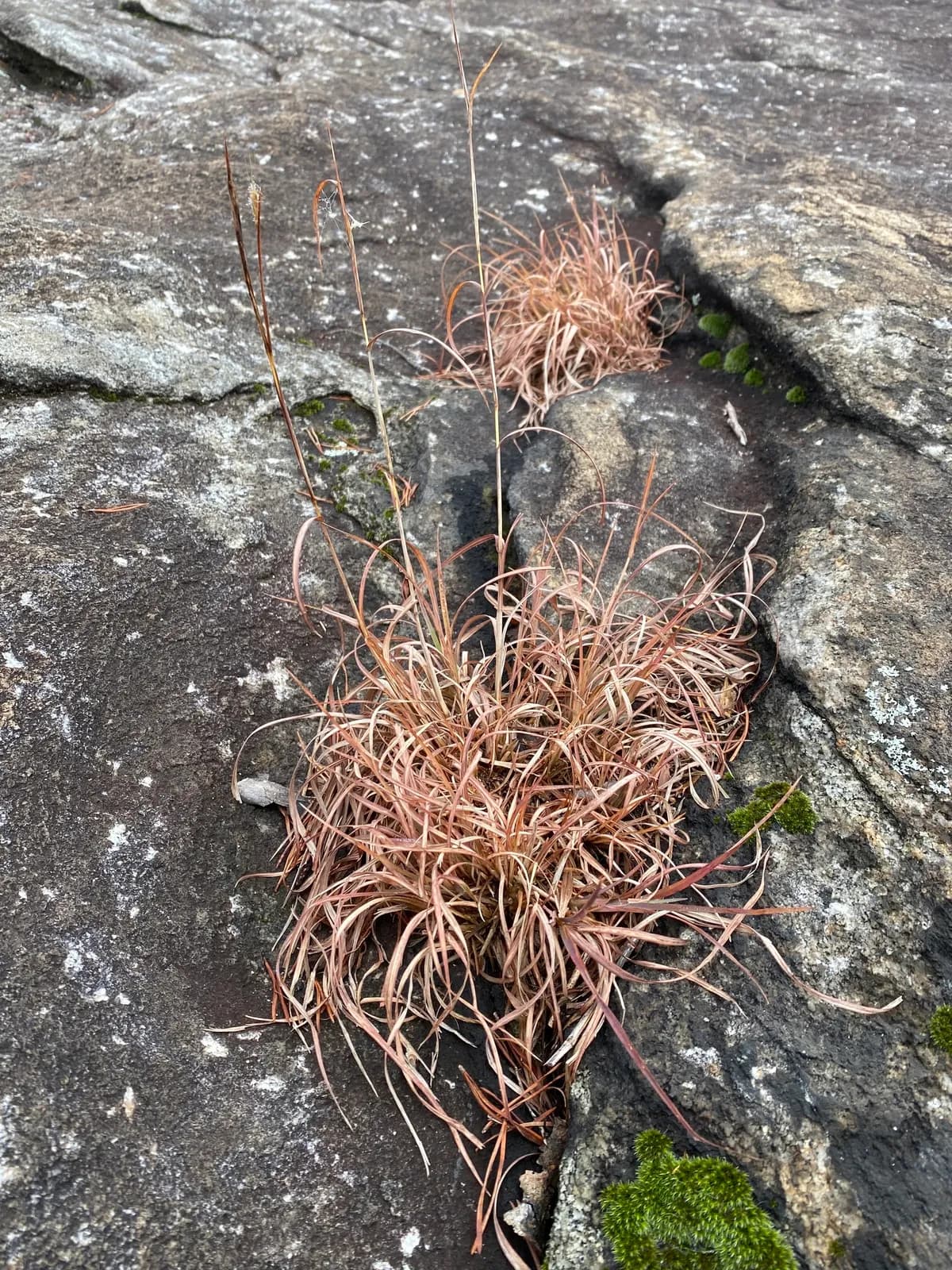
Find rebates in your areaA clump-forming warm-season grass with blue-green summer foliage that turns coppery in fall, topped by fluffy, silvery-white seed clusters that hold through winter.
How to care for Split bluestem, by region
How to care for Split bluestem where it is actually grown: year-round basics plus what to do each season, region by region, with the sources for each.
Care guidance last updated: September 2026
Ouachita Mountains (includes Hot Springs, AR)
Year-round
Split bluestem is a small warm season bunchgrass that handles Hot Springs conditions well once it has full sun and soil that drains fast. It is not a plant that needs pampering. The main way to lose it is wet feet in heavy soil.
- Give it full sun, at least 6 hours a day. In part shade the clump stays loose and leans instead of standing upright.
- Plant it in well-drained, sandy or rocky soil. Heavy clay that holds water after rain is the top reason this grass fails.
- Water new plants regularly through their first summer, then back off. Once established it wants dry to average soil and very little extra water.
- Each clump stays 1 to 2 feet wide and grows 2 to 4 feet tall, with wispy silver seed heads rising above the leaves in fall.
- Space new plants 18 to 24 inches apart so clumps have room to fill out without crowding each other.
- It grows fine in lean, low fertility soil and does not need feeding. Rich soil just makes the stems floppy.
Fall
Fall is when split bluestem earns its name. Feathery, silver seed heads open above the foliage from late summer into November.
- Bloom and seed head display runs from late summer into November, with the plumes catching afternoon light and holding their color into fall.
- The foliage starts turning copper and tan as nights cool. That is normal dormancy setting in, not a sign of trouble.
- Leave the seed heads up if you like the winter look. Cut them off before they shatter if you would rather limit how much the clump self-seeds.
- First frost in the Hot Springs area typically lands in late October to early November, and this grass is unaffected by it.
- No cutback needed now. Wait for late winter or early spring so the standing growth can protect the crown through the cold months.
Deadheading the seed heads before they shatter is a simple way to keep the bed looking neat if a full self-seeding look is not what HOA-conscious neighbors expect.
Winter
Winter is dormant season. The clump goes tan and stands still through the cold, and it does not need any help getting through an Arkansas winter.
- The dormant tan clump can stay standing all winter. That is normal, not dead, and many gardeners leave it up on purpose for winter texture.
- This species' broader range runs as far north as New Jersey, so a Hot Springs winter in zone 8a is well within what it handles without any covering.
- Do not cut it back yet. Wait until late winter or very early spring, right before new growth starts.
- Standing dormant growth also gives small birds and insects a place to shelter through the cold months.
- If the clump is leaning or matted down after ice or heavy snow, a light rake through it in late winter tidies it up before the spring cutback.
A tan, upright clump reads as an intentional winter feature rather than a neglected patch, which keeps a front bed looking HOA-friendly even in the off season.
Spring
Spring is cutback season. Cut the old growth down before new blades come up, then be patient, this grass is slow to green up.
- Cut the whole clump back to about 4 to 6 inches before new growth starts. In zone 8a that usually means sometime in March, ahead of the spring flush.
- New shoots take their time. Do not judge the plant by early April, it will not look like much until nights are reliably staying above 50 degrees.
- If a clump has gone thin or hollow in the middle after a few years, early spring is the time to dig and divide it.
- Skip the fertilizer. This grass is built for lean soil, and feeding it just leads to weak, floppy stems later in the season.
- Check drainage after spring rain. Standing water around the crown is a bigger risk to this plant than any cold snap.
A clean, low cutback in early spring keeps the bed looking tended right as the growing season starts, which fits an HOA-friendly front yard.
Summer
Summer is the easy season. Once established, this grass shrugs off Arkansas heat and humidity and mostly takes care of itself.
- Established clumps handle summer heat and humidity without extra watering. Save the hose for a first year plant or a real dry spell.
- Overwatering in summer is more likely to cause problems than underwatering. Soggy soil in hot weather can rot the crown.
- The clump fills out through summer and starts sending up its first seed stalks late in the season.
- No need to fertilize or mulch heavily around it. This is a plant that does better left alone in average or lean soil.
- If a clump is flopping open in the middle of summer, that usually means too much shade or soil that is richer and wetter than it wants.
Sources: Lady Bird Johnson Wildflower Center plant profile, Andropogon ternarius, US Forest Service Fire Effects Information System species summary, Clemson Cooperative Extension, Ornamental Grasses and Grass-like Plants factsheet, USDA Plant Hardiness Zone Map
Want these tasks as reminders timed to your yard? Pollinator Patch turns this guidance into a season-by-season care plan for the plants you actually grow.
Wildlife value
Seeds provide winter forage for birds, and the clumps offer nesting cover for native bees and other small wildlife.
Common questions
- How much sun does Split bluestem need?
- Split bluestem grows best in full sun conditions.
- When does Split bluestem bloom?
- Split bluestem blooms in September and October.
- Where is Split bluestem native?
- Split bluestem (Anatherum ternarium) is native to AL, AR, DC, DE and 17 more states, per the World Checklist of Vascular Plants (Kew).
Native range data from the World Checklist of Vascular Plants (Kew). Pollinator and host plant associations compiled from GBIF, iNaturalist, and published ecological literature.
If something looks wrong
Common plant problems, and what to check first
These come up on almost any plant. Each guide lists the likely causes in the order they are worth ruling out, with one thing to check before you act on any of them, and links to the source it came from.
- It is dying right after planting
- Leaves turning yellow
- Wilting even though I watered it
- Brown crispy leaf tips
- Bugs on the plant
Ready to grow Split bluestem? Add it to your garden in Pollinator Patch to track it and get season-by-season care guidance.
Planning a bed around it? Start a free plan with this plant
Not sure where to start? Take the 2-minute yard quiz