American blueberry
Vaccinium corymbosum
Last reviewed: September 2026
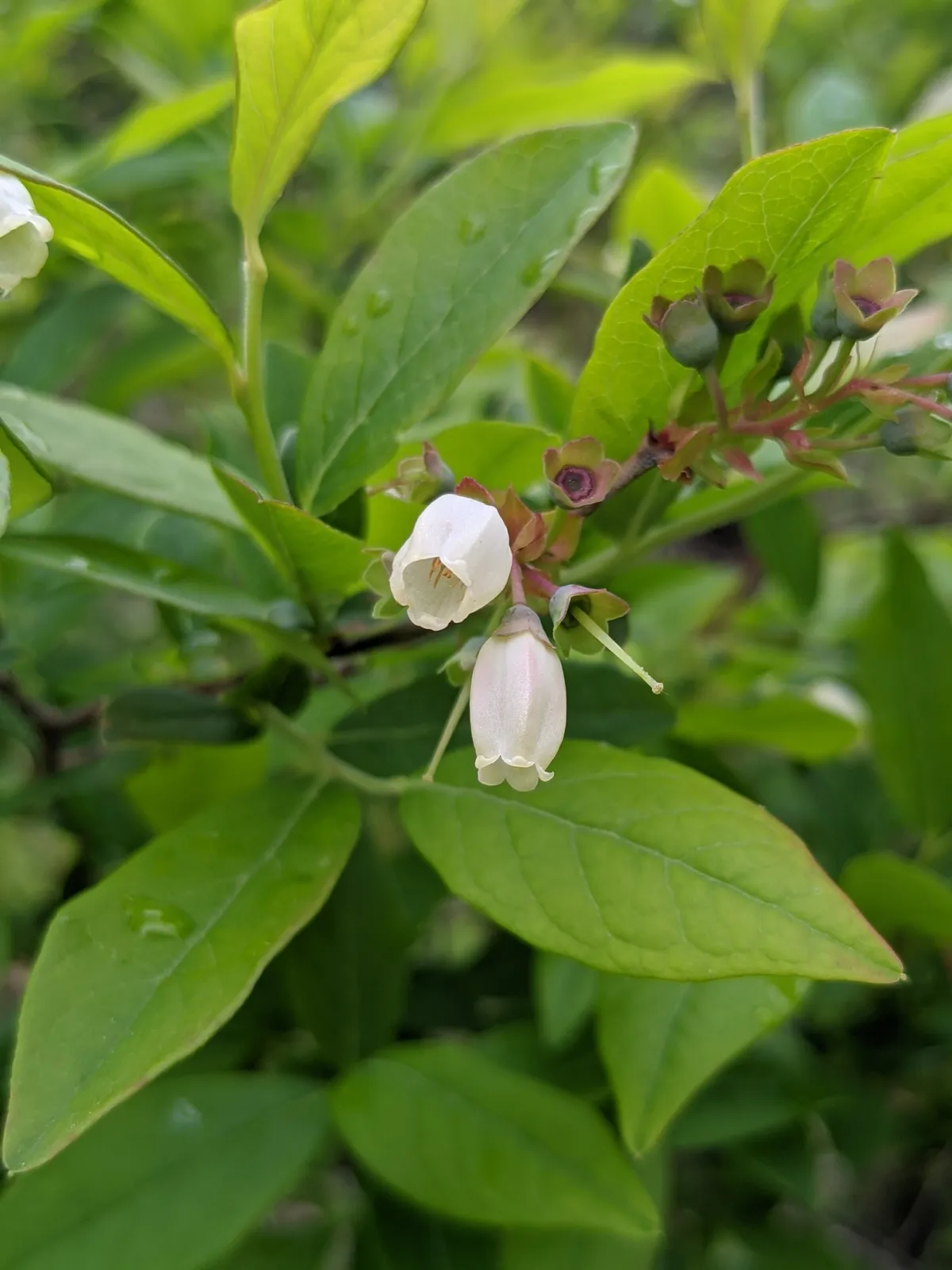
American blueberry is a deciduous shrub that blooms in April and May, producing white flowers favored by bumble bees, mason bees and the southeastern blueberry bee. It grows well in part sun with medium, consistent moisture.
Toxicity unknown
American blueberry (Vaccinium corymbosum) is not listed by the ASPCA Animal Poison Control Center (opens in new tab) or the other sources we check, so we have no verdict for it either way. Absence from those lists is not a clearance. If your pet shows symptoms after eating any plant, call the ASPCA at (888) 426-4435.
Light
part sun
Water
medium
Size
72"–144" H × 72"–120" W
Bloom
Apr, May
Native to
AL, CT, DE, FL and 21 more states
Pollinators
bumble bees, mason bees, southeastern blueberry bee
Before you buy
Your city may pay you to plant this
Cities and water utilities offer rebates for replacing lawn with native and water-wise plants. We track 452 programs across 44 states, each with a link to the provider and the date we last checked it.
Find rebates in your areaBrowse plants for this ecoregion
An upright multi-stemmed shrub with urn-shaped white flowers, edible summer berries, and reliably brilliant scarlet fall foliage. It needs consistently acidic, moisture-retentive soil to perform.
Growing American blueberry
Grow American blueberry in part sun and medium water. Mature plants reach 72 to 144 inches tall and spread 72 to 120 inches wide.
How to care for American blueberry, by region
How to care for American blueberry where it is actually grown: year-round basics plus what to do each season, region by region, with the sources for each.
Care guidance last updated: August 2026
Southern California/Northern Baja Coast (includes Los Angeles, CA)
Year-round
Highbush blueberry comes from wet, acidic ground in the eastern United States, and the Los Angeles basin is close to the opposite of that, with alkaline clay soil, dry summers, and mild winters. It can still grow here, but it needs to be treated like a plant that does not belong in native ground. That mainly means a container or raised bed, an acid soil mix, and a low chill variety bred for mild winters.
- Grow it in a large container or raised bed filled with an acidic mix, such as peat moss or coir blended with pine bark, instead of planting straight into Los Angeles clay or loam.
- Test the soil or potting mix pH and work in wettable soil sulfur if it reads above 6.0, then wait a few months before planting so the sulfur has time to work.
- Choose a southern highbush variety labeled for a low winter chill requirement, since much of the Los Angeles basin does not reliably supply enough winter cold for standard eastern highbush types.
- Feed with an acid forming fertilizer made for azaleas or camellias, starting once new spring leaves are fully open.
- Blueberry does not appear on the ASPCA's toxic or non toxic plant lists for cats or dogs, so there is no published warning either way, but the fruit itself is a normal human food crop.
Fall
Fall in the Los Angeles basin stays mild and dry, and it is one of the two good windows extension planting guides give for getting a potted blueberry into the ground or into a bigger container.
- November through December is a good time to plant potted blueberries here, since the ground is not frozen and roots have time to settle in before next summer's heat.
- Test the soil or potting mix pH now if you have not already, so there is time to work in sulfur before a late winter planting.
- Ease off watering frequency as days cool, but do not let the root zone dry out completely, since blueberry roots stay shallow.
- Enjoy the fall leaf color. Highbush blueberry is one of the few plants in a Los Angeles yard that turns real red and orange before winter.
Winter
Winter is short and mild here, but it is the season that decides whether this plant really works in the Los Angeles basin, because highbush blueberry needs a certain number of cold hours to grow and fruit well the following year.
- Choose a southern highbush variety labeled for a low chill requirement, since Los Angeles basin winters often do not supply enough cold hours for standard eastern highbush types.
- Late winter, before new growth starts, is the right time for bare root planting and for pruning out dead, weak, or crossing wood on an established plant.
- If you have not acidified your soil or potting mix yet, do it now with wettable sulfur so it has time to work before spring planting.
- Keep potted blueberries out of any hard freeze, though a normal Los Angeles winter cold snap will not hurt the plant.
A late winter prune keeps the bare, leafless shrub looking cared for near the front walk instead of scraggly until spring leaf out.
Spring
Spring in the Los Angeles basin is mild and still carries some rain, which makes it a good window to plant a new blueberry or start its first feeding of the year.
- Plant new bare root or container blueberries now if you have not already, into a raised bed or large pot with acidic mix rather than straight into unamended clay soil.
- In the plant's first year, pinch or strip off any flower buds so its energy goes into roots instead of berries.
- Once new leaves are fully open, start monthly feeding with an acid forming fertilizer made for azaleas or camellias.
- Refresh a 2 to 3 inch layer of pine bark or pine needle mulch to hold moisture and keep shallow roots cool as days warm up.
Summer
Los Angeles summers are hot and dry with almost no rain, which is the hardest stretch for a plant built for humid eastern summers, so steady watering and shade planning matter most now.
- Water deeply two to three times a week rather than a light daily sprinkle, since blueberry roots are shallow and dry out fast in our dry heat.
- Keep mulch topped up at 2 to 3 inches to hold moisture and keep roots cooler through hot inland stretches.
- If leaves turn yellow between the veins, that is often a sign the soil has drifted back toward alkaline, treat with another round of soil sulfur or a chelated iron product made for acid loving plants.
- Give inland and valley plants some afternoon shade during the hottest part of the day, while coastal plants can usually take more direct sun.
- Net ripening fruit if birds are stripping berries before you get to pick them.
Sources: Clemson HGIC Blueberry Factsheet, NC State Extension Plant Toolbox, Vaccinium corymbosum, ASPCA Toxic and Non-Toxic Plant List (cats)
Want these tasks as reminders timed to your yard? Pollinator Patch turns this guidance into a season-by-season care plan for the plants you actually grow.
Wildlife value
Buzz-pollinated by bumble bees and specialist blueberry bees, and the fruit supports dozens of bird species.
Common questions
- When does American blueberry bloom?
- Vaccinium corymbosum typically blooms in April and May, producing small white to pale pink bell shaped flowers before or as the leaves emerge.
- What pollinates American blueberry?
- Bumble bees, mason bees and the southeastern blueberry bee are important pollinators of Vaccinium corymbosum flowers.
- How much light does American blueberry need?
- This shrub grows best in part sun and tolerates conditions from full sun to part shade, though flowering and fruiting tend to improve with more light.
- How much water does American blueberry need?
- American blueberry prefers evenly moist, well drained, acidic soil and tolerates medium to high moisture but does not do well in standing water or drought.
- Does American blueberry keep its leaves year round?
- No, it is deciduous. The foliage often turns red or orange in autumn before dropping for winter.
These answers were drafted with an AI model from this plant's data. Verify care details with a local expert.
Native range data from the World Checklist of Vascular Plants (Kew). Pollinator and host plant associations compiled from GBIF, iNaturalist, and published ecological literature.
If something looks wrong
Common plant problems, and what to check first
These come up on almost any plant. Each guide lists the likely causes in the order they are worth ruling out, with one thing to check before you act on any of them, and links to the source it came from.
- It is dying right after planting
- Leaves turning yellow
- Wilting even though I watered it
- Brown crispy leaf tips
- Bugs on the plant
Ready to grow American blueberry? Add it to your garden in Pollinator Patch to track it and get season-by-season care guidance.
Planning a bed around it? Start a free plan with this plant
Not sure where to start? Take the 2-minute yard quiz