Green Hawthorn
Crataegus viridis
Last reviewed: September 2026
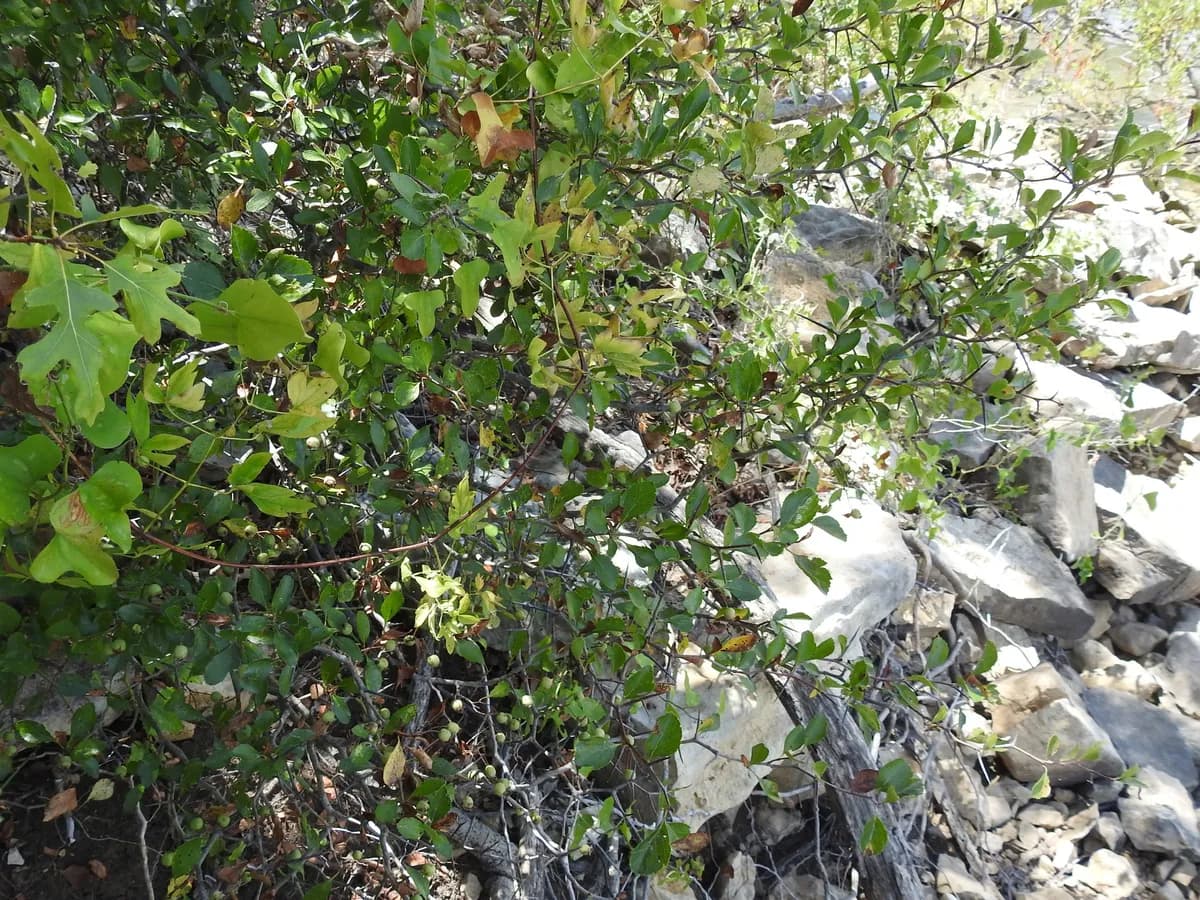
Green Hawthorn (Crataegus viridis) is not on the ASPCA Animal Poison Control Center toxic plant list for dogs or cats (aspca.org (opens in new tab), last reviewed 2026-05-21). If your pet shows symptoms after eating any plant, call the ASPCA at (888) 426-4435.
The USDA PLANTS Database (opens in new tab) does not flag Green Hawthorn as toxic to livestock.
Light
part sun
Water
high
Size
480"–600" H × 6"–18" W
Bloom
Mar, Apr, May
Native to
AL, AR, FL, GA and 16 more states
Pollinators
butterflies, bees
Before you buy
Your city may pay you to plant this
Cities and water utilities offer rebates for replacing lawn with native and water-wise plants. We track 452 programs across 44 states, each with a link to the provider and the date we last checked it.
Find rebates in your areaBrowse plants for this ecoregion
Green Hawthorn is a native Texas tree that produces clusters of white flowers in spring followed by small red berries. It grows 40-50 feet tall with a rounded canopy and provides excellent seasonal interest with spring blooms, summer fruit, and fall color.
How to care for Green Hawthorn, by region
How to care for Green Hawthorn where it is actually grown: year-round basics plus what to do each season, region by region, with the sources for each.
Care guidance last updated: August 2026
Ridge and Valley (includes Harrisburg, PA)
Year-round
Green hawthorn is a small deciduous tree with clusters of white spring flowers and red fruit that often hangs on well into winter. In the Harrisburg area it does best in full sun to part shade with soil that drains well but does not dry out completely, and it generally needs little upkeep once established. The two main things to watch are cedar hawthorn rust, which shows up more when a juniper or eastern red cedar is nearby, and fire blight during wet spring weather.
- Plant or transplant in early spring or fall while the tree is dormant, and water deeply through the first year or two while roots establish.
- Give it full sun for the best flowering and fruit set, though it will tolerate a few hours of shade a day.
- Keep it well away from eastern red cedar or other junipers if possible, since they host the fungus that causes cedar hawthorn rust on hawthorn leaves.
- Most cultivars, including Winter King, are more disease resistant than older hawthorn types and need only light structural pruning while dormant to keep an open vase shape.
- Green hawthorn is not on the ASPCA's toxic plant list for dogs, cats, or horses, though the thorns some hawthorns carry can still scratch a curious pet.
Fall
Fall is when green hawthorn puts on its best show around Harrisburg, with foliage turning shades of red to purple and the persistent red fruit holding on the branches as leaves drop, generally in the weeks before the area's average first frost in late October.
- Rake up and remove fallen leaves promptly, especially if rust or leaf spotting showed up this year, since the fungus that causes cedar hawthorn rust can overwinter in leaf litter.
- Leave the persistent red fruit on the tree. It is one of the plant's biggest seasonal draws and a food source for birds later in winter.
- Water through dry fall stretches until the ground starts to freeze, so the tree goes into winter well hydrated.
- A light cleanup of any dead or crossing branches now is fine, but save the bulk of structural pruning for late winter dormancy.
A raked, tidied bed under the canopy this time of year reads as intentional seasonal upkeep to an HOA board, not neglect, and the fruit-covered branches give a clear reason color and berries are still showing late in the season.
Winter
Winter is the best window for structural pruning in the Harrisburg area, done while the tree is fully dormant, and the persistent red fruit against the vase-shaped branching gives green hawthorn a clean silhouette through the cold months.
- Prune for structure from late winter into very early spring, before buds swell. This is the safest dormant window, and cuts heal fastest once new growth starts.
- Remove any dead, damaged, or crossing branches, and keep the tree's natural open vase shape rather than shearing it into a ball.
- The red fruit typically persists into winter and is a food source for birds during lean months, so there is no need to remove it.
- Watch young or newly planted trees for winter salt spray if they sit near a sidewalk or driveway that gets de-iced, and rinse foliage or use a burlap screen if spray is heavy.
A pruned, open vase shape paired with the fruit-covered branches reads as tended winter structure to an HOA board rather than an overgrown or neglected tree.
Spring
Spring is bloom time for green hawthorn around Harrisburg, with white flower clusters opening in May, well after the area's average last frost in mid April. This is also the last good window to finish any structural pruning before the tree leafs out.
- Finish dormant pruning before new growth pushes out, so cuts heal cleanly before the tree puts its energy into flowers.
- Watch for the white bloom clusters to open in May. Bloom this late in spring is normal for this species and a good sign the tree came through winter healthy.
- If last year's leaves showed orange or brown cedar hawthorn rust spots, a preventive fungicide labeled for rust applied as buds swell can help, especially with a red cedar growing nearby.
- Refresh mulch out to the drip line to hold spring moisture, and keep a string trimmer away from the trunk.
Summer
Through Harrisburg's hot, humid summer the tree is sizing up its green fruit toward its fall red color while roots keep working underground. Deep, infrequent watering during dry spells matters most for a tree planted in the last year or two.
- Water deeply during any dry spell that runs longer than a week, especially for a tree still establishing, rather than watering lightly and often.
- Small green fruit that set after the spring bloom spend the summer sizing up before they ripen to red heading into fall.
- Keep an eye on the leaves for small orange or brown spots from cedar hawthorn rust. If it shows up, note whether a juniper or eastern red cedar is growing nearby, since that is the alternate host the fungus needs to complete its cycle.
- Avoid pruning live wood during summer heat. Minor shaping is fine, but save real structural cuts for the dormant season.
Sources: Lady Bird Johnson Wildflower Center - Crataegus viridis, Morton Arboretum - Green Hawthorn, ASPCA - Toxic and Non-Toxic Plants: Hawthorn, Penn State Arboretum - Green Hawthorn (Winter King)
Want these tasks as reminders timed to your yard? Pollinator Patch turns this guidance into a season-by-season care plan for the plants you actually grow.
In an HOA neighborhood
Green Hawthorn takes more care to keep looking intentional in a front yard. Maintenance level: low. Consider it for backyard or mid-zone beds rather than the street edge.
Works well in: backyard only.
- Tree size exceeds typical HOA-friendly range
- Best suited for backyard or with special approval
Wildlife value
The spring flowers attract bees and butterflies for nectar, while the red berries feed birds throughout fall and winter. This tree serves as a host plant for several butterfly species and provides nesting sites for birds.
Common questions
- How much sun does Green Hawthorn need?
- Green Hawthorn grows best in part sun conditions.
- When does Green Hawthorn bloom?
- Green Hawthorn blooms in March, April, and May.
- Where is Green Hawthorn native?
- Green Hawthorn (Crataegus viridis) is native to AL, AR, FL, GA and 16 more states, per the World Checklist of Vascular Plants (Kew).
- Is Green Hawthorn toxic to dogs?
- Green Hawthorn is not on the ASPCA Animal Poison Control Center toxic plant list for dogs (aspca.org).
- Is Green Hawthorn toxic to cats?
- Green Hawthorn is not on the ASPCA Animal Poison Control Center toxic plant list for cats (aspca.org).
- Is Green Hawthorn toxic to livestock?
- The USDA PLANTS Database does not flag Green Hawthorn as toxic to livestock.
- What pollinators does Green Hawthorn attract?
- Green Hawthorn draws butterflies and bees.
- Is Green Hawthorn HOA-friendly?
- Green Hawthorn takes more care to look intentional in a front yard. Consider it for backyard or mid-zone beds rather than the street edge.
Native range data from the World Checklist of Vascular Plants (Kew). Pollinator and host plant associations compiled from GBIF, iNaturalist, and published ecological literature.
If something looks wrong
Common plant problems, and what to check first
These come up on almost any plant. Each guide lists the likely causes in the order they are worth ruling out, with one thing to check before you act on any of them, and links to the source it came from.
- It is dying right after planting
- Leaves turning yellow
- Wilting even though I watered it
- Brown crispy leaf tips
- Bugs on the plant
Ready to grow Green Hawthorn? Add it to your garden in Pollinator Patch to track it and get season-by-season care guidance.
Planning a bed around it? Start a free plan with this plant
Not sure where to start? Take the 2-minute yard quiz