Common Coreopsis
Coreopsis grandiflora
Last reviewed: October 2026
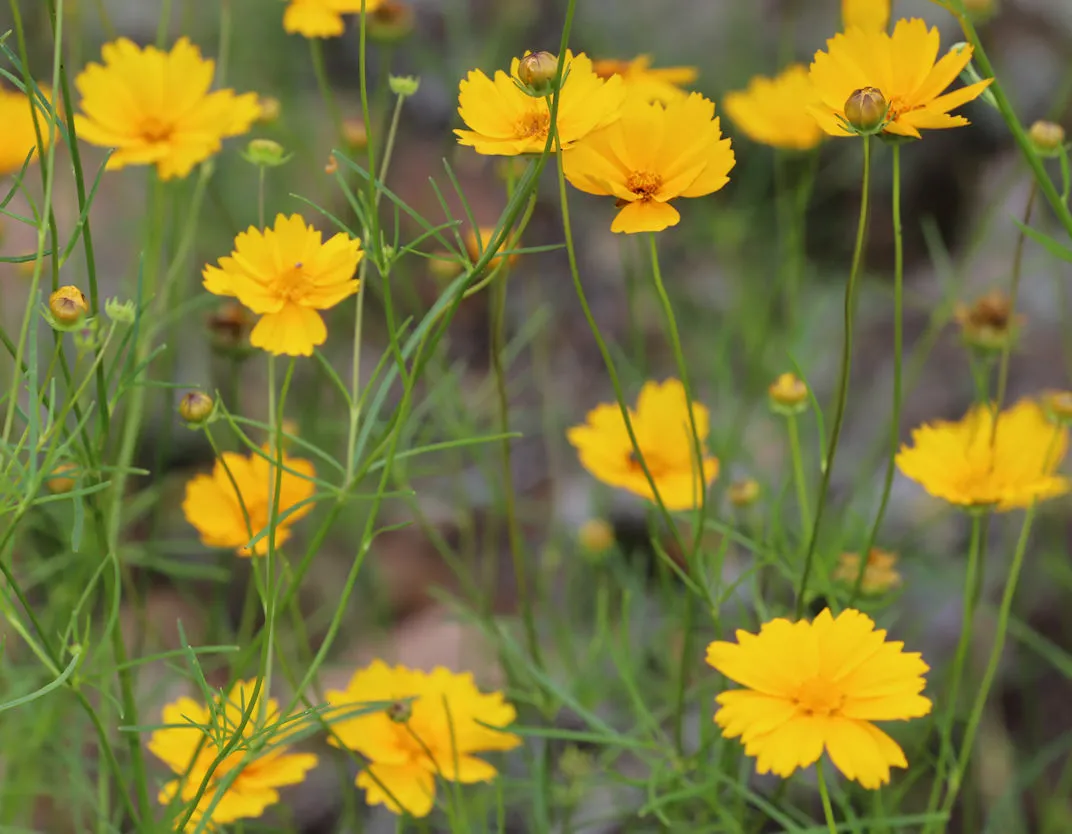
Coreopsis grandiflora is a full sun, low water forb that produces bright yellow blooms from June through September, drawing bees and butterflies to meadows, prairies and roadside plantings across much of the eastern and central United States.
Common Coreopsis (Coreopsis grandiflora) is not on the ASPCA Animal Poison Control Center toxic plant list for dogs or cats (aspca.org (opens in new tab), last reviewed 2026-05-21). If your pet shows symptoms after eating any plant, call the ASPCA at (888) 426-4435.
Light
full sun
Water
low
Size
12"–36" H × 12"–36" W
Bloom
Mar, Apr, May, Jun, Jul, Aug
Native to
AL, AR, FL, GA and 21 more states
Pollinators
bees, butterflies, moths, nectar insects
Before you buy
Your city may pay you to plant this
Cities and water utilities offer rebates for replacing lawn with native and water-wise plants. We track 459 programs across 44 states, each with a link to the provider and the date we last checked it.
Find rebates in your areaPicture natives in your own yard
Upload a photo of your yard and Patch Vision shows a rendering of it planted with natives for your region, like Common Coreopsis.


Browse plants for this ecoregion
Large-flower tickseed produces bright yellow daisy-like flowers from June through September on compact, bushy plants. This drought-tolerant native perennial forms neat clumps that work well in sunny borders and naturalized areas. The cheerful blooms provide long-lasting color with minimal care requirements.
Growing Common Coreopsis
Grow Common Coreopsis in full sun and low water. Mature plants reach 12 to 36 inches tall and spread 12 to 36 inches wide. Expect low maintenance to keep it looking intentional in a front yard.
How to care for Common Coreopsis, by region
How to care for Common Coreopsis where it is actually grown: year-round basics plus what to do each season, region by region, with the sources for each.
Care guidance last updated: October 2026
Cross Timbers (includes Fort Worth, TX)
Year-round
Large-flower tickseed is a Texas wildflower, but the Cross Timbers around Fort Worth is not where the record shows it growing on its own. Its documented home ground is farther east in the Blackland Prairie and post oak savanna belt of Central Texas. It still grows well here in a garden bed with full sun and well-drained soil.
- Not documented as native to the Cross Timbers itself. Its natural range centers on the Blackland Prairie and post oak savanna country to the east and south.
- Full sun and well-drained soil are the two things it needs most. Sandy or rocky ground is its favorite, but it handles clay if water does not pool.
- Blooms bright yellow from late spring into late summer and is not on the ASPCA toxic plant list for dogs or cats.
Fall
As bloom fades in fall, cut the plant back and clean up spent stems. This is also when to decide how much self-seeding to allow.
- Cut spent stems back close to the basal foliage once flowering stops.
- Remove seed heads before they drop if you want to limit self-seeding, since this species was not naturally growing in Cross Timbers soil and can spread more than expected in a garden bed.
- Hold off on dividing clumps now. Early spring is the better time for that.
A tidy fall cutback keeps the front bed looking intentional and HOA-friendly heading into the dormant season.
Winter
The plant goes dormant in winter. Basal foliage may hang on through a mild Cross Timbers winter, and the main task is making sure the crown does not sit in wet soil.
- No pruning or feeding needed while dormant.
- Check that the planting spot drains well after winter rain. Soggy soil around the crown invites rot and disease.
- Leave the root system undisturbed until early spring, when it is the right time to divide overgrown clumps.
Spring
Spring is planting time. Set out transplants or direct sow after the last frost so young plants have a full growing season to establish before Fort Worth's summer heat arrives.
- Plant after the last frost date in a spot that gets at least six hours of direct sun.
- Water regularly the first few weeks while roots establish, then taper off.
- Choose a well-drained spot. Clay soil works if it drains within a few hours after rain.
A fresh spring planting reads tidy from the street when it is kept inside a defined bed edge rather than scattered loose.
Summer
Summer is peak bloom. Deadhead spent flowers regularly to keep new buds coming and to keep the plant from looking scraggly in the heat.
- Snip spent flower heads back to the next bud or leaf set to extend the bloom into late summer.
- Water deeply during long dry stretches. This plant is not locally native here so it may need a bit more supplemental water than a true Cross Timbers native would.
- It self-sows readily and can spread on its own. Deadhead before seed drops if you want to keep it contained to one bed.
Regular deadheading keeps the bed looking tended rather than leggy, which matters most for street-facing front yard beds.
Sources: Lady Bird Johnson Wildflower Center: Coreopsis grandiflora (largeflower tickseed), Native Plant Society of Texas: Coreopsis grandiflora ecoregion distribution, ASPCA Poison Control: Coreopsis toxicity (non-toxic to dogs and cats), NC State Extension Gardener Plant Toolbox: Coreopsis grandiflora
Northern Piedmont (includes Lancaster, PA)
Year-round
Large-flower tickseed is not native to Pennsylvania, but it is a widely grown garden perennial that does well in Lancaster yards with full sun and well-drained soil.
- Give it full sun to light afternoon shade and well-drained soil. It does not like heavy, wet clay.
- It is hardy through Lancaster's winters (USDA zone 4a to 9b covers zone 6b to 7a here) and blooms bright yellow from late spring into summer.
- This species is native to the south-central and southeastern US, not to Pennsylvania. In this area it grows as an adapted garden plant rather than a local native.
- It is not on the ASPCA toxic plant list for cats, dogs, or horses.
Fall
Fall is cleanup time. Cut back spent stalks to keep next year's volunteer seedlings in check.
- Cut back the finished flower stalks after bloom to tidy the bed and reduce how many volunteer seedlings show up next spring.
- This species self-sows readily and can look weedy if seed heads are left standing all fall, so a fall cutback is worth the effort in a front yard.
- Fall division is possible in mild climates, but early spring division is more reliable here.
A fall cutback after bloom keeps the bed from looking gone-to-seed through the shoulder season, which is the detail an HOA committee tends to notice first.
Winter
Winter is dormant. The plant dies back to the ground and returns from the crown or from self-sown seed in spring.
- Top growth dies back completely over winter. This is normal and not a sign the plant died.
- It is hardy to USDA zone 4, so Lancaster's winters (zone 6b to 7a) are well within its range.
- Because it can be short-lived, do not be surprised if some clumps do not return and are instead replaced by nearby self-sown seedlings.
Spring
Spring is when you plant or divide large-flower tickseed and watch the first rosettes come up.
- Direct sow seed outdoors after the last frost. Seeds germinate without any special pretreatment.
- If you already have an established clump, divide it in early spring rather than fall for the best results.
- New foliage forms a low rosette before flower stalks rise. Plants usually start blooming by late May in this area.
Summer
Summer is peak bloom, and regular deadheading keeps the bed looking tended.
- Flowers open bright yellow from late spring through summer, with the heaviest bloom in June and July.
- Deadhead spent flowers every week or two to keep new buds coming and to slow down self-seeding.
- Water during extended dry spells in the plant's first year. Established clumps handle Lancaster summers without much extra water.
Regular deadheading through summer keeps the bed looking intentionally maintained instead of overgrown, which matters for front-yard visibility.
Sources: Lady Bird Johnson Wildflower Center, Coreopsis grandiflora, NC State Extension Gardener Plant Toolbox, Coreopsis grandiflora, ASPCA, Coreopsis toxicity
Piedmont (includes Atlanta, GA)
Year-round
Large-flowered tickseed likes sun and well-drained soil, and it handles dry spells well in Atlanta.
- Give it plenty of sun and soil that drains well.
- It does best in the drier part of the garden, and it can grow in clay if water drains away.
- Deadhead spent flowers to keep blooms coming.
- Divide clumps in early spring when they get crowded.
Deadheading keeps the front bed looking tidy through the bloom season.
Fall
Fall needs little work, and it is a fine time to note which plants got crowded.
- Water only during long dry stretches since the plant likes drier soil.
- This plant often reseeds, so new seedlings may pop up nearby.
- Mark crowded clumps now so you can divide them next spring.
Winter
Winter is a rest period, and good drainage matters most.
- Hardy through zone 4 to 9, so Atlanta winters are within its range.
- Avoid heavy watering and wet soil while it is dormant.
- It may not always come back reliably, but seedlings can fill in.
Spring
Spring is the time to divide crowded clumps and get plants settled before bloom.
- Divide clumps in early spring if they have grown too big.
- Plant in a spot with good drainage.
- Flowers start to open in late spring.
Summer
Summer is bloom season, and deadheading keeps the flowers going.
- Pinch off spent flowers to extend blooming into late summer.
- This plant tolerates dry soil, so avoid overwatering.
- Soggy soil in Atlanta's humid summers can invite southern blight, so keep drainage good.
Regular deadheading keeps a front bed looking neat.
Sources: NC State Extension Plant Toolbox: Coreopsis grandiflora
Ridge and Valley (includes Harrisburg, PA)
Year-round
Largeflower tickseed does best planted after your last spring frost, which lands around mid to late April in the Harrisburg area. Dig a hole no deeper than the root ball and skip the compost or rich topsoil, this plant actually blooms better in plain, lean, well-drained ground than in fed-up garden soil. Water it deeply two to three times a week for the first two to three weeks so roots settle in, then back off. Once established, it handles the Ridge and Valley's summer heat and humidity on rainfall alone and only needs help during a real dry stretch. A thin layer of mulch, one to two inches, holds moisture and evens out soil temperature, but keep it pulled a couple inches back from the crown so the base of the plant can breathe. The most common mistakes are overwatering, planting in rich amended soil, or leaving it too shaded, all of which lead to floppy, weak-stemmed plants with fewer flowers or a rotted crown. This region's valley clay drains slowly, so if a spot stays soggy after rain, either work in coarse sand or pick higher, sunnier ground instead. Plants also tend to wear out after two to three years if left undivided, so a light early-spring split keeps the clump vigorous.
- Plant after the last spring frost (mid to late April in the Harrisburg area) in full sun.
- Water deeply two to three times a week for the first two to three weeks, then taper off.
- Skip the compost. This plant blooms best in plain, well-drained soil.
- Mulch one to two inches deep, kept a couple inches clear of the crown.
- Divide clumps every two to three years in early spring so they don't wear out.
Fall
Bloom tapers off as nights cool through September, with the average first frost landing in late October in the Harrisburg area. After that first frost, you have a choice: cut stems back to a few inches for a neat look, or leave the seed heads standing through winter as a food source for goldfinches and other small birds that favor coreopsis and other composite flower seeds. If your front yard gets HOA attention, a good middle ground is cutting back the most visible clumps near the street and leaving a few tucked toward the back for wildlife. This is also a workable time to divide an overcrowded clump if it was missed in spring, though spring division tends to hold up better through this region's winters. Hold off on fertilizer and heavy watering now, the goal is to let the plant slow down and harden off before winter sets in.
- Bloom slows through September as nights cool.
- After the first frost (typically late October here), cut stems back to a few inches, or leave seed heads for goldfinches.
- For street-facing beds, cut back the visible clumps and leave a few in back for wildlife.
- Skip fertilizer and heavy watering, let the plant harden off before winter.
- Fall division works in a pinch, but spring division holds up better in this climate.
Cutting back the front-facing clumps after frost keeps the bed looking intentional rather than left to go to seed, which matters for HOA-conscious front yards.
Winter
Harrisburg sits in USDA zone 6b to 7a, well within this plant's hardiness range of zones 4a to 9b, so it needs no winter covering or protection here. There's nothing to water or feed during dormancy. The one job worth doing is leaving that one to two inch mulch layer from the general care in place, it buffers the freeze-thaw cycles common in this region's valley clay, which can otherwise heave a shallow-rooted plant partway out of the ground over winter. If seed heads were left standing in fall for the birds, leave them be through winter too, cutting stems now can expose the crown to cold it doesn't need to face. Wait for new growth at the base in spring before doing any cutting back. Winter is a good time to simply plan ahead, deciding which clumps will need dividing or moving once spring arrives.
- No winter watering or feeding needed, the plant is dormant.
- This region's zone 6b to 7a winters fall within its 4a to 9b hardiness range, so no covering is needed.
- Leave mulch in place to buffer freeze-thaw heaving in valley clay soils.
- If stems were left standing in fall, leave them through winter and wait for spring to cut back.
- Plan which clumps need dividing or moving once spring growth starts.
Stems cut back in fall keep the bed tidy through winter, while stems left standing for wildlife read as more natural and less manicured, worth weighing against how strict the HOA's front-yard expectations are.
Spring
Spring is when this plant wakes up and it's also the best window for the two chores that matter most: cutting back old growth and dividing crowded clumps. Once you see new green growth low at the base, usually by mid-spring in Harrisburg, cut any leftover winter stems down to a couple inches. If a clump is three or more years old, this is the moment to lift and split it before it puts real energy into new growth. New nursery plants can go in the ground once the frost risk has passed, around mid to late April here. Spring rain in the Ridge and Valley can leave clay soil sitting wet for days, and this plant does not like wet feet, so watch for puddling and route water away from the crown if you see it collecting. Hold off on fertilizer this season, extra nitrogen just makes for floppy stems and fewer flowers later in the summer.
- Cut old winter stems down to a couple inches once new growth shows at the base.
- Divide clumps three years old or older, early spring is the best window.
- Plant new nursery starts after the last frost, mid to late April in the Harrisburg area.
- If spring rain leaves standing water near the plant, route it away from the crown.
- Skip fertilizer this season, it trades flowers for floppy growth.
Summer
Peak bloom runs June through August in the Harrisburg area, and the single best thing you can do is deadhead weekly. Snipping spent flowers keeps the plant putting energy into new buds instead of seed, which both extends the bloom season and keeps a front bed looking tended rather than scraggly. This plant also self-seeds readily, so regular deadheading through summer keeps it from spreading into the lawn or a neighbor's bed. Once established, it rarely needs extra water here, only step in during a real dry stretch of two weeks or more without rain. Summer humidity can make stems flop or sprawl, especially after a stretch of thunderstorms, if that happens, shear the whole clump back by about a third in July to force fresh, compact growth and often a second flush of bloom into fall. Crowded, poorly drained spots can also develop southern blight in hot, humid weather, thinning stems for airflow helps prevent it.
- Deadhead spent blooms weekly through June, July, and August.
- Water only during a dry stretch of two or more weeks without rain.
- Shear the whole clump back by about a third in July if it flops or sprawls.
- Regular deadheading also curbs self-seeding into the lawn or nearby beds.
- Thin crowded stems for airflow to head off southern blight in hot, humid spots.
Weekly deadheading keeps a front bed looking intentional and tended through peak bloom, which reads well for HOA-conscious yards.
Sources: NC State Extension Gardener Plant Toolbox: Coreopsis grandiflora, Missouri Botanical Garden Plant Finder: Coreopsis grandiflora, Piedmont Master Gardeners (Virginia Cooperative Extension): Coreopsis, A Top 10 Favorite
Southern Coastal Plain (includes Jacksonville, FL)
Year-round
Coreopsis is Florida's state wildflower genus, and large-flower tickseed is native to Florida. In Gainesville and Jacksonville sand the whole job comes down to drainage plus deadheading. Keep the crown dry, clip spent flowers, and it holds a tidy shape and reseeds itself into next year's plants.
- Full sun, in the sandiest, fastest draining spot you have. A soggy crown is what kills it here, not dry weather.
- Plan on two or three years per plant. It keeps a planting going by reseeding, not by living long.
- Deadhead every week or two while it is flowering. That one chore decides whether the bed looks kept or shaggy.
- Water only to get it rooted. After that it runs on north Florida rainfall.
- ASPCA lists Coreopsis as non-toxic to dogs, cats, and horses.
Because it reseeds freely, a front bed can drift past its outline in a single season. Hold a crisp edge and pull volunteers out of the lawn strip so the planting reads intentional from the curb.
Fall
October and November are the best planting and seed-sowing window in this part of Florida, and this is when you set up next spring. Seed goes in shallow, barely covered, and stays lightly moist until it sprouts. Fall is also the right time to move or divide a clump that got crowded over summer.
- Sow seed October through January, no deeper than an eighth of an inch, pressed into the sand rather than buried.
- Keep the seed bed lightly moist until seedlings appear, then ease back on watering.
- Move or divide crowded clumps in October while the soil is still warm and roots settle fast.
- Let a few late flower heads ripen and drop if you want volunteers next year, and clip the rest.
If you want seedlings, leave the ripening flower heads only toward the back of the bed and keep the front row deadheaded. The curb view stays clean while the plant still replaces itself.
Winter
Unlike a lot of perennials here, large-flower tickseed goes dormant in winter instead of staying semi-evergreen. Cut it down after the first real cold snap, usually late November through December, and then mostly leave it alone. The one thing that will kill it now is a wet, heavily mulched crown during a mild, rainy winter.
- Cut stems back to about 3 to 4 inches once the foliage browns off, typically December.
- Do not pile mulch over the crown. Wet mulch in a warm winter is the fastest way to rot it.
- Water only during a long dry winter stretch, roughly once every two or three weeks.
- Watch for a flush of tiny seedlings after warm January rain and flag them so they do not get weeded out.
A dormant clump can read as dead from the sidewalk. Cutting it to an even 3 to 4 inch line and keeping the bed edged shows the yard is being maintained, not neglected.
Spring
Spring in north Florida is warm and reliably dry, and it is the plant's main growth push before the June rains arrive. Late February, once frost risk passes, is your second-best planting window after fall. Set spacing and skip the fertilizer now and you avoid floppy stems later.
- Set out plants or thin volunteer seedlings in late February, after the mid February to early March frost window closes.
- Space clumps 12 to 18 inches apart so air moves through them before the June rains start.
- Water new plants about twice a week through the dry April and May stretch, then taper off.
- Skip fertilizer entirely. Richer soil gives you tall, floppy stems that fall open in the first storm.
- Thin the volunteer seedlings down to the strongest few so the bed does not crowd itself.
Thin the spring volunteers while they are still small. A front bed that stays inside its outline all summer is far less likely to draw a violation letter.
Summer
June through September is both peak bloom and the daily thunderstorm season. Heat plus water standing at the base is what actually kills this plant in north Florida, not drought. Deadhead through the flush, then shear the whole clump back once flowering slows in late July.
- Deadhead spent blooms weekly from June into September to keep flowering going and slow the reseeding.
- Shear the clump back by a quarter to a half in late July if it sprawls. You get a neater shape and often a fall flush.
- Turn off any irrigation on this bed during the June to September rains and let the sand drain on its own.
- After a multi-inch storm, look at the base. Mushy, blackened stems at soil level mean it is sitting too wet, so move it to a higher, drier spot.
- Keep mulch pulled back an inch or two from the base so the crown stays dry.
Weekly deadheading through the rainy season is the whole difference between a bed that reads maintained and one that reads abandoned.
Sources: Florida Native Plant Society, Coreopsis grandiflora (native to Florida, short-lived, self-seeds), ASPCA Toxic and Non-Toxic Plants, Coreopsis, Missouri Botanical Garden Plant Finder, Coreopsis grandiflora, UF/IFAS Extension Duval County, Coreopsis: Florida's State Wildflower, UF/IFAS Gardening Solutions, Coreopsis, Lady Bird Johnson Wildflower Center, Coreopsis grandiflora
Texas Blackland Prairies (includes Dallas, TX)
Year-round
Large-flower tickseed is a genuine native of the Blackland Prairie, the ecoregion that runs through Dallas. Authority sources place it in the Northern Blackland Prairie specifically, so this is one of the more honest native picks for a Dallas front yard.
- Documented as native to the Texas Blackland Prairies, including the Northern Blackland Prairie belt that covers the Dallas area.
- Naturally grows in open ground, sandy woods edges, roadsides and fields, and adapts to the area's heavier clay soil as long as it drains reasonably well.
- Blooms bright yellow from late spring into late summer and is not on the ASPCA toxic plant list for dogs or cats.
Fall
As bloom winds down in fall, decide whether to cut back for a tidy look or leave some seed heads, since this is a native plant reseeding into ground it naturally belongs on.
- Cut spent stems back for a neater front-yard look, or leave some seed heads standing since this species naturally reseeds in Blackland Prairie ground.
- Leaving a few seed heads through fall supports birds and lets the planting fill in naturally over a couple seasons.
- Save dividing overgrown clumps for early spring rather than fall.
Cutting back the front-facing edge while leaving a few seed heads further back keeps the bed HOA-friendly without losing the naturalized look.
Winter
This native goes dormant for winter and generally needs no special care beyond good drainage in the area's heavy clay soil.
- No pruning or feeding needed while dormant. Basal foliage may persist through a mild Dallas winter.
- Blackland Prairie clay holds water, so check that winter rain is not pooling around the crown.
- Leave the plant undisturbed until early spring, then divide any crowded clumps.
Spring
Spring is when this native wakes up from its basal rosette and starts putting up new growth. Plant now and it settles into Dallas's prairie clay with just occasional watering.
- Plant after the last frost in full sun, six or more hours of direct light is best.
- Water while it establishes, then let rainfall do most of the work. This is a true native for the area's clay-prairie ground.
- If your bed holds water after rain, work in some compost or raise the bed slightly so the crown does not sit wet.
A native spring planting fits an HOA-friendly front bed easily when it is kept to a defined border.
Summer
Summer is peak bloom for this Blackland Prairie native. It is drought tolerant once established, so it needs less watering here than in a spot where it is not naturally at home.
- Deadhead spent flowers to keep new blooms coming through the hottest months.
- Established plants handle Dallas summer dry spells with little to no extra watering.
- The bright yellow blooms draw in pollinators, a natural fit for the prairie ecoregion it comes from.
Regular deadheading keeps a native prairie bloomer looking tended rather than wild, which reads well from the street.
Sources: Lady Bird Johnson Wildflower Center: Coreopsis grandiflora (largeflower tickseed), Native Plant Society of Texas: Coreopsis grandiflora ecoregion distribution, ASPCA Poison Control: Coreopsis toxicity (non-toxic to dogs and cats), NC State Extension Gardener Plant Toolbox: Coreopsis grandiflora
Western Allegheny Plateau (includes Pittsburgh, PA)
Year-round
Largeflower tickseed is a sunny, yellow flowered perennial in the aster family that blooms for months and asks for very little once it settles in. It tolerates the poor, sometimes sandy soil common in Pittsburgh area yards, and it is not on the ASPCA's list of toxic plants for dogs or cats.
- Plant in full sun to light shade in well drained soil, sandy or loamy soil works best.
- Water regularly the first season, then only during extended dry spells once the roots are established.
- Deadhead spent flowers through the growing season to keep new buds coming.
- Divide crowded clumps every two to three years to keep the plant blooming well.
- Bees and butterflies visit the flowers for nectar, and beekeepers consider coreopsis a reliable honey source.
- This tickseed can self seed and spread if old flower heads are left standing, so deadhead if you want to keep the patch contained.
Regular deadheading keeps the plant looking tidy from the street, which fits an HOA-conscious front bed.
Fall
Bloom slows and eventually stops as nights cool in fall. This is a good time for a final cleanup, and it also works as an alternative window for dividing the plant.
- Keep deadheading through early fall to stretch out the last of the bloom.
- After the first hard frost blackens the foliage, cut the plant back to a few inches above the ground.
- Fall is also a fine time to divide crowded clumps if you skipped it in spring.
- Rake up the cut foliage rather than leaving it in the bed, especially if you saw mildew or leaf spotting over the summer.
- Hold off on heavy mulch until the ground starts to cool, piling it on too early can trap moisture around the crown.
A fall cutback leaves the bed looking clean and intentional through the off season, which reads as HOA-friendly to neighbors and to any HOA walk through.
Winter
Largeflower tickseed goes fully dormant in winter and needs no active care beyond making sure the site drains well. It is hardy well into USDA zone 4, so Pittsburgh's zone 6a to 6b winters sit well within its range.
- No watering or feeding is needed once the ground freezes.
- If stems were not cut back in fall, trim them to a few inches in late winter before new growth starts.
- Add a couple inches of mulch over any clumps divided in fall to buffer the roots through freeze and thaw cycles.
- Make sure the planting site drains well, soggy winter soil is more likely to cause crown rot than cold air is.
- Use the quiet season to plan where you might divide or add plants once spring cleanup starts.
A neat fall cutback plus a light layer of mulch keeps the bed looking tidy through winter instead of collapsing into a brown tangle.
Spring
Spring is cleanup and planting time for largeflower tickseed. New growth pushes up from the base once nights warm, and this is the easiest window to divide the plant or add new starts.
- Cut back any dead stems left standing over winter as soon as new growth appears at the base.
- Divide overcrowded clumps in early spring, before the plant puts up much new growth.
- Wait until after Pittsburgh's average last frost, mid to late April, before setting out new nursery plants.
- Thin or remove self sown seedlings now if last year's patch spread further than you wanted.
- Work compost into sandy or poor soil at planting time, this plant does not need rich soil to thrive.
Clearing last year's dead stems in early spring gives the front bed a clean, cared for look heading into the season.
Summer
Summer is peak bloom for largeflower tickseed, with flowers opening from late spring into late summer. The plant handles Pittsburgh's humid summers well and rarely needs extra water once established.
- Deadhead every week or two through summer to keep the plant flowering instead of setting seed.
- Water only during long dry stretches, this plant handles dry soil better than soggy soil.
- Skip the fertilizer, rich soil tends to make the stems flop over.
- Stake floppy clumps or tuck them among sturdier neighbors if they lean after summer storms.
- Watch for powdery mildew or leaf spotting in humid, still air, and space plants for airflow to help prevent it.
Regular summer deadheading keeps the bed looking neat and full during the season when it is most visible from the street.
Sources: Lady Bird Johnson Wildflower Center, Coreopsis grandiflora profile, ASPCA, Toxic and Non-Toxic Plants: Coreopsis, Xerces Society, Plants for Pollinators: Tickseed, NC State Extension Gardener Plant Toolbox, Coreopsis grandiflora, Penn State Extension, Frost Critical Temperatures and Frost Protection, USDA Plant Hardiness Zone Map
Western Gulf Coastal Plain (includes Houston, TX)
Year-round
Largeflower coreopsis is a native Texas wildflower that blooms bright yellow from late spring into summer and holds up well to Houston heat once it is established, as long as it gets full sun and soil that drains.
- Native across much of Texas, including the eastern half of the state where Houston sits, in open sandy ground, roadsides, and fields.
- Full sun and well drained soil are the two things this plant really needs. Heavy, slow draining clay is the main way it struggles here, not heat.
- Very drought and heat tolerant once established, which fits Houston's long hot summers well.
- The straight species can get tall and floppy after spring rain or wind, so give it room and a sunny, open spot rather than crowding it against taller neighbors.
- Draws bees and butterflies, including a specialist bee, the coreopsis miner bee, that relies on Coreopsis flowers for pollen.
- Not on the ASPCA's toxic plant list for dogs, cats, or horses, though a pet that eats a large amount of any plant material can still get an upset stomach.
Fall
Fall is the recommended time in Houston to divide and reset largeflower coreopsis, since the long mild fall gives new divisions time to root before winter.
- Texas A&M AgriLife recommends dividing coreopsis and resetting the divisions in fall rather than spring.
- Houston's average first freeze lands around early December, so there is usually a wide window through fall for dividing and planting before cold weather arrives.
- Cutting back spent flower stalks once blooming slows in fall tidies the plant and can sometimes encourage one more round of flowers before frost.
- Fall is also a reasonable time to collect ripe seed heads if you want to start new plants next spring.
Cutting back spent stalks and dividing crowded clumps in fall keeps the bed neat heading into the dormant season.
Winter
Winter is mild for largeflower coreopsis in Houston. Top growth often dies back after a freeze, but an established, well drained clump usually returns from the crown in spring.
- Houston's average last freeze is around mid February, so cold snaps are typically short and rarely hard enough to kill an established, well drained clump outright.
- Top growth often browns and dies back after a hard freeze. Cutting the dead stems back to the basal foliage in late winter cleans up the bed before spring growth starts.
- Newly planted or divided coreopsis is more vulnerable to a hard freeze than an established clump. A layer of mulch over the crown helps protect new plantings through a cold snap.
- This is a quiet season for the plant, so there is little watering to do beyond normal rainfall unless Houston has an unusually dry winter.
Cutting back the dead winter stems leaves a tidier bed than letting brown stalks stand through the season.
Spring
Spring is a good time to plant largeflower coreopsis in Houston, since the last freeze usually passes by mid February and the growing season ahead is long.
- Houston's average last freeze lands around mid February, so once nights stay reliably above freezing it is a solid window to plant new coreopsis.
- New growth comes on fast in spring. Give plants a sunny, open spot with room to spread rather than tucking them behind or between taller perennials.
- Water new transplants regularly until roots take hold, then ease off once the plant is settled in, since it does not want constantly wet soil.
- Spring divisions can go in the ground now if needed, though Texas A&M AgriLife notes coreopsis usually does best when it is divided and reset in fall instead.
- First flower buds typically start opening by late April or May.
Summer
Summer is peak bloom for largeflower coreopsis in Houston, and a bit of deadheading keeps the flowers coming through the heat.
- Flowers keep coming roughly May through August. Snipping off spent blooms pushes the plant to make more flowers instead of setting seed.
- Drought and heat tolerant once established, so it handles Houston's long hot, humid stretch better with infrequent deep watering than frequent shallow watering.
- Heavy summer downpours on Houston's clay soils can leave roots sitting in standing water longer than the plant likes. A raised bed or amended, well drained spot matters more here than extra watering.
- Tall stems can flop after wind or heavy rain. Cutting the tallest stems back by about a third in early summer can help the plant stay upright through the rest of the season.
Deadheading spent blooms through summer keeps the bed looking tidy from the street and stretches the bloom season.
Sources: Lady Bird Johnson Wildflower Center, Coreopsis grandiflora, Native Plant Society of Texas, Coreopsis grandiflora, Texas A&M AgriLife Hortupdate, Coreopsis (Coreopsis grandiflora), ASPCA, Toxic and Non-Toxic Plants: Tickseed, Xerces Society, Plants for Pollinators: Tickseed, National Weather Service Houston/Galveston, Houston (IAH) Climate Normals
In an HOA neighborhood
Common Coreopsis is an HOA-friendly choice. Maintenance level: low. Tidiness: 4 out of 5.
Works well in: front yard, foundation, street edge, mid zone.
- May self-seed if not deadheaded regularly
Wildlife value
The abundant flowers attract numerous bees and butterflies throughout the growing season. Seeds provide food for goldfinches and other small birds in fall.
Common questions
- When does Coreopsis grandiflora bloom?
- It typically flowers from June through September, with bright yellow blooms produced over the summer months.
- What growing conditions suit Coreopsis grandiflora best?
- It grows best in full sun with well drained soil and needs only low supplemental water once established, making it a good fit for dry meadows and roadside plantings.
- What pollinators visit Coreopsis grandiflora?
- Bees and butterflies regularly visit the flowers for nectar and pollen through the summer bloom period.
- Does Coreopsis grandiflora keep its leaves year round?
- No, it is a deciduous herbaceous perennial that dies back to the ground after the growing season and regrows in spring.
- Is Common Coreopsis toxic to dogs?
- Common Coreopsis is not on the ASPCA Animal Poison Control Center toxic plant list for dogs (aspca.org).
- Is Common Coreopsis toxic to cats?
- Common Coreopsis is not on the ASPCA Animal Poison Control Center toxic plant list for cats (aspca.org).
- Is Common Coreopsis HOA-friendly?
- Common Coreopsis is generally an HOA-friendly choice in the right placement, with low maintenance.
These answers were drafted with an AI model from this plant's data. Verify care details with a local expert.
Native range data from the World Checklist of Vascular Plants (Kew). Pollinator and host plant associations compiled from GBIF, iNaturalist, and published ecological literature.
If something looks wrong
Common plant problems, and what to check first
These come up on almost any plant. Each guide lists the likely causes in the order they are worth ruling out, with one thing to check before you act on any of them, and links to the source it came from.
- It is dying right after planting
- Leaves turning yellow
- Wilting even though I watered it
- Brown crispy leaf tips
- Bugs on the plant
Ready to grow Common Coreopsis? Add it to your garden in Pollinator Patch to track it and get season-by-season care guidance.