Northern Gayfeather
Liatris scariosa
Last reviewed: September 2026
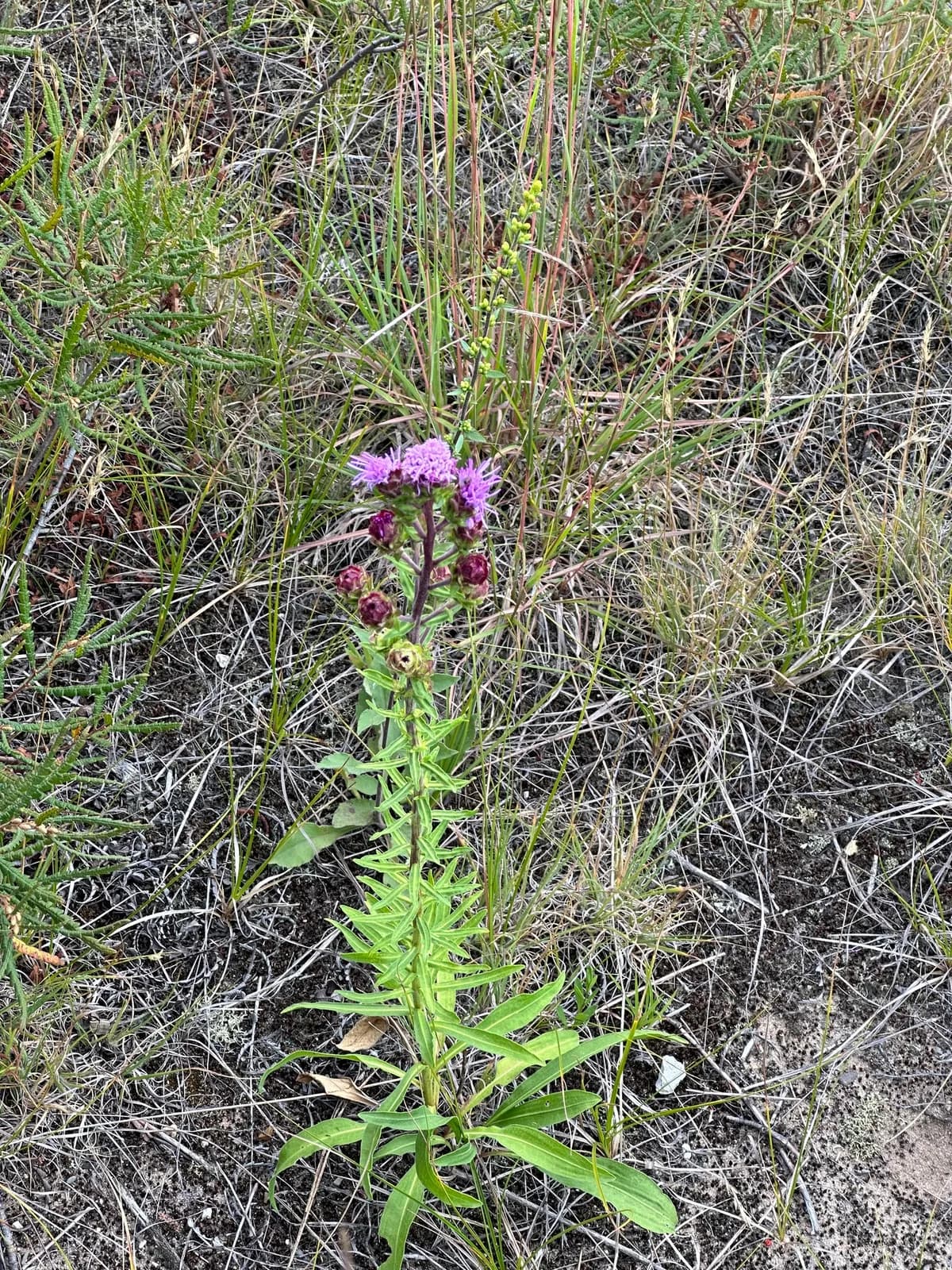
Northern Gayfeather is an upright forb that sends up purple flower spikes from July through September, growing well in full sun and dry to medium well-drained soils typical of open meadows and prairies.
Toxicity unknown
Northern Gayfeather (Liatris scariosa) is not listed by the ASPCA Animal Poison Control Center (opens in new tab) or the other sources we check, so we have no verdict for it either way. Absence from those lists is not a clearance. If your pet shows symptoms after eating any plant, call the ASPCA at (888) 426-4435.
Light
full sun
Water
low
Size
12"–48" H × 12"–24" W
Bloom
Jul, Aug, Sep
Native to
AL, AR, CT, DE and 30 more states
Pollinators
bees, butterflies, moths
Before you buy
Your city may pay you to plant this
Cities and water utilities offer rebates for replacing lawn with native and water-wise plants. We track 459 programs across 44 states, each with a link to the provider and the date we last checked it.
Find rebates in your areaPicture natives in your own yard
Upload a photo of your yard and Patch Vision shows a rendering of it planted with natives for your region, like Northern Gayfeather.


Browse plants for this ecoregion
Northern gayfeather produces dramatic purple flower spikes that bloom from top to bottom, creating a striking vertical accent in the garden. This drought-tolerant native perennial forms neat clumps with grass-like foliage and thrives in full sun conditions. The flowers provide excellent late-season color when many other perennials are fading.
Growing Northern Gayfeather
Grow Northern Gayfeather in full sun and low water. Mature plants reach 12 to 48 inches tall and spread 12 to 24 inches wide. Expect low maintenance to keep it looking intentional in a front yard.
How to care for Northern Gayfeather, by region
How to care for Northern Gayfeather where it is actually grown: year-round basics plus what to do each season, region by region, with the sources for each.
Care guidance last updated: October 2026
Eastern Corn Belt Plains (includes Columbus, OH)
Year-round
Year-round care for northern gayfeather around Columbus, OH: full sun to part shade, well-drained soil, little water once established.
- Give it full sun or partial shade.
- It prefers well-drained soil and resists drought once established.
- It grows from an underground corm.
- Flowers open from midsummer into fall.
- It tolerates more shade than most other Liatris species.
Tall pink flower spikes in a mid-bed group read as a deliberate late-season accent.
Sources: USDA Forest Service Wildflowers: Liatris scariosa, Lady Bird Johnson Wildflower Center: Liatris scariosa
Southern Michigan/Northern Indiana Drift Plains (includes Grand Rapids, MI)
Year-round
Northern Gayfeather is a low-maintenance native perennial for the Grand Rapids area. It just needs well-drained soil and a sunny spot, and it's a strong draw for native bees once it's established.
- Give it full sun or just a little afternoon shade, and soil that drains well. Wet ground over winter is the main thing that can hurt it.
- Once it's settled in, usually after the first year, it handles dry spells on its own and rarely needs extra watering.
- The tall flower spikes can lean over as they fill out, so a stake or a spot next to sturdy neighbor plants helps keep the bed looking neat.
- Bees and bumblebees rely on this plant for nectar. It's one of the better native choices for pollinators in a West Michigan yard.
- Northern Gayfeather is native to Michigan, including the Grand Rapids area, and it isn't on the ASPCA toxic plant list for dogs or cats. Eating a large amount of almost any plant can still upset a pet's stomach, so that's still worth watching.
Fall
Fall is when the last blooms fade out and it's a good time to either tidy up the bed or leave the seed heads standing for wildlife.
- Blooming winds down into September or October as the last flowers near the bottom of each spike open and fade.
- Once the flower stalks have dried and turned brown, you can cut them back, or leave them standing since birds and other wildlife make use of the seed heads into winter.
- Fall is also a fine time to plant or divide corms. Just do it early enough that roots have a few weeks to settle before the ground freezes.
A fall cutback of the spent flower stalks gives the bed a tended look heading into winter. Leaving some seed heads up instead is also a widely accepted look for a native planting, so it's a choice rather than a requirement.
Winter
Winter dormancy is easy for this plant in Grand Rapids. The corm just needs soil that isn't sitting wet and cold at the same time.
- The plant dies back to its underground corm for winter and needs nothing done to it, no watering or covering required.
- The real risk in a Michigan winter is standing water or heavy wet clay. The corm can rot if the ground stays soggy instead of freezing solid.
- Grand Rapids winters are well within this plant's cold hardiness range, so no extra winter protection is needed.
- If stalks were left up in fall for the birds, late winter is a fine time to cut them down before spring growth starts, or that can wait until spring.
Cutting down any leftover stalks in late winter, before new growth starts, is a simple way to keep the front bed looking maintained if that's a concern.
Spring
Spring is when new growth comes up from the underground corm and the plant gets going again for the season.
- New leafy shoots come up from the base once the soil warms, typically through April and May in West Michigan.
- Spring is the best time to plant new corms or divide an older clump, before summer heat sets in.
- Skip the fertilizer. This plant does fine in average soil, and heavy feeding tends to make the stems weaker and more likely to flop later.
- If last year's dry stalks weren't cleared in fall, spring is a good backup time to cut them down and make room for new growth.
Clearing out last year's dry stalks in spring, if it wasn't done in fall, keeps the front bed looking tended as new growth comes in.
Summer
Summer is bloom season. The tall pink-purple flower spikes open from the top down starting in mid-to-late summer and keep going into fall.
- Flower spikes typically start opening in July and continue blooming into September or October, with the top of each spike opening first.
- Water during dry stretches for the first summer or two while the roots are still getting established. After that it handles a Michigan summer dry spell well on its own.
- The stems can lean once they're full of flowers. A stake, or planting it next to sturdy neighbors, keeps them upright without looking messy.
- Bees, butterflies, and other pollinators are drawn to the blooms all summer. It's one of the better nectar plants for that stretch of the season.
Staking or grouping this plant with sturdy neighbors keeps the top-heavy bloom stalks from flopping into a walkway or the lawn, which is an easy thing for a passerby to notice.
Sources: USDA Forest Service, Savanna Blazing Star (Liatris scariosa), Lady Bird Johnson Wildflower Center, Liatris scariosa, ASPCA, Toxic and Non-Toxic Plant List: Dogs, NC State Extension Gardener Plant Toolbox, Liatris scariosa
In an HOA neighborhood
Northern Gayfeather is an HOA-friendly choice. Maintenance level: low. Tidiness: 4 out of 5.
Works well in: front yard, foundation, street edge, mid zone.
- Foliage dies back completely in winter
Wildlife value
The dense flower spikes are magnets for bees, butterflies, and moths during the critical late summer and early fall period. This plant is particularly valuable for monarch butterflies during their fall migration.
Common questions
- When does Northern Gayfeather bloom?
- Northern Gayfeather produces its purple, bottlebrush-like flower spikes from July into September, with peak bloom typically in August.
- What pollinators visit Northern Gayfeather?
- The flowers draw a range of bees, butterflies, and moths, which feed on the nectar-rich spikes throughout the summer bloom period.
- What growing conditions does this plant need?
- It performs best in full sun with low to medium soil moisture, and it tolerates dry, well-drained sites once established.
- Is Northern Gayfeather easy to maintain in a garden bed?
- Yes. As a low-water forb adapted to open, sunny sites, it generally needs little supplemental watering or fertilizing once its roots are established.
- Is Northern Gayfeather HOA-friendly?
- Northern Gayfeather is generally an HOA-friendly choice in the right placement, with low maintenance.
These answers were drafted with an AI model from this plant's data. Verify care details with a local expert.
Native range data from vouchered herbarium specimen records and regional native plant society lists. Pollinator and host plant associations compiled from GBIF, iNaturalist, and published ecological literature.
If something looks wrong
Common plant problems, and what to check first
These come up on almost any plant. Each guide lists the likely causes in the order they are worth ruling out, with one thing to check before you act on any of them, and links to the source it came from.
- It is dying right after planting
- Leaves turning yellow
- Wilting even though I watered it
- Brown crispy leaf tips
- Bugs on the plant
Ready to grow Northern Gayfeather? Add it to your garden in Pollinator Patch to track it and get season-by-season care guidance.