Savory-leaf aster
Ionactis linariifolia
Last reviewed: September 2026
Savory-leaf aster (Ionactis linariifolia) is a perennial forb native to AL, AR, CT, DC and 29 more states. It blooms in August, September, and October. The flowers draw bees and butterflies.
Toxicity unknown
Savory-leaf aster (Ionactis linariifolia) is not listed by the ASPCA Animal Poison Control Center (opens in new tab) or the other sources we check, so we have no verdict for it either way. Absence from those lists is not a clearance. If your pet shows symptoms after eating any plant, call the ASPCA at (888) 426-4435.
Light
full sun
Water
low
Size
6"–20" H × 8"–12" W
Bloom
Aug, Sep, Oct
Native to
AL, AR, CT, DC and 29 more states
Pollinators
bees, butterflies
Before you buy
Your city may pay you to plant this
Cities and water utilities offer rebates for replacing lawn with native and water-wise plants. We track 458 programs across 44 states, each with a link to the provider and the date we last checked it.
Find rebates in your areaBrowse plants for this ecoregion
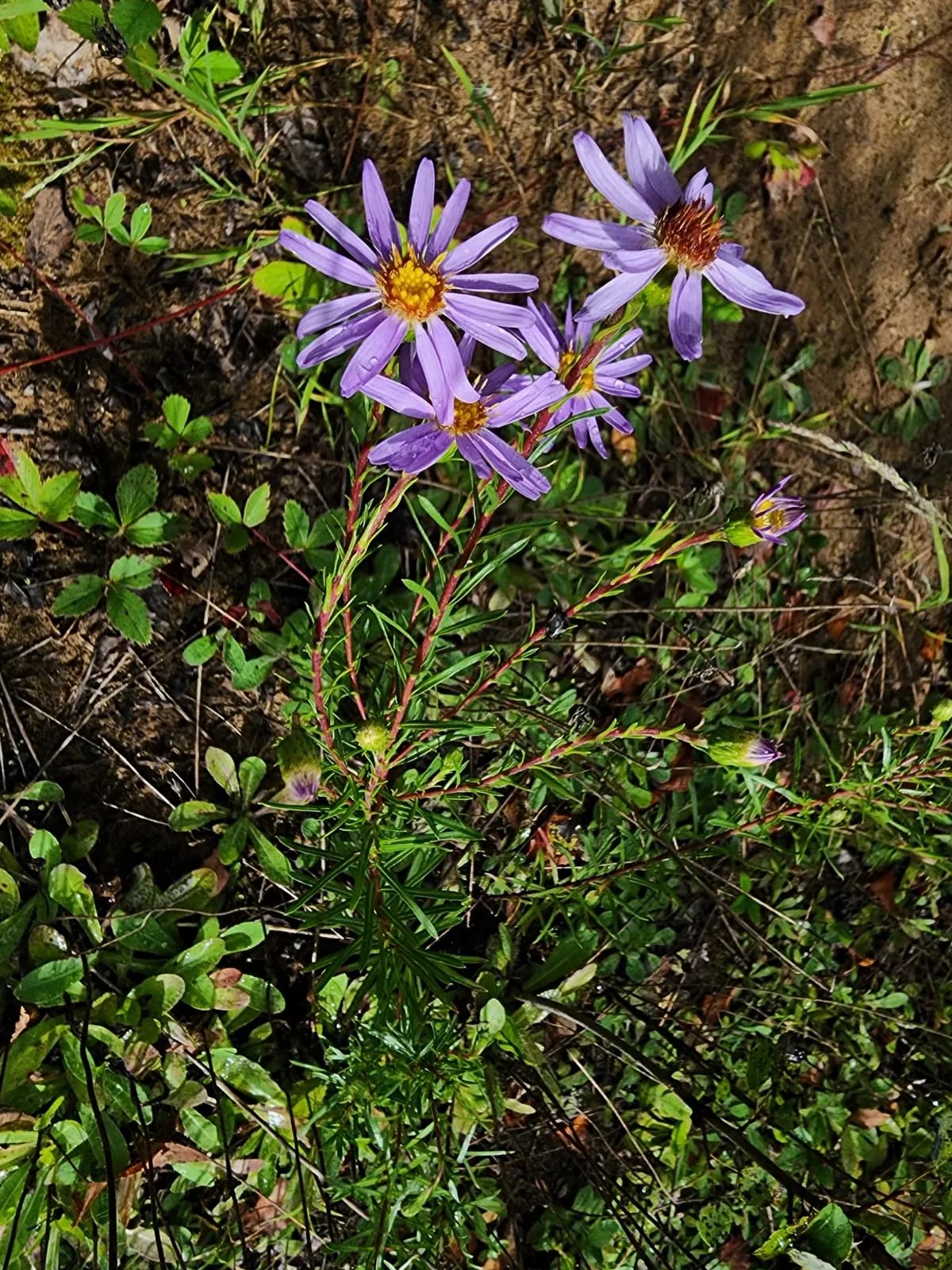
A stiff, wiry aster with narrow, needle-like leaves densely covering the stems and small lavender-purple daisy flowers in fall. Forms tight, low clumps on dry rocky outcrops and sandy barrens.
Growing Savory-leaf aster
Grow Savory-leaf aster in full sun and low water. Mature plants reach 6 to 20 inches tall and spread 8 to 12 inches wide.
How to care for Savory-leaf aster, by region
How to care for Savory-leaf aster where it is actually grown: year-round basics plus what to do each season, region by region, with the sources for each.
Care guidance last updated: September 2026
Ouachita Mountains (includes Hot Springs, AR)
Year-round
This aster is a tough, low mounding native plant found on dry rocky slopes and open woods around Hot Springs. Once it settles in, it needs very little from you.
- Give it full sun to light afternoon shade and well-drained sandy, rocky, or gravelly soil, matching the dry clearings and rocky banks it grows in naturally around the Ouachita Mountains.
- It tolerates dry spells well once established, so in the humid Hot Springs summer, water only during extended dry stretches rather than on a fixed schedule.
- It stays low, usually 1 to 2 feet tall, forming a clump with narrow, needle-like leaves that give it a fine, almost evergreen texture year round.
- It is a genuine Arkansas native, so it fits naturally into a Hot Springs yard without needing extra soil amendment or coddling.
Its low, tidy clump and fine needle-like foliage read as an intentional groundcover rather than a wild patch, which keeps a front bed looking HOA-friendly.
Fall
Fall is this plant's big moment. It blooms from late summer into October with small purple, blue, or white daisy-like flowers, right around the time most other perennials are winding down.
- Let the flowers finish and go to seed rather than deadheading them. The seed heads feed birds and let the plant self-sow modestly nearby.
- No need to cut the plant back yet. Leave the stems standing through fall for winter interest and habitat rather than tidying the bed now.
- Hot Springs typically doesn't see its first fall frost until early to mid November, so this aster gets a long, mild bloom window most years.
Fall bloom with a naturally low, mounded habit keeps this plant from reading as an overgrown or messy patch, even left unpruned through the season.
Winter
Hot Springs winters are mild for a native aster like this one. The top growth dies back, but the plant itself is not doing much and does not need protection.
- Leave the dried stems and seed heads standing over winter rather than cutting the plant to the ground. They offer some shelter for overwintering insects and hold up fine in Zone 8a's mild winters.
- No mulching or covering is needed. This plant's natural home is dry, exposed, rocky ground, and it tolerates winter cold in Zone 8a without extra care.
- Wait until new growth appears at the base in spring before cutting back last year's stems, rather than clearing the bed in late winter.
Standing dried stems through winter can look unkempt to a strict HOA-conscious neighbor, so consider a light tidy of the most visible front-facing stems while leaving the rest for wildlife.
Spring
Spring is cleanup and settling-in time. The plant is just waking up from its low winter clump, and Hot Springs can still see a late frost into late March.
- Once new growth shows at the base, clear away any dried stems left over from last fall so light and air reach the new shoots.
- Hold off on heavy watering. Hot Springs gets a good share of its roughly 58 inches of yearly rain in spring, and this aster does not like sitting in soggy ground, so well-drained soil matters most right now.
- If a new transplant or seedling is still small, wait until the risk of a late frost has passed, which in the Hot Springs area typically runs into late March, before moving it to its final spot.
- This is a reasonable time to divide an older, crowded clump, since the plant spreads slowly from short rhizomes rather than aggressively.
Summer
Summer in Hot Springs is hot and humid, but this aster is built for dry, open ground, so the main job is staying out of its way.
- Once established, it handles the region's hot, humid summer stretches on its own and only needs supplemental water during a prolonged dry spell.
- Avoid heavy mulch piled against the base. Good air movement around the wiry stems in sandy or gravelly soil matters more to this plant than moisture retention.
- Do not fertilize. It comes from lean, dry sites, and rich soil or extra feeding tends to make it floppy instead of keeping its natural low, tidy clump.
Sources: Lady Bird Johnson Wildflower Center Native Plant Database, Ionactis linariifolius, USDA PLANTS Database, Plants Profile for Ionactis linariifolius, Mt. Cuba Center plant profile, Stiff-Leaved Aster (Ionactis linariifolia), USDA Plant Hardiness Zone Map, Zone 8a (Hot Springs, AR area)
Wildlife value
Fall flowers are an important late-season nectar source for bees and migrating butterflies.
Common questions
- How much sun does Savory-leaf aster need?
- Savory-leaf aster grows best in full sun conditions.
- When does Savory-leaf aster bloom?
- Savory-leaf aster blooms in August, September, and October.
- Where is Savory-leaf aster native?
- Savory-leaf aster (Ionactis linariifolia) is native to AL, AR, CT, DC and 29 more states, per the World Checklist of Vascular Plants (Kew).
- What pollinators does Savory-leaf aster attract?
- Savory-leaf aster draws bees and butterflies.
Native range data from the World Checklist of Vascular Plants (Kew). Pollinator and host plant associations compiled from GBIF, iNaturalist, and published ecological literature.
If something looks wrong
Common plant problems, and what to check first
These come up on almost any plant. Each guide lists the likely causes in the order they are worth ruling out, with one thing to check before you act on any of them, and links to the source it came from.
- It is dying right after planting
- Leaves turning yellow
- Wilting even though I watered it
- Brown crispy leaf tips
- Bugs on the plant
Ready to grow Savory-leaf aster? Add it to your garden in Pollinator Patch to track it and get season-by-season care guidance.