Southern-gooseberry
Vaccinium stamineum
Last reviewed: October 2026
Southern-gooseberry (Vaccinium stamineum) is a perennial shrub native to AL, AR, CT, DC and 25 more states. It blooms in April, May, and June. The flowers draw bumble bees and bees.
Toxicity unknown
Southern-gooseberry (Vaccinium stamineum) is not listed by the ASPCA Animal Poison Control Center (opens in new tab) or the other sources we check, so we have no verdict for it either way. Absence from those lists is not a clearance. If your pet shows symptoms after eating any plant, call the ASPCA at (888) 426-4435.
Light
part sun
Water
medium
Size
36"–96" H × 36"–72" W
Bloom
Apr, May, Jun
Native to
AL, AR, CT, DC and 25 more states
Pollinators
bumble bees, bees
Before you buy
Your city may pay you to plant this
Cities and water utilities offer rebates for replacing lawn with native and water-wise plants. We track 459 programs across 44 states, each with a link to the provider and the date we last checked it.
Find rebates in your areaPicture natives in your own yard
Upload a photo of your yard and Patch Vision shows a rendering of it planted with natives for your region, like Southern-gooseberry.


Browse plants for this ecoregion
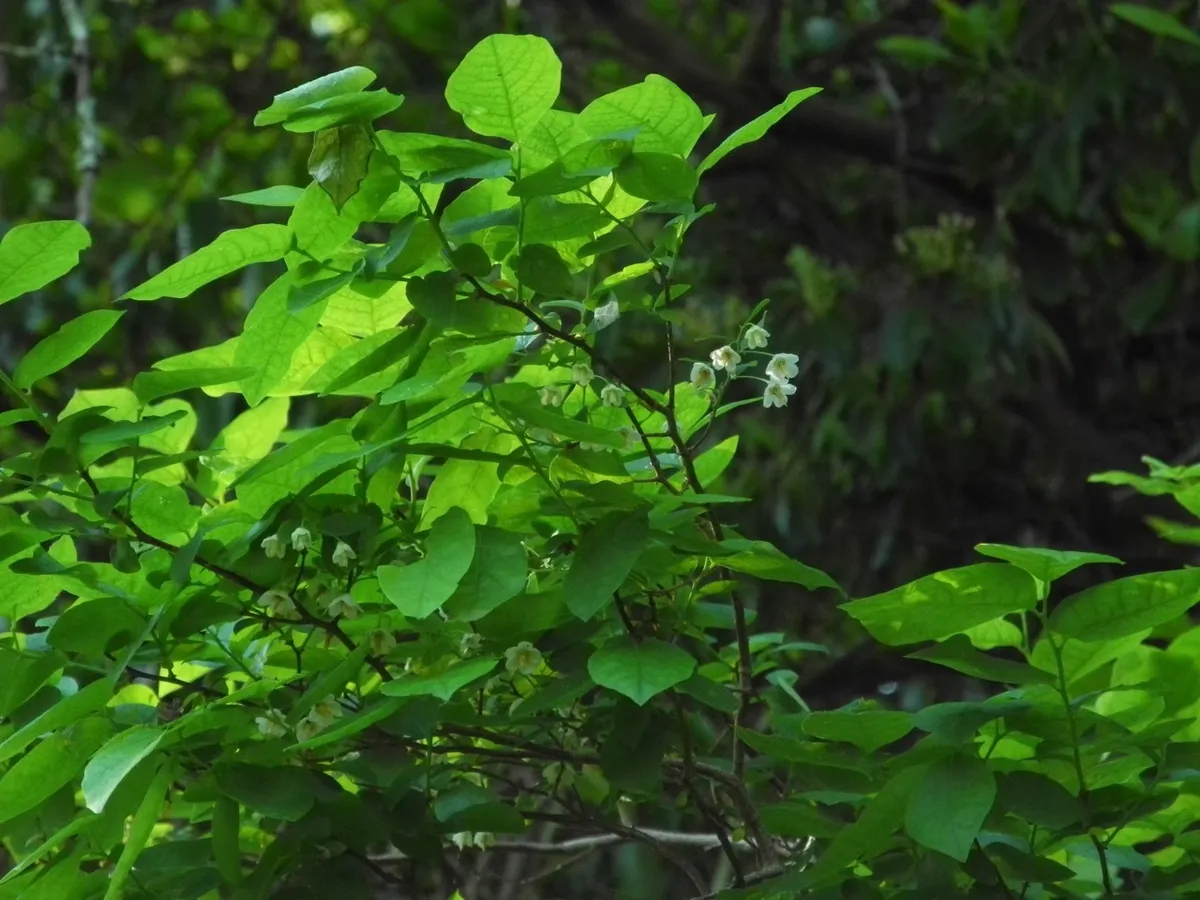
An understory shrub in the blueberry family with an open, layered branching pattern and small white bell-shaped flowers in spring. Green-tinted purple berries follow in fall, and the leaves often color well before dropping.
Growing Southern-gooseberry
Grow Southern-gooseberry in part sun and medium water. Mature plants reach 36 to 96 inches tall and spread 36 to 72 inches wide.
How to care for Southern-gooseberry, by region
How to care for Southern-gooseberry where it is actually grown: year-round basics plus what to do each season, region by region, with the sources for each.
Care guidance last updated: September 2026
Piedmont (includes Atlanta, GA)
Year-round
Deerberry is a native Piedmont shrub for Atlanta gardens that wants acidic, well-drained soil and a spot with at least half a day of sun.
- Deerberry is native to Georgia's Piedmont region, including the Atlanta area.
- Give it full sun to part shade. It flowers and fruits best with several hours of direct sun.
- It needs acidic, well-drained soil. Atlanta's red clay holds water, so mix in compost or plant it on a slope or raised bed.
- Mature size runs about 6 to 12 feet tall and wide over time.
- Water it regularly the first year. After that it tolerates Georgia's dry spells well.
- Skip regular fertilizer. Overly alkaline soil or heavy feeding can turn the leaves yellow (chlorosis).
HOA-conscious: it spreads slowly by underground runners into a clump over the years, so give it room at the edge of a bed or plan to divide it.
Fall
Fall, with a first frost around November 13 in Atlanta, is when deerberry's fruit ripens and its foliage colors before frost ends the growing season.
- Fruit finishes ripening to purplish black from late summer into early fall and draws songbirds and other wildlife.
- Foliage often shifts color before dropping, which is normal for the season.
- Fall, before the average first frost around November 13, is also a good second planting window since the soil is still warm.
- Rake fallen leaves and dropped fruit away from front walkways as they come down.
- Hold off on fertilizer this time of year so the plant can harden off before winter.
HOA-friendly: the leaf color change and berry drop this time of year are normal for the plant, not a sign it is struggling.
Winter
Atlanta winters, USDA zone 7b, are mild enough that established deerberry needs little care beyond dormant-season pruning.
- Deerberry is hardy through Atlanta's USDA zone 7b winters and needs no special winter protection once established.
- Late winter, before new growth starts, is the best time to cut out dead, damaged, or crowded stems.
- A young plant in its first winter benefits from a layer of mulch over the root zone to buffer hard freezes.
- Do not fertilize in winter. Wait until new growth starts in spring.
- Check that mulch has not piled against the main stems, which can invite rot.
Spring
Spring in Atlanta, with a last frost around March 21, is planting season for deerberry and the start of its bloom.
- Plant or transplant after the average last frost date of about March 21 for the Atlanta area.
- Small white bell-shaped flowers open from April into June. Leave them alone, they turn into the fall berries.
- New spring growth can get nipped by a late cold snap. Cover a young plant if a freeze is forecast after it has leafed out.
- If you need to shape the plant, do it right after flowering finishes so you do not cut off the season's berries.
- Water newly planted deerberry through dry spring stretches until roots are established.
Summer
Atlanta summers are hot and humid, and established deerberry handles them well while its fruit ripens late in the season.
- Established deerberry tolerates Atlanta's summer heat and humidity without extra watering in most years.
- In a dry stretch, give it a deep soak every week or two rather than frequent shallow watering.
- A 2 to 3 inch layer of mulch over the root zone helps keep roots cool and holds moisture in clay soil.
- Watch for azalea stem borers, tent caterpillars, and scale insects on the stems and leaves.
- Berries start to color up from pale green toward purple late in summer.
Sources: Lady Bird Johnson Wildflower Center - Vaccinium stamineum, NC State Extension Plant Toolbox - Vaccinium stamineum, National Weather Service Peachtree City - Atlanta frost/freeze dates
Wildlife value
Host plant for Henry's elfin.
The bell-shaped flowers are pollinated mainly by bumble bees, the berries feed birds and mammals, and the foliage hosts Henry's elfin caterpillars.
Common questions
- How much sun does Southern-gooseberry need?
- Southern-gooseberry grows best in part sun conditions.
- When does Southern-gooseberry bloom?
- Southern-gooseberry blooms in April, May, and June.
- Where is Southern-gooseberry native?
- Southern-gooseberry (Vaccinium stamineum) is native to AL, AR, CT, DC and 25 more states, per the World Checklist of Vascular Plants (Kew).
- What butterflies or moths does Southern-gooseberry host?
- Southern-gooseberry is a larval host plant for Henry's elfin.
Native range data from the World Checklist of Vascular Plants (Kew). Pollinator and host plant associations compiled from GBIF, iNaturalist, and published ecological literature.
If something looks wrong
Common plant problems, and what to check first
These come up on almost any plant. Each guide lists the likely causes in the order they are worth ruling out, with one thing to check before you act on any of them, and links to the source it came from.
- It is dying right after planting
- Leaves turning yellow
- Wilting even though I watered it
- Brown crispy leaf tips
- Bugs on the plant
Ready to grow Southern-gooseberry? Add it to your garden in Pollinator Patch to track it and get season-by-season care guidance.