Tall Coreopsis
Coreopsis tripteris
Last reviewed: October 2026
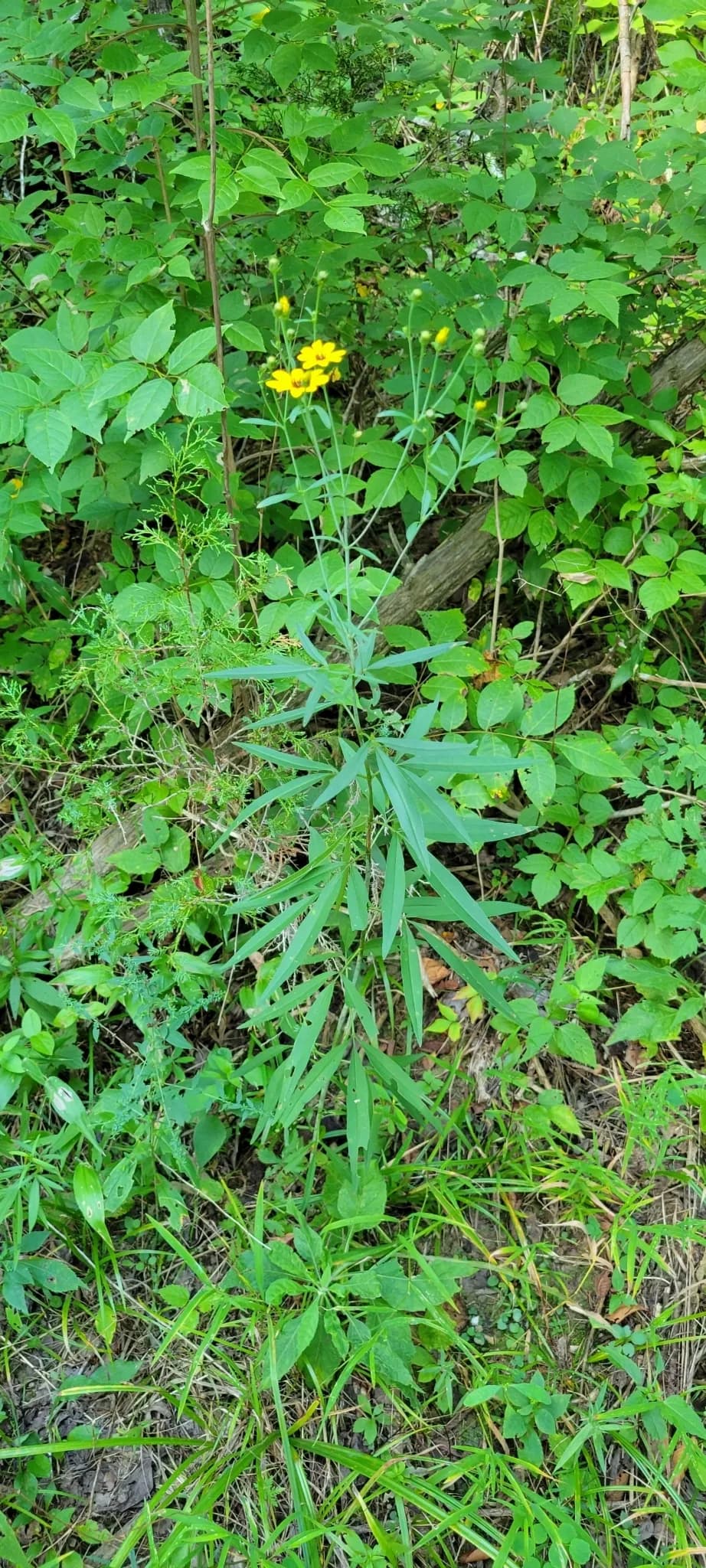
Coreopsis tripteris, or Tall Coreopsis, is a tall prairie forb that blooms yellow from July through September. It grows in full sun with low water needs and draws bees, butterflies and beetles.
Tall Coreopsis (Coreopsis tripteris) is not on the ASPCA Animal Poison Control Center toxic plant list for dogs or cats (aspca.org (opens in new tab), last reviewed 2026-05-21). If your pet shows symptoms after eating any plant, call the ASPCA at (888) 426-4435.
Light
full sun
Water
low
Size
36"–96" H × 24"–36" W
Bloom
Jul, Aug, Sep
Native to
AL, AR, FL, GA and 30 more states
Pollinators
bees, butterflies, beetles
Deer
Resistant (per Prairie Moon Nursery)
Before you buy
Your city may pay you to plant this
Cities and water utilities offer rebates for replacing lawn with native and water-wise plants. We track 459 programs across 44 states, each with a link to the provider and the date we last checked it.
Find rebates in your areaPicture natives in your own yard
Upload a photo of your yard and Patch Vision shows a rendering of it planted with natives for your region, like Tall Coreopsis.


Browse plants for this ecoregion
Tall coreopsis is a robust native perennial that produces bright yellow daisy-like flowers from summer through early fall. This drought-tolerant plant can reach up to 8 feet tall, making it an excellent choice for background plantings or naturalized areas.
Growing Tall Coreopsis
Grow Tall Coreopsis in full sun and low water. Mature plants reach 36 to 96 inches tall and spread 24 to 36 inches wide. Expect low maintenance to keep it looking intentional in a front yard.
How to care for Tall Coreopsis, by region
How to care for Tall Coreopsis where it is actually grown: year-round basics plus what to do each season, region by region, with the sources for each.
Care guidance last updated: October 2026
Erie Drift Plain (includes Buffalo, NY)
Year-round
Tall tickseed is a tall yellow-flowered perennial that likes part shade and moist soil.
- Plant it in part shade with moist to dry sandy soil.
- It can grow 3 to 9 feet tall, often shorter.
- It grows easily from seed with no pretreatment.
Give it a back-of-the-border spot and cut stems back in late winter to keep it tidy.
Fall
Fall is the end of the bloom, and Buffalo frost usually arrives around mid October.
- Flowers fade by late September.
- Let seed heads finish before tidying.
- Water if fall is dry.
Winter
In winter the plant is dormant and the old stems can be left standing.
- Leave stems up through snow.
- Cut them back in late winter before new growth.
- No other winter care is needed.
Spring
Spring is a good time to sow seed or divide mature plants.
- Seed germinates without pretreatment.
- Mature plants can be divided.
- Wait until late spring frost danger passes before planting out in Buffalo.
Summer
Summer is for yellow flowers from July through September.
- Keep the soil moist.
- Expect it to grow tall, so give it space.
- Stake only if stems flop.
Sources: Lady Bird Johnson Wildflower Center: Coreopsis tripteris
Ouachita Mountains (includes Hot Springs, AR)
Year-round
Tall coreopsis is a big, easygoing native perennial that belongs at the back of the bed, not the front, and it earns its keep with bumblebees and native bees in late summer.
- This species is native to most of Arkansas, including the Ouachita Mountains region around Hot Springs, though it does not naturally occur in the low-lying Mississippi Alluvial Plain or the Gulf coastal plain further south and east.
- Give it full sun, six or more hours a day, though it tolerates a half day of shade.
- It is not picky about soil. Clay, loam or sand all work as long as drainage is decent.
- Mature height runs 5 to 8 feet, occasionally taller, so plant it at the back of a bed or along a fence line where the height reads as a backdrop rather than a wall blocking the front yard.
- It spreads by underground rhizomes and can form a loose colony over a few seasons. Give it room, or plan on dividing it every few years to keep it where you want it.
- Bright yellow blooms with a dark purple-red center show up in late summer into fall, and small native bees, bumblebees and wasps visit for nectar and pollen.
Fall
Bloom carries into fall, seed heads feed birds if you leave them standing, and fall is a good time to divide an overgrown clump before dormancy.
- Blooming often continues into fall as nights start to cool, tapering off once temperatures drop consistently toward frost.
- Ripening seed heads feed goldfinches and other birds into fall, which is why many gardeners leave the dried stalks standing rather than cutting back right after bloom.
- If a tidy, front-facing look matters more than the birds this season, cut stems back to a few inches once flowering finishes and the foliage browns.
- Fall, while the plant is heading into dormancy, is also a good time to dig and divide an overgrown clump or remove rhizomes that have spread past where you want them.
Cutting the spent stalks down to a low, even edge in fall gives a visible bed a tidier, HOA-friendly look than leaving tall dead stems standing all winter, if that matters more to you than the birds.
Winter
This plant is fully winter hardy in Hot Springs, dies back completely above ground, and needs nothing from you until spring except an optional cleanup cut.
- Tall coreopsis is winter hardy across USDA zones 4 through 8, and Hot Springs sits in zone 8a, so a typical winter here is well within what this plant handles without any protection.
- All above-ground growth dies back to the ground after a hard frost. The plant survives winter as a rhizome mat and caudex below the soil surface.
- No watering is needed during dormancy under normal Arkansas winter rainfall.
- If stalks were left up for winter interest or bird food, this is the last stretch to enjoy that look. Cutting the clump down to a few inches any time before new growth starts in spring is fine either way.
A clump of tall, bare winter stalks can read as unkept from the street. Cutting it back to a few inches by late winter gives a clean, HOA-friendly reset before spring growth starts, if you did not already cut back in fall.
Spring
Spring is establishment season. New shoots push up from last year's rhizome mat, and this is also the best window to plant a new one or rein in a spreading colony.
- New growth emerges from the rhizome base as the soil warms in spring. Hot Springs sits in USDA zone 8a, so expect green-up well ahead of areas further north.
- If you are planting a new one, spring after the last hard frost is the best window. Keep the root zone evenly moist for the first few weeks while it settles in.
- Skip the fertilizer. Rich soil just makes an already-tall plant more likely to flop later in the season.
- This is a good time to walk the bed and pull or dig out any new shoots coming up outside where you want the colony, since the rhizomes travel underground and can show up a foot or two from the original planting.
Summer
Established plants shrug off Arkansas summer heat with little watering, buds form through midsummer, and the tall stems may need a little support once flowers open.
- Established plants are drought tolerant and rarely need extra water once summer heat and humidity settle in. A deep soak during a long dry stretch helps keep blooms coming.
- A first-year plant, or one recently divided, still needs regular water through the hot months while its roots establish.
- Flower buds build through midsummer, and the yellow, purple-red-centered blooms typically open from around late July into fall.
- In open or windy spots, or in rich soil, the tall stems can lean. A single plant may need a stake, but a cluster of three or more usually holds itself up by leaning together.
- Deadheading is optional. It will not push out a lot of extra bloom on this species, but pinching off spent flower heads keeps a bed that faces the street looking tended.
Deadheading spent blooms through summer keeps a front-facing planting looking cared for, which reads as more HOA-conscious than letting the whole colony go to seed at once.
Sources: Arkansas Native Plant Society: Know Your Natives, Tall Coreopsis, Illinois Wildflowers: Tall Coreopsis species page, Prairie Moon Nursery: Tall Coreopsis growing guide, University of Arkansas Cooperative Extension: Hardiness Zones
In an HOA neighborhood
Tall Coreopsis takes more care to keep looking intentional in a front yard. Maintenance level: low. Consider it for backyard or mid-zone beds rather than the street edge.
Works well in: backyard only.
- Very tall height appears too wild for front yards
- Can look weedy when dormant
- May be viewed as uncontrolled native growth
Wildlife value
Host plant for wavy-lined emerald moth.
The abundant flowers attract bees, butterflies, and beetles throughout the long blooming season. Seeds provide food for birds in fall and winter.
Common questions
- How tall does Coreopsis tripteris grow?
- Tall Coreopsis is one of the taller species in its genus, with upright stems that commonly reach several feet in height by the time it flowers in mid to late summer.
- When does Tall Coreopsis bloom?
- Coreopsis tripteris blooms from July through September, producing yellow daisy-like flowers with darker centers on branching stems.
- How much water does Tall Coreopsis need?
- Once established, Coreopsis tripteris tolerates low water levels and prefers well-drained soil, which suits dry to average prairie and meadow conditions.
- Does Coreopsis tripteris need full sun?
- Coreopsis tripteris flowers best in full sun but can also grow in part sun locations with slightly reduced flowering.
- What insects visit Coreopsis tripteris flowers?
- Bees, butterflies, and beetles visit Coreopsis tripteris for nectar and pollen, making it a useful addition to pollinator gardens.
- Is Tall Coreopsis toxic to dogs?
- Tall Coreopsis is not on the ASPCA Animal Poison Control Center toxic plant list for dogs (aspca.org).
- Is Tall Coreopsis toxic to cats?
- Tall Coreopsis is not on the ASPCA Animal Poison Control Center toxic plant list for cats (aspca.org).
- Is Tall Coreopsis HOA-friendly?
- Tall Coreopsis takes more care to look intentional in a front yard. Consider it for backyard or mid-zone beds rather than the street edge.
These answers were drafted with an AI model from this plant's data. Verify care details with a local expert.
Native range data from vouchered herbarium specimen records and regional native plant society lists. Pollinator and host plant associations compiled from GBIF, iNaturalist, and published ecological literature.
If something looks wrong
Common plant problems, and what to check first
These come up on almost any plant. Each guide lists the likely causes in the order they are worth ruling out, with one thing to check before you act on any of them, and links to the source it came from.
- It is dying right after planting
- Leaves turning yellow
- Wilting even though I watered it
- Brown crispy leaf tips
- Bugs on the plant
Ready to grow Tall Coreopsis? Add it to your garden in Pollinator Patch to track it and get season-by-season care guidance.