Blue flag
Iris versicolor
Last reviewed: August 2026
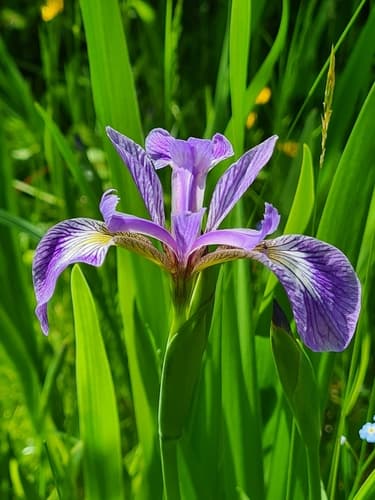
Iris versicolor, or blue flag, is a wetland forb that blooms blue-violet from May through July in marshes, ditches, and pond edges across the northeastern and upper midwestern United States.
Blue flag is toxic to dogs and cats.
Listed as toxic by the ASPCA Animal Poison Control Center (opens in new tab) (last reviewed 2026-08-15). If your pet has been exposed, call the ASPCA Animal Poison Control Center at (888) 426-4435and your veterinarian's emergency line.
Pollinator Patch flags toxic plants so you can choose a pet-safe native alternative for your yard.
Light
full sun
Water
high
Size
24"–36" H × 18"–24" W
Bloom
May, Jun, Jul
Native to
CT, MA, MD, ME and 11 more states
Pollinators
bumble bees, syrphid flies, hummingbirds
Before you buy
Your city may pay you to plant this
Cities and water utilities offer rebates for replacing lawn with native and water-wise plants. We track 452 programs across 44 states, each with a link to the provider and the date we last checked it.
Find rebates in your areaBrowse plants for this ecoregion
A wetland iris with broad sword-shaped leaves and violet-blue flowers veined in yellow and white. It thrives in saturated soil at pond edges and in rain gardens, forming slow-spreading clumps from thick rhizomes.
Growing Blue flag
Grow Blue flag in full sun and high water. Mature plants reach 24 to 36 inches tall and spread 18 to 24 inches wide.
Wildlife value
A reliable early-summer nectar source for large bees, and the dense foliage clumps shelter amphibians at water margins.
Common questions
- When does blue flag iris bloom?
- Iris versicolor typically flowers from May through July, with exact timing shifting slightly depending on local spring temperatures and site moisture.
- What pollinators visit blue flag iris?
- Bumble bees and syrphid flies are the main pollinators working the flowers for nectar and pollen, and hummingbirds will also visit for nectar.
- How much water does Iris versicolor need?
- This iris grows best in consistently wet to moist soil and tolerates standing water, making it a good fit for pond margins, rain gardens, and low spots that stay damp.
- How much sun does blue flag iris need?
- It flowers most heavily in full sun but will still grow and bloom, though less vigorously, in part sun with a few hours of shade.
- Is Iris versicolor a good choice for a rain garden?
- Yes, its tolerance for saturated soil and standing water makes it well suited to rain gardens, pond edges, and other spots that flood periodically.
- Is Blue flag toxic to dogs?
- Yes. Blue flag is listed as toxic to dogs by the ASPCA Animal Poison Control Center (aspca.org). If your pet has been exposed, call the ASPCA Animal Poison Control Center at (888) 426-4435.
- Is Blue flag toxic to cats?
- Yes. Blue flag is listed as toxic to cats by the ASPCA Animal Poison Control Center (aspca.org). If your cat has been exposed, call the ASPCA Animal Poison Control Center at (888) 426-4435.
These answers were drafted with an AI model from this plant's data. Verify care details with a local expert.
Native range data from the World Checklist of Vascular Plants (Kew). Pollinator and host plant associations compiled from GBIF, iNaturalist, and published ecological literature.
If something looks wrong
Common plant problems, and what to check first
These come up on almost any plant. Each guide lists the likely causes in the order they are worth ruling out, with one thing to check before you act on any of them, and links to the source it came from.
- It is dying right after planting
- Leaves turning yellow
- Wilting even though I watered it
- Brown crispy leaf tips
- Bugs on the plant
Pollinator Patch flags toxic plants like Blue flag and shows pet-safe natives for your ecoregion instead.
Planning a bed around it? Start a free plan with this plant
Not sure where to start? Take the 2-minute yard quiz