Ninebark
Physocarpus opulifolius
Last reviewed: October 2026
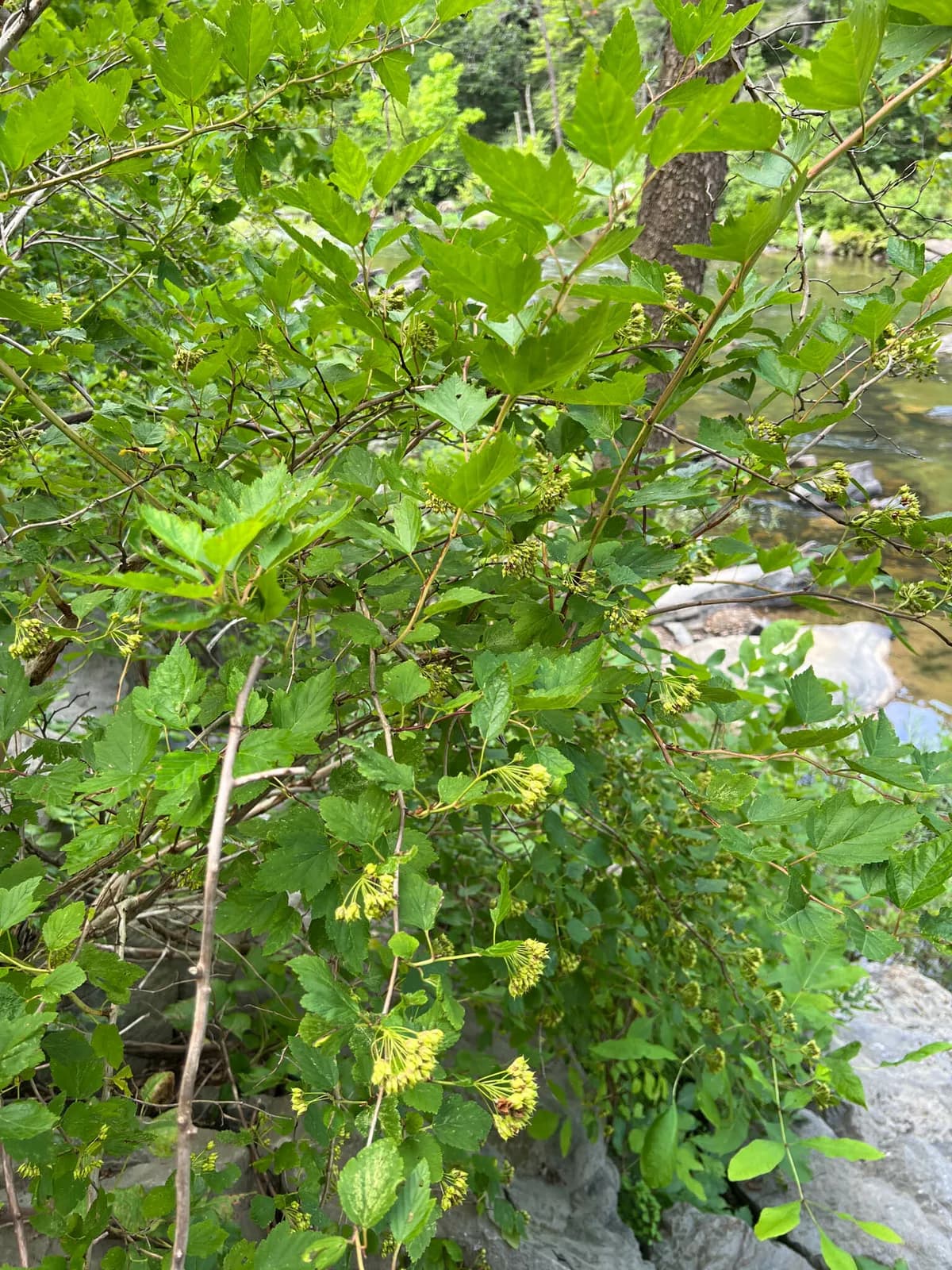
Physocarpus opulifolius (ninebark) is a deciduous shrub that produces clusters of white flowers in May and June. It grows well in full sun to part shade and tolerates both wet and moderately dry soils.
Toxicity unknown
Ninebark (Physocarpus opulifolius) is not listed by the ASPCA Animal Poison Control Center (opens in new tab) or the other sources we check, so we have no verdict for it either way. Absence from those lists is not a clearance. If your pet shows symptoms after eating any plant, call the ASPCA at (888) 426-4435.
The USDA PLANTS Database (opens in new tab) does not flag Ninebark as toxic to livestock.
Light
full sun
Water
medium
Size
72"–120" H × 72"–120" W
Bloom
May, Jun
Native to
AL, AZ, CT, DE and 29 more states
Pollinators
bees, butterflies
Before you buy
Your city may pay you to plant this
Cities and water utilities offer rebates for replacing lawn with native and water-wise plants. We track 459 programs across 44 states, each with a link to the provider and the date we last checked it.
Find rebates in your areaPicture natives in your own yard
Upload a photo of your yard and Patch Vision shows a rendering of it planted with natives for your region, like Ninebark.


Browse plants for this ecoregion
Ninebark is a sturdy native shrub with attractive white flower clusters in late spring and early summer. It features peeling bark that adds winter interest and can grow quite large, making it suitable for larger landscape spaces.
Growing Ninebark
Grow Ninebark in full sun and medium water. Mature plants reach 72 to 120 inches tall and spread 72 to 120 inches wide. Expect low maintenance to keep it looking intentional in a front yard.
How to care for Ninebark, by region
How to care for Ninebark where it is actually grown: year-round basics plus what to do each season, region by region, with the sources for each.
Care guidance last updated: September 2026
Piedmont (includes Atlanta, GA)
Year-round
Ninebark is a tough, low-fuss shrub that handles Atlanta's heat, clay soil, and dry spells once it settles in, and it has real winter interest most shrubs do not.
- Give it full sun to part shade. In Atlanta's hot summers, a little afternoon shade helps the leaves hold their color better than all day sun.
- It handles clay soil, rocky soil, and average garden soil just fine. Good drainage matters more than soil type.
- Water regularly the first year to help roots establish. After that it becomes drought tolerant and only needs extra water during long dry stretches.
- Give it room. Space plants 5 to 8 feet apart, since the straight species can reach 5 to 8 feet tall and wide at maturity (dwarf varieties stay much smaller, so check your specific plant tag).
- The bark peels off in curling strips as the shrub ages, showing layers of reddish brown underneath. Leave older stems alone through the seasons so this feature builds up instead of getting pruned away.
- It blooms on wood that grew the previous year, so the timing of any pruning matters more than how often you do it.
- This shrub is native to the eastern United States, with its natural range reaching south into Georgia and Florida, so it belongs in this region's yards.
Fall
Fall is the best time to plant a new ninebark in Atlanta, and it is also when this shrub's standout bark starts to show.
- October through December is the ideal planting window in Georgia. Cooler air lets roots establish in the still warm soil all winter, ahead of next summer's heat.
- Do not prune in fall to tidy up for the season. Next spring's flower buds are already set on this year's growth, and a fall cutback removes them along with the bloom.
- As leaves drop, the shrub's peeling, curling bark becomes the main feature. Older stems show the most layering, which is the payoff for leaving them alone.
- Keep watering any new fall planting through dry autumn stretches until the ground cools for good. Established plants need little to no extra water this time of year.
- Rake fallen leaves out away from the base rather than piling mulch or debris against the stems, which helps keep the crown from staying wet over winter.
Skip the instinct to cut the shrub back hard during fall cleanup. Ninebark reads as neat left alone, and an untimed cutback both strips next year's blooms and can leave a bare, ragged look in the front bed through winter.
Winter
Winter is dormant season for ninebark in Atlanta, and it is the best time to see the bark that makes this shrub worth growing.
- This is a cold hardy shrub, so Georgia's occasional freezes and the rare ice event do not usually trouble an established plant. No winter protection is needed.
- With the leaves gone, the peeling bark (curling in strips to show reddish brown layers underneath) is at its most visible. This is the shrub's main winter interest feature.
- If the shrub has gotten leggy, thin flowering, or overgrown, late winter before new leaves emerge is the time for a hard rejuvenation cut close to the ground. You trade that year's bloom for a fuller, better shaped shrub afterward.
- Georgia soil stays warm enough for root growth through most of the winter, so a shrub planted in fall keeps establishing underground even while it looks completely dormant above ground.
- Skip fertilizer until spring. Feeding a dormant shrub in winter does not help it and can push weak, poorly timed growth if a warm spell tricks it into breaking dormancy early.
Leaving the bare stems and peeling bark on display through winter is the intended look for this shrub, not a sign it needs cutting back for tidiness.
Spring
Spring is bloom time for ninebark in Atlanta, and it is also the one narrow window to prune without giving up next year's flowers.
- Clusters of small white to pale pink flowers open in mid to late spring on wood the shrub grew the year before.
- Prune right after the flowers fade, not before. Since next year's blooms form on this year's new growth, waiting until later in the year just means cutting off flowers you have not seen yet.
- If the shrub is old, thin, or leggy and needs a hard reset, do that cut close to the ground in late winter before new leaves emerge instead. You trade that year's bloom for a fuller shrub going forward.
- Spring planting works if you can water consistently through Atlanta's early heat, but fall is still the better window for a new ninebark to settle in with less stress.
- New spring growth is tender for a few weeks. A late cold snap after the leaves emerge can nip the newest tips, but an established plant shrugs this off and pushes new growth right behind it.
Prune the moment the blooms drop instead of doing a broad springtime cutback. A shrub trimmed on the wrong schedule can look sparse in the front bed for a full year, which draws more attention than letting it finish its natural cycle.
Summer
Once established, ninebark handles Atlanta's hot, humid summers better than most shrubs, but a few things change once temperatures climb.
- Full sun gives the best flower and foliage show, but in Atlanta's peak summer heat a spot with afternoon shade keeps leaves looking fresher and helps prevent scorch.
- First year plants still need deep watering during dry stretches. Plants that have been in the ground two or more years are drought tolerant and usually coast through summer dry spells on rainfall alone.
- Stop any pruning by mid August. Cutting later than that removes the wood that is already setting next spring's flower buds.
- Give the shrub some breathing room instead of crowding it against a wall or other plants. Good airflow through the thick of summer keeps humid, still air from settling in the foliage.
- Mulch 2 to 3 inches deep around the base to hold moisture and keep roots cooler through the hottest weeks, keeping the mulch a few inches back from the stems.
Sources: NC State Extension Gardener Plant Toolbox: Physocarpus opulifolius, Lady Bird Johnson Wildflower Center: Physocarpus opulifolius (native range and USDA status), Clemson HGIC: Rain Garden Plants, Physocarpus opulifolius (Ninebark), UGA CAES Field Report: Fall is the Time to Plant and Transplant Trees and Shrubs
In an HOA neighborhood
Ninebark is an HOA-friendly choice. Maintenance level: low. Tidiness: 4 out of 5.
Works well in: front yard, foundation, street edge, mid zone.
- Large mature size requires adequate space planning
Wildlife value
Host plant for spring azure, columbus butterfly, pale swallowtail.
The abundant white flowers attract bees and butterflies during bloom season. Birds also benefit from the small fruits that develop after flowering.
Common questions
- When does ninebark bloom?
- Ninebark typically flowers in May and June, producing small clusters of white blooms along the branches.
- What pollinators does ninebark attract?
- The flowers draw bees and butterflies, which visit for nectar and pollen during the spring bloom period.
- How much sun does ninebark need?
- It grows best in full sun but tolerates part sun to part shade, though flowering and fall color are strongest with more sun.
- How much water does ninebark require?
- It does well in medium moisture soil and can handle both wetter sites, such as stream banks, and shorter dry spells once established.
- Does ninebark keep its leaves year round?
- No, ninebark is deciduous and drops its leaves in fall after a change in color, leafing out again each spring.
- Is Ninebark toxic to livestock?
- The USDA PLANTS Database does not flag Ninebark as toxic to livestock.
- Is Ninebark HOA-friendly?
- Ninebark is generally an HOA-friendly choice in the right placement, with low maintenance.
These answers were drafted with an AI model from this plant's data. Verify care details with a local expert.
Native range data from the World Checklist of Vascular Plants (Kew). Pollinator and host plant associations compiled from GBIF, iNaturalist, and published ecological literature.
If something looks wrong
Common plant problems, and what to check first
These come up on almost any plant. Each guide lists the likely causes in the order they are worth ruling out, with one thing to check before you act on any of them, and links to the source it came from.
- It is dying right after planting
- Leaves turning yellow
- Wilting even though I watered it
- Brown crispy leaf tips
- Bugs on the plant
Ready to grow Ninebark? Add it to your garden in Pollinator Patch to track it and get season-by-season care guidance.