Rue Anemone
Thalictrum thalictroides
Last reviewed: August 2026
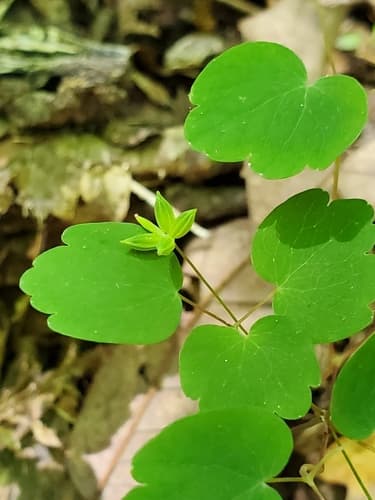
Rue anemone is a low woodland forb that blooms in April and May with delicate white flowers held above finely divided foliage. It suits shaded gardens with well drained soil and light to moderate moisture.
Toxicity unknown
Rue Anemone (Thalictrum thalictroides) is not listed by the ASPCA Animal Poison Control Center (opens in new tab) or the other sources we check, so we have no verdict for it either way. Absence from those lists is not a clearance. If your pet shows symptoms after eating any plant, call the ASPCA at (888) 426-4435.
Light
part shade
Water
medium
Size
6"–12" H × 6"–12" W
Bloom
Apr, May
Native to
AL, AR, CT, DE and 29 more states
Pollinators
bees, beetles
Before you buy
Your city may pay you to plant this
Cities and water utilities offer rebates for replacing lawn with native and water-wise plants. We track 459 programs across 44 states, each with a link to the provider and the date we last checked it.
Find rebates in your areaPicture natives in your own yard
Upload a photo of your yard and Patch Vision shows a rendering of it planted with natives for your region, like Rue Anemone.


Browse plants for this ecoregion
Rue anemone is a delicate spring wildflower with small white or pink flowers that bloom in April and May. This low-growing native perennial forms small clumps and goes dormant by midsummer, making it ideal for woodland gardens and shaded areas.
Growing Rue Anemone
Grow Rue Anemone in part shade and medium water. Mature plants reach 6 to 12 inches tall and spread 6 to 12 inches wide. Expect low maintenance to keep it looking intentional in a front yard.
How to care for Rue Anemone, by region
How to care for Rue Anemone where it is actually grown: year-round basics plus what to do each season, region by region, with the sources for each.
Care guidance last updated: September 2026
Eastern Corn Belt Plains (includes Columbus, OH)
Year-round
Rue anemone is a small, early spring woodland wildflower that is native to Ohio and much of the eastern United States, and it goes fully dormant by early summer so it disappears from the bed until the following spring.
- Native to Ohio's deciduous woodlands, found on wooded slopes and ridges throughout the state, per the Lady Bird Johnson Wildflower Center
- Grows well under 12 inches tall, in part to full shade with humus rich, evenly moist but well drained, slightly acidic soil
- A true spring ephemeral, it flowers in April and May, sets seed by mid-May, then dies back to the ground until the following spring
- Spreads slowly by tuberous roots and self seeding, staying well behaved rather than aggressive
- Best planted under tall deciduous trees and avoid planting near black walnut trees
- Rabbits and other herbivores will browse young growth, so new plantings may need protection
Goes fully dormant and disappears by early summer, so the bed stays tidy on its own without any cutback work, which reads as intentional rather than overgrown.
Fall
Rue anemone stays dormant through fall with nothing happening above ground, which makes fall a good time to plant new divisions or nursery starts.
- Best planted in fall, or very early spring, so roots can establish before next year's brief growing window
- Top dress with shredded leaf litter in fall to mimic the humus rich woodland floor it needs
- No need to cut back or clean up, since there is no visible foliage this time of year
- Columbus's first fall frost typically arrives around mid October, which does not affect this already dormant plant
Winter
The plant is fully dormant underground through winter and needs no care at all.
- Tuberous roots overwinter in the soil with no maintenance required
- A layer of fallen leaves left in place over winter protects the dormant roots and adds organic matter
- Hardy through Columbus's USDA zone 6b winters with no special protection needed
- Nothing to prune or water during dormancy
Spring
Spring is when rue anemone does all of its growing, blooming, and seed setting before going dormant for the year.
- Emerges in early to mid April in the Columbus area, before deciduous trees fully leaf out
- Flowers open white to pale pink from mid April through May
- Water new spring plantings well while they establish, since the plant does most of its yearly growth in these few weeks
- Let seed pods mature and drop before the foliage yellows if you want the patch to slowly spread over time
- No fertilizer needed if planted in humus rich woodland soil
Summer
By early summer the plant has gone dormant and the foliage disappears completely, so there is nothing to water or maintain.
- Foliage yellows and dies back by late May to June as central Ohio warms up
- Mark the spot if the bed is otherwise bare, since there is no visible plant from June through the rest of the growing season
- No supplemental water needed once it is dormant, since the plant is not actively growing
- Avoid digging or disturbing the soil where it is dormant so the tuberous roots are not damaged
Sources: Lady Bird Johnson Wildflower Center: Thalictrum thalictroides, Missouri Botanical Garden Plant Finder: Thalictrum thalictroides, ASPCA Toxic and Non-Toxic Plants List (A-Z database, searched directly for this species with no matching entry), UW-Madison Arboretum: Thalictrum thalictroides (Rue Anemone) fact sheet, National Weather Service Wilmington OH: Fall Frost/Freeze
In an HOA neighborhood
Rue Anemone takes more care to keep looking intentional in a front yard. Maintenance level: low. Consider it for backyard or mid-zone beds rather than the street edge.
Works well in: backyard only.
- Disappears completely by midsummer leaving bare spots
- Very small stature may look sparse or weedy
- Delicate appearance doesn't match typical landscaping expectations
Wildlife value
The early spring flowers provide nectar for native bees and beetles when few other flowers are available. The plant serves as a host for some specialist native insects.
Common questions
- When does rue anemone bloom?
- Rue anemone typically flowers in April and May, producing small white blossoms on thin stems before many surrounding trees fully leaf out.
- What growing conditions does rue anemone need?
- It grows best in part shade with medium, well drained moisture, similar to the dappled light found beneath deciduous trees.
- What pollinators visit rue anemone?
- Bees and beetles are the main visitors, drawn to the flowers during the early spring bloom period.
- Is rue anemone evergreen?
- No, it is deciduous and behaves as a spring ephemeral, with foliage dying back after flowering as the season warms.
- Is Rue Anemone HOA-friendly?
- Rue Anemone takes more care to look intentional in a front yard. Consider it for backyard or mid-zone beds rather than the street edge.
These answers were drafted with an AI model from this plant's data. Verify care details with a local expert.
Native range data from vouchered herbarium specimen records and regional native plant society lists. Pollinator and host plant associations compiled from GBIF, iNaturalist, and published ecological literature.
If something looks wrong
Common plant problems, and what to check first
These come up on almost any plant. Each guide lists the likely causes in the order they are worth ruling out, with one thing to check before you act on any of them, and links to the source it came from.
- It is dying right after planting
- Leaves turning yellow
- Wilting even though I watered it
- Brown crispy leaf tips
- Bugs on the plant
Ready to grow Rue Anemone? Add it to your garden in Pollinator Patch to track it and get season-by-season care guidance.