Lizard's-tail
Saururus cernuus
Last reviewed: August 2026
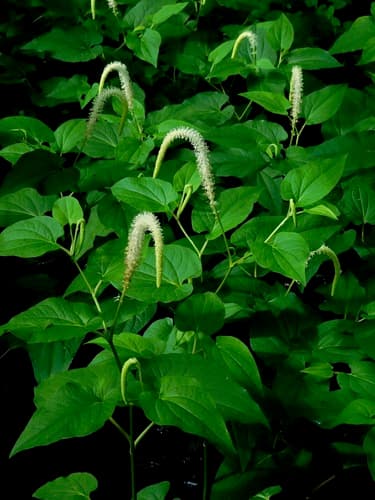
Saururus cernuus, or lizard's-tail, is a wetland forb that blooms June through August with slender curving white flower spikes. It grows well in part shade along stream banks, swamp edges, and pond margins.
Toxicity unknown
Lizard's-tail (Saururus cernuus) is not listed by the ASPCA Animal Poison Control Center (opens in new tab) or the other sources we check, so we have no verdict for it either way. Absence from those lists is not a clearance. If your pet shows symptoms after eating any plant, call the ASPCA at (888) 426-4435.
Light
part shade
Water
high
Size
12"–36" H × 12"–24" W
Bloom
Jun, Jul, Aug
Native to
AL, AR, DE, FL and 24 more states
Pollinators
bees, beetles
Before you buy
Your city may pay you to plant this
Cities and water utilities offer rebates for replacing lawn with native and water-wise plants. We track 452 programs across 44 states, each with a link to the provider and the date we last checked it.
Find rebates in your areaBrowse plants for this ecoregion
Lizard's-tail is a native perennial that thrives in moist, shady conditions with distinctive white, curved flower spikes that bloom through summer. This clumping plant produces heart-shaped leaves and works well in rain gardens or consistently wet areas where many other plants struggle.
Growing Lizard's-tail
Grow Lizard's-tail in part shade and high water. Mature plants reach 12 to 36 inches tall and spread 12 to 24 inches wide. Expect low maintenance to keep it looking intentional in a front yard.
How to care for Lizard's-tail, by region
How to care for Lizard's-tail where it is actually grown: year-round basics plus what to do each season, region by region, with the sources for each.
Care guidance last updated: August 2026
Cross Timbers (includes Fort Worth, TX)
Year-round
Lizard's tail is a spreading, moisture-loving perennial that works well in a wet, shaded corner of a Fort Worth yard even though it is not confirmed native to this exact area.
- This plant needs soil that stays wet to muddy all the time, not just regular garden watering, so it belongs at a pond edge, in a rain garden low spot, or in a bog planter rather than a regular flower bed.
- Its confirmed Texas range centers on the Blackland Prairie and Gulf Coast wetlands to the east and south, not the Fort Worth Prairie itself, according to the Lady Bird Johnson Wildflower Center, so treat it here as a well-adapted wetland plant rather than a local native.
- Part shade to full shade works best. It can take more sun if the roots never dry out, but Fort Worth summer sun on drying soil will scorch the leaves.
- It spreads by underground rhizomes and slowly fills a wet area, so give it a contained spot or plan to thin it every year or two.
- It is winter hardy well beyond what Fort Worth sees in a normal cold snap, so the roots come back reliably each spring.
Fall
Fall is when the foliage starts to die back and a light cleanup keeps the planting looking tidy before frost.
- Growth slows as days shorten, and leaves begin to yellow ahead of Fort Worth's average first freeze around November 22, per the National Weather Service.
- Cutting back dead and yellowing stems in late fall keeps a front-yard water feature or bog bed looking neat through winter.
- Keep the soil from drying out completely even as watering needs drop, since the rhizomes are still active below the surface.
- This is a fine time to divide or relocate a spreading colony before winter dormancy sets in.
Cutting back the dead foliage in late fall keeps a visible water feature or bog bed tidy for the street view through winter.
Winter
Lizard's tail goes fully dormant in winter and the rhizomes handle typical Fort Worth cold without any special protection.
- The above-ground growth dies back completely after frost. This is normal, the plant is resting below the soil or waterline, not dead.
- Its hardiness range covers much colder winters than Fort Worth typically sees, so a normal cold snap will not kill the roots.
- Container plantings above ground are the exception. Move an above-ground pot to a sheltered spot or sink it into the ground so the root ball does not freeze solid during a hard freeze.
- No fertilizing or heavy watering is needed while it is dormant. Just keep the area from drying out completely.
A bare, cut-back bog bed over winter is expected and temporary, not something a neighbor or HOA would flag as neglect.
Spring
Spring is when lizard's tail wakes up and needs steady moisture as new shoots push through the mud.
- New leaf shoots usually appear once the soil warms after Fort Worth's average last freeze around March 12, per the National Weather Service.
- Keep the root zone wet through spring dry spells. Fort Worth's heavy clay holds water well, but a dry week can still stress new growth.
- If the colony is crowded from last year, spring before new growth is a good time to dig and divide clumps.
- White flower spikes typically begin by late spring and continue into summer.
Summer
Summer heat means lizard's tail needs consistent water and a break from full afternoon sun.
- Fort Worth summer afternoons regularly hit the upper 90s to 100s, so give this plant part shade if it is not sitting in standing water, to keep the leaves from scorching.
- Check pond edges, rain gardens, or bog containers often since heat speeds up evaporation and the soil must not dry out.
- White flower spikes keep blooming through summer. Snipping off spent spikes can encourage a second round of blooms.
- This is the season the rhizomes spread fastest, so thin the colony if it is crowding neighboring plants.
Sources: Lady Bird Johnson Wildflower Center - Saururus cernuus, Native Plant Society of Texas - Lizard Tail, Prairie Moon Nursery - Saururus cernuus, National Weather Service Fort Worth - DFW Freeze Dates
Texas Blackland Prairies (includes Dallas, TX)
Year-round
Lizard's tail is a spreading, moisture-loving perennial that fits naturally into wet, shaded corners of a Dallas yard.
- This plant needs soil that stays wet to muddy all the time, not just regular garden watering, so it belongs at a pond edge, in a rain garden low spot, or in a bog planter rather than a regular flower bed.
- It grows naturally in the Blackland Prairie region that runs through the Dallas area, in wet ditches and stream edges, according to the Lady Bird Johnson Wildflower Center.
- Part shade to full shade works best. It can take more sun if the roots never dry out, but Dallas summer sun on drying soil will scorch the leaves.
- It spreads by underground rhizomes and will slowly fill a wet area, so give it its own contained spot or plan to thin it every year or two.
- It is winter hardy well beyond what Dallas sees in a normal cold snap, so the roots come back reliably each spring.
Fall
Fall is when the foliage starts to die back and a light cleanup keeps the planting looking tidy before frost.
- Growth slows as days shorten, and leaves begin to yellow ahead of Dallas's average first freeze around November 22, per the National Weather Service.
- Cutting back dead and yellowing stems in late fall keeps a front-yard water feature or bog bed looking neat through winter.
- Keep the soil from drying out completely even as watering needs drop, since the rhizomes are still active below the surface.
- This is a fine time to divide or relocate a spreading colony before winter dormancy sets in.
Cutting back the dead foliage in late fall keeps a visible water feature or bog bed tidy for the street view through winter.
Winter
Lizard's tail goes fully dormant in winter and the rhizomes handle typical Dallas cold without any special protection.
- The above-ground growth dies back completely after frost. This is normal, the plant is resting below the soil or waterline, not dead.
- Its hardiness range covers much colder winters than Dallas typically sees, so a normal cold snap will not kill the roots.
- Container plantings above ground are the exception. Move an above-ground pot to a sheltered spot or sink it into the ground so the root ball does not freeze solid during a hard freeze.
- No fertilizing or heavy watering is needed while it is dormant. Just keep the area from drying out completely.
A bare, cut-back bog bed over winter is expected and temporary, not something a neighbor or HOA would flag as neglect.
Spring
Spring is when lizard's tail wakes up and needs steady moisture as new shoots push through the mud.
- New leaf shoots usually appear once the soil warms after Dallas's average last freeze around March 12, per the National Weather Service.
- Keep the root zone wet through spring dry spells. Dallas clay holds water well, but a dry week can still stress new growth.
- If the colony is crowded from last year, spring before new growth is a good time to dig and divide clumps.
- White flower spikes typically begin by late spring and continue into summer.
Summer
Summer heat and humidity mean lizard's tail needs consistent water and a break from full afternoon sun.
- Dallas summer afternoons regularly hit the upper 90s to 100s, so give this plant part shade if it is not sitting in standing water, to keep the leaves from scorching.
- Check pond edges, rain gardens, or bog containers often since heat speeds up evaporation and the soil must not dry out.
- White flower spikes keep blooming through summer. Snipping off spent spikes can encourage a second round of blooms.
- This is the season the rhizomes spread fastest, so thin the colony if it is crowding neighboring plants.
Sources: Lady Bird Johnson Wildflower Center - Saururus cernuus, Native Plant Society of Texas - Lizard Tail, National Weather Service Fort Worth - DFW Freeze Dates, Prairie Moon Nursery - Saururus cernuus
Want these tasks as reminders timed to your yard? Pollinator Patch turns this guidance into a season-by-season care plan for the plants you actually grow.
In an HOA neighborhood
Lizard's-tail takes more care to keep looking intentional in a front yard. Maintenance level: low. Consider it for backyard or mid-zone beds rather than the street edge.
Works well in: backyard only.
- Requires consistently wet soil that's unusual in typical landscaping
- Informal wetland appearance may look out of place in manicured settings
- Can spread aggressively in ideal conditions
Wildlife value
The summer flowers attract native bees and beetles with their accessible nectar and pollen. The plant also provides habitat for moisture-loving insects in its preferred wetland settings.
Common questions
- When does lizard's-tail bloom?
- Saururus cernuus blooms from June through August, producing narrow white flower spikes with a distinctive drooping tip.
- What light and water conditions does lizard's-tail need?
- This plant does best in part shade with consistently wet to saturated soil, making it suited to boggy or slow-draining sites.
- What insects pollinate lizard's-tail?
- Bees and beetles are the main visitors to the small white flowers of Saururus cernuus.
- Where does lizard's-tail work well in a garden?
- Because it tolerates standing water and shaded to partly sunny sites, it fits rain gardens, pond margins, and low wet spots where many other perennials struggle.
- Is Lizard's-tail HOA-friendly?
- Lizard's-tail takes more care to look intentional in a front yard. Consider it for backyard or mid-zone beds rather than the street edge.
These answers were drafted with an AI model from this plant's data. Verify care details with a local expert.
Native range data from vouchered herbarium specimen records and regional native plant society lists. Pollinator and host plant associations compiled from GBIF, iNaturalist, and published ecological literature.
If something looks wrong
Common plant problems, and what to check first
These come up on almost any plant. Each guide lists the likely causes in the order they are worth ruling out, with one thing to check before you act on any of them, and links to the source it came from.
- It is dying right after planting
- Leaves turning yellow
- Wilting even though I watered it
- Brown crispy leaf tips
- Bugs on the plant
Ready to grow Lizard's-tail? Add it to your garden in Pollinator Patch to track it and get season-by-season care guidance.
Planning a bed around it? Start a free plan with this plant
Not sure where to start? Take the 2-minute yard quiz