Robin's Plantain
Erigeron pulchellus
Last reviewed: September 2026
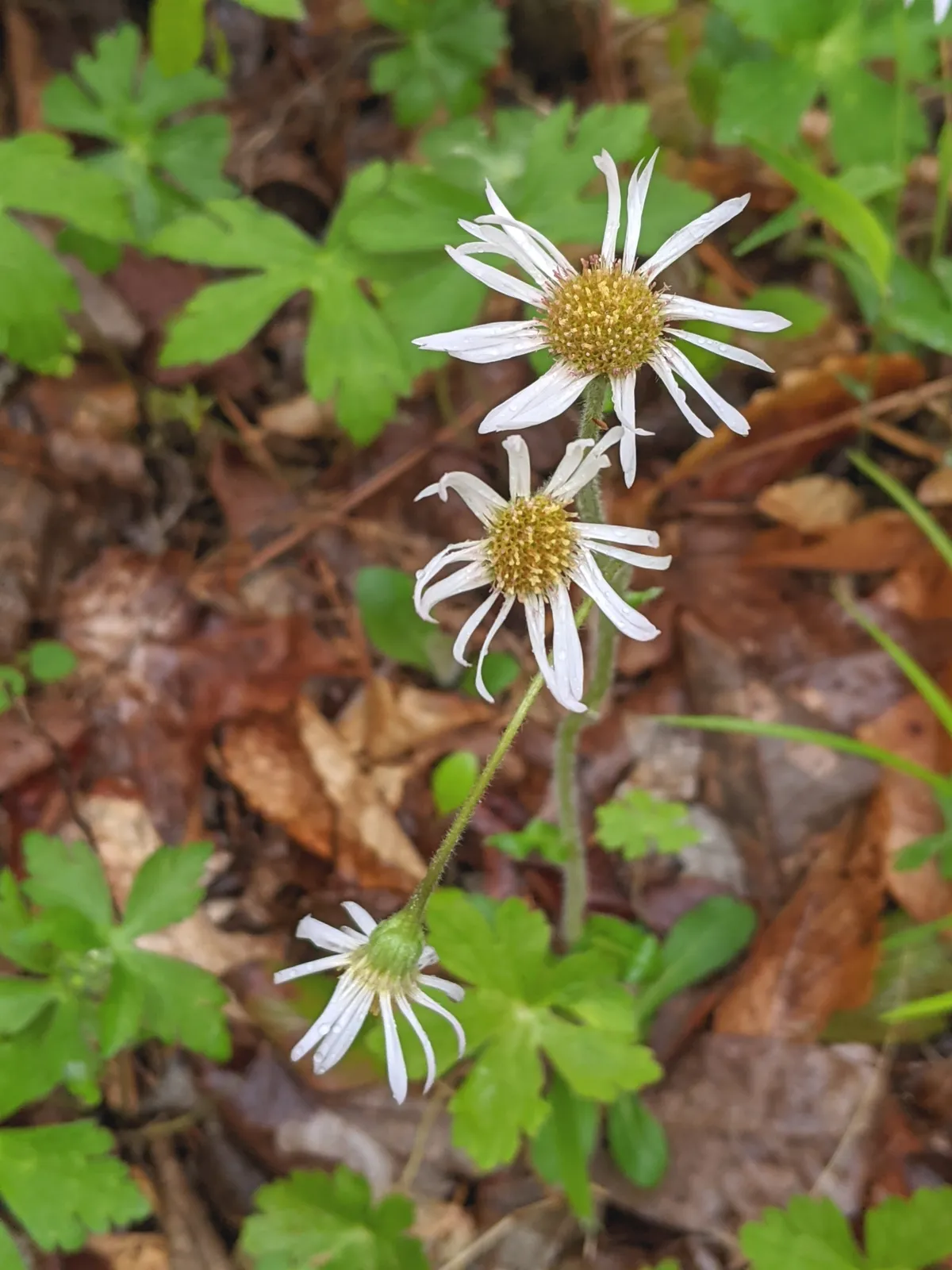
Erigeron pulchellus, or Robin's plantain, is a low-growing forb that blooms from April through June with pale lavender to white daisy-like flowers. It does well in part sun with medium moisture in woodland edges and open meadows.
Toxicity unknown
Robin's Plantain (Erigeron pulchellus) is not listed by the ASPCA Animal Poison Control Center (opens in new tab) or the other sources we check, so we have no verdict for it either way. Absence from those lists is not a clearance. If your pet shows symptoms after eating any plant, call the ASPCA at (888) 426-4435.
Light
part sun
Water
medium
Size
8"–18" H × 6"–12" W
Bloom
Apr, May, Jun
Native to
AL, AR, CT, DE and 30 more states
Pollinators
bees, butterflies
Before you buy
Your city may pay you to plant this
Cities and water utilities offer rebates for replacing lawn with native and water-wise plants. We track 459 programs across 44 states, each with a link to the provider and the date we last checked it.
Find rebates in your areaPicture natives in your own yard
Upload a photo of your yard and Patch Vision shows a rendering of it planted with natives for your region, like Robin's Plantain.


Browse plants for this ecoregion
Robin's plantain is a charming native wildflower that produces clusters of small, daisy-like blooms with white to pale purple petals and yellow centers from April through June. This low-growing perennial spreads slowly to form neat patches, making it useful as a groundcover or border plant in partially shaded areas.
Growing Robin's Plantain
Grow Robin's Plantain in part sun and medium water. Mature plants reach 8 to 18 inches tall and spread 6 to 12 inches wide. Expect low maintenance to keep it looking intentional in a front yard.
How to care for Robin's Plantain, by region
How to care for Robin's Plantain where it is actually grown: year-round basics plus what to do each season, region by region, with the sources for each.
Care guidance last updated: October 2026
Eastern Great Lakes Lowlands (includes Rochester, NY)
Year-round
Year-round care for Robin's plantain around Rochester, NY: part shade to sun and well-drained soil.
- It grows in part shade, and NC State Extension also lists full sun.
- It adapts to clay, loam, sand, and shallow rocky soils, and does best well drained. Moist soil is acceptable.
- It is drought tolerant and does well in dry conditions, per NC State Extension.
- It reaches 1 to 2 feet tall and 1.5 to 2 feet wide, and flowers from April to June.
- It spreads by surface runners with new rosettes forming along them, so it forms colonies.
- NC State Extension lists it as hardy in USDA zones 3 to 8, low maintenance, with no serious pest or disease problems.
A low spreading groundcover with a defined edge reads as a tidy, intentional planting.
Sources: Lady Bird Johnson Wildflower Center: Erigeron pulchellus, NC State Extension Gardener Plant Toolbox: Erigeron pulchellus
Interior River Valleys and Hills (includes Peoria, IL)
Year-round
Robin's plantain is a low, spreading woodland edge perennial native to Illinois, including the central part of the state, with pale lavender to white daisy like flowers in spring.
- Give it part shade and moist, rich soil, it comes from woodland edges and stream banks
- It spreads by stolons to form a dense low groundcover over a couple of seasons
- Once established it needs little supplemental care beyond occasional water in dry stretches
- Good fit under trees or along a shaded border where turf struggles
- Not aggressive enough to be a weed problem in most home beds
Its neat, low rosette habit reads as a tidy groundcover rather than a wild patch, which helps in a visible shaded bed.
Fall
Fall is a dormancy transition, the low rosette of leaves usually stays semi evergreen through mild stretches before winter sets in.
- Leave the basal rosette in place, it often persists through fall and even mild winter weather
- Water is rarely needed once nights turn consistently cool
- No fall fertilizing or pruning is necessary for this species
- First frost in the Peoria area averages mid October, the rosette will slow growth after that
- Good time to divide and spread clumps to new spots if you want to expand the groundcover
Winter
Robin's plantain is winter hardy through central Illinois and its low rosette often holds some green through mild winter stretches.
- No winter protection is needed, this species is native to the region's climate
- Leave leaf litter over the bed, it mimics the woodland floor conditions this plant comes from
- No watering needed during dormancy
- Avoid walking on the low rosettes, they can be visible and somewhat green even under light snow
- Plan any bed expansion or edging for early spring before new growth resumes
Spring
Spring is this plant's main show in central Illinois, with bloom running from April into June right as woodland soil stays consistently moist.
- Flowers open from April through June, cut back winter leaf litter once the last frost has passed in mid April
- Keep soil moist but not soggy during bloom, this is when the plant needs the most water
- No fertilizer needed, rich woodland soil is usually enough on its own
- Watch for the low rosettes sending up flower stalks about 12 to 18 inches tall
- Good companion timing with spring ephemerals in a shaded native bed
Summer
Bloom fades by early summer and the plant shifts into a quiet groundcover phase, tolerating Illinois summer heat and humidity reasonably well in shade.
- After flowering ends, trim spent stalks to keep the bed tidy, this is optional and mainly cosmetic
- Water during extended dry spells, especially in an exposed bed that gets afternoon sun
- The plant is heat and humidity tolerant but prefers part shade over full summer sun in this climate
- It will continue spreading gently by stolons through the growing season
- No pest or disease issues are typically noted for this species locally
Sources: Lady Bird Johnson Wildflower Center, Erigeron pulchellus, NWS Climate and Past Weather, Peoria freeze and frost records
Southeastern Wisconsin Till Plains (includes Milwaukee, WI)
Year-round
Robin's plantain (Erigeron pulchellus) is a low, native Wisconsin wildflower that blooms in mid to late spring at woodland edges and in part shade garden beds. It spreads slowly by basal rosettes and short runners into a tidy, long season groundcover.
- This plant is native to Wisconsin, so it fits naturally into woodland edge and part shade beds here.
- Give it part shade to full sun and average to dry, well drained soil.
- Water only during dry spells once it is established. It does not do well in soggy soil.
- Leave the basal leaf rosette in place year round. It stays green through much of the winter.
- Skip fertilizer. Lean, well drained soil is what this plant is adapted to.
The low, evergreen rosette habit keeps this planting looking tidy and mowed edge neat from the street, which fits an HOA-conscious front yard.
Fall
Fall is the natural cleanup season for Robin's plantain. The plant is heading toward dormancy while its low basal rosette stays green into winter.
- Cut back any remaining dried flower stalks to the ground once they turn brown.
- Leave the green basal rosette itself in place. It is what carries the plant through winter.
- Rake fallen tree leaves off the rosette so it is not smothered, especially in shadier woodland edge spots.
- Wait until the ground starts to freeze, close to Thanksgiving in the Milwaukee area, before adding winter mulch.
- This is a good time to divide a crowded colony and move extra rosettes to a new spot.
A fall cutback of dried stalks and a light leaf rake keeps the bed looking clean and intentional for the street through winter.
Winter
Robin's plantain overwinters as a low, mostly evergreen rosette. Through Milwaukee's freeze and thaw cycles, a simple mulch layer protects the shallow crown from being pushed up out of the ground.
- Apply 6 to 8 inches of loose straw or shredded leaf mulch over the crown in late fall, once the ground starts to freeze.
- Loose mulch guards against frost heave, when repeated freezing and thawing pushes roots and crowns up out of the soil.
- Do not pile mulch so thick or wet that it smothers the still green leaves.
- Leave the rosette itself covered by nothing heavier than light mulch and snow. It can still photosynthesize on mild winter days.
- Pull the mulch back in mid to late spring once new growth resumes.
A neat, even layer of mulch over a low rosette reads as tended, not messy, even in the off season.
Spring
Spring is the main event for Robin's plantain, with flower stalks opening pale lavender to white daisy like blooms from about April into June in the Milwaukee area.
- Expect bloom from roughly April through June.
- Deadheading is not required for plant health, but trimming spent flower stalks keeps the bed looking tidy and can encourage a light rebloom.
- This is when the plant is most attractive to small native bees and other early season pollinators.
- Divide or transplant rosettes in spring if you want to spread the colony to a new spot.
- Pull back any winter mulch once new growth is visible so the crown does not stay wet and smothered.
Trimming spent flower stalks once bloom fades keeps the front bed looking neat for street view.
Summer
By summer the spring flush of flowers is done and the plant settles into its low, evergreen rosette, which handles Wisconsin's warm, sometimes dry stretches without much fuss.
- Water only during extended dry spells. Overwatering in heavy or wet soil can cause crown rot.
- Trim back any dried flower stalks left over from spring for a cleaner look.
- Give plants some room for airflow. Crowded, humid plantings can invite powdery mildew in some years.
- No fertilizer needed. This plant thrives in lean soil through the growing season.
- The rosette can spread by short runners over summer. Pull or transplant unwanted spreaders to keep the bed in bounds.
Trimming old flower stalks and keeping the spread in check helps the bed read as intentional rather than overgrown.
Sources: Erigeron pulchellus (Robin's plantain) - Native Plant Database, Erigeron pulchellus, Robin's Plantain - Prairie Moon Nursery, Winter mulch your landscape plants - UW-Madison Division of Extension, Kenosha County
In an HOA neighborhood
Robin's Plantain is an HOA-friendly choice. Maintenance level: low. Tidiness: 3 out of 5.
Works well in: foundation, mid zone.
- May appear too informal or weedy for conservative HOAs
- Could be mistaken for a weed by those unfamiliar with native plants
Wildlife value
The flowers attract various native bees, butterflies, and other beneficial insects during the spring and early summer blooming period. The seeds also provide food for small birds and wildlife.
Common questions
- When does Robin's plantain bloom?
- Robin's plantain typically flowers from April through June, producing daisy-like blooms in shades of lavender, pink, or white on low rosettes of foliage.
- What light and water conditions suit this plant best?
- It grows best in part sun with medium, well-drained moisture, though it can tolerate brighter full sun spots or drier soil once established.
- Does Robin's plantain attract pollinators?
- Its spring blooms draw bees and butterflies, making it a useful early-season nectar source in woodland gardens and meadow plantings.
- Is this a good plant for a woodland garden edge?
- Yes, its low, spreading rosettes and tolerance of part shade to part sun make it well suited to woodland borders, rock gardens, and naturalized meadow plantings.
- Is Robin's Plantain HOA-friendly?
- Robin's Plantain is generally an HOA-friendly choice in the right placement, with low maintenance.
These answers were drafted with an AI model from this plant's data. Verify care details with a local expert.
Native range data from vouchered herbarium specimen records and regional native plant society lists. Pollinator and host plant associations compiled from GBIF, iNaturalist, and published ecological literature.
If something looks wrong
Common plant problems, and what to check first
These come up on almost any plant. Each guide lists the likely causes in the order they are worth ruling out, with one thing to check before you act on any of them, and links to the source it came from.
- It is dying right after planting
- Leaves turning yellow
- Wilting even though I watered it
- Brown crispy leaf tips
- Bugs on the plant
Ready to grow Robin's Plantain? Add it to your garden in Pollinator Patch to track it and get season-by-season care guidance.