Woods's rose
Rosa woodsii
Last reviewed: September 2026
Rosa woodsii is a thorny deciduous shrub with pink flowers blooming May through July. It favors full sun and low water once established, often found on dry slopes, streambanks, and open rangeland.
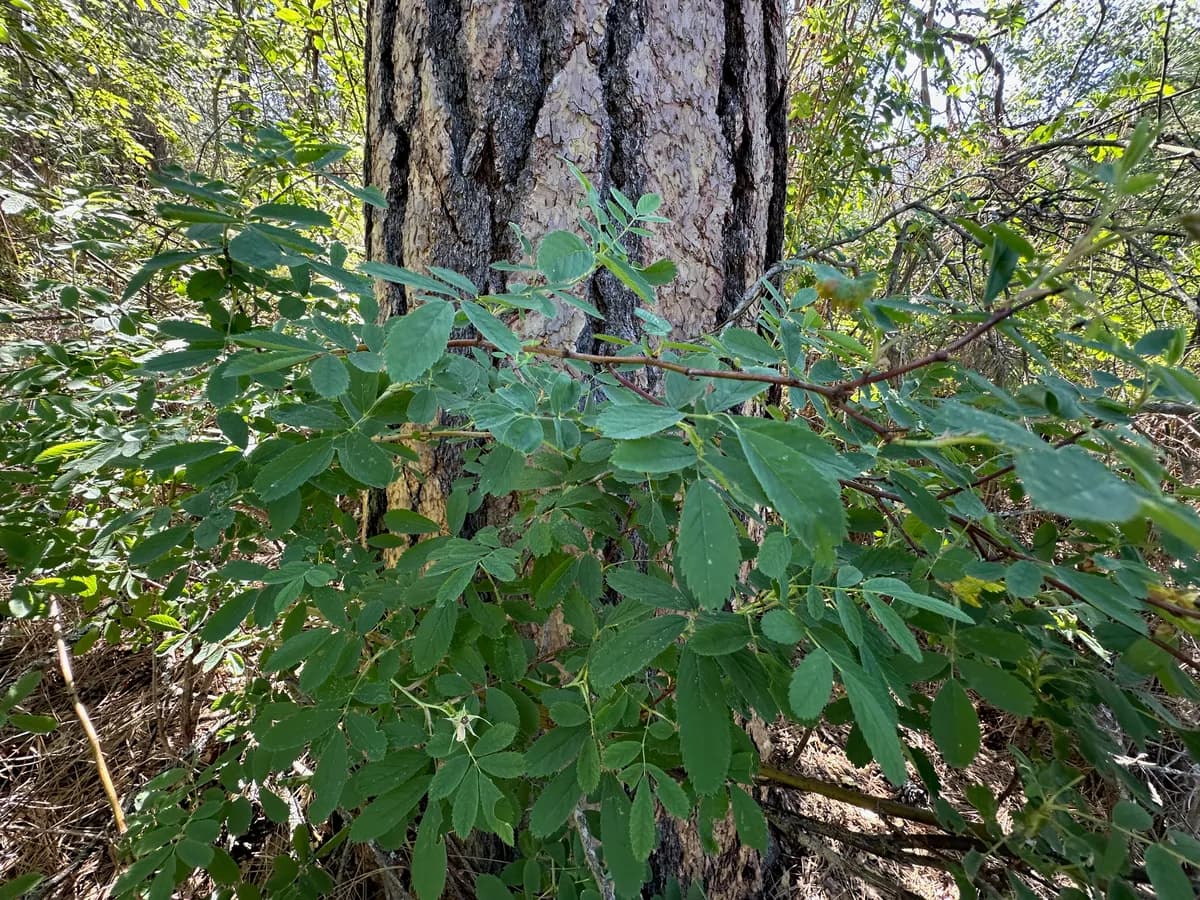
Woods's rose (Rosa woodsii) is not on the ASPCA Animal Poison Control Center toxic plant list for dogs or cats (aspca.org (opens in new tab), last reviewed 2026-08-15). If your pet shows symptoms after eating any plant, call the ASPCA at (888) 426-4435.
Light
full sun
Water
low
Size
36"–84" H × 36"–72" W
Bloom
May, Jun, Jul
Native to
AZ, CA, CO, IA and 16 more states
Pollinators
bumble bees, mining bees, syrphid flies
Before you buy
Your city may pay you to plant this
Cities and water utilities offer rebates for replacing lawn with native and water-wise plants. We track 452 programs across 44 states, each with a link to the provider and the date we last checked it.
Find rebates in your areaBrowse plants for this ecoregion
A thicket-forming wild rose with single pink five-petaled flowers, prickly arching canes, and round red hips that persist through winter. It suckers readily and is often used for erosion control and hedgerows.
Growing Woods's rose
Grow Woods's rose in full sun and low water. Mature plants reach 36 to 84 inches tall and spread 36 to 72 inches wide.
Wildlife value
Pollen-rich open flowers are worked by many bee species, and the winter hips are important bird forage.
Common questions
- When does Woods' rose bloom?
- Rosa woodsii typically flowers from May through July, with pink blooms appearing on new growth before the rose hips form later in the season.
- What pollinators visit Woods' rose flowers?
- Bumble bees, mining bees, and syrphid flies are regular visitors to Rosa woodsii flowers, drawn to the open blooms for pollen.
- How much water does Rosa woodsii need?
- Once established, Woods' rose tolerates low water and dry conditions well, though it can also handle occasional moisture along streambanks and drainages.
- What growing conditions suit Woods' rose best?
- It grows best in full sun to partial shade with well-drained soil, and is commonly seen on dry slopes, rangeland, and near seasonal water sources.
- Is Rosa woodsii a good shrub for a low-water garden?
- Yes, its low water requirement and tolerance for full sun make it a practical choice for xeriscape or drought-tolerant plantings.
- Is Woods's rose toxic to dogs?
- Woods's rose is not on the ASPCA Animal Poison Control Center toxic plant list for dogs (aspca.org).
- Is Woods's rose toxic to cats?
- Woods's rose is not on the ASPCA Animal Poison Control Center toxic plant list for cats (aspca.org).
These answers were drafted with an AI model from this plant's data. Verify care details with a local expert.
Native range data from vouchered herbarium specimen records and regional native plant society lists. Pollinator and host plant associations compiled from GBIF, iNaturalist, and published ecological literature.
If something looks wrong
Common plant problems, and what to check first
These come up on almost any plant. Each guide lists the likely causes in the order they are worth ruling out, with one thing to check before you act on any of them, and links to the source it came from.
- It is dying right after planting
- Leaves turning yellow
- Wilting even though I watered it
- Brown crispy leaf tips
- Bugs on the plant
Ready to grow Woods's rose? Add it to your garden in Pollinator Patch to track it and get season-by-season care guidance.
Planning a bed around it? Start a free plan with this plant
Not sure where to start? Take the 2-minute yard quiz