Sawtooth Sunflower
Helianthus grosseserratus
Last reviewed: October 2026
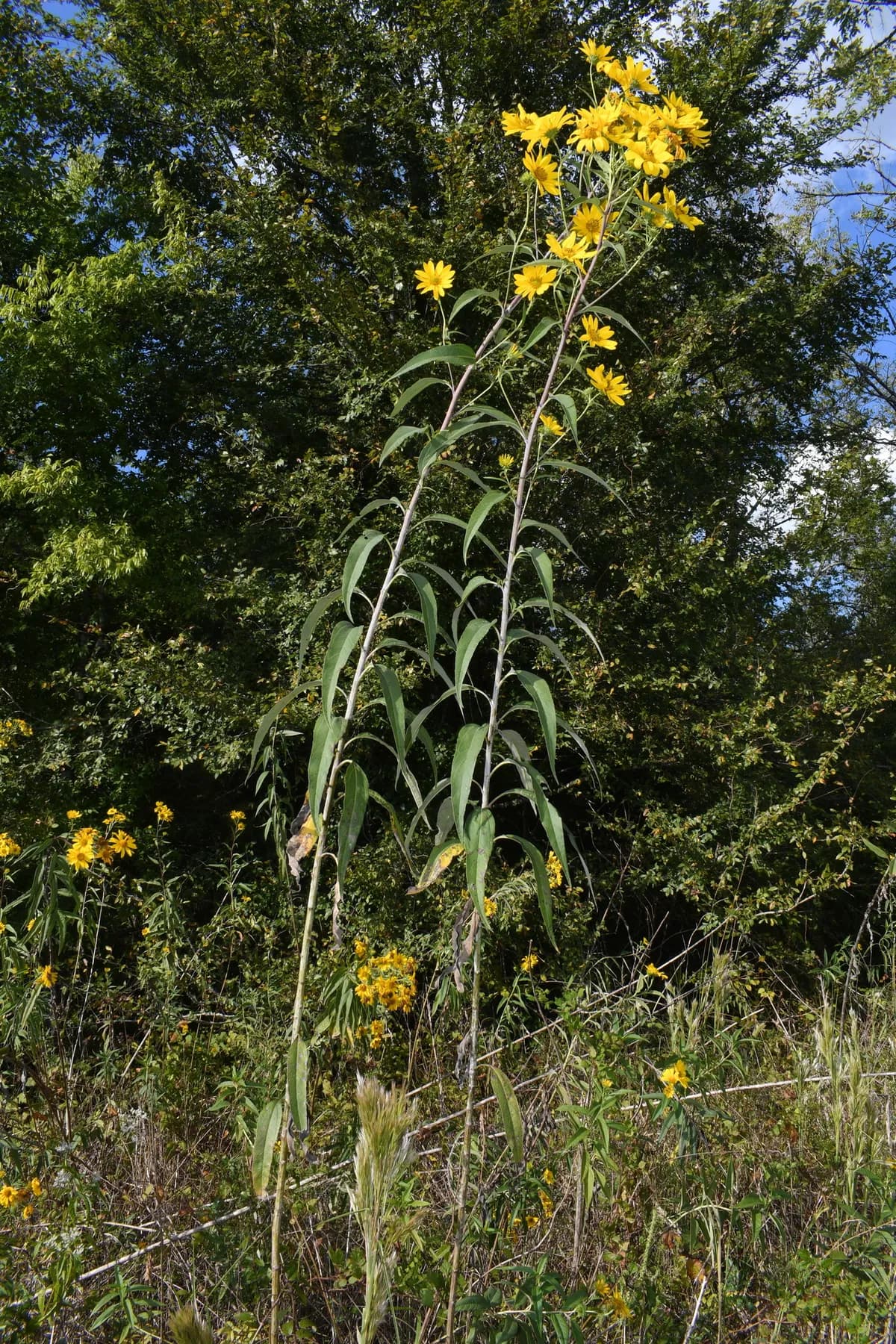
Helianthus grosseserratus, the sawtooth sunflower, is a tall prairie forb with bright yellow blooms from June through November. It grows best in full sun with medium moisture in meadows, ditches and open fields.
Toxicity unknown
Sawtooth Sunflower (Helianthus grosseserratus) is not listed by the ASPCA Animal Poison Control Center (opens in new tab) or the other sources we check, so we have no verdict for it either way. Absence from those lists is not a clearance. If your pet shows symptoms after eating any plant, call the ASPCA at (888) 426-4435.
The USDA PLANTS Database (opens in new tab) does not flag Sawtooth Sunflower as toxic to livestock.
Light
full sun
Water
medium
Size
36"–180" H × 6"–18" W
Bloom
Jun, Jul, Aug, Sep, Oct, Nov
Native to
AR, GA, IA, IL and 23 more states
Pollinators
butterflies, bees, moths
Before you buy
Your city may pay you to plant this
Cities and water utilities offer rebates for replacing lawn with native and water-wise plants. We track 459 programs across 44 states, each with a link to the provider and the date we last checked it.
Find rebates in your areaPicture natives in your own yard
Upload a photo of your yard and Patch Vision shows a rendering of it planted with natives for your region, like Sawtooth Sunflower.


Browse plants for this ecoregion
Sawtooth Sunflower is a tall native perennial that produces bright yellow flowers from summer through late fall. It forms narrow clumps and can reach 3 to 15 feet in height, making it an excellent backdrop plant for larger garden spaces.
Growing Sawtooth Sunflower
Grow Sawtooth Sunflower in full sun and medium water. Mature plants reach 36 to 180 inches tall and spread 6 to 18 inches wide. Expect low maintenance to keep it looking intentional in a front yard.
How to care for Sawtooth Sunflower, by region
How to care for Sawtooth Sunflower where it is actually grown: year-round basics plus what to do each season, region by region, with the sources for each.
Care guidance last updated: July 2026
Erie Drift Plain (includes Cleveland, OH)
Year-round
Sawtooth sunflower is a tall, sturdy perennial that comes back bigger every year around Cleveland. Give it full sun and steady moisture, and plan for its height so it stays upright and tidy near the curb.
- Establishment: water a new plant deeply once or twice a week through its first summer so the roots settle in before Cleveland's cold winter.
- Watering once established: it likes moist soil, so give it a deep soak during dry weeks, but it does not need daily watering.
- Height control: this plant can reach 6 to 10 feet, so cut the stems back by a third to a half in late June or early July to keep it shorter and less likely to flop.
- Common mistake: rich, loose soil makes it shoot up too fast and keel over, so hold off on heavy feeding and cut it back at midsummer instead of staking a giant.
Fall
Fall is bloom time and seed time. You can deadhead spent flowers to keep the front bed looking neat and to slow how much it self-seeds around the yard.
- Snip off spent flower heads through September and October if you want a tidier look and fewer volunteer seedlings next year.
- Leave some seed heads standing if you want to feed goldfinches and other birds into late fall.
- Watch for new seedlings popping up nearby, and pull the ones you do not want while they are small and easy to remove.
A quick fall deadheading and a pass over stray seedlings reads as intentional upkeep and helps a front-yard planting avoid looking overgrown, which is what draws a violation letter.
Winter
This plant is fully hardy through a Cleveland winter and needs almost nothing. The only real choice is whether to cut the dead stalks down now or leave them for winter interest and birds.
- For a clean, intentional winter look near the street, cut the dead stalks down to a few inches after they brown out in late fall.
- To help wildlife, you can leave the stalks and seed heads standing over winter and cut them in early spring instead.
- No winter watering or mulching is needed, since the roots are cold-hardy well below Cleveland's typical winter lows.
Cutting the browned stalks down for winter gives the bed a deliberate, cared-for silhouette, which keeps a front yard reading as intentional rather than neglected during the bare months.
Spring
Spring is for cleanup and a fresh start. Cut last year's dead stalks to the ground once hard frost is past, and give the new shoots room and moisture as they push up.
- Cut any old stalks you left standing down to a few inches once the danger of a hard freeze passes, usually mid to late April in the Cleveland area.
- Pull competing weeds around the crown early so the new shoots get full sun from the start.
- If the clump has gotten wide and crowded, early spring is the time to dig and divide it before growth takes off.
Summer
Summer is when this plant races upward, so this is the season to keep it from getting too tall and floppy. A midsummer trim now saves you from staking a 10-foot stalk later.
- In late June or early July, cut the whole plant back by a third to a half so it branches lower and stays sturdier through Cleveland's summer storms.
- During dry stretches in July and August, give it a deep soak, since it prefers moist soil and will wilt in a long drought.
- If a tall stem still leans, tie it loosely to a stake rather than pulling it tight, which can snap the stem.
Sources: Prairie Moon Nursery Saw-tooth Sunflower page, Illinois Wildflowers Sawtooth Sunflower profile (community tip), Minnesota Wildflowers Sawtooth Sunflower profile (community tip), GrowItBuildIt Sawtooth Sunflower guide (community tip), Gardenia Helianthus grosseserratus care page (community tip)
In an HOA neighborhood
Sawtooth Sunflower takes more care to keep looking intentional in a front yard. Maintenance level: low. Consider it for backyard or mid-zone beds rather than the street edge.
Works well in: backyard only.
- Height exceeds typical HOA-friendly range
Wildlife value
This sunflower is a pollinator magnet, attracting butterflies, bees, and moths throughout its extended blooming season. The seeds also provide food for birds in late fall and winter.
Common questions
- When does sawtooth sunflower bloom?
- Sawtooth sunflower typically blooms from June into November, with peak flowering in late summer and early fall.
- What pollinators visit sawtooth sunflower?
- Bees, butterflies and moths regularly visit the flower heads of sawtooth sunflower for nectar and pollen.
- What light and water conditions does it need?
- It grows best in full sun to part sun and does well in medium moisture soils, though it can tolerate wetter or drier sites once established.
- What kind of habitat suits sawtooth sunflower?
- It is commonly found in tallgrass prairies, moist meadows, roadside ditches and old fields across a broad range of climates from humid eastern states to drier plains regions.
- How large does sawtooth sunflower get?
- Plants often reach several feet tall, with sturdy stems and toothed leaves that give the species its common name.
- Is Sawtooth Sunflower toxic to livestock?
- The USDA PLANTS Database does not flag Sawtooth Sunflower as toxic to livestock.
- Is Sawtooth Sunflower HOA-friendly?
- Sawtooth Sunflower takes more care to look intentional in a front yard. Consider it for backyard or mid-zone beds rather than the street edge.
These answers were drafted with an AI model from this plant's data. Verify care details with a local expert.
Native range data from vouchered herbarium specimen records and regional native plant society lists. Pollinator and host plant associations compiled from GBIF, iNaturalist, and published ecological literature.
If something looks wrong
Common plant problems, and what to check first
These come up on almost any plant. Each guide lists the likely causes in the order they are worth ruling out, with one thing to check before you act on any of them, and links to the source it came from.
- It is dying right after planting
- Leaves turning yellow
- Wilting even though I watered it
- Brown crispy leaf tips
- Bugs on the plant
Ready to grow Sawtooth Sunflower? Add it to your garden in Pollinator Patch to track it and get season-by-season care guidance.