Whorled Marsh Pennywort
Hydrocotyle verticillata
Last reviewed: August 2026
Toxicity unknown
Whorled Marsh Pennywort (Hydrocotyle verticillata) is not listed by the ASPCA Animal Poison Control Center (opens in new tab) or the other sources we check, so we have no verdict for it either way. Absence from those lists is not a clearance. If your pet shows symptoms after eating any plant, call the ASPCA at (888) 426-4435.
Light
part shade
Water
high
Size
2"–12" H × 6"–18" W
Bloom
Jun, Jul, Aug
Native to
AL, AR, AZ, CA and 23 more states
Pollinators
bees, beetles, flies
Before you buy
Your city may pay you to plant this
Cities and water utilities offer rebates for replacing lawn with native and water-wise plants. We track 459 programs across 44 states, each with a link to the provider and the date we last checked it.
Find rebates in your areaPicture natives in your own yard
Upload a photo of your yard and Patch Vision shows a rendering of it planted with natives for your region, like Whorled Marsh Pennywort.


Browse plants for this ecoregion
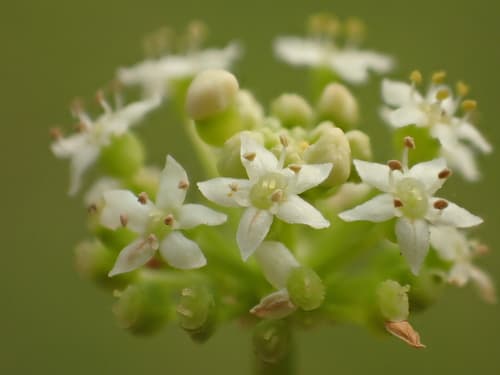
Whorled marsh pennywort is a low-growing native groundcover with distinctive circular leaves arranged in whorls around the stem. This moisture-loving perennial thrives in wet areas and produces small white flowers during summer months. It spreads to form dense mats in consistently moist to wet soil conditions.
How to care for Whorled Marsh Pennywort, by region
How to care for Whorled Marsh Pennywort where it is actually grown: year-round basics plus what to do each season, region by region, with the sources for each.
Care guidance last updated: September 2026
Mississippi Valley Loess Plains (includes Memphis, TN)
Year-round
Whorled marshpennywort is a wetland plant that is native to Tennessee. In the Memphis area it belongs in a pond edge, bog garden, or water-filled container, not regular garden soil, and it wants to stay wet or sit in an inch or two of water all year.
- It is native to Tennessee, so it fits naturally into wetland edges, rain gardens, and pond margins in the Memphis area.
- Keep the soil wet or standing in up to about four inches of water. Letting it dry out is the main way to lose this plant.
- It grows in sun to part shade, so either a sunny pond edge or a partly shaded bog garden spot will work.
- It is a fast spreader that grows by runners along the water surface, so give it a container or a defined edge if you want to keep it contained.
- Trim stems back with scissors any time it gets leggy. Cutting encourages thicker, bushier growth instead of long runners.
Fall
As nights cool into October and November, whorled marshpennywort slows down and heads into dormancy. This is the time to stop feeding it and tidy it up before Memphis's first frost, usually around November 3.
- Memphis's average first fall frost lands around November 3, so plan your last major trim and any plant moves before then.
- Stop fertilizing by early fall. That tells the plant to put energy into its roots instead of new top growth heading into winter.
- Cut away yellow, brown, or dying foliage so it does not fall into the water and decay over winter.
- A clean fall cutback along a visible pond edge reads as intentional upkeep instead of an overgrown corner, which helps if you are in a neighborhood with an HOA.
A tidy fall cutback around a pond edge or bog garden reads as intentional, cared-for landscaping and helps avoid a violation letter about an overgrown yard.
Winter
Memphis winters bring occasional hard freezes, so whorled marshpennywort needs help surviving if it is not rooted in deep water. Move it to deeper water or a frost-free spot until spring.
- If it is growing in a pond, move pots into water at least 20 inches deep. That extra depth insulates the roots even if the surface ices over.
- If it is in a shallow container or small water feature, bring it into an unheated garage or basement that stays above freezing.
- Do not expect new growth or feed it during winter. It is normal for it to sit dormant until temperatures rise again in spring.
- Memphis's coldest stretch usually lands in January, so watch for hard freeze warnings and move plants ahead of a deep freeze, not after.
Keeping the dormant plant contained over winter, in a garage or deep water instead of a bare pot sitting on the pond edge, reads as intentional and helps avoid a violation letter about winter yard clutter.
Spring
Spring is when whorled marshpennywort wakes back up in Memphis. Once the average last frost passes in late March, it is the best time to divide crowded clumps and get new plants settled.
- Memphis's average last spring frost is around March 30, so hold off moving containers back outside or restarting an outdoor pond setup until after that.
- Divide crowded clumps and replant the extra pieces. Since it spreads by runners, division is an easy way to make more plants for other wet spots in the yard.
- Start light feeding again once new growth shows up, after holding off over winter.
- Check that water depth is still around one to four inches. Spring rain in the Memphis area can also raise pond levels, so make sure runners are not washed loose.
Summer
Summer is peak growing season for whorled marshpennywort in Memphis's heat and humidity. Keep the water level steady and expect fast growth that needs regular trimming.
- Keep it in standing water or consistently wet soil through Memphis's hot, dry stretches. As a wetland plant, it will decline quickly if it dries out.
- It blooms with small white flowers from spring into early fall, though the flowers are easy to miss under the round leaves.
- Trim back runners every few weeks in summer so it does not crowd out other pond plants or cover the whole water surface.
- If algae or duckweed start competing for space in a full sun spot, a little afternoon shade can help it hold its own.
Sources: Lady Bird Johnson Wildflower Center Native Plant Database: Hydrocotyle verticillata, Dragonfly Aquatics: Pennywort (Hydrocotyle verticillata) Care Guide, Almanac.com: Frost Dates for Memphis, TN (community tip), Virginia Cooperative Extension: Winterizing the Water Garden
In an HOA neighborhood
Whorled Marsh Pennywort takes more care to keep looking intentional in a front yard. Maintenance level: moderate. Consider it for backyard or mid-zone beds rather than the street edge.
Works well in: backyard only.
- Requires consistently wet soil that may create drainage concerns
- Low height and spreading habit can appear uncontrolled
- Specialized marsh plant may look out of place in typical landscaping
Wildlife value
The small summer flowers attract various pollinators including bees, beetles, and flies. Dense growth provides habitat for small invertebrates in wet garden areas.
Common questions
- How much sun does Whorled Marsh Pennywort need?
- Whorled Marsh Pennywort grows best in part shade conditions.
- When does Whorled Marsh Pennywort bloom?
- Whorled Marsh Pennywort blooms in June, July, and August.
- Where is Whorled Marsh Pennywort native?
- Whorled Marsh Pennywort (Hydrocotyle verticillata) is native to AL, AR, AZ, CA and 23 more states, per the World Checklist of Vascular Plants (Kew).
- What pollinators does Whorled Marsh Pennywort attract?
- Whorled Marsh Pennywort draws bees, beetles, and flies.
- Is Whorled Marsh Pennywort HOA-friendly?
- Whorled Marsh Pennywort takes more care to look intentional in a front yard. Consider it for backyard or mid-zone beds rather than the street edge.
Native range data from the World Checklist of Vascular Plants (Kew). Pollinator and host plant associations compiled from GBIF, iNaturalist, and published ecological literature.
If something looks wrong
Common plant problems, and what to check first
These come up on almost any plant. Each guide lists the likely causes in the order they are worth ruling out, with one thing to check before you act on any of them, and links to the source it came from.
- It is dying right after planting
- Leaves turning yellow
- Wilting even though I watered it
- Brown crispy leaf tips
- Bugs on the plant
Ready to grow Whorled Marsh Pennywort? Add it to your garden in Pollinator Patch to track it and get season-by-season care guidance.