Broomsedge Bluestem
Andropogon virginicus
Last reviewed: August 2026
Andropogon virginicus (Broomsedge Bluestem) is a native warm-season grass that blooms bronze to copper from August through October. This drought-tolerant species thrives in full sun across eastern North America.
The USDA PLANTS Database (opens in new tab) does not flag Broomsedge Bluestem as toxic to livestock.
Light
full sun
Water
low
Size
24"–60" H × 12"–24" W
Bloom
Aug, Sep, Oct
Native to
AL, AR, CT, DE and 29 more states
Pollinators
bees, beetles, moths
Before you buy
Your city may pay you to plant this
Cities and water utilities offer rebates for replacing lawn with native and water-wise plants. We track 426 programs across 44 states, each with a link to the provider and the date we last checked it.
Find rebates in your areaBrowse plants for this ecoregion
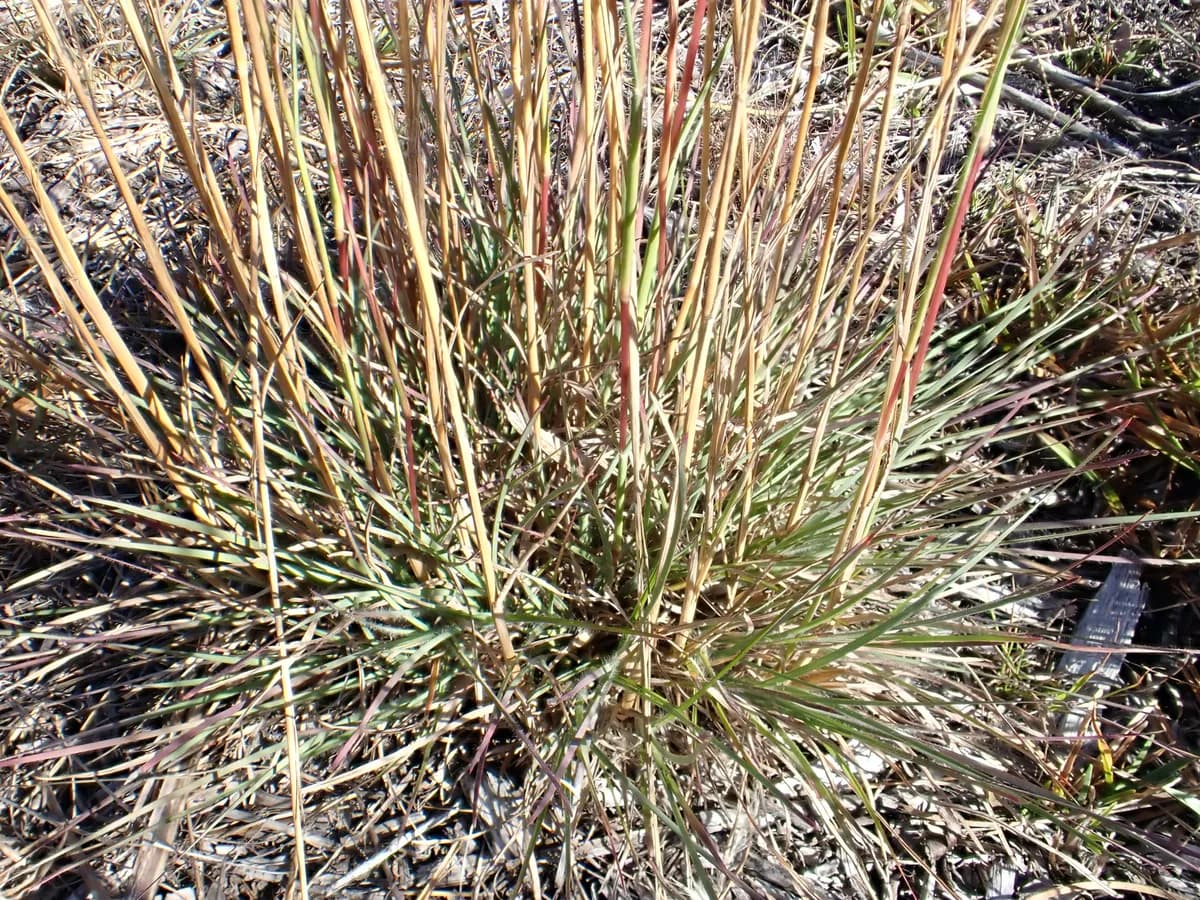
Broom-sedge is a tall native bunch grass that forms upright clumps with fine-textured foliage. In late summer and fall, it produces feathery seed heads that turn attractive bronze or copper colors. This drought-tolerant grass goes dormant in winter, turning tan to light brown.
Growing Broomsedge Bluestem
Grow Broomsedge Bluestem in full sun and low water. Mature plants reach 24 to 60 inches tall and spread 12 to 24 inches wide. Expect low maintenance to keep it looking intentional in a front yard.
In an HOA neighborhood
Broomsedge Bluestem takes more care to keep looking intentional in a front yard. Maintenance level: low. Consider it for backyard or mid-zone beds rather than the street edge.
Works well in: backyard only.
- Can look weedy and unkempt
- Tall height may violate landscaping codes
- Dormant season appearance is very informal
Wildlife value
Host plant for swarthy skipper.
The late-season flowers attract bees, beetles, and moths when few other plants are blooming. Seeds provide food for birds, and the dense clumps offer nesting sites and winter cover for small wildlife.
Common questions
- When does Andropogon virginicus bloom?
- Broomsedge Bluestem produces its characteristic bronze to copper-colored flower heads from August through October, creating attractive fall displays.
- What pollinators visit Andropogon virginicus?
- This native grass attracts bees, beetles, and moths during its blooming period. The seeds also provide important food for birds and small mammals.
- Where is Broomsedge Bluestem native?
- Andropogon virginicus is native to eastern North America, including New York and extending south through the southeastern United States.
- Is Broomsedge Bluestem toxic to livestock?
- The USDA PLANTS Database does not flag Broomsedge Bluestem as toxic to livestock.
- Is Broomsedge Bluestem HOA-friendly?
- Broomsedge Bluestem takes more care to look intentional in a front yard. Consider it for backyard or mid-zone beds rather than the street edge.
Native range data from vouchered herbarium specimen records and regional native plant society lists. Pollinator and host plant associations compiled from GBIF, iNaturalist, and published ecological literature.
Ready to grow Broomsedge Bluestem? Add it to your garden in Pollinator Patch to track it and get season-by-season care guidance.
Not sure where to start? Take the 2-minute yard quiz