Broomsedge Bluestem
Andropogon virginicus
Last reviewed: September 2026
Andropogon virginicus is a warm season bunchgrass that blooms from August through October and grows well in full sun with low water. It thrives in poor, dry soils common to old fields and roadsides across the eastern and central US.
Toxicity unknown
Broomsedge Bluestem (Andropogon virginicus) is not listed by the ASPCA Animal Poison Control Center (opens in new tab) or the other sources we check, so we have no verdict for it either way. Absence from those lists is not a clearance. If your pet shows symptoms after eating any plant, call the ASPCA at (888) 426-4435.
The USDA PLANTS Database (opens in new tab) does not flag Broomsedge Bluestem as toxic to livestock.
Light
full sun
Water
medium
Size
24"–60" H × 12"–24" W
Bloom
Aug, Sep, Oct
Native to
AL, AR, CT, DE and 29 more states
Pollinators
bees, beetles, moths
Before you buy
Your city may pay you to plant this
Cities and water utilities offer rebates for replacing lawn with native and water-wise plants. We track 459 programs across 44 states, each with a link to the provider and the date we last checked it.
Find rebates in your areaPicture natives in your own yard
Upload a photo of your yard and Patch Vision shows a rendering of it planted with natives for your region, like Broomsedge Bluestem.


Browse plants for this ecoregion
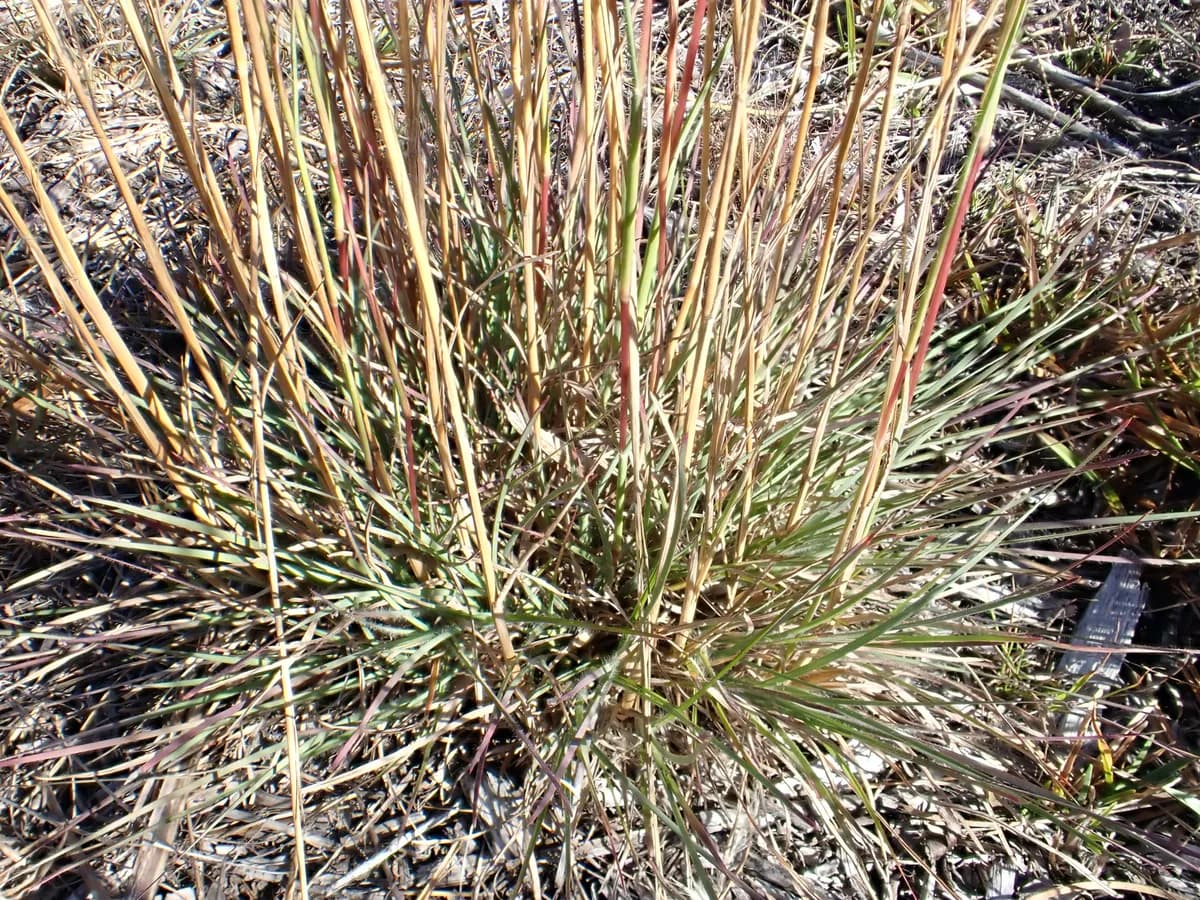
Broom-sedge is a tall native bunch grass that forms upright clumps with fine-textured foliage. In late summer and fall, it produces feathery seed heads that turn attractive bronze or copper colors. This drought-tolerant grass goes dormant in winter, turning tan to light brown.
Growing Broomsedge Bluestem
Grow Broomsedge Bluestem in full sun and medium water. Mature plants reach 24 to 60 inches tall and spread 12 to 24 inches wide. Expect low maintenance to keep it looking intentional in a front yard.
How to care for Broomsedge Bluestem, by region
How to care for Broomsedge Bluestem where it is actually grown: year-round basics plus what to do each season, region by region, with the sources for each.
Care guidance last updated: July 2026
Cross Timbers (includes Fort Worth, TX)
Year-round
Broomsedge bluestem is a native warm season bunchgrass that thrives in poor, dry soil and needs almost no care once it is established, but its loose, straw colored winter look reads as unmowed to most HOAs, so plan where you put it.
- Give it full sun and skip supplemental water and fertilizer once established, rich soil and extra water make the clumps flop instead of standing upright.
- Space new clumps 18 to 24 inches apart, each one grows into a 2 to 3 foot wide vase shaped bunch.
- Plant in spring so roots have a full growing season before the first hard summer.
- Leave the tan winter foliage standing through late winter, it shelters overwintering skipper butterfly caterpillars that use this grass as a host plant.
Fall
Fall is broomsedge's showiest season, its blades turn a warm copper orange and the seed heads open into fluffy white tufts, and it is also a fine time to plant since the heat has broken.
- Expect the foliage to shift from green to coppery orange-tan starting in September and to hold that color through winter, this is normal seasonal change, not dieback.
- Seed heads open into small silvery white tufts through September and October, this is its main wildlife interest, not a maintenance concern.
- If planting new clumps, do it by mid October so roots establish before the first hard freeze (mid November in North Texas).
- No fertilizer or extra water needed, the plant is heading into natural winter dormancy.
The copper and tan fall color is the plant's peak ornamental moment. Paired with a visibly mowed or edged border along the bed, it reads as a planned autumn grass rather than something left unmanaged.
Winter
Broomsedge stands through winter as dry tan to coppery foliage, its normal dormant look, and needs no water or care, but the standing dead-looking clump is the part most likely to draw an HOA comment.
- Leave the tan winter foliage standing, do not cut it back until March, it protects the plant's crown through hard freezes and shelters overwintering skipper butterfly caterpillars that use broomsedge as a host plant.
- No water or fertilizer needed, the plant is fully dormant.
- Expect the clump to look pale tan to straw colored through a mild North Texas winter, with occasional flattening after a hard freeze or ice event; this is temporary and the plant regrows in spring.
- In heavy black clay soils, avoid winter foot traffic or heavy mulch piling directly on the crown, standing water there can rot the base; in the sandier soils west of the metro this is less of a concern since drainage is faster.
Standing tan winter foliage is the biggest reason broomsedge gets flagged as unkempt. A clean mowed or edged border around the bed does more for perceived tidiness than anything done to the grass itself.
Spring
Spring is when broomsedge breaks dormancy and puts out fresh green blades, and it is the best time to plant new clumps or cut back last year's growth before summer heat arrives.
- Cut the previous year's tan growth back to 4 to 6 inches by mid to late March, before new green shoots emerge, with pruners or a mower on its highest setting.
- Plant new nursery starts anytime from March through May once the last frost has passed (mid March in North Texas), so roots establish before summer.
- Skip fertilizer, broomsedge is adapted to low fertility soil and extra nitrogen makes it grow tall and floppy.
- Water new plantings weekly through the first spring if rain is scarce; established clumps need no supplemental water.
Cutting the old winter growth back to a tidy 4 to 6 inch clump in March is the single most effective way to keep this grass reading as an intentional planting rather than an overgrown patch.
Summer
Once established, broomsedge is one of the most drought tolerant grasses for North Texas and needs no attention through the hottest months, but first year plantings still need help getting through their first summer.
- Established clumps (second summer or later) need no supplemental water even through 100 degree plus stretches in July and August.
- First year plantings, especially in the sandier soils west of the metro, need a deep soak every 7 to 10 days if there is no rain, since their roots have not reached full depth yet.
- Do not fertilize in summer, it pushes weak floppy growth right when the plant is conserving resources.
- Watch for the first silvery white seed tufts to appear starting in August, the start of its bloom period.
Sources: Lady Bird Johnson Wildflower Center Native Plant Database: Andropogon virginicus, USDA NRCS Plant Profile: Andropogon virginicus (broomsedge bluestem), Texas A&M AgriLife Extension, Texas Range Plants: Broomsedge Bluestem
Texas Blackland Prairies (includes Dallas, TX)
Year-round
Broomsedge bluestem is a native warm season bunchgrass that thrives in poor, dry soil and needs almost no care once it is established, but its loose, straw colored winter look reads as unmowed to most HOAs, so plan where you put it.
- Give it full sun and skip supplemental water and fertilizer once established, rich soil and extra water make the clumps flop instead of standing upright.
- Space new clumps 18 to 24 inches apart, each one grows into a 2 to 3 foot wide vase shaped bunch.
- Plant in spring so roots have a full growing season before the first hard summer.
- Leave the tan winter foliage standing through late winter, it shelters overwintering skipper butterfly caterpillars that use this grass as a host plant.
Fall
Fall is broomsedge's showiest season, its blades turn a warm copper orange and the seed heads open into fluffy white tufts, and it is also a fine time to plant since the heat has broken.
- Expect the foliage to shift from green to coppery orange-tan starting in September and to hold that color through winter, this is normal seasonal change, not dieback.
- Seed heads open into small silvery white tufts through September and October, this is its main wildlife interest, not a maintenance concern.
- If planting new clumps, do it by mid October so roots establish before the first hard freeze (mid November in North Texas).
- No fertilizer or extra water needed, the plant is heading into natural winter dormancy.
The copper and tan fall color is the plant's peak ornamental moment. Paired with a visibly mowed or edged border along the bed, it reads as a planned autumn grass rather than something left unmanaged.
Winter
Broomsedge stands through winter as dry tan to coppery foliage, its normal dormant look, and needs no water or care, but the standing dead-looking clump is the part most likely to draw an HOA comment.
- Leave the tan winter foliage standing, do not cut it back until March, it protects the plant's crown through hard freezes and shelters overwintering skipper butterfly caterpillars that use broomsedge as a host plant.
- No water or fertilizer needed, the plant is fully dormant.
- Expect the clump to look pale tan to straw colored through a mild North Texas winter, with occasional flattening after a hard freeze or ice event; this is temporary and the plant regrows in spring.
- In heavy black clay soils, avoid winter foot traffic or heavy mulch piling directly on the crown, standing water there can rot the base; in the sandier soils west of the metro this is less of a concern since drainage is faster.
Standing tan winter foliage is the biggest reason broomsedge gets flagged as unkempt. A clean mowed or edged border around the bed does more for perceived tidiness than anything done to the grass itself.
Spring
Spring is when broomsedge breaks dormancy and puts out fresh green blades, and it is the best time to plant new clumps or cut back last year's growth before summer heat arrives.
- Cut the previous year's tan growth back to 4 to 6 inches by mid to late March, before new green shoots emerge, with pruners or a mower on its highest setting.
- Plant new nursery starts anytime from March through May once the last frost has passed (mid March in North Texas), so roots establish before summer.
- Skip fertilizer, broomsedge is adapted to low fertility soil and extra nitrogen makes it grow tall and floppy.
- Water new plantings weekly through the first spring if rain is scarce; established clumps need no supplemental water.
Cutting the old winter growth back to a tidy 4 to 6 inch clump in March is the single most effective way to keep this grass reading as an intentional planting rather than an overgrown patch.
Summer
Once established, broomsedge is one of the most drought tolerant grasses for North Texas and needs no attention through the hottest months, but first year plantings still need help getting through their first summer.
- Established clumps (second summer or later) need no supplemental water even through 100 degree plus stretches in July and August.
- First year plantings, especially in the sandier soils west of the metro, need a deep soak every 7 to 10 days if there is no rain, since their roots have not reached full depth yet.
- Do not fertilize in summer, it pushes weak floppy growth right when the plant is conserving resources.
- Watch for the first silvery white seed tufts to appear starting in August, the start of its bloom period.
Sources: Lady Bird Johnson Wildflower Center Native Plant Database: Andropogon virginicus, USDA NRCS Plant Profile: Andropogon virginicus (broomsedge bluestem), Texas A&M AgriLife Extension, Texas Range Plants: Broomsedge Bluestem
In an HOA neighborhood
Broomsedge Bluestem takes more care to keep looking intentional in a front yard. Maintenance level: low. Consider it for backyard or mid-zone beds rather than the street edge.
Works well in: backyard only.
- Can look weedy and unkempt
- Tall height may violate landscaping codes
- Dormant season appearance is very informal
Wildlife value
Host plant for swarthy skipper.
The late-season flowers attract bees, beetles, and moths when few other plants are blooming. Seeds provide food for birds, and the dense clumps offer nesting sites and winter cover for small wildlife.
Common questions
- When does Andropogon virginicus bloom?
- Broomsedge bluestem blooms from August through October, producing fluffy, silvery seed heads that persist into winter.
- What insects use Andropogon virginicus?
- Bees, beetles, and moths visit the plant, using it for pollen, shelter, or as a host for larvae.
- What kind of soil does broomsedge bluestem need?
- It tolerates poor, sandy, or clay soils with low fertility and is often found in old fields, pastures, and roadside edges.
- Does broomsedge bluestem need regular watering once established?
- No. Once established it is drought tolerant and performs best with low supplemental water.
- Why does broomsedge bluestem turn orange in fall?
- As temperatures drop, the foliage shifts from green to a coppery orange tan, a color it often holds through winter.
- Is Broomsedge Bluestem toxic to livestock?
- The USDA PLANTS Database does not flag Broomsedge Bluestem as toxic to livestock.
- Is Broomsedge Bluestem HOA-friendly?
- Broomsedge Bluestem takes more care to look intentional in a front yard. Consider it for backyard or mid-zone beds rather than the street edge.
These answers were drafted with an AI model from this plant's data. Verify care details with a local expert.
Native range data from vouchered herbarium specimen records and regional native plant society lists. Pollinator and host plant associations compiled from GBIF, iNaturalist, and published ecological literature.
If something looks wrong
Common plant problems, and what to check first
These come up on almost any plant. Each guide lists the likely causes in the order they are worth ruling out, with one thing to check before you act on any of them, and links to the source it came from.
- It is dying right after planting
- Leaves turning yellow
- Wilting even though I watered it
- Brown crispy leaf tips
- Bugs on the plant
Ready to grow Broomsedge Bluestem? Add it to your garden in Pollinator Patch to track it and get season-by-season care guidance.