Rough-stem Goldenrod
Solidago rugosa
Last reviewed: September 2026
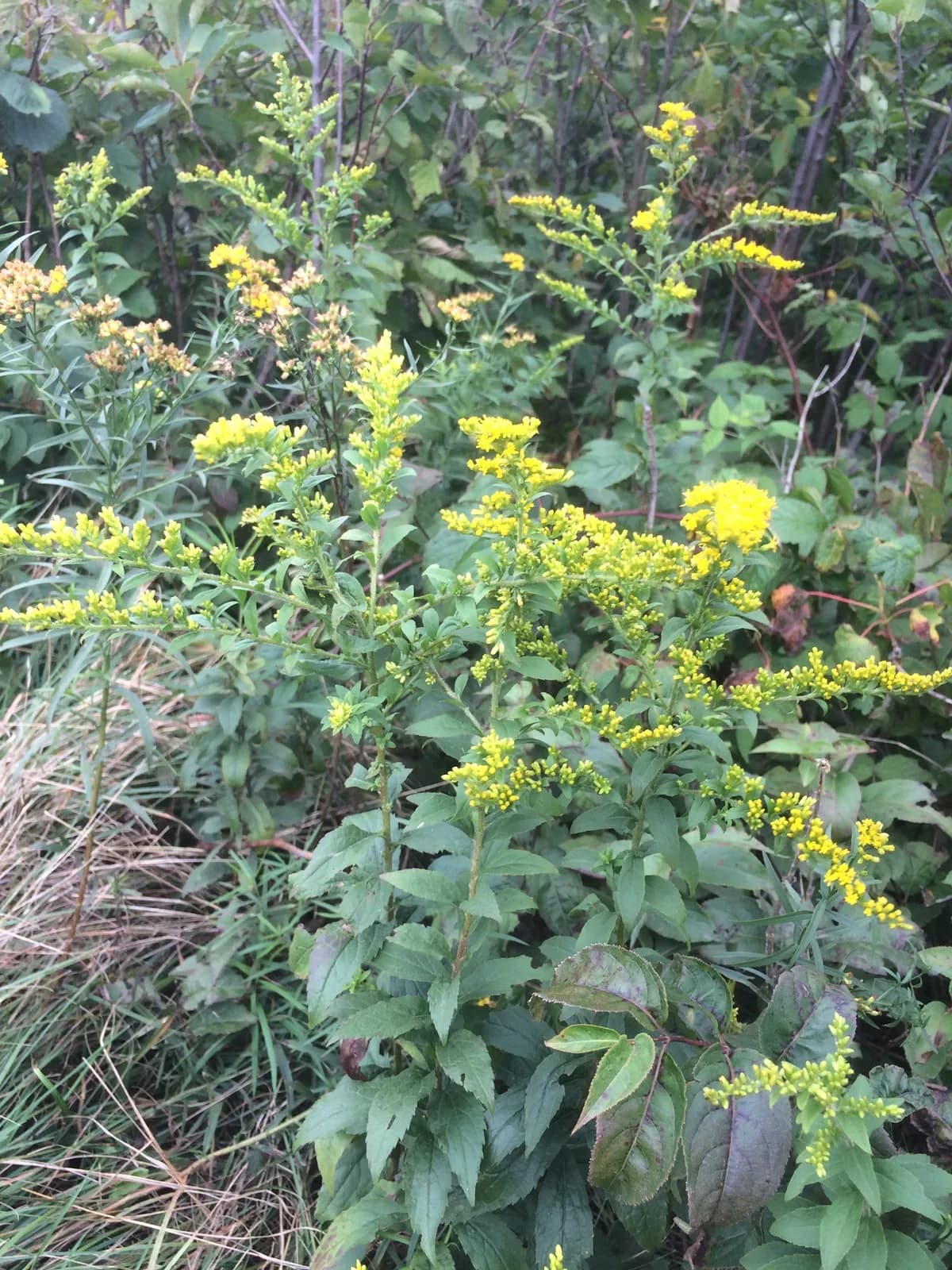
Solidago rugosa, rough-stemmed goldenrod, is a full-sun forb that blooms with small yellow flower clusters from August through October and grows well in medium-moisture meadows and open woodland edges.
Toxicity unknown
Rough-stem Goldenrod (Solidago rugosa) is not listed by the ASPCA Animal Poison Control Center (opens in new tab) or the other sources we check, so we have no verdict for it either way. Absence from those lists is not a clearance. If your pet shows symptoms after eating any plant, call the ASPCA at (888) 426-4435.
The USDA PLANTS Database (opens in new tab) does not flag Rough-stem Goldenrod as toxic to livestock.
Light
full sun
Water
medium
Size
24"–60" H × 12"–36" W
Bloom
Aug, Sep, Oct
Native to
AL, AR, CT, DE and 26 more states
Pollinators
bees, butterflies, beetles
Before you buy
Your city may pay you to plant this
Cities and water utilities offer rebates for replacing lawn with native and water-wise plants. We track 459 programs across 44 states, each with a link to the provider and the date we last checked it.
Find rebates in your areaPicture natives in your own yard
Upload a photo of your yard and Patch Vision shows a rendering of it planted with natives for your region, like Rough-stem Goldenrod.


Browse plants for this ecoregion
Rough-stem goldenrod produces bright yellow flower clusters in late summer and fall when many other plants are finishing their bloom cycles. This native perennial forms upright clumps that can spread gradually through underground rhizomes, making it useful for naturalizing larger areas.
Growing Rough-stem Goldenrod
Grow Rough-stem Goldenrod in full sun and medium water. Mature plants reach 24 to 60 inches tall and spread 12 to 36 inches wide. Expect low maintenance to keep it looking intentional in a front yard.
How to care for Rough-stem Goldenrod, by region
How to care for Rough-stem Goldenrod where it is actually grown: year-round basics plus what to do each season, region by region, with the sources for each.
Care guidance last updated: September 2026
Acadian Plains and Hills (includes Bangor)
Year-round
Rough goldenrod is a tough, native perennial that belongs in the cold, wet interior and downeast parts of Maine around Bangor. It handles boggy ground, acidic soil, and hard winters, and it feeds a lot of late-season bees and butterflies.
- Native across the Acadian region: its range runs from Newfoundland and the Maritimes down through Maine, so the cold winters here (USDA zones 3b to 5) are well within what it takes.
- Loves moist to wet ground. Plant it in low, damp spots, along a wet meadow edge, or near a stream or rain garden where fussier plants sulk.
- Full sun gives the best bloom and the sturdiest stems. It will grow in part sun but tends to flop more.
- Blooms August into October with flat-topped yellow sprays that pull in native Andrena bees, bumblebees, and migrating monarchs late in the season.
- Not on the ASPCA toxic plant list, so it is a safe pick for yards with dogs or cats. Note that goldenrod pollen is heavy and insect-carried, so it does not cause hay fever (that is ragweed, which blooms at the same time).
Fall
Fall is the show. Rough goldenrod blooms yellow from August into October and is one of the best late nectar sources for pollinators before frost shuts things down in northern Maine.
- Let it bloom fully. This is peak feeding time for native Andrena bees, bumblebees, and monarchs fueling up for migration, per the Xerces Society goldenrods are top-tier late-season forage.
- Hold off on cutting it back after bloom. The dried stems and seed heads feed birds and shelter overwintering insects.
- If you want to limit self-seeding in a small bed, snip the spent flower heads before the seed ripens, but leave the stalks standing.
- Mark where clumps sit before the tops die down so you know where to divide next spring.
If a full standing seed head reads as messy for your street, deadheading the spent flowers while leaving neat stalks keeps it looking intentional and avoids a violation letter.
Winter
Winter care is basically leaving it alone. Rough goldenrod is fully hardy through Maine's coldest interior winters and does more good standing than cut down.
- No winter protection needed. Its range reaches Newfoundland and the Maritimes, so Bangor-area cold and snow load are no problem.
- Leave the standing stems through winter. Hollow goldenrod stalks are prime overwintering habitat for native bees and other beneficial insects.
- Standing seed heads feed goldfinches and other seed-eaters through the snow.
- Do the cutback in early spring instead, once you see new growth, rather than in fall or winter.
For a tidier curb look over winter, cut stems to a uniform 12 to 18 inches instead of removing them, so the bed reads as kept and intentional while still sheltering insects.
Spring
Spring is for planting and dividing rough goldenrod while the ground is cool and wet. New shoots come up late here, so do not assume a clump died over winter.
- Plant potted goldenrod after the frost heave settles, usually mid to late May in the Bangor area. Cold, wet spring soil suits it, so no need to baby it.
- Be patient with dormancy. It leafs out later than many perennials, so hold off pulling a bare-looking clump until at least early June.
- Divide crowded clumps now with a spade. This keeps a stand from spreading too far and gives you free plants for other damp spots.
- Pinch the growing tips once in late spring if you want shorter, bushier plants that stand up better and look tidier in a front bed.
Pinching tips in late spring keeps stems shorter and less floppy, so the plant reads as intentional rather than weedy once it blooms.
Summer
Summer is mostly hands-off. Rough goldenrod builds its stems and buds through the warm months and gets by on Maine's normal rainfall in a damp spot.
- Water only during a real dry stretch. In a naturally moist site it usually needs nothing, but a young plant in its first summer likes steady moisture.
- Skip the fertilizer. Rich soil makes it grow tall and flop, lean, damp, acidic ground gives sturdier plants.
- Leave the buds alone as August nears. The flat-topped yellow clusters are what feed late-season bees and monarchs, so no shearing.
- Watch that it does not crowd smaller neighbors. If a clump is muscling out other plants, note it now and plan a spring division.
Sources: Go Botany, Native Plant Trust: Solidago rugosa, native to New England including Maine, Lady Bird Johnson Wildflower Center: Solidago rugosa, range Newfoundland to Georgia, wet soils, full sun, ASPCA Animal Poison Control Center plant database (not listed as toxic to dogs, cats, horses), Xerces Society: goldenrods (Solidago) are key late-season pollinator nectar and pollen sources, Xerces Society: leave standing plant stems as overwintering habitat for native bees
Arkansas Valley (includes McAlester, OK)
Year-round
Rough goldenrod reaches into the Arkansas Valley through the moist bottomlands and river-valley woodlands along the Poteau and Arkansas River corridor, adjacent to its core Ouachita Mountains range in Le Flore County. It forms upright clumps 2 to 4 feet tall with wrinkled, rough leaves and yellow fall flower plumes, and spreads by rhizome over time.
- Needs consistently moist to average soil, it is a bottomland and moist-meadow plant, not suited to the valley's drier upland sites
- Full sun to light shade for best flowering
- Space plants 18 to 24 inches apart, it fills in by rhizome within a few seasons
- Best sited in a low or naturally moist part of the yard rather than a dry, exposed slope
Keep it to a defined bed in a moist low spot with a clean edge so the spreading habit reads as a planned planting rather than an overgrown corner.
Fall
Rough goldenrod blooms in September and October with tall plumes of small yellow flowers that draw in late-season bees and butterflies before frost.
- Goldenrod pollen is heavy and insect-carried, it is not a cause of fall allergies, per the Xerces Society
- Leave flower stalks standing after bloom, they support overwintering native bee and moth larvae, per the Xerces Society
- Deadhead if you want to limit self-seeding into nearby lawn or beds
- Trim only rhizome runners that have spread past the bed line, leave the main clump alone until late winter
A clean bed edge around the clump helps standing winter seedheads read as intentional design rather than an unmowed patch.
Winter
The plant is dormant through winter, dying back to its crown. Standing dried stems are a normal part of the native winter look and provide overwintering habitat.
- Leave stems up through winter and cut back in late winter before new growth starts
- No supplemental watering needed while dormant, except during an unusually dry winter
- Check for rhizome spread at the clump perimeter and trim back any runners crossing into a neighbor-facing edge
- A light mulch layer over the crown is optional in this ecoregion's normal winter range
Spring
New rough-leaved growth emerges from the crown in spring. This is the window to divide crowded clumps or transplant seedlings before summer heat sets in.
- Divide established clumps in early spring and replant divisions immediately so roots stay moist
- Clear away last year's dead stems if not already cut back in late winter
- Pull stray rhizome shoots at the bed edge before they establish outside the planting area
- Keep soil moist during spring dry spells, this species does not recover well from drought stress early in the season
Summer
Summer is steady vegetative growth, with the clump reaching its full height and buds forming late in the season for a fall bloom.
- Water during dry stretches, especially in a valley-floor planting exposed to more sun and heat than its shaded Ouachita habitat
- Pinch tips in early summer for a shorter, bushier plant if desired
- Thin dense stems to improve airflow and reduce risk of powdery mildew in humid weeks
- Skip fertilizer in average garden soil, too much nitrogen causes weak, floppy stems
Sources: USDA PLANTS Database, Solidago rugosa profile, Lady Bird Johnson Wildflower Center, Solidago rugosa, Prairie Moon Nursery, Solidago rugosa growing guide, Xerces Society, goldenrod and pollinator conservation
Atlantic Coastal Pine Barrens (includes Riverhead, NY)
Year-round
Rough goldenrod is native to the Atlantic Coastal Pine Barrens around Riverhead, one of its classic sandy pine-barren habitats.
- Naturally grows in pine barrens, sandy swamps, and moist sandy soil typical of Long Island's pine barrens.
- Spreads by rhizome, forming a colony in the sandy, well-drained to moist soil here.
- Full sun to part shade, more sun for fuller bloom.
- Well suited to sandy coastal-plain soils that many other perennials struggle with.
Fall
Fall is peak bloom, an important nectar source in the pine barrens.
- Flowers open late summer into fall for bees before frost.
- Leave seed heads standing, birds feed on them through winter.
- A tidy edge in front keeps a front-yard stand looking planned.
A trimmed edge or lower companion plant along the front keeps a street-facing bed looking tended.
Winter
Dormant season, no active care needed.
- Leave stems standing through winter for insect shelter.
- Fully hardy through coastal Long Island winters.
- Wait for spring shoots before cutting back.
Spring
Spring is when new shoots emerge from the crown.
- Cut back old stems once new growth appears at the base.
- Divide crowded clumps now if desired.
- No fertilizer needed, it's adapted to lean sandy soil here.
Summer
Summer growth builds toward the fall bloom.
- Water new plantings during dry spells, sandy soil here drains fast so young roots need help until established.
- Cut back by a third in early summer for a shorter, fuller plant.
- Thin dense clumps for airflow if mildew shows up in humid coastal weeks.
Sources: USDA PLANTS Wrinkleleaf Goldenrod Plant Guide, Native Plant Trust Go Botany, Solidago rugosa, Lady Bird Johnson Wildflower Center, Solidago rugosa, Missouri Botanical Garden Plant Finder, Solidago rugosa
Blue Ridge (includes Gettysburg, PA)
Year-round
Rough goldenrod is native to the Blue Ridge around Gettysburg, at the western edge of the Pennsylvania range.
- Grows in moist to average soil in fields, forest edges, and low ground common in this ridge-and-valley terrain.
- Spreads by rhizome to form a colony, give it space.
- Full sun to part shade, best bloom in more sun.
- Occurs statewide in Pennsylvania including this region.
Fall
Fall is peak bloom, a strong late nectar source.
- Flowers open late summer into fall for bees before frost.
- Leave seed heads standing, birds feed through winter.
- A tidy edge in front keeps a front-yard stand looking planned.
A trimmed edge or lower companion plant along the front keeps a street-facing bed looking tended.
Winter
Dormant, no active care needed.
- Leave stems standing through winter for insect shelter.
- Fully hardy through the region's winters.
- Wait for spring shoots before cutting back.
Spring
Spring is when new shoots come up.
- Cut old stems back once new growth appears at the base.
- Divide crowded clumps now if needed.
- No fertilizer needed in typical local soils.
Summer
Summer growth builds toward fall bloom.
- Water young plants during dry spells, established ones tolerate normal summer rain.
- Cut back by a third in early summer for a shorter, fuller plant.
- Thin dense clumps for airflow if mildew shows up in humid stretches.
Sources: USDA PLANTS Wrinkleleaf Goldenrod Plant Guide, PAEnflowered, Solidago rugosa (community tip), North Carolina Extension Gardener Plant Toolbox, Solidago rugosa, Missouri Botanical Garden Plant Finder, Solidago rugosa, Lady Bird Johnson Wildflower Center, Solidago rugosa
Boston Mountains (includes Fayetteville)
Year-round
Rough goldenrod is a tough, tall native that brings a wave of gold to your yard in late summer and feeds bees and butterflies when little else is blooming.
- Plant it in full sun to part shade in the acidic, rocky, cherty soil common on Ozark slopes and stream bottoms.
- It handles moist spots best, like the base of a slope or a low seep, but shrugs off dry spells once its roots are set.
- Give it room or plan to divide it, since it spreads by underground stems and can form a broad patch over a few years.
- It is a strong late-season nectar source for native bees and a host plant for the wavy-lined emerald moth.
Fall
Fall is the big show, when the plant turns gold and hums with bees, so mostly you just enjoy it and tidy the edges.
- Let it bloom fully from late summer into fall, when it is one of the top nectar sources for native bees heading into winter.
- Deadhead a few of the earliest spent plumes if you want to slow how many seedlings pop up next year.
- Leave most seed heads standing into late fall so birds can feed on the seeds and the insects they draw.
- Do a light edge trim along walks and the lawn line rather than a full cutback.
Deadheading the first faded plumes and edging the patch along the walkway keeps the fall display looking cared for and intentional, which is the difference an HOA-conscious neighbor notices before sending a note.
Winter
In winter the plant dies back to the ground, and you can either leave the dry stems for wildlife or cut them down for a neater look.
- Leave the standing stems through winter if you can, since they shelter overwintering insects and hold seeds for birds.
- Cut the old stems to a few inches above the ground in late winter, before new spring shoots start.
- Real Boston Mountains freezes do not hurt it, since this is a fully cold-hardy native for zones 6b to 7a.
- Mark the clump or note where it is, since it disappears completely once frost knocks it back.
If dry winter stems read as messy on your street, cutting them to a low, even height keeps the bed looking intentional and cared for over winter and avoids giving an HOA a reason to send a violation letter.
Spring
Spring is for getting new plants in the ground and letting the fresh shoots come up on their own.
- Plant or divide clumps in early spring while the soil holds moisture from spring rains.
- Water new plants weekly through their first spring so the roots settle into the rocky soil.
- Skip fertilizer, since rich soil makes it flop and spread harder than you want.
- Pull competing weeds early, but leave the goldenrod shoots, which push up as reddish stems.
Summer
Summer is easy: let it grow tall, and just keep an eye on water during the hottest, driest stretches.
- Water deeply during long dry spells in a Boston Mountains summer, especially on fast-draining ridge soil.
- In richer or wetter spots you can cut the stems back by about a third in early summer to keep them shorter and less floppy.
- Leave the buds alone as they form, since the bloom is the whole point for late-summer pollinators.
- Watch for it leaning into paths and stake or trim only what crowds a walkway.
A light early-summer trim keeps the patch upright and reads as intentional to neighbors, which helps avoid a violation letter over a plant that looks like it has flopped over.
Sources: USDA NRCS Plant Guide, Wrinkleleaf Goldenrod (Solidago rugosa), Lady Bird Johnson Wildflower Center, Solidago rugosa (native to AR and OK, value to native bees, host plant), BONAP North American Plant Atlas, Solidago rugosa county map (present in NW and north-central Arkansas and eastern Oklahoma), North Carolina Extension Gardener Plant Toolbox, Solidago rugosa seasonal care
Central Appalachians (includes Johnstown, PA)
Year-round
Rough goldenrod is native to the Central Appalachians around Johnstown.
- Grows in moist to average soil in fields, low woods, and mountain valley bottoms in this region.
- Spreads by rhizome, give it space to fill in over a few seasons.
- Full sun to part shade, more sun for fuller bloom.
- Occurs statewide in Pennsylvania including this mountainous region.
Fall
Fall is peak bloom, a key nectar source before frost.
- Flowers open late summer into fall for late-season bees.
- Leave seed heads standing, birds feed on them through winter.
- A tidy edge in front keeps a street-facing stand looking planned.
A trimmed edge or lower companion plant along the front keeps a street-facing bed looking tended.
Winter
Dormant, no active care needed.
- Leave stems standing through winter for insect shelter.
- Fully hardy through mountain winters in this region.
- Wait for spring growth before cutting back.
Spring
Spring is when new stems emerge from the crown.
- Cut back old stems once new growth appears at the base.
- Divide crowded clumps now if you want to limit spread.
- No fertilizer needed in typical mountain-valley soils.
Summer
Summer growth builds toward the fall bloom.
- Water young plants during dry spells, established plants tolerate normal summer rain.
- Cut back by a third in early summer for a shorter, fuller plant.
- Thin dense clumps for airflow if mildew shows up in humid weeks.
Sources: USDA PLANTS Wrinkleleaf Goldenrod Plant Guide, PAEnflowered, Solidago rugosa (community tip), North Carolina Extension Gardener Plant Toolbox, Solidago rugosa, Lady Bird Johnson Wildflower Center, Solidago rugosa, Missouri Botanical Garden Plant Finder, Solidago rugosa
Central Corn Belt Plains (includes Chicago)
Year-round
Rough goldenrod is native to the Central Corn Belt Plains around Chicago, at the western edge of its range.
- Grows naturally in moist to average soil along field edges, low woods, and prairie remnants in this region.
- Spreads by rhizome into a modest colony, useful for filling a bed but plan for some spread.
- Full sun gives the best bloom, part shade is tolerated.
- A reliable late-season bee plant for Chicago-area gardens.
Fall
Fall is peak bloom season and prime pollinator activity.
- Flowers open late summer into fall, one of the last nectar sources before frost for local bees.
- Leave the seed heads standing, they feed birds through winter.
- A clean edge or shorter companion plant in front helps a front-yard planting read as intentional.
A defined edge or lower border plant along the front keeps a street-facing stand looking like a planned garden bed.
Winter
Dormant, no active care needed.
- Leave dead stems up through winter for insect habitat and visual texture in the bed.
- Fully hardy through Chicago-area winters, no mulch needed.
- Hold off cutting back until new spring growth appears.
Spring
Spring is when new stems emerge.
- Cut last year's dead stems back once new growth shows at the base.
- Divide overgrown clumps now if you want to limit spread.
- No extra fertilizer needed in typical Chicago-area garden soil.
Summer
Summer growth builds toward fall flowering.
- Water during dry summer stretches, established plants handle normal rainfall fine.
- Pinch or cut stems back by a third in early summer for a shorter, fuller plant.
- Divide crowded stands for airflow if powdery mildew appears in humid weeks.
Sources: USDA PLANTS Wrinkleleaf Goldenrod Plant Guide, Illinois Wildflowers, Wrinkled-Leaved Goldenrod, Missouri Botanical Garden Plant Finder, Solidago rugosa, Lady Bird Johnson Wildflower Center, Solidago rugosa
Cross Timbers (includes Fort Worth, TX)
Year-round
Rough-stem goldenrod is a tall, clumping perennial listed for Texas at state level, though the source does not name Fort Worth, so treat this as general care. It likes full sun and moist soil, so Fort Worth summers need extra water. It blooms yellow late in the year.
- Full sun to light shade
- Prefers moist to wet soil and tolerates well-drained soil
- Grows 3 to 6 feet tall
- Spreads slowly by underground stems
Tall stems can flop in a front bed. Pinch in spring or stake to keep it tidy.
Fall
Blooms open August through November and draw bees. Ragweed, not goldenrod, is the usual cause of hay fever.
- Let flowers finish for late pollinators
- Water during dry fall weather
- Fall is a good time to divide
- Leave seed heads if you like the look
Winter
Stems die back after freezes. New growth appears next spring.
- Cut stems down in late winter
- Divide overgrown clumps
- Mulch lightly
- Skip winter watering unless it is very dry
Spring
Plant or divide in spring and give it steady moisture as it grows.
- Divide clumps in spring
- Water new plants weekly
- Mulch to hold moisture in clay
- Pinch stems in late spring for a shorter plant
Summer
Fort Worth heat and dry spells stress this moisture-loving plant. Water is the main task.
- Water deeply every week or two in dry weather
- Mulch to cool roots
- Stake tall stems if they flop
- Do not fertilize
Sources: Lady Bird Johnson Wildflower Center: Solidago rugosa, NC State Extension Plant Toolbox: Solidago rugosa
Driftless Area (includes Galena, IL)
Year-round
Rough goldenrod reaches the western edge of its range in the Driftless Area near Galena.
- It likes moist to average soil in low woods, field edges, and stream banks common in this hilly, unglaciated landscape.
- Spreads by rhizomes into a colony, give it room or plan to divide every few years.
- Tolerant of both sun and part shade, more sun means a fuller bloom.
- Deer generally leave goldenrods alone compared to other perennials.
Fall
Fall is peak bloom, a key late nectar source before frost.
- Flowers open from late summer into fall, feeding bees building up for winter.
- Skip deadheading, the seed heads feed finches and other birds into winter.
- A mowed strip or low edging plant in front keeps the bed looking tended for street-facing spots.
A trimmed edge or low border plant in front of the stand keeps it looking like a planted bed rather than an overgrown patch.
Winter
Winter dormancy, nothing to do above ground.
- Leave stems standing for winter interest and shelter for overwintering insects.
- Hardy through this region's winters without mulch or covering.
- No watering or feeding needed until spring growth resumes.
Spring
Spring brings new shoots from the crown.
- Cut old stems down to a few inches once new growth appears at the base.
- Divide in early spring if the clump has outgrown its space.
- No fertilizer needed, average soil here suits it fine.
Summer
Summer is active growth ahead of fall flowering.
- Water new plantings through dry stretches, established clumps tolerate normal summer weather here without help.
- Cut stems back by about a third in June if you want a shorter, sturdier plant come bloom time.
- Watch for rust or mildew in humid years and thin dense clumps for airflow.
Sources: USDA PLANTS Wrinkleleaf Goldenrod Plant Guide, Illinois Wildflowers, Wrinkled-Leaved Goldenrod, Lady Bird Johnson Wildflower Center, Solidago rugosa, Missouri Botanical Garden Plant Finder, Solidago rugosa
Eastern Corn Belt Plains (includes Columbus)
Year-round
Rough goldenrod is native throughout the Eastern Corn Belt Plains around Columbus.
- Grows in moist to average soil in fields, open woods, and roadsides typical of this region.
- Spreads by rhizome to form a colony over time, give it room to expand.
- Tolerates full sun to part shade, blooms best with more sun.
- A dependable late-season nectar source for bees around Columbus.
Fall
Fall is the main bloom period and peak pollinator activity.
- Flowers open late summer into fall, feeding bees before the first hard frost.
- Leave seed heads standing, they feed birds through the winter months.
- A tidy edge in front of the stand keeps it looking planned in a front-yard bed.
A trimmed edge or lower companion plant along the front of the stand keeps a street-facing bed looking intentional.
Winter
Dormant season, no active work needed.
- Leave stems standing through winter for insect shelter and texture.
- Fully hardy through Ohio winters without extra protection.
- Wait for spring shoots before cutting back old growth.
Spring
Spring brings new growth from the crown.
- Cut old stems down once new shoots emerge at the base.
- Divide crowded clumps now to control spread or start new plants.
- No fertilizer needed in typical Ohio garden soil.
Summer
Summer growth ahead of the fall bloom.
- Water young plants during dry spells, established ones tolerate normal Ohio summer weather.
- Cut back by a third in early summer if you want a shorter, bushier habit.
- Thin dense clumps for airflow if mildew shows up in humid weeks.
Sources: USDA PLANTS Wrinkleleaf Goldenrod Plant Guide, North Carolina Extension Gardener Plant Toolbox, Solidago rugosa, Lady Bird Johnson Wildflower Center, Solidago rugosa, Missouri Botanical Garden Plant Finder, Solidago rugosa
Eastern Great Lakes Lowlands (includes Rochester, NY)
Year-round
Rough goldenrod is native to the Eastern Great Lakes and Hudson Lowlands around Rochester.
- Grows in moist to average soil in fields, low woods, and lowland ground typical here.
- Spreads by rhizome, give it space for a small colony.
- Full sun to part shade, more sun for fuller bloom.
- A common late-season native across upstate New York.
Fall
Fall is peak bloom, a key late nectar source.
- Flowers open late summer into fall for bees before frost.
- Leave seed heads standing, birds feed on them through winter.
- A tidy edge in front keeps a street-facing stand looking planned.
A trimmed edge or lower companion plant along the front keeps a street-facing bed looking tended.
Winter
Dormant season, no active care needed.
- Leave stems standing through winter for insect shelter.
- Fully hardy through lake-effect winters here.
- Wait for spring shoots before cutting back.
Spring
Spring is when new shoots come up from the crown.
- Cut back old stems once new growth appears at the base.
- Divide crowded clumps now if needed.
- No fertilizer needed in typical lowland soils.
Summer
Summer growth builds toward the fall bloom.
- Water new plantings during dry spells, established clumps tolerate normal lake-effect summer rain.
- Cut back by a third in early summer for a shorter, fuller plant.
- Thin dense clumps for airflow if mildew shows up in humid weeks.
Sources: USDA PLANTS Wrinkleleaf Goldenrod Plant Guide, Native Plant Trust Go Botany, Solidago rugosa, Lady Bird Johnson Wildflower Center, Solidago rugosa, Missouri Botanical Garden Plant Finder, Solidago rugosa
Erie Drift Plain (includes Buffalo, NY)
Year-round
Rough goldenrod is native to the Erie Drift Plain around Buffalo.
- Grows in moist to average soil in fields, low woods, and along the flat drift-plain ground typical here.
- Spreads by rhizome, give it room for a small colony.
- Full sun to part shade, more sun means better bloom.
- Tolerates lake-effect winters without trouble.
Fall
Fall is peak bloom, a key late nectar plant before frost.
- Blooms open from late summer into fall for late-season bees.
- Leave seed heads up, birds feed on them into winter.
- A neat edge in front keeps a street-facing stand looking tended.
A trimmed edge or lower companion plant along the front keeps a street-facing bed looking intentional.
Winter
Dormant season, no active care needed.
- Leave stems standing through winter for insect shelter.
- Fully hardy through lake-effect winters here.
- Wait for new spring growth before cutting back old stems.
Spring
Spring is when new stems come up.
- Cut back old growth once new shoots appear at the base.
- Divide congested clumps now if needed.
- No fertilizer needed in typical Erie plain soils.
Summer
Summer growth builds ahead of fall bloom.
- Water new plantings during dry spells, established clumps handle normal summer rain fine.
- Cut back by a third in early summer for a shorter, denser plant.
- Thin dense stands for airflow if mildew shows up in humid stretches near the lake.
Sources: USDA PLANTS Wrinkleleaf Goldenrod Plant Guide, Native Plant Trust Go Botany, Solidago rugosa, Lady Bird Johnson Wildflower Center, Solidago rugosa, Missouri Botanical Garden Plant Finder, Solidago rugosa
Huron/Erie Lake Plains (includes Toledo)
Year-round
Rough goldenrod is native to the Huron/Erie Lake Plains around Toledo.
- Favors moist to average soil in the low, flat lake-plain ground common in this region.
- Spreads by rhizome, plant it where a small colony is welcome.
- Full sun to part shade, more sun means a fuller bloom.
- Handles the heavier lake-plain clay soils typical here.
Fall
Fall is peak bloom, an important late nectar source.
- Blooms from late summer into fall, feeding bees ahead of frost.
- Leave seed heads up, birds feed on them through winter.
- A trimmed edge in front keeps a street-facing bed looking tended.
Keep a mowed or mulched edge in front of the planting so it reads as a tended bed, especially near the street.
Winter
Dormant season, no active care needed.
- Leave stems standing through winter for insect shelter.
- Fully hardy through the region's lake-effect winters.
- Cut back old stems only once spring growth resumes.
Spring
Spring shoots emerge from the crown.
- Cut back old stems once new growth appears at the base.
- Divide clumps now if they've outgrown their space.
- No fertilizer needed in the region's typical soils.
Summer
Summer growth builds toward the fall bloom.
- Water new plantings in dry spells, established clumps tolerate normal rainfall.
- Cut back by a third in early summer for a shorter, fuller plant.
- Watch for mildew in humid stretches near the lake, thin stems for airflow.
Sources: USDA PLANTS Wrinkleleaf Goldenrod Plant Guide, North Carolina Extension Gardener Plant Toolbox, Solidago rugosa, Lady Bird Johnson Wildflower Center, Solidago rugosa, Missouri Botanical Garden Plant Finder, Solidago rugosa
Interior Plateau (includes Cincinnati)
Year-round
Rough goldenrod is native to the Interior Plateau around Cincinnati.
- Grows in moist to average soil in fields, low woods, and roadsides typical of this rolling plateau region.
- Spreads by rhizome, give it space for a small colony.
- Full sun to part shade, more sun for fuller bloom.
- A common, easy-going native goldenrod in this region.
Fall
Fall is peak bloom, a strong late nectar plant.
- Flowers open late summer into fall for bees before frost.
- Leave seed heads standing, birds feed on them through winter.
- A tidy edge in front keeps a front-yard stand looking planned.
A trimmed edge or lower companion plant along the front keeps a street-facing bed looking tended.
Winter
Dormant season, no active care needed.
- Leave stems standing through winter for insect shelter.
- Fully hardy through the region's winters.
- Wait for spring shoots before cutting back.
Spring
Spring brings new shoots from the crown.
- Cut back old stems once new growth appears at the base.
- Divide crowded clumps now if desired.
- No fertilizer needed in typical local soils.
Summer
Summer growth builds toward the fall bloom.
- Water young plants during dry spells, established plants tolerate normal summer rain and humidity.
- Cut stems back by a third in early summer for a shorter, fuller plant.
- Thin dense clumps for airflow if mildew appears in humid weeks.
Sources: USDA PLANTS Wrinkleleaf Goldenrod Plant Guide, North Carolina Extension Gardener Plant Toolbox, Solidago rugosa, Missouri Botanical Garden Plant Finder, Solidago rugosa, Lady Bird Johnson Wildflower Center, Solidago rugosa
Interior River Valleys and Hills (includes Peoria, IL)
Year-round
Rough goldenrod is native to the Interior River Valleys and Hills around Peoria, near the western edge of its range.
- Grows in moist to average soil in river-valley bottoms, field edges, and low woods common in this region.
- Spreads by rhizome, give it space for a colony over time.
- Full sun to part shade, more sun for fuller bloom.
- A reliable late-season bee plant for this part of Illinois.
Fall
Fall is peak bloom, a key late nectar source.
- Flowers open late summer into fall for bees ahead of frost.
- Leave seed heads standing, birds feed on them through winter.
- A tidy edge in front keeps a front-yard stand looking planned.
A trimmed edge or lower companion plant along the front keeps a street-facing bed looking tended.
Winter
Dormant season, no active care needed.
- Leave stems standing through winter for insect shelter.
- Fully hardy through central Illinois winters.
- Wait for spring shoots before cutting back.
Spring
Spring is when new shoots emerge from the crown.
- Cut back old stems once new growth appears at the base.
- Divide crowded clumps now if you want to control spread.
- No fertilizer needed in typical river-valley soils.
Summer
Summer growth builds toward the fall bloom.
- Water young plants during dry spells, established plants tolerate normal summer rain.
- Cut back by a third in early summer for a shorter, fuller plant.
- Thin dense clumps for airflow if mildew shows up in humid weeks.
Sources: USDA PLANTS Wrinkleleaf Goldenrod Plant Guide, Illinois Wildflowers, Wrinkled-Leaved Goldenrod, Missouri Botanical Garden Plant Finder, Solidago rugosa, Lady Bird Johnson Wildflower Center, Solidago rugosa
Middle Atlantic Coastal Plain (includes Philadelphia)
Year-round
Rough goldenrod is native throughout the Middle Atlantic Coastal Plain around Philadelphia.
- Grows well in moist to average soil in fields, low woods, and along coastal-plain wetland margins.
- Spreads by rhizome into a colony, give it space to fill in.
- Full sun to part shade, best bloom with more sun.
- A common, easy native goldenrod for this region.
Fall
Fall is peak bloom and a major late nectar source.
- Flowers open from late summer into fall, feeding bees before frost.
- Leave seed heads standing, birds feed on them through winter.
- A tidy edge in front keeps a street-facing bed looking planned.
A trimmed edge or lower border plant along the front keeps a street-facing stand looking tended.
Winter
Dormant season, no active care needed.
- Leave stems standing through winter for insect shelter.
- Fully hardy through mid-Atlantic winters.
- Wait for spring shoots before cutting back.
Spring
Spring is when new shoots emerge.
- Cut old stems back once new growth shows at the base.
- Divide crowded clumps now if desired.
- No fertilizer needed in typical coastal-plain soils.
Summer
Summer growth builds toward the fall bloom.
- Water young plants during dry spells, established plants tolerate normal rain and humidity here.
- Cut stems back by a third in early summer for a shorter, fuller plant.
- Thin dense clumps for airflow if mildew appears in humid weeks.
Sources: USDA PLANTS Wrinkleleaf Goldenrod Plant Guide, North Carolina Extension Gardener Plant Toolbox, Solidago rugosa, Missouri Botanical Garden Plant Finder, Solidago rugosa, Lady Bird Johnson Wildflower Center, Solidago rugosa
Mississippi Alluvial Plain (includes Memphis, TN)
Year-round
Rough goldenrod is native to the Mississippi Valley Loess Plains around Memphis, at home in the bluff-and-bottomland terrain typical of this region.
- Confirmed present in Tennessee and Mississippi by the Tennessee-Kentucky Plant Atlas and the Lady Bird Johnson Wildflower Center's state range list.
- Prefers wetter habitat than most goldenrods: bottomland forest edges, stream banks, and the bases and ledges of the loess bluffs that define this ecoregion.
- Grows 2 to 6 feet tall in clumps that expand slowly by rhizomes.
- Not on the ASPCA toxic plant list for dogs or cats.
- Blooms provide a major late-season nectar source for bees and butterflies in the lower Mississippi Valley.
Fall
Fall bloom is the highlight, a key late-season pollinator stop in the lower Mississippi Valley.
- Flowers open from late summer into October or November around Memphis.
- Leave spent flower heads standing after bloom. Goldfinches and other seed-eating birds feed on them into winter.
- One of the last available nectar sources before frost for bees and migrating monarchs.
- Do not cut back for a second bloom. This species flowers once per season.
Fall bloom reads as an intentional pollinator planting rather than an untended patch.
Winter
Winter dormancy needs no active care. Leave stems standing until spring.
- Standing dead stems shelter overwintering native bees nesting in the hollow centers.
- Seed heads left from fall continue to feed birds through winter.
- No watering or feeding needed while dormant.
- Wait until spring regrowth begins before cutting back.
A dormant clump can look scruffy over winter to neighbors. Placing it toward the back of a bed helps it read as planned.
Spring
Spring cleanup starts as new shoots emerge from the base.
- Cut old stems back to a few inches once new basal growth shows, typically early to mid spring around Memphis.
- Divide crowded clumps every 2 to 3 years in spring if the stand outgrows its spot.
- This species tolerates the region's dense loess soils better than many goldenrods, since it is adapted to bottomland ground.
- Mulch lightly around the base, keeping mulch off the crown, to help hold moisture through spring dry spells.
A clean spring cutback keeps the planting looking tended after winter dieback.
Summer
Memphis summers are hot and humid, and this moisture-tolerant goldenrod handles both well.
- Water during extended dry spells, especially in the first year. Established plants tolerate more moisture than most goldenrods but still need drainage.
- Skip fertilizer in typical loess or bottomland soils.
- Powdery mildew can show up in crowded, humid plantings. Space plants for airflow instead of treating with fungicide.
- A light pinch back in early summer keeps growth more compact for a front-yard planting.
Sources: Tennessee-Kentucky Plant Atlas, Solidago rugosa var. rugosa, Lady Bird Johnson Wildflower Center, Solidago rugosa, ASPCA Toxic and Non-Toxic Plants, letter R, NC State Extension Gardener Plant Toolbox, Solidago rugosa, Missouri Botanical Garden Plant Finder, Solidago rugosa, University of Tennessee Extension, Tennessee Smart Yards, Solidago rugosa
Mississippi Valley Loess Plains (includes Memphis, TN)
Year-round
Rough goldenrod is native to the Mississippi Alluvial Plain around Memphis, growing in the bottomland forest edges, stream banks, and wet prairies typical of this floodplain region.
- This species prefers wetter ground than most goldenrods, matching the poorly drained, flat alluvial terrain of this ecoregion: bottomland forests, stream banks, and wet prairie edges.
- Native range confirmed for Tennessee and Mississippi by the Lady Bird Johnson Wildflower Center and the Tennessee-Kentucky Plant Atlas.
- Grows 2 to 6 feet tall, spreading by rhizomes into loose clumps.
- Not on the ASPCA toxic plant list for dogs or cats.
- A reliable late-season nectar source for bees and butterflies in the Mississippi Delta.
Fall
Fall bloom is the main event, an important late-season stop for pollinators crossing the Delta.
- Flowers open from late summer into October or November in the Memphis area.
- Leave spent flower heads standing. Goldfinches and other seed-eating birds rely on them into winter.
- One of the last nectar sources before frost for bees and migrating monarchs moving through the Mississippi Flyway corridor.
- Do not cut back expecting a second bloom. This species flowers once per season.
Fall bloom reads as an intentional pollinator planting rather than an untended patch.
Winter
Winter dormancy needs no active care beyond patience until spring.
- Leave dead stems standing through winter. Hollow centers shelter overwintering native bees.
- Seed heads left from fall continue to feed birds through the winter months.
- No watering or feeding needed while dormant.
- Wait until spring regrowth begins before cutting back, rather than tidying in late fall.
A dormant clump can look scruffy to neighbors over winter. Placing it toward the back of a bed helps it read as planned.
Spring
Spring cleanup and division suit the wetter clay and alluvial soils of this floodplain region.
- Cut old stems back to a few inches once new basal shoots appear, typically early to mid spring around Memphis.
- This species handles the region's heavier, poorly drained alluvial soils better than many other goldenrods.
- Divide crowded clumps every 2 to 3 years in spring if the stand spreads beyond its spot.
- Mulch lightly around the base, keeping mulch off the crown, to help even out moisture through spring.
A tidy spring cutback signals an intentional planting rather than leftover winter growth.
Summer
Hot, humid Delta summers and occasional wet spells suit this moisture-tolerant goldenrod.
- Water during extended dry spells in the first year. Established plants tolerate wetter soil than most goldenrods, a good fit for low or poorly drained yard spots.
- No fertilizer needed in typical alluvial soils.
- Powdery mildew can appear in crowded, humid plantings. Space for airflow rather than spraying.
- A light pinch back in early summer keeps growth more compact near a front walk or bed edge.
Sources: Lady Bird Johnson Wildflower Center, Solidago rugosa, Tennessee-Kentucky Plant Atlas, Solidago rugosa var. rugosa, ASPCA Toxic and Non-Toxic Plants, letter R, Missouri Botanical Garden Plant Finder, Solidago rugosa, University of Tennessee Extension, Tennessee Smart Yards, Solidago rugosa, NC State Extension Gardener Plant Toolbox, Solidago rugosa
North Central Appalachians (includes Williamsport, PA)
Year-round
Rough Goldenrod is genuinely native to this part of Pennsylvania and is one of the easiest choices for a Williamsport yard. It forms an upright clump of arching, wrinkled leafy stems that stay green through the growing season and need very little from you once established.
- Give it full sun to part shade and soil that stays on the moist to average side. It also tolerates poor, sandy, or rocky ground as long as drainage is decent.
- No regular feeding or spraying is needed. Established plants handle Williamsport's cold winters without extra protection.
- It spreads by underground rhizomes and self-seeding into a colony over a few seasons, so give new plantings room rather than crowding them against other perennials.
- It is a true native here and an important late season source of nectar and pollen for native bees and honeybees.
Fall
Fall is the main event. Expect a real show of bright yellow, arching flower sprays right as many other plants are finishing for the year, and pollinators will be counting on it.
- Blooms typically run from late August into October, sometimes as late as November in a mild year.
- The flowers are a genuinely important late season food source for native bees and honeybees, so it is worth leaving them alone rather than deadheading.
- Around the first fall frost, commonly in early October in Williamsport, the foliage begins to die back on its own. No cutting is needed yet.
- Seeds ripen and turn a whitish color by around October, which is when you may notice goldfinches and other seed eating birds visiting the plant.
Winter
Winter is a true rest for this plant. The best thing you can do is leave it alone until late winter.
- Leave the dried stems and seed heads standing through winter rather than cutting back in fall. Penn State Extension recommends waiting until hard frosts fully brown the foliage so the roots can reclaim energy from the dying stems.
- The standing stems and seed heads also give the bed winter texture and shelter for overwintering garden insects.
- Williamsport's USDA zone 6b winters are well within what this species tolerates, so no mulch or winter cover is needed for an established planting.
- If a heavy wet snow flattens the stand, it is fine to leave it flattened. There is no need to prop the stems back up.
Standing winter stems can look sparse or untidy to an HOA-conscious neighbor, but a cutback once new growth starts in spring restores a tended look.
Spring
Spring is cleanup time and, if you want more plants, division season. New shoots are often slow to show, so be patient before assuming a clump did not make it through winter.
- Cut down last year's dried stems once you see new green growth at the base, usually by mid to late April in Williamsport, leaving a couple inches behind so you do not disturb the crown.
- Wait until after the last spring frost, typically early to mid May here, before planting new divisions or nursery starts outside.
- Late winter into earliest spring, while the clump is still small and stems are easy to see, is the best time to dig and divide a crowded stand.
- New growth can be one of the later perennials to show in a bed, so mark the spot the season before if you tend to forget where it is.
A tidy spring cutback restores a clean, HOA-conscious look at the start of the season without losing the plant.
Summer
Summer is easy. Established plants need very little water and no fertilizer, and the only real decision is whether to prune once for a more compact plant later.
- Water only during a genuine dry stretch of two or more weeks. This species tolerates average to wet soil and does not need regular watering once established.
- Skip fertilizer. Rich soil tends to make the stems tall and floppy without producing more flowers.
- If stems tend to flop over in your bed, prune the plant back by about a third in early summer, before the Fourth of July. It regrows shorter and bushier with more flowers later.
- The leaves normally look rough and wrinkled on top. That texture is where the name comes from, not a sign of a problem.
An early summer trim keeps the plant compact and tidy along a front walk or foundation bed, which reads as more intentional to HOA-conscious neighbors.
Sources: Lady Bird Johnson Wildflower Center, Solidago rugosa (Wrinkleleaf goldenrod), NC State Extension Gardener Plant Toolbox, Solidago rugosa, Penn State Extension, Cutting Down Perennials in the Fall, Garden Design, Growing Goldenrod: How to Grow and Care for Solidago Plants (community tip)
Northeastern Coastal Zone (includes New York City)
Year-round
Rough goldenrod is a cold-hardy native for the New York City area (Northeastern Coastal Zone), with arching yellow fall sprays that are a magnet for late pollinators.
- Plant in full sun in average to moist soil. It is native across New York and tolerates a wide range of soils (USDA NRCS).
- It spreads by runners and seed to form colonies. Give it room, edge the bed, or choose the compact 'Fireworks' selection for a tidy front yard.
- Goldenrod is a keystone plant: a host for dozens of butterflies and moths and a critical fall nectar source for migrating monarchs and native bees (Xerces Society).
- Goldenrod does not cause hay fever. Its pollen is heavy and insect-carried; ragweed, blooming at the same time, is the real culprit (University of Illinois Extension).
- Goldenrod is not on the ASPCA toxic plant list, so it is a low-worry plant around dogs and cats.
Fall
The payoff season. Yellow sprays cover the plant and feed pollinators before their winter.
- Bloom runs late summer into October, a critical nectar source for migrating monarchs and native bees (Xerces Society).
- Leave the seed heads and stems standing through winter. Native bees overwinter in the stems and birds eat the seeds.
- A light mulch helps first-year plants ahead of their first cold winter.
You can clip the very tops after bloom for a neater look, but leaving the stems standing is far better for wildlife.
Winter
Fully dormant under cold and snow. The standing stems are winter habitat.
- Established plants are reliably winter hardy in the New York City area and need no protection (Lady Bird Johnson Wildflower Center).
- Leave the dead stems standing until early-spring cleanup. Native bees are overwintering inside them.
- The seed heads also feed birds and add winter structure.
If standing winter stems read as untidy in your neighborhood, plan one clean cutback in late winter instead of leaving them into spring.
Spring
New growth comes up in spring. Cut old stalks and rein in any unwanted spread.
- Cut last year's stalks to the ground in early spring before new growth (Penn State Extension).
- Dig out runners that have wandered to keep the colony in bounds. Spring is the easiest time.
- Established plants need little supplemental water once the season warms.
Cutting old stalks and edging the patch in early spring keeps it reading as a planned bed rather than a spreading weed.
Summer
It is building toward fall. An optional early-summer trim keeps it shorter and less likely to flop.
- For a bushier plant, cut it back by about one-third in late May or early June. Skip this if you like the full height.
- Water in an extended dry spell, especially for first-year plants.
- Otherwise leave it be until the late-summer bloom.
An early-summer trim keeps the plant compact and upright, which reads tidier in a front bed than a tall flop.
Sources: USDA NRCS Plant Guide, Solidago rugosa, Lady Bird Johnson Wildflower Center, Xerces Society, University of Illinois Extension, Autumn Allergies, ASPCA Animal Poison Control Center, Toxic and Non-Toxic Plants, Penn State Extension, Delay Garden Cleanup
Northeastern Highlands (includes Montpelier, VT)
Year-round
Rough goldenrod (Solidago rugosa) is native to Vermont and well suited to Montpelier's short, cool Green Mountain growing season, USDA zone 4b to 5a. It is a low-maintenance native perennial that spreads by rhizome and blooms in late summer into fall.
- Site in full sun to light shade with well-drained soil
- Give it room to spread by rhizome, or contain the bed edge with a buried barrier
- Expect a compressed growing season, roughly late May through mid-September
- Divide crowded clumps every 3 to 4 years in spring
- Leave seed heads and stems standing through winter, cut back in early spring
Edged beds and a spring cutback keep this HOA-friendly native goldenrod reading as an intentional planting rather than a wild patch.
Fall
Fall is rough goldenrod's peak season in Montpelier, with bright yellow blooms opening in late August before the average first frost, near September 18, typically ends the display.
- Peak bloom runs late August into September, cut short by an average first frost near September 18
- Leave flowers in place through fall for late-season pollinator activity
- Skip fall fertilizing, it can push soft growth that will not harden off in time
- Let seed heads stand for winter interest and food for birds
- Do a light cleanup only, save the main stem cutback for spring
Winter
Winters in Montpelier are long and cold under USDA zone 4b to 5a conditions, but rough goldenrod is fully hardy there and needs no special protection.
- No winter protection needed in zone 4b/5a, this species is hardy through Vermont winters
- Leave stems and seed heads standing for structure and habitat through the snow season
- Mulch lightly after the ground freezes, and only in newly planted, first-year beds
- Do not cut back until active growth resumes in spring
Spring
Spring comes late in Montpelier's zone 4b/5a climate, with the average last frost landing around late May, so new growth and any planting stay on a delayed schedule.
- Hold off on cutting back old winter stems until new shoots appear, usually early to mid May
- Wait until after the average last frost, around May 25, before dividing or transplanting
- Top-dress with compost once soil has warmed
- Expect slower, cool-soil emergence compared to warmer regions
- Divide any overcrowded clumps once new growth is a few inches tall
Summer
Summer is short and mild in Montpelier, and rough goldenrod uses the warm weeks between June and August to build the foliage that carries its fall bloom.
- Water during dry stretches, this species tolerates average garden moisture but is not drought-hardy in shallow mountain soils
- No fertilizer needed in typical garden soil
- Pinch or cut back by a third in late June for a shorter, bushier plant
- Watch for powdery mildew during humid late-summer weeks and thin crowded stems for airflow
- Stake taller stands in exposed, windy sites
Sources: Solidago rugosa (wrinkleleaf goldenrod), Lady Bird Johnson Wildflower Center, USDA Plant Hardiness Zone Map, Frost Dates for Montpelier, VT (community tip)
Northern Allegheny Plateau (includes Binghamton, NY)
Year-round
Rough goldenrod is native to the Northern Appalachian Plateau and Uplands around Binghamton.
- Grows well in moist to average soil in fields, forest edges, and roadsides across this plateau region.
- Spreads by rhizome into a colony over time, give it room.
- Full sun to part shade, blooms best with more sun.
- A reliable, common native in this part of upstate New York.
Fall
Fall is peak bloom, a strong late-season nectar plant.
- Flowers open late summer into fall, feeding bees ahead of frost.
- Leave seed heads standing, birds feed on them through winter.
- A tidy edge in front helps a front-yard stand look intentional.
A trimmed edge or lower border plant along the front keeps a street-facing bed looking tended.
Winter
Dormant, no active care needed.
- Leave stems standing through winter for insect shelter and texture.
- Fully hardy through plateau winters without protection.
- Wait for spring growth before cutting back.
Spring
Spring brings fresh shoots from the crown.
- Cut back last year's stems once new growth shows at ground level.
- Divide clumps now to control spread or start new plantings.
- No fertilizer needed in typical plateau soils.
Summer
Summer growth builds toward fall bloom.
- Water young plants during dry stretches, established ones tolerate normal summer weather.
- Cut stems back by a third in early summer for a fuller, shorter plant.
- Thin crowded stands for airflow if mildew shows up in humid weeks.
Sources: USDA PLANTS Wrinkleleaf Goldenrod Plant Guide, Native Plant Trust Go Botany, Solidago rugosa, Lady Bird Johnson Wildflower Center, Solidago rugosa, Missouri Botanical Garden Plant Finder, Solidago rugosa
Northern Lakes and Forests (includes Marquette, MI)
Year-round
Rough goldenrod is native across Michigan, including the Upper Peninsula's Northern Lakes and Forests, where it grows in sandy, moist ground along woods, dunes, and old fields.
- Michigan Flora and the Lady Bird Johnson Wildflower Center both list Michigan within the native range of Solidago rugosa.
- In this cooler, sandier ecoregion it favors moist sandy or loamy soil in low open woods, pine barrens, sandy swamps, and old fields rather than deep shade.
- Grows 2 to 6 feet tall in clumping stands that spread by rhizomes.
- Not on the ASPCA toxic plant list for dogs or cats.
- Hardy well into USDA zone 3-4 conditions typical of the Upper Peninsula.
Fall
Fall bloom arrives earlier here than in warmer regions, often peaking by mid-September.
- Expect flowering from late August into early October in the Upper Peninsula, shorter than the bloom window farther south.
- Leave flower heads standing after bloom. Goldfinches and other seed eaters rely on them into early winter.
- This is one of the last nectar sources before hard frost, valuable for late-season bumble bees preparing to overwinter.
- Do not cut back for rebloom. Solidago rugosa blooms once a season.
Fall color reads as a planned late-season display rather than an unkempt yard.
Winter
Winter is long and cold here, and standing stems provide cover through heavy snow.
- Leave stems and seed heads standing through the Upper Peninsula's long winter. Snow load usually flattens some stems naturally.
- Hollow stems can shelter overwintering native bees. Wait until spring growth starts before cutting back.
- No care needed while dormant under snow cover.
- This species is well within its natural cold range here, so no winter protection is necessary.
A snow-flattened clump is temporary. Plan the cutback for spring rather than trying to tidy it under snow.
Spring
Spring cleanup starts later here than farther south, once the ground fully thaws.
- Cut old stems back to a few inches once new growth appears at the base, typically late May in the Upper Peninsula.
- Late frosts are common this far north. New shoots tolerate a light frost, but avoid disturbing the crown during a hard freeze.
- Divide overcrowded clumps in spring if the patch has spread wider than wanted.
- Sandy soil here drains fast, so check moisture in a dry spring rather than assuming winter snowmelt was enough.
A clean spring cutback signals an intentional planting once the long winter dieback is cleared.
Summer
Short, cool summers mean steady but slower growth than farther south.
- Water young plants during dry stretches. Established stands in sandy soil handle short dry spells but not prolonged drought.
- No fertilizer needed. Rich soil encourages floppy growth and faster spread than most front yards want.
- Full sun gives the sturdiest stems. In part shade common under open pine cover, expect a looser, more open habit.
- Deer and rabbits generally leave goldenrod alone, though local pressure varies.
Sources: Michigan Flora, Solidago, Lady Bird Johnson Wildflower Center, Solidago rugosa, ASPCA Toxic and Non-Toxic Plants, letter R, Illinois Wildflowers, Wrinkled-Leaved Goldenrod (community tip)
Northern Piedmont (includes Poughkeepsie, NY)
Year-round
Rough goldenrod is native to the Northern Piedmont around Poughkeepsie.
- Grows in moist to average soil in fields, low woods, and roadsides typical of this rolling piedmont terrain.
- Spreads by rhizome, give it room for a modest colony.
- Full sun to part shade, more sun means fuller bloom.
- A common late-summer native in the Hudson Valley.
Fall
Fall is peak bloom, an important late nectar source before frost.
- Flowers open from late summer into fall for bees stocking up before winter.
- Leave seed heads standing, birds feed on them through winter.
- A tidy edge in front keeps a street-facing stand looking planned.
A trimmed edge or lower companion plant along the front keeps a street-facing bed looking tended.
Winter
Dormant, no active care needed.
- Leave stems standing through winter for insect shelter and texture.
- Fully hardy through Hudson Valley winters.
- Wait for spring growth before cutting back.
Spring
Spring is when new shoots emerge from the crown.
- Cut back old stems once new growth appears at the base.
- Divide crowded clumps now if you want to limit spread.
- No fertilizer needed in typical piedmont soils.
Summer
Summer growth builds toward the fall bloom.
- Water new plantings during dry stretches, established clumps tolerate normal rain.
- Cut back by a third in early summer for a shorter, denser plant.
- Thin dense stands for airflow if mildew shows up in humid stretches.
Sources: USDA PLANTS Wrinkleleaf Goldenrod Plant Guide, Native Plant Trust Go Botany, Solidago rugosa, Lady Bird Johnson Wildflower Center, Solidago rugosa, Missouri Botanical Garden Plant Finder, Solidago rugosa
Ouachita Mountains (includes Broken Bow, OK)
Year-round
Rough goldenrod is a genuine native of the Ouachita Mountains, where it grows in moist low woods, meadows, and bog edges across McCurtain, Le Flore, and Pushmataha counties. It forms upright clumps 2 to 4 feet tall with wrinkled, rough-textured leaves and sprays of small yellow flowers in fall. It spreads by rhizome and reseeding, so give it room or plant it where a loose drift reads as intentional.
- Give it consistently moist to average garden soil, it does not tolerate long dry spells the way prairie goldenrods do
- Full sun to light shade, it flowers best with at least a half day of direct sun
- Space plants 18 to 24 inches apart since it spreads by rhizome over a few seasons
- Pair with moisture-loving fall bloomers like New England aster to avoid a single-species look near property lines
A tidy, staked or edged clump of rough goldenrod reads as a deliberate fall accent bed rather than an unmanaged patch, especially if kept to a defined border along a walkway.
Fall
Fall is the main event for rough goldenrod, with tall plumes of small yellow flowers opening from September into October. It is a key late-season nectar source and a larval host plant for several moth species.
- Goldenrod is not the cause of fall allergies, its pollen is heavy and insect-carried, not airborne like ragweed, per the Xerces Society
- Leave spent flower stalks standing through winter, they host overwintering moth and native bee larvae, per the Xerces Society
- Deadhead spent blooms if you want to prevent excess reseeding into nearby beds
- Cut back only the outer rhizome runners after bloom if the clump is spreading past its bed
Standing seedheads through winter can look unkempt to a strict HOA reviewer, a mowed edge or defined bed border around the clump signals it is a maintained planting, not neglect.
Winter
Rough goldenrod dies back to the crown for winter. The dried stems and seedheads left standing provide habitat and are a normal, intentional part of a native fall bed, not a sign of neglect.
- Leave stems standing through winter for overwintering insects, cut back in late winter just before new growth starts
- No watering needed once the plant is dormant unless there is an extended winter dry spell
- Check clump edges for rhizome spread and trim the perimeter if it is creeping toward a walkway or fence line
- A light layer of leaf mulch over the crown is optional and not required in this ecoregion's normal winter conditions
Spring
Spring is when rough goldenrod puts up its first rosette of rough, wrinkled leaves from the overwintering crown. This is the best window to divide an established clump or move seedlings before the plant puts energy into summer growth.
- Divide crowded clumps in early spring while the plant is still low, replant divisions right away so roots do not dry out
- Cut back any leftover dead stems from last year if you did not clear them in late winter
- Watch for early emergence of rhizome offshoots at the clump edge and pull any that stray past your bed line
- Mulch lightly to hold moisture, this species wilts fast in a dry spring in the Ouachita foothills
Summer
Through summer the clump bulks up into its full 2 to 4 foot height with rough, hairy stems and leaves. Buds start forming late in the season ahead of the fall bloom.
- Keep soil evenly moist through hot stretches, this is not a drought plant like the prairie Solidago species
- Pinch stem tips in early summer if you want a bushier, shorter clump for a tighter bed near the house
- Watch for rust or powdery mildew in humid, still air, thin crowded stems to improve airflow
- No fertilizer needed in decent garden soil, extra nitrogen makes it flop
Sources: USDA PLANTS Database, Solidago rugosa profile, Lady Bird Johnson Wildflower Center, Solidago rugosa, Prairie Moon Nursery, Solidago rugosa growing guide, Xerces Society, goldenrod and pollinator conservation
Ozark Highlands (includes Springfield, MO)
Year-round
Rough goldenrod is a good fit for the Ozark Highlands in and around Springfield and Joplin. Missouri Botanical Garden and MissouriPlants both place this plant in the southwestern corner of the state, which is the Ozark country, where it grows along spring branches and stream edges and even on dry sandy knolls and rocky ledges. That range of habitats matches the Ozarks well, with its thin, rocky, acidic upland soils and its moist draws and creek bottoms. Give it full sun to light shade and a spot that stays a little moist, and it will bloom bright yellow from late summer into fall. It is one of the best late-season plants you can grow for bees and butterflies. It is not on the ASPCA toxic plant list, so it is a safe choice around dogs and cats.
- Native to the southwestern corner of Missouri, which is the Ozark Highlands, per Missouri Botanical Garden and MissouriPlants records.
- Handles the two faces of Ozark ground: moist creek and spring-branch edges, and drier rocky, sandy, acidic upland spots.
- Blooms yellow August into October and feeds bees, monarchs, soldier beetles, and small wasps when little else is flowering, per the Xerces Society.
- Not on the ASPCA toxic plant list, so it is safe to plant where dogs and cats roam.
Fall
Fall is when rough goldenrod earns its keep in the Ozarks. It throws bright yellow flower sprays from about August into October, right when monarchs are moving through southwest Missouri and native bees are stocking up for winter. Let it bloom fully before you think about any cleanup. Goldenrod pollen is heavy and sticky and does not blow around like ragweed does, so it is not the hay-fever culprit people blame it for. If your yard faces the street and you want a tidy look, you can trim spent flower stalks back after the color fades, but leaving some seed heads standing feeds finches and small birds through early winter.
- Peak bloom is roughly August through October, feeding monarchs and native bees late in the season, per the Xerces Society.
- Goldenrod is not the hay-fever plant; its heavy, sticky pollen does not travel on the wind the way ragweed pollen does.
- Leaving some seed heads up after bloom feeds finches and other small birds into early winter.
If your bed faces the street, trimming the spent flower stalks once the yellow fades reads as intentional care and keeps the fall look tidy, which helps avoid a violation letter. Leaving a few seed heads for birds is fine when the overall bed still looks kept.
Winter
Rough goldenrod dies back to the ground for the Ozark winter and rides out the cold in its roots. The dry stems and seed heads that stand through the winter are not just leftovers. Hollow and pithy goldenrod stems are where a lot of small native bees and other insects spend the winter, and the seed heads feed birds. A good middle path in the Ozarks is to leave the standing stems up through the coldest months, then cut them back to a few inches in late winter before the new spring shoots push up. There is no need to water in winter. Ozark rains and snowmelt handle it, and the dormant crown is happy in the rocky, acidic ground it grew up in.
- The plant is fully cold hardy in the Ozarks and dies back to the crown for winter.
- Standing hollow stems shelter overwintering native bees and insects, and seed heads feed birds, per the Xerces Society.
- Cut old stems back to a few inches in late winter, just before new spring growth appears.
- No winter watering needed; natural Ozark rain and snowmelt are enough for the dormant crown.
If you want a neater winter silhouette out front, cutting the old stems to a few inches in late winter reads as intentional upkeep and avoids a bed that looks abandoned. Leaving a small clump of stems standing for overwintering bees is easy to keep tidy-looking when the rest of the bed is trimmed.
Spring
Spring is the time to get rough goldenrod set up in Ozark ground. New shoots come up from the crown once the soil warms. This is the easiest window to plant or divide it, while the plant is putting energy into roots and not yet into flowers. Ozark uplands are rocky and drain fast, so water a new planting deeply once a week through spring to help the roots reach down into the thin, acidic soil. If you are working a moist creek-side or a draw where water collects, you can water less. Do not add lime. This plant is at home in the naturally acidic Ozark soils and does not want the pH pushed up.
- Plant or divide in spring while the plant is focused on roots, not blooms.
- On fast-draining rocky Ozark upland soil, water a new planting deeply once a week; ease off in a moist draw or creek edge that holds water.
- Skip the lime. Rough goldenrod is native to the naturally acidic Ozark uplands and does not need a sweeter soil, per Missouri Botanical Garden habitat notes.
- A 2 inch layer of leaf mulch helps young roots hold moisture between rains on thin upland ground.
Summer
Summer in the Ozarks brings heat and dry spells, and this is when the difference between a moist spot and a dry upland spot really shows. Rough goldenrod planted along a spring branch or in a low draw will mostly take care of itself. On a dry, rocky, sandy knoll or a ledge planting it can flag in a long August dry stretch, so give it a deep soak every week or two if the leaves start to wilt. Established plants are fairly drought tough once their roots are down. Hold off on fertilizer. Rich feeding makes goldenrod grow tall and floppy, which is the opposite of what you want in a front yard. Buds start forming in late summer for the fall show.
- In a moist draw or spring-branch edge, established plants need little summer water.
- On dry rocky or sandy Ozark upland spots, deep-soak every week or two during a long dry stretch if leaves wilt.
- No fertilizer. Rich soil makes rough goldenrod grow tall and flop over, per Missouri Botanical Garden growing notes.
- Flower buds set in late summer, so keep the plant from going bone dry heading into bloom.
Sources: Missouri Botanical Garden Plant Finder, Solidago rugosa, Lady Bird Johnson Wildflower Center, Solidago rugosa, MissouriPlants.com, Solidago rugosa, Xerces Society, pollinator value of goldenrods, ASPCA toxic and non-toxic plants (Rayless Goldenrod entry, distinguishing true goldenrod)
Piedmont (includes Atlanta, GA)
Year-round
Rough goldenrod is a native perennial across the Georgia Piedmont, at home in old fields, woodland edges, and the moist to average soils common around Atlanta.
- Native to the Piedmont region, listed as a native plant for the Georgia Piedmont by the Georgia Native Plant Society.
- Grows 2 to 6 feet tall in clumps that spread slowly by rhizomes, so give it room in a bed rather than a tight border.
- Full sun to light shade and average to moist soil suit it best. It tolerates clay better than many goldenrods but struggles in constant standing water.
- Not on the ASPCA toxic plant list for dogs or cats.
- Late-summer through fall yellow blooms are a major nectar source for bees, butterflies, and migrating monarchs.
Fall
Fall is the main show, with bright yellow blooms drawing in pollinators before frost.
- Flowers open from late summer into November in the Piedmont, one of the last nectar sources before frost.
- Leave spent flower heads in place. Goldfinches and other seed-eating birds feed on the seed heads into winter.
- Do not deadhead for a second bloom. This species flowers once per season and cutting it back now removes next year's food source for birds.
- If seed spread is a concern in a small yard, cut spent flower heads before seed drops, but expect fewer birds to visit that winter.
Fall bloom is showy and reads as an intentional pollinator planting rather than an untended patch.
Winter
Winter stems and seed heads offer shelter and food if you leave them standing.
- Standing dead stems shelter overwintering native bees that nest inside the hollow centers.
- Seed heads left from fall continue to feed birds through the Georgia winter.
- Wait until spring to cut back rather than tidying in late fall. A frost-browned clump is a short season, not a mess.
- No watering or feeding needed. The plant is fully dormant.
A dormant clump can look scruffy to neighbors. A short explanatory sign or keeping it toward the back of a bed helps it read as intentional.
Spring
Spring is cleanup and division season for rough goldenrod in the Piedmont.
- Cut back old stems to a few inches once new growth shows at the base, usually by mid to late spring in the Atlanta area.
- If you left hollow stems standing over winter for nesting bees, wait until they show new growth before cutting, then leave 12 to 24 inches of stem standing.
- Divide crowded clumps every 2 to 3 years in spring to keep the patch from spreading further than you want.
- New shoots emerge from rhizomes at the base, so mulch lightly rather than piling mulch over the crown.
A tidy spring cutback keeps the bed looking intentional instead of like leftover winter debris.
Summer
Summer is steady growth with little maintenance needed for established plants.
- Water during extended dry spells in the first year. Established clumps handle Georgia summer heat and humidity well.
- No fertilizer needed in typical Piedmont soil. Rich soil tends to make it flop and spread more aggressively.
- If a clump is getting taller than you want, a light pinch back in early summer keeps it more compact for a front-yard planting.
- Watch for powdery mildew in humid, crowded plantings. Good airflow between plants helps more than any spray.
Sources: Georgia Native Plant Society plant list, ASPCA Toxic and Non-Toxic Plants, letter R, NC State Extension Gardener Plant Toolbox, Solidago rugosa, Wisconsin Horticulture Extension, Fireworks Goldenrod care, Missouri Botanical Garden Plant Finder, Solidago rugosa
Ridge and Valley (includes Harrisburg, PA)
Year-round
Rough goldenrod is native to the Ridge and Valley region around Harrisburg.
- Grows in moist to average soil in fields, low woods, and valley bottoms typical of this terrain.
- Spreads by rhizome, give it room for a small colony.
- Full sun to part shade, more sun for fuller bloom.
- Occurs statewide in Pennsylvania including this region.
Fall
Fall is peak bloom, an important late nectar plant.
- Flowers open late summer into fall, feeding bees before frost.
- Leave seed heads standing, birds feed on them through winter.
- A tidy edge in front keeps a front-yard stand looking planned.
A trimmed edge or lower companion plant along the front keeps a street-facing bed looking tended.
Winter
Dormant season, no active care needed.
- Leave stems standing through winter for insect shelter.
- Fully hardy through the region's winters.
- Wait for spring shoots before cutting back.
Spring
Spring brings new shoots from the crown.
- Cut back old stems once new growth appears at the base.
- Divide crowded clumps now if desired.
- No fertilizer needed in typical valley soils.
Summer
Summer growth builds toward the fall bloom.
- Water young plants during dry stretches, established clumps tolerate normal rain.
- Cut stems back by a third in early summer for a shorter, fuller plant.
- Thin dense clumps for airflow if mildew appears in humid weeks.
Sources: USDA PLANTS Wrinkleleaf Goldenrod Plant Guide, PAEnflowered, Solidago rugosa (community tip), North Carolina Extension Gardener Plant Toolbox, Solidago rugosa, Missouri Botanical Garden Plant Finder, Solidago rugosa, Lady Bird Johnson Wildflower Center, Solidago rugosa
South Central Plains (includes Beaumont)
Year-round
Rough goldenrod is a good match for the sandy, humid conditions of the Piney Woods, and it feeds an outsized share of local wildlife.
- It grows well in full sun to part shade and tolerates the moist, sandy, acidic soils typical of East Texas, including low woods, thickets, and pine-forest edges (Lady Bird Johnson Wildflower Center).
- The Piney Woods variety, Solidago rugosa var. celtidifolia, is native to the sandy coastal plain from Virginia down through eastern Texas, which covers the Beaumont, Lufkin, and Nacogdoches area (USDA NRCS Plant Guide, wrinkleleaf goldenrod).
- Goldenrods as a group support well over 100 species of butterflies and moths and are called out by the Xerces Society as being of special value to bumblebees and honeybees.
- Rough goldenrod is not on the ASPCA toxic plant list.
Fall
Fall is when rough goldenrod puts on its show, covering itself in small yellow flower sprays right as monarchs pass through.
- Bloom time runs late summer into fall, providing one of the last big nectar pushes before frost (USDA NRCS Plant Guide).
- It's a key late-season stop for migrating monarchs and painted ladies, and a host plant for several butterfly and moth species.
- No deadheading needed. Spent flower heads feed songbirds through winter if left standing.
A goldenrod planting in full fall bloom reads as a deliberate pollinator bed, not an untended patch, especially next to other clearly labeled natives.
Winter
Winter is a cutback season, since this goldenrod dies back to the ground after the first freeze.
- Stems brown and collapse after the first hard frost, typically leaving bare ground by midwinter.
- Cut stems back to a few inches in late winter before new growth starts, or leave a portion standing if you want to shelter overwintering insects.
- Dead stems left standing also give stem-nesting native bees a place to overwinter, so a partial cutback is a reasonable compromise.
A full cutback by late winter keeps the front bed looking maintained heading into spring.
Spring
Spring is mostly hands-off, just watching for new shoots and dividing if a clump has gotten crowded.
- New shoots emerge from spreading rhizomes in early spring, and clumps can widen quickly in the humid Piney Woods climate.
- Divide overgrown clumps in early spring if you want to keep the planting contained or share starts elsewhere in the bed.
- No fertilizer needed. This species handles the naturally acidic, sandy soils of East Texas without amendments (USDA NRCS Plant Guide).
Summer
Summer is easy for rough goldenrod, since it's built for the humidity and rainfall the Piney Woods gets.
- This species tolerates wet to mesic conditions well, so it handles a humid East Texas summer without much intervention (Lady Bird Johnson Wildflower Center).
- A mid-summer pinch back can keep taller stems from flopping before fall bloom, especially in part shade under pines.
- Watch for rust on foliage in especially wet stretches; spacing plants for airflow helps more than fungicide.
Sources: Lady Bird Johnson Wildflower Center - Solidago rugosa, USDA NRCS Plant Guide - Wrinkleleaf Goldenrod (Solidago rugosa), ASPCA Animal Poison Control - Toxic and Non-Toxic Plants search
Southeastern Plains (includes Tallahassee)
Year-round
Rough goldenrod is native to the Southeastern Plains, including the Florida panhandle near Tallahassee, where its range hits its southern edge.
- This is the southern edge of where rough goldenrod grows naturally, so give it a spot with consistent moisture rather than a hot dry bed.
- It spreads by rhizomes and can form a colony over a few years, so plant it where some spread is welcome.
- Late summer and fall blooms make it one of the last nectar sources before frost in this region.
- Full sun to light shade both work, but more sun means more flowers.
Fall
Fall is the main show, bright yellow plumes from late summer into November.
- This is the peak bloom window and a major late-season food source for native bees in the area.
- Leave spent flower heads standing rather than deadheading, seed heads feed birds through winter.
- A tidy edge or low border in front reads as an intentional planting rather than an overgrown patch, which helps if street-facing.
Keep a neat mowed or mulched edge in front of the stand so it reads as a planted bed, this matters most for street-facing beds.
Winter
Winter is dormant, the rhizomes wait underground for spring.
- Leave the dead stems standing through winter, they shelter overwintering insects and look better than bare dirt.
- No fertilizer or water needed this time of year.
- Mild Southeast winters mean the crown rarely needs extra mulch protection.
Spring
Spring is when new shoots emerge from the rhizome mat left over winter.
- Cut back last year's dead stems in early spring before new growth starts, to about 3 to 4 inches.
- Divide crowded clumps now if you want to control spread or share plants.
- A light layer of compost at the base helps new growth without pushing too much leafy growth.
Summer
Summer is steady growth before the fall bloom.
- Water during dry spells the first year, established plants handle Southeast humidity and rain patterns fine.
- Pinch stems back by a third in early summer if you want a shorter, bushier plant instead of tall floppy stems.
- Watch for powdery mildew in humid stretches, thin crowded stems for airflow.
Sources: USDA PLANTS Wrinkleleaf Goldenrod Plant Guide, Lady Bird Johnson Wildflower Center, Solidago rugosa, North Carolina Extension Gardener Plant Toolbox, Solidago rugosa, Missouri Botanical Garden Plant Finder, Solidago rugosa
Southeastern Wisconsin Till Plains (includes Milwaukee, WI)
Year-round
Rough goldenrod (Solidago rugosa) is native to Wisconsin and does well in Milwaukee's Lake Michigan-moderated climate, USDA zone 5b to 6a. It is a low-maintenance native perennial that spreads by rhizome and blooms in late summer into fall.
- Site in full sun to light shade with well-drained soil
- Give it room to spread by rhizome, or contain the bed edge with a buried barrier
- Lake Michigan keeps frost dates milder and later here than at inland Wisconsin locations
- Divide crowded clumps every 3 to 4 years in spring
- Leave seed heads and stems standing through winter, cut back in early spring
Edged beds and a spring cutback keep this HOA-friendly native goldenrod reading as an intentional planting rather than a wild patch.
Fall
Fall bloom runs later in Milwaukee than in inland Wisconsin, since Lake Michigan pushes the average first frost out toward mid-to-late October instead of the earlier dates inland spots see.
- Peak bloom runs late August into October, with frost risk really starting around mid-October
- Leave flowers in place through fall for late-season pollinator activity
- Skip fall fertilizing, it can push soft growth that will not harden off in time
- Let seed heads stand for winter interest and food for birds
- Do a light cleanup only, save the main stem cutback for spring
Winter
Winters in Milwaukee are cold but milder than inland Wisconsin under USDA zone 5b to 6a conditions, and rough goldenrod is fully hardy there with no special protection needed.
- No winter protection needed in zone 5b/6a, this species is hardy through Milwaukee winters
- Leave stems and seed heads standing for structure and habitat through the snow season
- Mulch lightly after the ground freezes, and only in newly planted, first-year beds
- Do not cut back until active growth resumes in spring
Spring
Spring warms up earlier in Milwaukee than in inland Wisconsin thanks to Lake Michigan's moderating effect, with frost risk typically dropping off by mid-May in zone 5b/6a.
- Cut back old winter stems once new shoots appear, usually late April to early May
- Lake-effect cooling can delay bud break slightly right along the shoreline compared to inland Milwaukee
- Good timing to divide or transplant once frost risk drops after mid-May
- Top-dress with compost as soil warms
- Watch new growth for slug damage in damp spring beds
Summer
Milwaukee summers are warm, with the lake keeping the hottest days a bit milder near the shoreline, giving rough goldenrod a full season to build foliage before its fall bloom.
- Water during dry stretches, established plants tolerate average garden moisture
- No fertilizer needed in typical garden soil
- Pinch or cut back by a third in late June for a shorter, bushier plant
- Watch for powdery mildew in humid, still air and thin stems for airflow
- Deadhead any early spent bloom stalks to tidy the bed
Sources: Solidago rugosa (wrinkleleaf goldenrod), Lady Bird Johnson Wildflower Center, USDA Plant Hardiness Zone Map, Frost Dates for Milwaukee, WI (community tip)
Southern Michigan/Northern Indiana Drift Plains (includes Lansing, MI)
Year-round
Rough goldenrod is native across southern Michigan's drift plains, common in old fields, woodland edges, and roadsides around Lansing.
- Michigan Flora and the Lady Bird Johnson Wildflower Center list Michigan within the native range of Solidago rugosa.
- Thrives in moist to average soil, full sun to light shade, matching the till plains and interspersed woodlots typical of this ecoregion.
- Grows 2 to 6 feet tall, spreading slowly into clumps by rhizomes.
- Not on the ASPCA toxic plant list for dogs or cats.
- A reliable late-season nectar source for bees and migrating monarchs moving through the Great Lakes region.
Fall
Fall brings the main bloom, an important late-season pollinator stop before frost.
- Flowers open from late summer through October in this part of Michigan.
- Leave seed heads standing after bloom. Goldfinches and other birds feed on them into winter.
- One of the last nectar sources for bees and monarchs migrating through the Great Lakes before frost.
- Do not cut back expecting rebloom. This species flowers once per season.
Fall bloom reads as an intentional pollinator planting, not an untended patch.
Winter
Winter dormancy is straightforward. Leave stems up until spring.
- Standing dead stems shelter overwintering native bees that nest in the hollow centers.
- Seed heads continue to feed birds through the winter months.
- No watering or feeding needed while dormant.
- Wait until spring growth starts to cut back rather than tidying in late fall or winter.
A dormant, frost-browned clump can look unkempt to neighbors over winter. Placing it toward the back of a bed helps.
Spring
Spring cleanup and division keep clumps in bounds as the ground warms.
- Cut old stems to a few inches once new basal growth appears, usually by early to mid May around Lansing.
- Divide clumps every 2 to 3 years in spring if the stand has spread beyond the planned area.
- New growth can tolerate a light late frost, common in this region into early May.
- Mulch lightly around the base rather than over the crown to avoid smothering new shoots.
A tidy spring cutback resets the bed after winter dieback and signals an intentional planting.
Summer
Summers here are warm and humid, with established plants needing little upkeep.
- Water new plants during dry stretches. Once established, it handles typical southern Michigan summer rainfall without extra watering.
- Skip fertilizer. Rich, heavily amended soil causes floppy stems and faster spread than most yards want.
- Watch for powdery mildew in crowded, low-airflow plantings, more common in humid summers. Space plants to allow airflow.
- A light pinch-back in early summer keeps plants more compact if height is a concern near a front walk or HOA sightline.
Sources: Michigan Flora, Solidago, Lady Bird Johnson Wildflower Center, Solidago rugosa, ASPCA Toxic and Non-Toxic Plants, letter R, NC State Extension Gardener Plant Toolbox, Solidago rugosa, Missouri Botanical Garden Plant Finder, Solidago rugosa, Wisconsin Horticulture Extension, Fireworks Goldenrod care
Southwestern Appalachians (includes Chattanooga, TN)
Year-round
Rough goldenrod is native to the Southwestern Appalachians around Chattanooga, growing in bottomland forests, stream banks, and bluff bases across the region.
- Confirmed present in Tennessee by the Tennessee-Kentucky Plant Atlas and listed by University of Tennessee's Tennessee Smart Yards program.
- Prefers wetter ground than most goldenrods: bottomland forest edges, stream and spring branch banks, and bases or ledges of bluffs typical of this ridge-and-valley terrain.
- Grows 2 to 6 feet tall in clumps that spread by rhizomes over time.
- Not on the ASPCA toxic plant list for dogs or cats.
- A strong late-season nectar source for bees and butterflies moving through the Appalachian foothills.
Fall
Fall is the main bloom season, a key late-season nectar stop in the Appalachian foothills.
- Flowers open from late summer into October or November around Chattanooga.
- Leave spent flower heads standing. Goldfinches and other seed-eating birds feed on them into winter.
- One of the last nectar sources before frost for bees and migrating monarchs passing through the ridge-and-valley corridor.
- Do not cut back for a second bloom. This species flowers once per season.
Fall bloom is showy and reads as an intentional pollinator planting.
Winter
Winter dormancy needs no active care. Standing stems offer shelter and food.
- Leave dead stems standing through winter. Hollow centers shelter overwintering native bees.
- Seed heads left from fall continue to feed birds through the winter months.
- No watering or feeding needed while dormant.
- Wait until spring regrowth begins before cutting back.
A dormant clump can look scruffy to neighbors during winter. Placing it toward the back of a bed helps it read as intentional.
Spring
Spring cleanup and division keep the clump tidy as new growth emerges from the base.
- Cut old stems back to a few inches once new basal shoots appear, typically by mid spring in the Chattanooga area.
- Divide crowded clumps every 2 to 3 years in spring to control spread.
- This species prefers wetter soil than most goldenrods, so a spot near a downspout or low corner of the yard suits it well.
- Mulch lightly around the base, avoiding the crown, to help retain moisture through spring dry spells.
A clean spring cutback keeps the bed looking planned rather than leftover from last season.
Summer
Summer heat and humidity are no issue for this moisture-loving goldenrod.
- Water during extended dry spells, especially the first year. It tolerates more moisture than most goldenrods but still needs drainage, not standing water.
- No fertilizer needed in typical Southwestern Appalachian soils.
- Watch for powdery mildew in crowded, humid plantings. Space plants for airflow rather than treating with fungicide.
- A light pinch back in early summer keeps the plant more compact if it is planted near a front walk.
Sources: Tennessee-Kentucky Plant Atlas, Solidago rugosa var. rugosa, University of Tennessee Extension, Tennessee Smart Yards, Solidago rugosa, ASPCA Toxic and Non-Toxic Plants, letter R, NC State Extension Gardener Plant Toolbox, Solidago rugosa
Texas Blackland Prairies (includes Dallas)
Year-round
Rough goldenrod brings a wall of yellow to the Dallas and Austin area in fall. It is one of the best plants you can grow for pollinators heading into winter.
- Plant in full sun in average soil. It tolerates Blackland clay and is drought tolerant once established (Lady Bird Johnson Wildflower Center).
- It spreads by underground runners and seed to form colonies. Give it room, edge the bed, or choose the more compact 'Fireworks' selection for a tidy front yard.
- Goldenrod is a keystone plant: a host for dozens of butterflies and moths and a critical fall nectar source for migrating monarchs and native bees (Xerces Society).
- Goldenrod does not cause hay fever. Its pollen is heavy and insect-carried; the real culprit is ragweed, which blooms at the same time (University of Illinois Extension).
- Goldenrod is not on the ASPCA toxic plant list, so it is a low-worry plant around dogs and cats.
Fall
The payoff. Arching sprays of yellow cover the plant and swarm with bees and butterflies.
- Bloom runs late summer into fall, a critical nectar source for migrating monarchs and native bees (Xerces Society).
- Leave the seed heads and stems standing after bloom. Native bees overwinter in the stems and birds eat the seeds.
- No watering or feeding needed.
If you want a neater look, you can clip the very tops after bloom, but leaving the stems standing is far better for wildlife.
Winter
The plant dies back and rests. Leave the stems standing as winter habitat.
- Established plants are fully cold hardy here and need no protection (Lady Bird Johnson Wildflower Center).
- Leave the dead stems until early spring. Native bees are overwintering inside them.
- Do not water dormant plants.
If standing stems read as messy in your neighborhood, plan one clean cutback in late winter rather than leaving them into spring.
Spring
New growth comes up in spring. This is the time to cut old stalks and pull back any spread you do not want.
- Cut last year's stalks to the ground in early spring before new growth (Penn State Extension).
- Dig out runners that have wandered past where you want the patch. Spring is the easiest time to keep the colony in bounds.
- Established plants need little water. Hold off unless spring turns dry.
Cutting old stalks and edging the patch in early spring keeps it reading as a planned bed, not a spreading weed.
Summer
It is building toward fall. An optional early-summer trim keeps it shorter and less likely to flop.
- For a shorter, bushier plant, cut it back by about one-third in late May or early June. Skip this if you like the full height.
- Water in a hard, dry Blackland summer stretch. It is drought tolerant but not invincible.
- Otherwise leave it alone. The show starts in late summer.
An early-summer trim keeps the plant compact and upright, which reads tidier in a front bed than a tall flop.
Sources: Lady Bird Johnson Wildflower Center, Xerces Society, University of Illinois Extension, Autumn Allergies, ASPCA Animal Poison Control Center, Toxic and Non-Toxic Plants, Gardenia, Rough Goldenrod Guide (community tip), Penn State Extension, Delay Garden Cleanup
Western Allegheny Plateau (includes Pittsburgh)
Year-round
Rough goldenrod is native to the Western Allegheny Plateau around Pittsburgh.
- Grows in moist to average soil in fields, low woods, and roadsides typical of this hilly plateau.
- Spreads by rhizome, give it space for a small colony.
- Full sun to part shade, more sun for fuller bloom.
- Occurs statewide in Pennsylvania including the Pittsburgh area.
Fall
Fall is peak bloom, an important late nectar source.
- Flowers open late summer into fall for bees before frost.
- Leave seed heads standing, birds feed on them through winter.
- A tidy edge in front keeps a street-facing bed looking tended.
A trimmed edge or lower companion plant along the front keeps a street-facing stand looking planned.
Winter
Dormant season, no active care needed.
- Leave stems standing through winter for insect shelter.
- Fully hardy through Pittsburgh-area winters.
- Wait for spring shoots before cutting back.
Spring
Spring is when new shoots come up from the crown.
- Cut old stems back once new growth appears at the base.
- Divide crowded clumps now if needed.
- No fertilizer needed in typical plateau soils.
Summer
Summer growth builds toward the fall bloom.
- Water young plants during dry spells, established plants tolerate normal summer rain.
- Cut back by a third in early summer for a shorter, fuller plant.
- Thin dense clumps for airflow if mildew shows up in humid weeks.
Sources: USDA PLANTS Wrinkleleaf Goldenrod Plant Guide, Wild Ones Western Pennsylvania, Goldenrods for Allegheny County (community tip), Lady Bird Johnson Wildflower Center, Solidago rugosa, Missouri Botanical Garden Plant Finder, Solidago rugosa, North Carolina Extension Gardener Plant Toolbox, Solidago rugosa
Western Gulf Coastal Plain (includes Houston)
Year-round
Rough goldenrod is right at home in the Houston area, where it likes the extra moisture. It lights up the fall garden and feeds pollinators before winter.
- Plant in full sun. It takes average to moist soils and the heavy soils common on the Gulf Coast, and is native all the way to the Gulf (USDA NRCS).
- It spreads by runners and seed, especially in rich moist ground. Give it room, edge the bed, or use the compact 'Fireworks' selection.
- Goldenrod is a keystone plant: a host for dozens of butterflies and moths and a critical fall nectar source for migrating monarchs and native bees (Xerces Society).
- Goldenrod does not cause hay fever. Its pollen is heavy and insect-carried; ragweed, blooming at the same time, is the real culprit (University of Illinois Extension).
- Goldenrod is not on the ASPCA toxic plant list, so it is a low-worry plant around dogs and cats.
Fall
The payoff. Yellow sprays cover the plant and feed pollinators heading into winter.
- Bloom runs late summer into fall, a critical nectar source for migrating monarchs and native bees (Xerces Society).
- Leave the seed heads and stems standing. Native bees overwinter in the stems and birds eat the seeds.
- No watering or feeding needed.
You can clip the very tops after bloom for a neater look, but leaving the stems standing is far better for wildlife.
Winter
A short, mild dormancy. The plant rests and needs almost nothing.
- Mild Gulf winters mean established plants need no protection (Lady Bird Johnson Wildflower Center).
- Leave the dead stems until late-winter cleanup. Native bees are overwintering inside them.
- No watering needed.
Plan a single late-winter cutback so the bed looks intentional heading into the early Gulf spring.
Spring
New growth comes up in spring. Cut old stalks and rein in any unwanted spread.
- Cut last year's stalks to the ground before new growth (Penn State Extension).
- In rich Gulf soil it spreads readily, so dig out runners now to keep the patch where you want it.
- Spring rains usually handle the watering.
Cutting old stalks and edging the patch in early spring keeps it reading as a planned bed rather than a spreading weed.
Summer
It is building toward fall. An optional early-summer trim keeps it shorter and less floppy.
- For a bushier, shorter plant, cut it back by about one-third in late May or early June. Skip it if you want full height.
- Keep the soil from drying out completely in a Gulf dry spell. It prefers steady moisture.
- Otherwise leave it be until the late-summer bloom.
An early-summer trim keeps the plant compact and upright, which reads tidier in a front bed than a tall flop.
Sources: USDA NRCS Plant Guide, Solidago rugosa, Lady Bird Johnson Wildflower Center, Xerces Society, University of Illinois Extension, Autumn Allergies, ASPCA Animal Poison Control Center, Toxic and Non-Toxic Plants, Gardenia, Rough Goldenrod Guide (community tip)
In an HOA neighborhood
Rough-stem Goldenrod takes more care to keep looking intentional in a front yard. Maintenance level: low. Consider it for backyard or mid-zone beds rather than the street edge.
Works well in: backyard only.
- Often perceived as weedy due to goldenrod reputation
- Can spread aggressively in ideal conditions
- Dies back completely in winter leaving bare stems
Wildlife value
Host plant for goldenrod gall moth, wavy-lined emerald.
The late-season blooms provide crucial nectar for migrating butterflies and late-foraging bees when few other flowers are available. Seeds feed birds through winter months.
Common questions
- When does rough-stemmed goldenrod bloom?
- Rough-stemmed goldenrod typically flowers from August through October, producing branching sprays of small yellow blooms late in the growing season.
- What growing conditions does rough-stemmed goldenrod need?
- It does best in full sun with medium soil moisture, though it can tolerate wetter or drier spells once it is established in a meadow or garden bed.
- What pollinators visit rough-stemmed goldenrod?
- Its late-season flowers attract bees, butterflies, and beetles, making it a useful nectar and pollen source as many other plants finish blooming.
- Is rough-stemmed goldenrod a good choice for a wildflower meadow?
- Yes, as a clump-forming forb that spreads readily in full sun and medium moisture, it fits well into meadow plantings, pollinator gardens, and naturalized borders.
- Is Rough-stem Goldenrod toxic to livestock?
- The USDA PLANTS Database does not flag Rough-stem Goldenrod as toxic to livestock.
- Is Rough-stem Goldenrod HOA-friendly?
- Rough-stem Goldenrod takes more care to look intentional in a front yard. Consider it for backyard or mid-zone beds rather than the street edge.
These answers were drafted with an AI model from this plant's data. Verify care details with a local expert.
Native range data from vouchered herbarium specimen records and regional native plant society lists. Pollinator and host plant associations compiled from GBIF, iNaturalist, and published ecological literature.
If something looks wrong
Common plant problems, and what to check first
These come up on almost any plant. Each guide lists the likely causes in the order they are worth ruling out, with one thing to check before you act on any of them, and links to the source it came from.
- It is dying right after planting
- Leaves turning yellow
- Wilting even though I watered it
- Brown crispy leaf tips
- Bugs on the plant
Ready to grow Rough-stem Goldenrod? Add it to your garden in Pollinator Patch to track it and get season-by-season care guidance.