Tall Blazing Star
Liatris aspera
Last reviewed: August 2026
Liatris aspera, tall blazing star, sends up spiky purple-pink flower heads in late summer and does well in dry, sunny prairies, glades, and open fields with well-drained soil.
Toxicity unknown
Tall Blazing Star (Liatris aspera) is not listed by the ASPCA Animal Poison Control Center (opens in new tab) or the other sources we check, so we have no verdict for it either way. Absence from those lists is not a clearance. If your pet shows symptoms after eating any plant, call the ASPCA at (888) 426-4435.
Light
full sun
Water
low
Size
24"–36" H × 12"–18" W
Bloom
Jun, Jul, Aug
Native to
AL, AR, FL, GA and 22 more states
Pollinators
butterflies, bees, hummingbirds, nectar insects
Before you buy
Your city may pay you to plant this
Cities and water utilities offer rebates for replacing lawn with native and water-wise plants. We track 452 programs across 44 states, each with a link to the provider and the date we last checked it.
Find rebates in your areaBrowse plants for this ecoregion
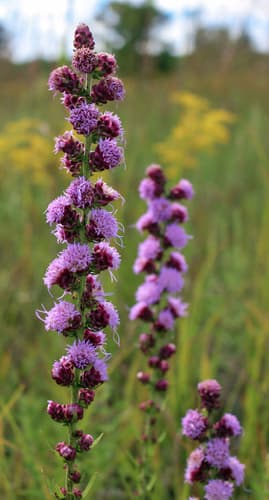
Tall Blazing Star produces dramatic spikes of purple flowers that bloom from top to bottom in summer. This drought-tolerant native perennial forms neat clumps with grass-like foliage and striking vertical flower stems. It goes dormant in winter, disappearing completely until spring growth emerges.
Growing Tall Blazing Star
Grow Tall Blazing Star in full sun and low water. Mature plants reach 24 to 36 inches tall and spread 12 to 18 inches wide. Expect low maintenance to keep it looking intentional in a front yard.
How to care for Tall Blazing Star, by region
How to care for Tall Blazing Star where it is actually grown: year-round basics plus what to do each season, region by region, with the sources for each.
Care guidance last updated: September 2026
Central Irregular Plains (includes Kansas City, MO)
Year-round
Tall blazing star is a true Missouri prairie native that wants full sun and dry, well drained soil, needs almost no fuss once it settles in, and is a strong late season draw for butterflies and native bees.
- Give it full sun, at least 6 hours of direct light a day. In shade it stretches, flops, and blooms less.
- Plant it in dry to medium, well drained soil. It tolerates sandy, rocky, clay, or loam soil fine as long as water does not sit around the roots.
- Space plants 6 inches to 1 foot apart. Each one grows from an underground corm and reaches about 2 to 3 feet tall, occasionally taller.
- Once established it is drought tolerant and rarely needs extra water or any fertilizer. Rich soil or too much moisture tends to make the flower stalks flop and can invite root rot.
- This plant is genuinely native to Missouri. It occurs across most of the state, including the western Missouri prairies and the Kansas City area, and is only absent from the Bootheel region.
- Butterflies, native bees, and bumble bees all rely on its flowers for nectar, making it one of the better late season pollinator plants for a home garden.
Fall
Fall is peak bloom for tall blazing star around Kansas City, and it is also the point where you let the plant go to seed instead of tidying it up.
- Flowers open from the top of the stalk down and are usually showiest from August into October, sometimes carrying into November in a mild fall.
- Skip deadheading and let the spent flower stalks stand after bloom. Birds feed on the seeds through fall and into winter.
- Fall is also a fine time to plant new native perennials here, since cooler air and still warm soil let roots settle in before winter without heat stress.
- Leave the dry stems in place instead of cutting the plant back now. Save the real cleanup for spring.
Brown, standing seed stalks after bloom can read as neglect to a neighbor expecting a mowed look. Keeping the bed edges trimmed and neat while the seed stalks stand helps a native planting look intentional rather than abandoned.
Winter
Winter is a quiet, fully dormant stretch for tall blazing star. The corm sits underground and mostly just needs decent drainage to get through a Kansas City winter.
- The plant is hardy well past Kansas City's winter lows and does not need mulch or any winter covering.
- The bigger winter risk is wet feet, not cold. A corm sitting in saturated clay through a wet winter is more likely to rot than one that simply gets cold.
- Leave last year's dry stems standing through winter. They give overwintering insects a place to shelter and add some structure to an otherwise bare bed.
- There is nothing to water or feed this time of year. The plant stays fully dormant until spring warms things up.
Spring
Spring in the Kansas City area is planting time for tall blazing star, and it is also when you decide how much longer to let last year's dead stems stand before cutting them back.
- April into May is the standard window for putting new tall blazing star plants in the ground once the soil has warmed.
- Water new plantings regularly through their first spring and summer so the corm can build a solid root system. After the first year it needs very little extra water.
- Hold off on cutting back last year's dried stems until nighttime temperatures are reliably in the 50s, usually mid to late April here. Moth and native bee larvae can still be sheltering inside those old stems.
- New leafy growth comes up slowly from the corm, so it can look like nothing is happening for a few weeks before the plant takes off.
Dead stems still standing in early spring can look untidy to a neighbor used to a mowed lawn look. It is normal prairie garden practice, and a tidy cutback once nights are reliably warm brings the bed back to a clean, intentional look.
Summer
Kansas City summers bring heat and humidity that tall blazing star handles well once established, with flowering starting to ramp up near the end of the season.
- Established plants are drought tolerant and generally do not need extra watering during a normal Kansas City summer, even through a dry stretch.
- If the plant went in this year, keep watering during hot weeks until it has been through a full growing season.
- Avoid low, soggy spots in the yard. Standing water in heavy clay during a wet summer raises the chance of the corm rotting.
- Watch the flower stalks starting in August. Tall or crowded stalks sometimes flop over and can use a stake or a simple plant support ring.
- Skip the fertilizer. Rich, fertile soil pushes the stalks to grow taller and weaker instead of sturdier.
Sources: Missouri Department of Conservation, Blazing Stars (Gayfeathers, Liatris) field guide, Lady Bird Johnson Wildflower Center, Native Plant Database: Liatris aspera, NC State Extension, Liatris aspera (Rough Blazing-star), Prairie Nursery, Rough Blazing Star (Liatris aspera), Xerces Society, For Pollinators' Sakes, Don't Spring into Garden Cleanup Too Soon, K-State Research and Extension, Johnson County: Plant Wildflowers and Native Grasses in Fall or Winter
Ouachita Mountains (includes Hot Springs, AR)
Year-round
Tall Blazing Star is a native prairie perennial that grows from an underground corm and sends up tall purple flower spikes. It fits the Hot Springs area naturally and needs very little care once it settles in.
- Full sun and soil that drains well are what this plant needs most. It struggles in wet clay or soil that has been heavily improved with compost.
- It is native to Garland County, where Hot Springs sits, and does well in the Ouachita Mountains area's naturally rocky, acidic soils.
- It grows from a corm and can live for decades in one spot, so pick a permanent location rather than a bed you replant often.
- Skip extra fertilizer. Rich, overly fertile soil with a lot of moisture makes the tall flower stalks flop over.
Mature plants can reach five feet tall and the flower spikes can lean over after a fall rain. Planting in a small cluster, or adding a stake, keeps the bed looking tidy from the street.
Fall
Fall is peak bloom and seed season, with flower spikes opening from late summer into October, later than most other blazing star species. After bloom, the fluffy seed heads can be left standing or trimmed back.
- Flower spikes are usually in full color from late August through October.
- The late-season blooms are a nectar source for migrating Monarch butterflies passing through Arkansas each fall, along with other butterflies and native bees.
- Leave spent flower stalks standing if you want to feed songbirds. The fluffy seed heads are a food source into winter.
- For a tidier look, cut stalks back to a few inches after bloom fades, generally by late October, and divide any overcrowded corms at the same time for replanting next spring.
Left-standing seed stalks can look unkempt to some HOA reviewers. Cutting them back once the color fades keeps the bed looking intentional while the corm stays undisturbed underground.
Winter
The plant dies back completely to the ground for winter and rests as a dormant corm underground, so there is little to do until spring. Hot Springs winters are mild enough that an established plant needs no special protection.
- Top growth dies back after the first hard fall frost, usually by mid-November in the Hot Springs area. This is the normal winter pattern, not a sign the plant is dying.
- Winters in this part of Arkansas rarely get cold enough to stress an established plant, so no mulch or covering is needed.
- If stalks were cut back in fall, leave the base of the plant alone through winter. The corm sits only an inch or two underground and needs no extra protection.
- Hold off on digging, tilling, or walking heavily on the bed while the ground is cold and wet, since disturbing it can damage the dormant corm.
A cut-back bed shows mostly bare soil through winter. Mulching the visible patches or pairing the planting with some nearby evergreen structure keeps the bed looking tended for anyone judging curb appeal this time of year.
Spring
Spring is when new leafy growth pushes up from the corm as the soil warms. It is also the best time to plant new corms before summer heat sets in.
- Wait until nights are reliably staying above freezing, usually by late March to early April in the Hot Springs area, before setting out new plants.
- Plant corms about one inch deep in soil that drains well. Water gently for the first few weeks to help roots establish, then let the soil dry out between waterings.
- Skip fertilizer in spring. Extra nitrogen now leads to floppy stems later in the season.
- Watch young shoots for nibbling from rabbits or deer, which commonly feed on new spring growth.
Summer
Summer is the main growing season, when the plant stores up energy for the flower spikes that open toward late summer. Hot Springs summers are hot and humid, but this plant handles that well once established.
- Once established, it handles hot, humid summers without regular watering. Water only during a dry stretch of three weeks or more.
- Avoid soaking the base of the plant. Soil that stays wet around the corm can lead to rot.
- Aphids, thrips, and whiteflies are minor pests on this plant, and powdery mildew can show up in humid stretches with poor air circulation.
- Tall stems grown in rich, moist soil may need a stake, since this species is more prone to flopping than shorter garden Liatris.
The purple flower spikes read as an intentional planting rather than an overgrown patch, especially set in a small grouped cluster instead of a single stalk.
Sources: USDA NRCS Plant Guide: Tall Blazing Star (Liatris aspera), USDA PLANTS Database: Liatris aspera plant profile, ASMSA Pollinator Garden catalog: Liatris aspera, native to Garland County AR (community tip), Missouri Botanical Garden Plant Finder: Liatris aspera, Lady Bird Johnson Wildflower Center: Liatris aspera plant profile
South Central Plains (includes Beaumont, TX)
Year-round
Rough blazing star is a tall, upright perennial with fuzzy purple flower spikes that bloom in late summer into fall. In Beaumont's hot, humid, high rainfall climate the biggest risk to this plant is wet feet, not drought, so drainage matters more than watering.
- Give it full sun, at least six hours a day, in the driest, best draining spot you have. Beaumont's heavy clay soil holds water, so work two to three inches of compost or a mix of clean sand and organic matter into the bed before planting, or use a raised bed built eight to ten inches tall.
- Space plants about twelve to eighteen inches apart. Flower spikes can reach up to six feet, and Beaumont's summer storms and wind can make tall spikes flop, so a sheltered spot or a light stake helps.
- Water new plants regularly through their first growing season while roots establish. Once established, it prefers to dry out between waterings and does not need extra water beyond Beaumont's normal rainfall.
- It is not on the ASPCA's toxic plant list. The ASPCA's own pet friendly bouquet guidance names blazing star, the Liatris genus, as a good option for a household with pets.
- Bees, hoverflies, and butterflies including monarchs use the late season blooms, and the plant hosts two moth species that feed only on Liatris.
Fall
Fall is peak bloom into cutback season for rough blazing star in Beaumont. Flowering can run into early fall before the plant is done for the year, and cleanup is the main task once it finishes.
- Blooms typically continue from late summer into September, and sometimes later given Beaumont's long warm season. This is one of the last nectar sources for monarchs and other pollinators before they move on for the year.
- Once flower spikes are fully spent and browning, cut the stalks back to a few inches above the ground.
- This is also a good time to divide overcrowded corms if you want to expand the planting. Lift and separate them after the stems have died back.
- Hold off on heavy watering into fall. Beaumont can still see tropical rain events this time of year, and wet soil heading into winter is the biggest risk to the corm.
Cutting spent stalks back once blooms finish avoids the tall, dead stem look that tends to draw HOA attention, and keeps the bed reading as intentional going into fall.
Winter
Beaumont winters are mild but wet, and Liatris aspera goes fully dormant back to its underground corm. The main task is keeping that corm dry through the season's occasional hard freezes and heavier rain.
- The plant is leafless and dormant through winter. Leave the cut back stubble in place so you do not accidentally dig into the corm.
- Beaumont typically sees its first freeze risk by mid to late November, with occasional hard freezes into December and January. Established plantings in a well draining spot do not usually need extra winter protection at this hardiness zone.
- Winter is the riskiest season for this plant in Beaumont, since the rainy season and heavy clay soil combine to keep roots wet right when the corm tolerates that the least. Check that the bed is not holding standing water after winter rain.
- Skip a heavy mulch layer directly over the crown. A light layer nearby is fine, but a thick, damp mulch cap over a dormant corm adds to the wet soil risk instead of protecting it.
A neat, low, cut back winter silhouette reads as a deliberately dormant bed rather than a neglected one, which is HOA-friendly heading into the next growing season.
Spring
Spring in Beaumont warms up fast and brings heavy rain, so the main job with rough blazing star is planting it on a dry, well draining site rather than watching for frost.
- Plant new corms or nursery starts once your last frost has passed. In Beaumont that is typically by late March, once nights stop dropping near freezing.
- Confirm the planting site drains within a few hours after a hard spring rain before you put anything in the ground. If water stands, work in sand, compost, or gypsum, or build a raised bed, since Beaumont's clay soil holds water far longer than this plant wants.
- New growth starts as a low, grassy clump. Keep the area weeded so young shoots are not shaded out before the flower stalk rises later in the season.
- Skip heavy fertilizing at planting time. A light layer of compost is enough, since rich, damp spring soil is more likely to rot a young corm than help it grow.
Summer
Summer is the main event for rough blazing star in Beaumont, with tall purple flower spikes opening from around August into early fall. The heat itself is not the challenge here, the humidity and rainfall are.
- Once established, the plant handles Beaumont's summer heat and dry spells well and does not need supplemental watering beyond normal rainfall.
- Avoid daily watering or low spots where water collects. Consistently damp soil around the base in Beaumont's humid summers is a more common way to lose this plant than heat or drought.
- Give plants room to breathe. Good spacing and airflow between plants lowers the odds of fungal problems showing up in crowded, humid conditions.
- As lower blooms on a spike fade, snipping off just the spent top can encourage a longer bloom window. A good window to prune is once the top third of a spike has browned.
Trimming spent flower tops as they fade keeps the bed looking tended instead of leggy, an HOA-friendly habit that reads as intentional rather than neglected.
Sources: Lady Bird Johnson Wildflower Center, Liatris aspera plant profile, ASPCA, A Safe Bouquet for Mother's Day, Xerces Society, Plants for Pollinators: Blazingstar, Texas A&M AgriLife Extension, Soil Preparation, Native Plant Society of Texas, Liatris aspera
Texas Blackland Prairies (includes Dallas, TX)
Year-round
Tall blazing star is a true native of the Dallas area's Blackland Prairie clay, sending up one tall spike of purple flowers from an underground corm and coming back reliably once it settles in.
- Give it full sun and well drained soil. It is native to the East Central Texas Plains and Blackland Prairies around Dallas, so it grows fine in unamended clay and needs no fertilizer.
- Water deeply but rarely once established. It is very drought tolerant, and soggy soil over winter, not cold, is the main way people lose this plant.
- Space plants 12 to 18 inches apart. Rich soil, heavy fertilizer, or too much shade makes the single flower spike flop, so skip feeding it.
- It does not appear on the ASPCA toxic or non-toxic plant list, so pet safety for dogs, cats, or horses has not been formally evaluated either way. Watch new pets around any unfamiliar plant.
Fall
Fall is peak bloom here. The purple spikes open from the top down starting in late summer and run into October, right when migrating monarchs are moving through North Texas.
- Skip deadheading. Let the flowers go to seed so the fluffy seed heads can feed goldfinches and reseed the patch.
- This is a key fall nectar stop for monarch butterflies passing through Texas in September and October during their migration.
- Skip fall fertilizing. A plant native to Blackland Prairie clay does fine on the soil's natural fertility without it.
Leaving the spent flower spikes standing through fall reads as an intentional native planting rather than an unkept bed, which keeps it HOA-conscious even without deadheading.
Winter
Winter is dormant. The corm rides out Dallas winters underground with no protection needed, and the dried stalks can stay standing for winter interest and bird food until the early spring cutback.
- Dallas's zone 8b winters are mild enough that this plant needs no winter protection or mulching. It is hardy well beyond this zone, down to zone 3.
- The real winter risk is not cold, it is wet feet. Make sure the planting site drains and does not pool water during heavier winter storms.
- Leave the dried flower stalks standing as winter interest and a seed source for birds, then cut them back in early spring.
Bare dried stalks can look sparse to a neighbor in winter. A small plant label or nearby evergreen planting helps the bed read as an intentional HOA-friendly native planting rather than neglect.
Spring
Spring is cleanup time. Cut back last year's dried stalks before the new grass-like leaves come up, usually by March in the Dallas area.
- Cut old flower stalks down to a couple inches above the ground in late winter or early spring, before new shoots emerge.
- New growth starts as a low clump of narrow leaves. Do not pile mulch over the crown, the corm rots if it stays wet.
- Divide overcrowded clumps in early spring if flowering has thinned out over the years. Replant divisions at the same depth they were growing.
Cutting the old stalks back in early spring keeps the bed looking tidy and HOA-friendly before the new growth fills in.
Summer
Summer is when the flower spike shoots up. Once established, this plant handles Dallas heat with little to no extra water.
- Established plants, year two and older, usually need no watering through a normal Dallas summer beyond regular rainfall. Water new first-year plantings during extended dry stretches.
- The flower spike can reach 2 to 4 feet and may lean in wind or part shade. Stake it in exposed spots rather than fertilizing, which only makes the lean worse.
- Watch for aphids clustering on the forming flower buds in late summer. A strong spray of water usually clears them without needing anything else.
Sources: Liatris aspera, Native Plant Society of Texas, Liatris aspera, Lady Bird Johnson Wildflower Center Native Plant Database, ASPCA Toxic and Non-Toxic Plants, letter L, Tall Blazing Star Plant Guide, USDA NRCS
Want these tasks as reminders timed to your yard? Pollinator Patch turns this guidance into a season-by-season care plan for the plants you actually grow.
In an HOA neighborhood
Tall Blazing Star is an HOA-friendly choice. Maintenance level: low. Tidiness: 4 out of 5.
Works well in: front yard, foundation, street edge, mid zone.
Wildlife value
The long-blooming purple flowers are magnets for butterflies, bees, and hummingbirds throughout summer. Seeds provide food for birds in fall.
Common questions
- When does Liatris aspera bloom?
- Liatris aspera generally flowers from June into August, with rounded, button-like purple flower heads opening along the upper part of a stiff, upright stem.
- What growing conditions suit Liatris aspera best?
- This plant does best in full sun to part sun with low water once established, and it tolerates dry, well-drained soils including sandy or rocky ground.
- What pollinators does Liatris aspera attract?
- Liatris aspera draws butterflies, bees, and hummingbirds, and its flowers serve as a nectar source for a range of other insects.
- Does Liatris aspera need staking or extra care?
- It usually stands upright on its own in open, sunny sites, but plants grown in overly rich soil or too much shade may flop and benefit from nearby support.
- Is Tall Blazing Star HOA-friendly?
- Tall Blazing Star is generally an HOA-friendly choice in the right placement, with low maintenance.
These answers were drafted with an AI model from this plant's data. Verify care details with a local expert.
Native range data from vouchered herbarium specimen records and regional native plant society lists. Pollinator and host plant associations compiled from GBIF, iNaturalist, and published ecological literature.
If something looks wrong
Common plant problems, and what to check first
These come up on almost any plant. Each guide lists the likely causes in the order they are worth ruling out, with one thing to check before you act on any of them, and links to the source it came from.
- It is dying right after planting
- Leaves turning yellow
- Wilting even though I watered it
- Brown crispy leaf tips
- Bugs on the plant
Ready to grow Tall Blazing Star? Add it to your garden in Pollinator Patch to track it and get season-by-season care guidance.
Planning a bed around it? Start a free plan with this plant
Not sure where to start? Take the 2-minute yard quiz