Virginia Mountain-Mint
Pycnanthemum virginianum
Last reviewed: September 2026
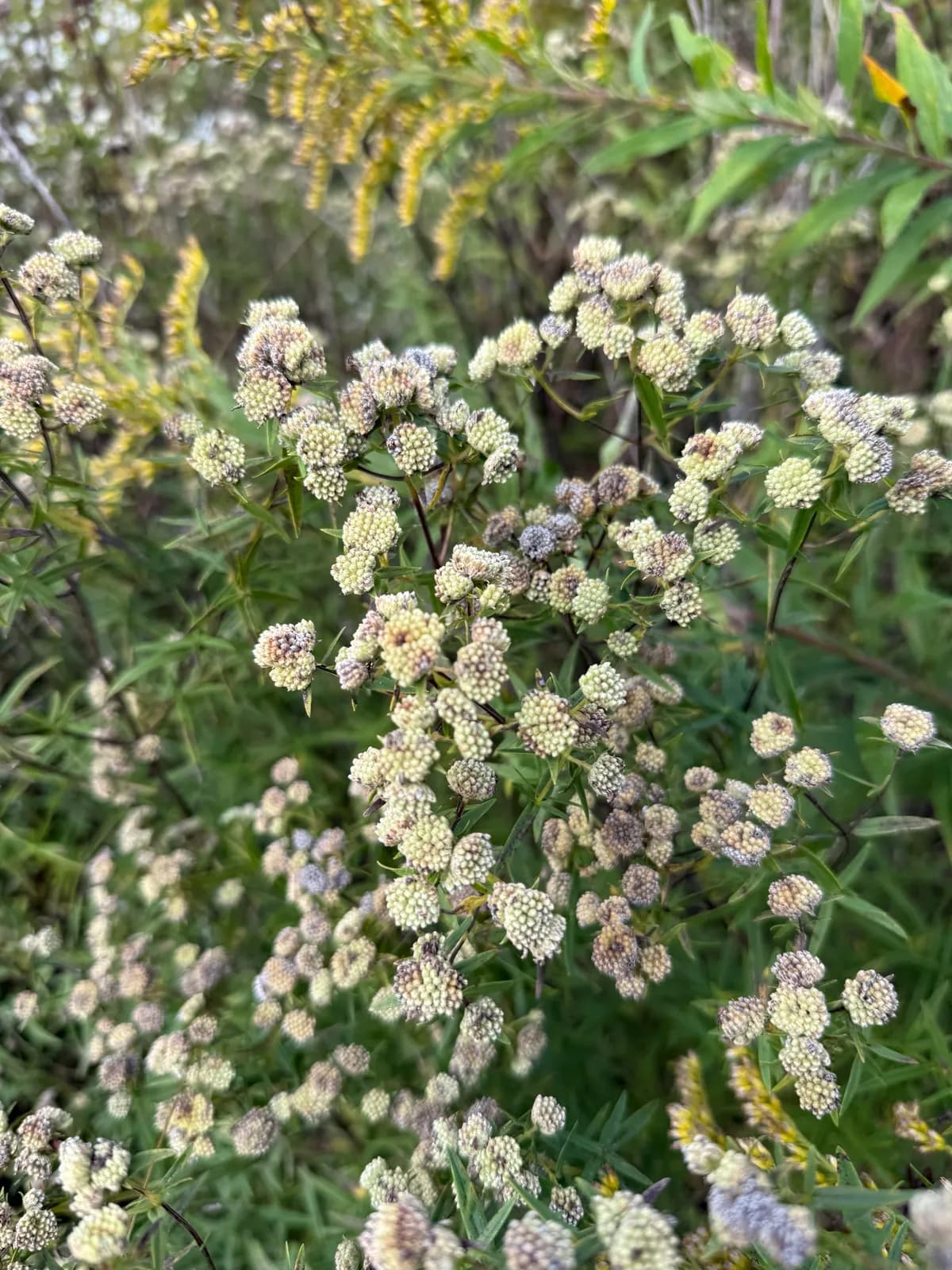
Pycnanthemum virginianum, or Virginia mountain mint, is an upright forb with clusters of small white flowers blooming July through September. It grows well in full sun to part shade with medium moisture soil and draws bees, butterflies and wasps.
Toxicity unknown
Virginia Mountain-Mint (Pycnanthemum virginianum) is not listed by the ASPCA Animal Poison Control Center (opens in new tab) or the other sources we check, so we have no verdict for it either way. Absence from those lists is not a clearance. If your pet shows symptoms after eating any plant, call the ASPCA at (888) 426-4435.
Light
full sun
Water
medium
Size
24"–36" H × 12"–24" W
Bloom
Jul, Aug, Sep
Native to
AL, AR, CT, DE and 27 more states
Pollinators
bees, butterflies, wasps
Deer
Resistant (per Prairie Moon Nursery)
Before you buy
Your city may pay you to plant this
Cities and water utilities offer rebates for replacing lawn with native and water-wise plants. We track 459 programs across 44 states, each with a link to the provider and the date we last checked it.
Find rebates in your areaPicture natives in your own yard
Upload a photo of your yard and Patch Vision shows a rendering of it planted with natives for your region, like Virginia Mountain-Mint.


Browse plants for this ecoregion
Mountain Mint is a fragrant native perennial that forms neat clumps of aromatic foliage topped with clusters of small white flowers. The silvery-white bracts surrounding the flower heads create an attractive display from summer into fall. This hardy plant spreads slowly by rhizomes and tolerates drought once established.
Growing Virginia Mountain-Mint
Grow Virginia Mountain-Mint in full sun and medium water. Mature plants reach 24 to 36 inches tall and spread 12 to 24 inches wide. Expect low maintenance to keep it looking intentional in a front yard.
How to care for Virginia Mountain-Mint, by region
How to care for Virginia Mountain-Mint where it is actually grown: year-round basics plus what to do each season, region by region, with the sources for each.
Care guidance last updated: October 2026
Erie Drift Plain (includes Buffalo, NY)
Year-round
Virginia mountain mint likes moist soil and part shade, and it can spread, mostly in moist ground.
- Plant it in part shade with moist soil.
- It can spread aggressively, but less in drier soil.
- Divide in spring to share or control it.
Because it spreads, give it a defined spot or edge so it stays tidy.
Fall
In fall the plant winds down, so just keep it from drying out completely.
- Water if autumn is dry.
- Watch for runners reaching past the bed edge.
- Fall in Buffalo brings frost around mid October, which ends growth.
Winter
In winter the plant rests, so leave it be.
- No watering or fertilizing needed.
- Snow cover is normal here.
- Plan spring division now if it spread too far.
Spring
Spring is the time to divide mountain mint and to start new plants.
- Divide plants in spring to control spread.
- Keep the soil moist as new growth starts.
- Late frost in Buffalo can nip new shoots, which is usually fine.
Summer
Summer brings white flowers, and moist soil keeps the plant happy.
- Expect white flowers, often spotted purple, in July and August.
- Water during dry spells.
- Take tip cuttings in early summer if you want more plants.
Sources: Lady Bird Johnson Wildflower Center: Virginia Mountain-mint
Northern Allegheny Plateau (includes Binghamton, NY)
Year-round
Virginia mountain mint is native to the Binghamton area's moist meadows and settles in fast, then spreads by rhizome once it's happy.
- Water regularly through the first growing season while roots establish.
- Once established it's drought tolerant and rarely needs supplemental watering here.
- Mulch 2 to 3 inches to hold moisture and buffer the freeze-thaw cycles common in the Southern Tier.
- It spreads by underground rhizomes and can be aggressive in moist, rich soil. Give it room or a root barrier.
- The most common mistake is planting it in a small front bed with no plan for its spread. It will outgrow a tight border in a season or two.
Edge the planting or set a buried root barrier around it in a front bed so it stays inside the bed line instead of spreading into the lawn or walkway, which keeps it looking intentional rather than overgrown.
Fall
Fall brings the first frosts to Binghamton, usually by mid to late October, and this is a season to leave the plant alone rather than tidy it.
- Leave seed heads and stems standing through fall instead of cutting back.
- Standing stems and seed heads protect overwintering insects through the coming winter.
- Reduce watering as the plant goes dormant with the season's first hard frost.
- This is not a good season to divide. Wait for spring instead.
Winter
Binghamton winters are cold and snowy, and this plant handles them by dying back to the roots and waiting it out.
- Foliage dies back completely to the ground by winter.
- Leave the dead stems standing through winter for insect habitat rather than cutting back in fall.
- Cut the old stems back in very early spring, before new shoots appear, if you want a tidier restart.
- No extra winter mulching is required beyond what's already on the bed. It's hardy through Southern Tier winters.
Spring
Spring arrives late in Binghamton, and this is when new shoots push up from the roots.
- New growth appears once soil warms, usually April into May, after the last frost.
- Divide congested clumps now if you want to control spread or share starts.
- Plant new starts in spring so they have a full season to establish before winter.
- No fertilizer needed. It grows well in average garden soil.
Summer
Summer is peak season, with fragrant foliage and a long bloom of small white flowers that draw a steady stream of pollinators.
- Blooms run July into August with small white flowers in dense clusters.
- Deadhead spent flower clusters if you want to extend bloom and keep the bed looking tidy.
- Water during dry spells. Southern Tier summers can have short dry stretches even though the region is generally humid.
- Expect heavy bee and butterfly visits to the flowers during bloom.
Sources: Lady Bird Johnson Wildflower Center - Pycnanthemum virginianum, Missouri Botanical Garden Plant Finder - Pycnanthemum virginianum
In an HOA neighborhood
Virginia Mountain-Mint is an HOA-friendly choice. Maintenance level: low. Tidiness: 4 out of 5.
Works well in: front yard, foundation, street edge, mid zone.
- May spread beyond intended area if not managed
Wildlife value
This plant is exceptionally valuable for pollinators, attracting numerous species of native bees, beneficial wasps, and butterflies throughout its long bloom period. The dense flower clusters provide abundant nectar and the seeds feed birds in winter.
Common questions
- When does Virginia Mountain-Mint bloom?
- It typically blooms from July through September, producing dense clusters of small white flowers with faint purple spotting atop square stems.
- What pollinators visit Virginia Mountain-Mint?
- Bees, butterflies and wasps are frequent visitors, drawn to the abundant nectar in its tight flower clusters throughout the summer bloom period.
- What growing conditions does Virginia Mountain-Mint prefer?
- It does best in full sun to partial shade with medium soil moisture, though established plants can handle both drier spells and periodically wetter ground.
- What kind of plant is Virginia Mountain-Mint?
- It is a rhizomatous herbaceous perennial forb in the mint family, with narrow leaves and square stems that spread to form colonies in meadows and prairie plantings.
- Is Virginia Mountain-Mint HOA-friendly?
- Virginia Mountain-Mint is generally an HOA-friendly choice in the right placement, with low maintenance.
These answers were drafted with an AI model from this plant's data. Verify care details with a local expert.
Native range data from vouchered herbarium specimen records and regional native plant society lists. Pollinator and host plant associations compiled from GBIF, iNaturalist, and published ecological literature.
If something looks wrong
Common plant problems, and what to check first
These come up on almost any plant. Each guide lists the likely causes in the order they are worth ruling out, with one thing to check before you act on any of them, and links to the source it came from.
- It is dying right after planting
- Leaves turning yellow
- Wilting even though I watered it
- Brown crispy leaf tips
- Bugs on the plant
Ready to grow Virginia Mountain-Mint? Add it to your garden in Pollinator Patch to track it and get season-by-season care guidance.