Cinnamon fern
Osmundastrum cinnamomeum
Last reviewed: October 2026
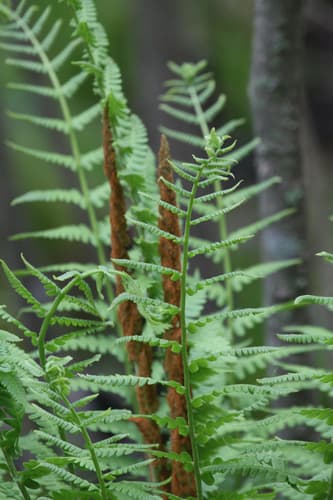
Osmundastrum cinnamomeum, the cinnamon fern, grows in wet woodlands, swamps and stream banks across much of the eastern and central United States, forming clumps of arching green fronds with a cinnamon colored fertile frond in spring.
Toxicity unknown
Cinnamon fern (Osmundastrum cinnamomeum) is not listed by the ASPCA Animal Poison Control Center (opens in new tab) or the other sources we check, so we have no verdict for it either way. Absence from those lists is not a clearance. If your pet shows symptoms after eating any plant, call the ASPCA at (888) 426-4435.
Light
part shade
Water
high
Size
24"–36" H × 6"–12" W
Bloom
N/A
Native to
AL, AR, CT, DE and 29 more states
Before you buy
Your city may pay you to plant this
Cities and water utilities offer rebates for replacing lawn with native and water-wise plants. We track 459 programs across 44 states, each with a link to the provider and the date we last checked it.
Find rebates in your areaPicture natives in your own yard
Upload a photo of your yard and Patch Vision shows a rendering of it planted with natives for your region, like Cinnamon fern.


Browse plants for this ecoregion
A large, elegant clumping fern that unfurls a vase-shaped rosette of tall, arching sterile fronds around a central cluster of showy cinnamon-brown fertile fronds in spring. The bright green foliage turns golden in autumn before dying back. Its bold, formal silhouette suits shaded, consistently moist beds and the edges of water features.
Growing Cinnamon fern
Grow Cinnamon fern in part shade and high water. Mature plants reach 24 to 36 inches tall and spread 6 to 12 inches wide. Expect low maintenance to keep it looking intentional in a front yard.
How to care for Cinnamon fern, by region
How to care for Cinnamon fern where it is actually grown: year-round basics plus what to do each season, region by region, with the sources for each.
Care guidance last updated: October 2026
Cross Timbers (includes Fort Worth, TX)
Year-round
Cinnamon fern is a shade loving fern grown for its lush texture and the cinnamon colored fertile fronds that shoot up from the center of the clump each spring. It needs consistently moist, acidic soil to thrive, which takes some extra prep in North Texas.
- Plant in part shade to full shade with soil that stays consistently moist, not bone dry between waterings.
- Work in a few inches of compost or peat at planting time to push soil pH toward acidic (below 6.0) and hold moisture longer, especially important in the alkaline black clay of the Blackland Prairies.
- Space plants 2 to 3 feet apart since a mature clump can spread that wide.
- Skip fertilizer the first year and let the root system establish before feeding.
- Mulch 2 to 3 inches with shredded leaves or pine bark to hold moisture and mimic the woodland floor it grows on naturally.
Fall
Fronds turn yellow and die back with the first frost. Fall is also a good time to plant new cinnamon ferns before next year's heat arrives.
- Expect the sterile fronds to turn yellow through October and November as temperatures drop; this is normal seasonal dieback, not a problem to fix.
- Cut back fronds once they fully brown, usually late November into December, to tidy the bed going into winter.
- If planting new ferns, fall works as well as spring here as long as you keep the new roots consistently moist through the first months.
- Top dress with an inch of compost or leaf mulch in October to feed the rhizomes before winter dormancy.
Cutting back browned fronds in late fall keeps the bed looking tended and intentional rather than left to die back on its own over winter.
Winter
Cinnamon fern goes fully dormant in winter. The fronds die back to the ground and the plant disappears above ground until spring.
- Expect no visible growth from December through February; the rhizome is alive underground, do not dig it up thinking it died.
- Leave 2 to 3 inches of mulch over the root zone to buffer the short hard freezes and occasional severe Arctic outbreaks North Texas winters bring.
- Do not water during a hard freeze, but do not let the bed go bone dry for weeks either, the dormant rhizome still needs some moisture.
- Mark the spot with a small stake or edging so it is not disturbed by other winter bed work before new fiddleheads appear in March.
A dormant, mulched bed with no visible fern can read as an empty gap to a neighbor; a small edging marker signals it is an intentional planting, not a dead spot.
Spring
Spring is cinnamon fern's showcase: bright green fiddleheads unfurl into fronds, and separate cinnamon colored fertile fronds shoot up from the middle of the clump.
- Watch for fiddleheads to emerge in March as soil warms; these are ornamental only, do not pick and eat them.
- The upright, stiff, cinnamon brown fertile fronds appear at the clump's center in April and wither within a few weeks. That is normal, not a sign of trouble.
- Keep soil consistently moist through spring rains and do not let the root zone dry out during dry stretches.
- In heavy black clay, watch for standing water after a hard rain and improve drainage if it pools for more than a day; in the sandier soils west of the metro, check soil moisture more often since it drains fast.
- Divide overcrowded clumps in early spring before new fronds unfurl and replant divisions right away.
The upright cinnamon colored fertile fronds read as an intentional ornamental accent, not overgrowth, so there is no need to remove them once they brown and wither.
Summer
July and August heat is the hardest test for cinnamon fern in North Texas. Consistent moisture, not sun, is what keeps it alive through the hot season.
- Water two to three times a week during 100F stretches; the fern will wilt and can die back if the soil dries out.
- Keep it out of direct afternoon sun; part to full shade protects the fronds from scorching.
- Refresh mulch back up to 2 to 3 inches if it has thinned, this cuts down on how often you need to water.
- In the Blackland Prairies' heavy black clay, watch for waterlogging after summer storms; in the Cross Timbers' sandier soils, expect to water more often since it drains fast and dries out sooner.
- Hold off on fertilizer during heat stretches; feeding a heat stressed plant pushes growth it cannot support.
Fronds that flag or brown from heat stress can make a bed look neglected; a deep, slow watering usually revives them within a day or two.
Sources: NC State Extension Gardener Plant Toolbox: Osmundastrum cinnamomeum, Lady Bird Johnson Wildflower Center: Osmunda cinnamomea
Texas Blackland Prairies (includes Dallas, TX)
Year-round
Cinnamon fern is a shade loving fern grown for its lush texture and the cinnamon colored fertile fronds that shoot up from the center of the clump each spring. It needs consistently moist, acidic soil to thrive, which takes some extra prep in North Texas.
- Plant in part shade to full shade with soil that stays consistently moist, not bone dry between waterings.
- Work in a few inches of compost or peat at planting time to push soil pH toward acidic (below 6.0) and hold moisture longer, especially important in the alkaline black clay of the Blackland Prairies.
- Space plants 2 to 3 feet apart since a mature clump can spread that wide.
- Skip fertilizer the first year and let the root system establish before feeding.
- Mulch 2 to 3 inches with shredded leaves or pine bark to hold moisture and mimic the woodland floor it grows on naturally.
Fall
Fronds turn yellow and die back with the first frost. Fall is also a good time to plant new cinnamon ferns before next year's heat arrives.
- Expect the sterile fronds to turn yellow through October and November as temperatures drop; this is normal seasonal dieback, not a problem to fix.
- Cut back fronds once they fully brown, usually late November into December, to tidy the bed going into winter.
- If planting new ferns, fall works as well as spring here as long as you keep the new roots consistently moist through the first months.
- Top dress with an inch of compost or leaf mulch in October to feed the rhizomes before winter dormancy.
Cutting back browned fronds in late fall keeps the bed looking tended and intentional rather than left to die back on its own over winter.
Winter
Cinnamon fern goes fully dormant in winter. The fronds die back to the ground and the plant disappears above ground until spring.
- Expect no visible growth from December through February; the rhizome is alive underground, do not dig it up thinking it died.
- Leave 2 to 3 inches of mulch over the root zone to buffer the short hard freezes and occasional severe Arctic outbreaks North Texas winters bring.
- Do not water during a hard freeze, but do not let the bed go bone dry for weeks either, the dormant rhizome still needs some moisture.
- Mark the spot with a small stake or edging so it is not disturbed by other winter bed work before new fiddleheads appear in March.
A dormant, mulched bed with no visible fern can read as an empty gap to a neighbor; a small edging marker signals it is an intentional planting, not a dead spot.
Spring
Spring is cinnamon fern's showcase: bright green fiddleheads unfurl into fronds, and separate cinnamon colored fertile fronds shoot up from the middle of the clump.
- Watch for fiddleheads to emerge in March as soil warms; these are ornamental only, do not pick and eat them.
- The upright, stiff, cinnamon brown fertile fronds appear at the clump's center in April and wither within a few weeks. That is normal, not a sign of trouble.
- Keep soil consistently moist through spring rains and do not let the root zone dry out during dry stretches.
- In heavy black clay, watch for standing water after a hard rain and improve drainage if it pools for more than a day; in the sandier soils west of the metro, check soil moisture more often since it drains fast.
- Divide overcrowded clumps in early spring before new fronds unfurl and replant divisions right away.
The upright cinnamon colored fertile fronds read as an intentional ornamental accent, not overgrowth, so there is no need to remove them once they brown and wither.
Summer
July and August heat is the hardest test for cinnamon fern in North Texas. Consistent moisture, not sun, is what keeps it alive through the hot season.
- Water two to three times a week during 100F stretches; the fern will wilt and can die back if the soil dries out.
- Keep it out of direct afternoon sun; part to full shade protects the fronds from scorching.
- Refresh mulch back up to 2 to 3 inches if it has thinned, this cuts down on how often you need to water.
- In the Blackland Prairies' heavy black clay, watch for waterlogging after summer storms; in the Cross Timbers' sandier soils, expect to water more often since it drains fast and dries out sooner.
- Hold off on fertilizer during heat stretches; feeding a heat stressed plant pushes growth it cannot support.
Fronds that flag or brown from heat stress can make a bed look neglected; a deep, slow watering usually revives them within a day or two.
Sources: NC State Extension Gardener Plant Toolbox: Osmundastrum cinnamomeum, Lady Bird Johnson Wildflower Center: Osmunda cinnamomea
In an HOA neighborhood
Cinnamon fern is an HOA-friendly choice. Maintenance level: low. Tidiness: 4 out of 5.
Works well in: front yard, foundation, mid zone.
- needs consistently moist soil and shade to look its best
Wildlife value
The dense fronds provide cover for amphibians and small wildlife, and the fibrous crowns offer nesting material for birds.
Common questions
- Does cinnamon fern produce flowers?
- No. Cinnamon fern is a fern, not a flowering plant. It reproduces by spores that develop on a separate upright fertile frond covered in rust colored sporangia, which is where the plant gets its common name.
- When does the fertile frond of cinnamon fern appear?
- The cinnamon colored fertile fronds usually emerge in spring alongside the green sterile fronds, then wither back after releasing spores.
- What growing conditions does cinnamon fern prefer?
- It does best in consistently moist to wet, acidic soil in part shade to shade, and is often found along stream banks, in swamps, and in low wet woods.
- How large does cinnamon fern get?
- Mature clumps typically reach two to three feet tall and wide, with arching sterile fronds surrounding the shorter, stiffer fertile fronds at the center.
- Is Cinnamon fern HOA-friendly?
- Cinnamon fern is generally an HOA-friendly choice in the right placement, with low maintenance.
These answers were drafted with an AI model from this plant's data. Verify care details with a local expert.
Native range data from the World Checklist of Vascular Plants (Kew). Pollinator and host plant associations compiled from GBIF, iNaturalist, and published ecological literature.
If something looks wrong
Common plant problems, and what to check first
These come up on almost any plant. Each guide lists the likely causes in the order they are worth ruling out, with one thing to check before you act on any of them, and links to the source it came from.
- It is dying right after planting
- Leaves turning yellow
- Wilting even though I watered it
- Brown crispy leaf tips
- Bugs on the plant
Ready to grow Cinnamon fern? Add it to your garden in Pollinator Patch to track it and get season-by-season care guidance.