Late Boneset
Eupatorium serotinum
Last reviewed: October 2026
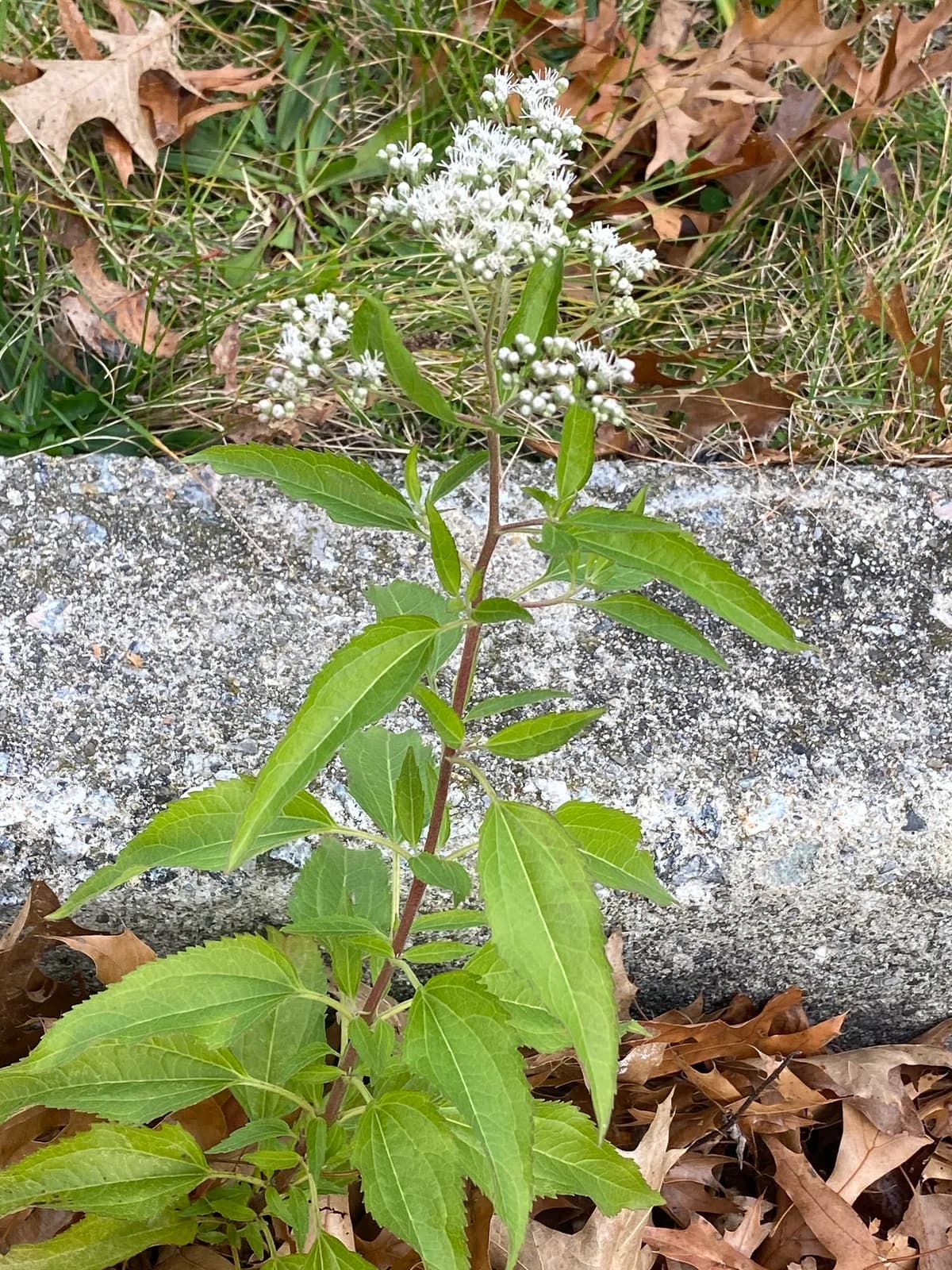
Fall Boneset is a tall herbaceous forb that blooms from July through October with flat clusters of small white flowers. It grows best in full sun with medium moisture in fields, roadsides and open woodland edges across much of the eastern and central United States.
Toxicity unknown
Late Boneset (Eupatorium serotinum) is not listed by the ASPCA Animal Poison Control Center (opens in new tab) or the other sources we check, so we have no verdict for it either way. Absence from those lists is not a clearance. If your pet shows symptoms after eating any plant, call the ASPCA at (888) 426-4435.
Light
part sun
Water
medium
Size
12"–36" H × 36"–48" W
Bloom
Sep, Oct, Nov
Native to
AL, AR, DE, FL and 27 more states
Pollinators
bees, butterflies, beetles, wasps, flies, nectar insects
Before you buy
Your city may pay you to plant this
Cities and water utilities offer rebates for replacing lawn with native and water-wise plants. We track 459 programs across 44 states, each with a link to the provider and the date we last checked it.
Find rebates in your areaPicture natives in your own yard
Upload a photo of your yard and Patch Vision shows a rendering of it planted with natives for your region, like Late Boneset.


Browse plants for this ecoregion
Fall boneset is a tall native perennial that produces clusters of small white flowers from summer through fall. It forms upright clumps and can spread gradually to create colonies, making it useful for naturalizing larger areas.
Growing Late Boneset
Grow Late Boneset in part sun and medium water. Mature plants reach 12 to 36 inches tall and spread 36 to 48 inches wide. Expect low maintenance to keep it looking intentional in a front yard.
How to care for Late Boneset, by region
How to care for Late Boneset where it is actually grown: year-round basics plus what to do each season, region by region, with the sources for each.
Care guidance last updated: September 2026
Western Gulf Coastal Plain (includes Houston, TX)
Year-round
Fall boneset is a Gulf Coast Prairies native that handles Houston's heat and humidity well and puts on its main show just as most other blooms are fading.
- Give it part shade to full sun. In Houston's hot summers, some afternoon shade helps keep it from wilting.
- It prefers moist, organically rich soil but adapts fine to Houston's clay and sandy soils too.
- It spreads by underground rhizomes and by self-seeding, so give it room to form a stand or plan to divide it every few years.
- It typically grows three to five feet tall and can flop without nearby plants to lean on, so pair it with sturdy neighbors.
- This species is native to the Gulf Coast Prairies and Western Gulf Coastal Plain ecoregion, which includes the Houston area.
Fall
Fall is fall boneset's moment in Houston, blooming from September into November right when pollinators need it most.
- Let the small white flower clusters open fully from September through November. This is peak nectar season for bees, butterflies, and other pollinating insects.
- If you want to limit self-seeding, deadhead spent flower heads before the seeds mature and blow around the yard.
- Leave some flower heads through fall if you'd rather feed seed-eating birds later in the season.
- Expect Houston's first frost around early December to blacken the foliage and signal the end of the bloom.
Deadheading spent flower clusters after the fall bloom fades keeps the bed tidy and limits volunteer seedlings next spring, without cutting the display short while pollinators are still using it.
Winter
Once frost blackens the foliage, winter is cutback and cleanup season for fall boneset in Houston.
- Cut the blackened stems down to a few inches once frost has killed the top growth, typically after Houston's first frost in early December.
- Leave the cut stems and fallen leaves as mulch over the crown, or add a light mulch layer for extra insulation during a rare hard freeze.
- Winter dormancy is a good time to dig and divide the clump if you want to spread it to a new spot or share it.
- Houston winters are mild, so this plant needs no frost protection. Occasional light freezes in zone 9a won't harm the dormant roots.
Cutting the frost-killed stalks down in winter leaves a clean, low profile through the dormant season instead of a bed of dead brown stems.
Spring
Spring in Houston is cleanup and control season for fall boneset, before it puts on its big warm-season growth.
- Cut back any dead stalks left over from last year before new shoots get tall, usually by late February once frost risk has passed.
- Thin or divide crowded clumps now if the patch spread further than you want. Replant the divisions or share them.
- Water new divisions regularly while roots establish. Established clumps generally handle Houston's spring rains on their own.
- Watch for volunteer seedlings nearby and pull the ones you don't want. This plant self-seeds readily on moist ground.
Clearing last year's dead stalks in late winter or early spring keeps the front bed looking tended before new growth fills in.
Summer
Through Houston's long, hot summer, fall boneset is building the growth that turns into its fall flower show.
- Water during dry stretches. It tolerates some drought, but the lower leaves may brown and drop if it dries out for too long.
- Stake stems or let them lean on a neighboring plant if the stand starts to flop, especially after summer thunderstorms.
- Afternoon shade is worth providing if your spot gets full, unbroken Houston sun. It reduces stress without cutting into next season's bloom.
- Skip deadheading this month. Flower buds are just starting to form for a September through November bloom.
Sources: Lady Bird Johnson Wildflower Center, Native Plant Database profile for Eupatorium serotinum, Native Plant Society of Texas, Eupatorium serotinum plant profile, bplant.org, Late Boneset (Eupatorium serotinum) species page (community tip)
In an HOA neighborhood
Late Boneset takes more care to keep looking intentional in a front yard. Maintenance level: low. Consider it for backyard or mid-zone beds rather than the street edge.
Works well in: backyard only.
- Can appear weedy and unkempt
- Spreads aggressively and may look wild
- Very tall growth may seem unmaintained
Wildlife value
This plant is excellent for late-season pollinators, attracting bees, butterflies, beetles, wasps, and flies when many other flowers have finished blooming. It's particularly valuable for migrating monarch butterflies in fall.
Common questions
- When does Fall Boneset bloom?
- Fall Boneset produces its flat-topped clusters of small white flowers from July into October, making it one of the later-blooming members of the Eupatorium group.
- What pollinators does Fall Boneset attract?
- The flowers draw a wide range of pollinators including bees, butterflies, beetles, wasps and flies, which visit the nectar-rich blooms in late summer and fall.
- What growing conditions does Fall Boneset need?
- It grows best in full sun to part sun with medium moisture, though it can tolerate wetter soils and brief drier spells once established.
- Is Fall Boneset a shrub or a perennial?
- It is an herbaceous forb, not a woody shrub. The above-ground growth dies back each year and the plant regrows from its base in spring.
- Is Late Boneset HOA-friendly?
- Late Boneset takes more care to look intentional in a front yard. Consider it for backyard or mid-zone beds rather than the street edge.
These answers were drafted with an AI model from this plant's data. Verify care details with a local expert.
Native range data from vouchered herbarium specimen records and regional native plant society lists. Pollinator and host plant associations compiled from GBIF, iNaturalist, and published ecological literature.
If something looks wrong
Common plant problems, and what to check first
These come up on almost any plant. Each guide lists the likely causes in the order they are worth ruling out, with one thing to check before you act on any of them, and links to the source it came from.
- It is dying right after planting
- Leaves turning yellow
- Wilting even though I watered it
- Brown crispy leaf tips
- Bugs on the plant
Ready to grow Late Boneset? Add it to your garden in Pollinator Patch to track it and get season-by-season care guidance.